Description
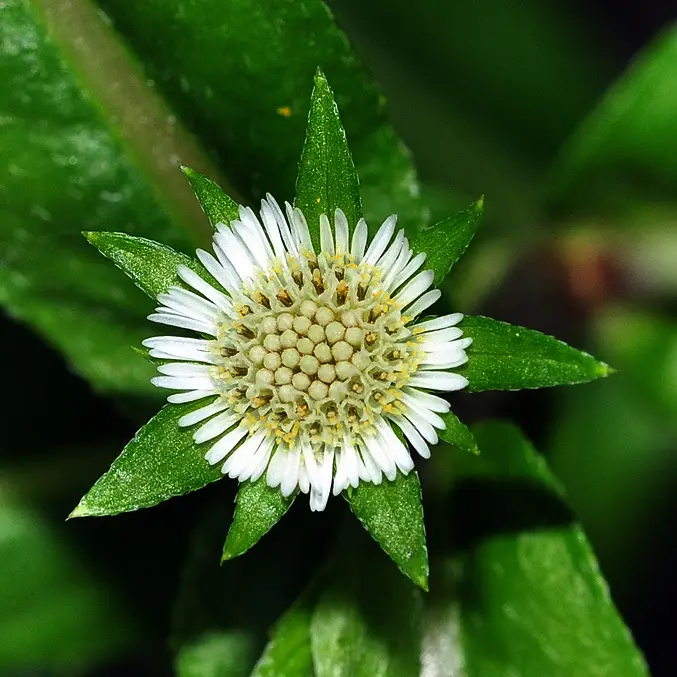
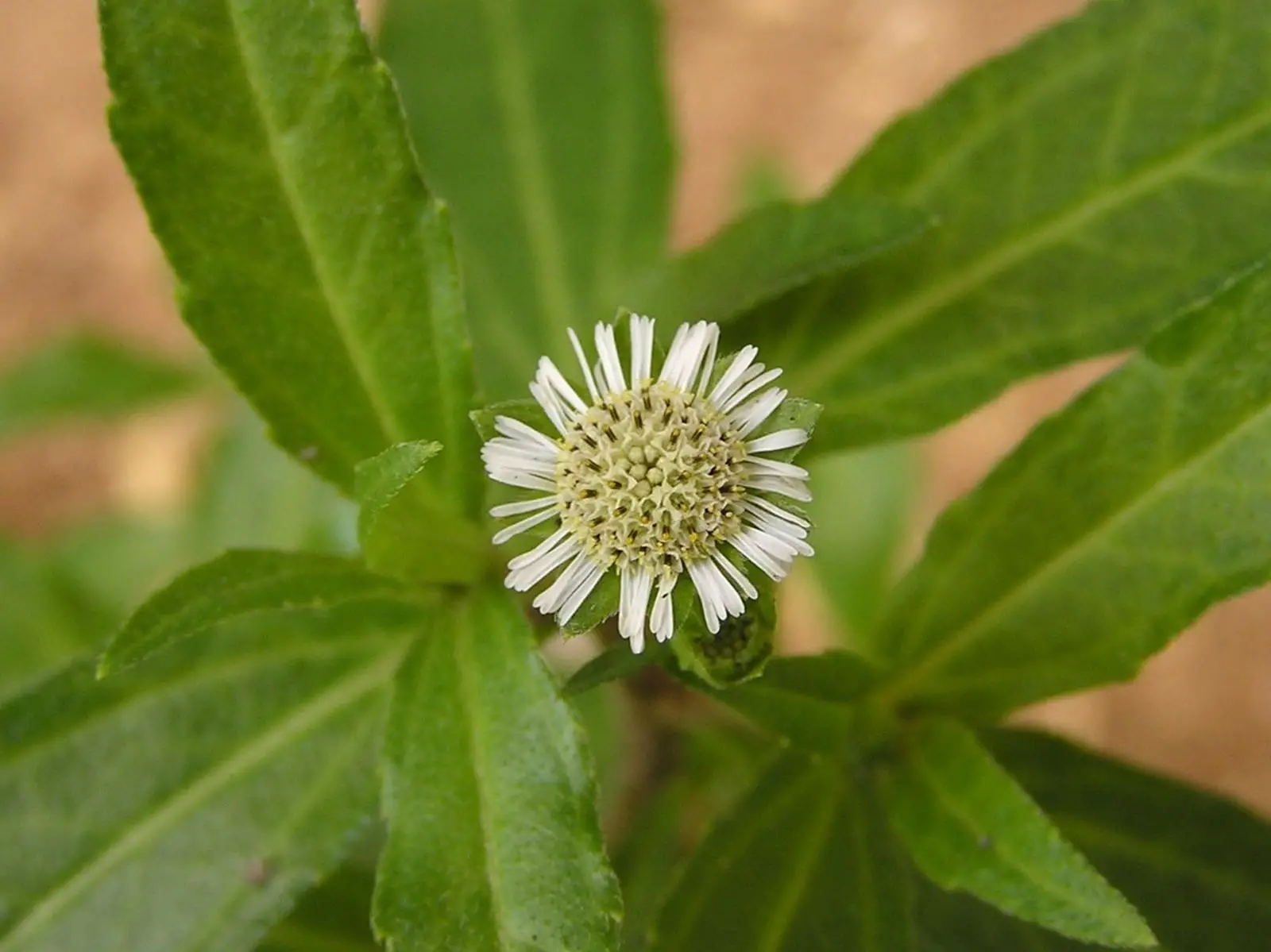
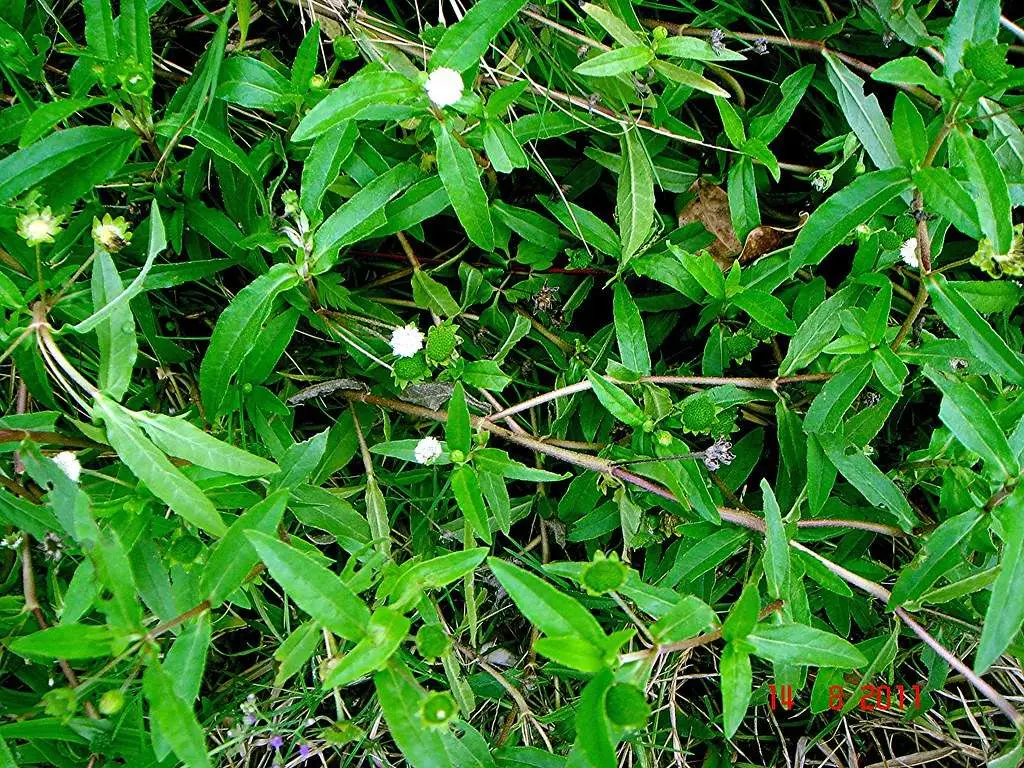
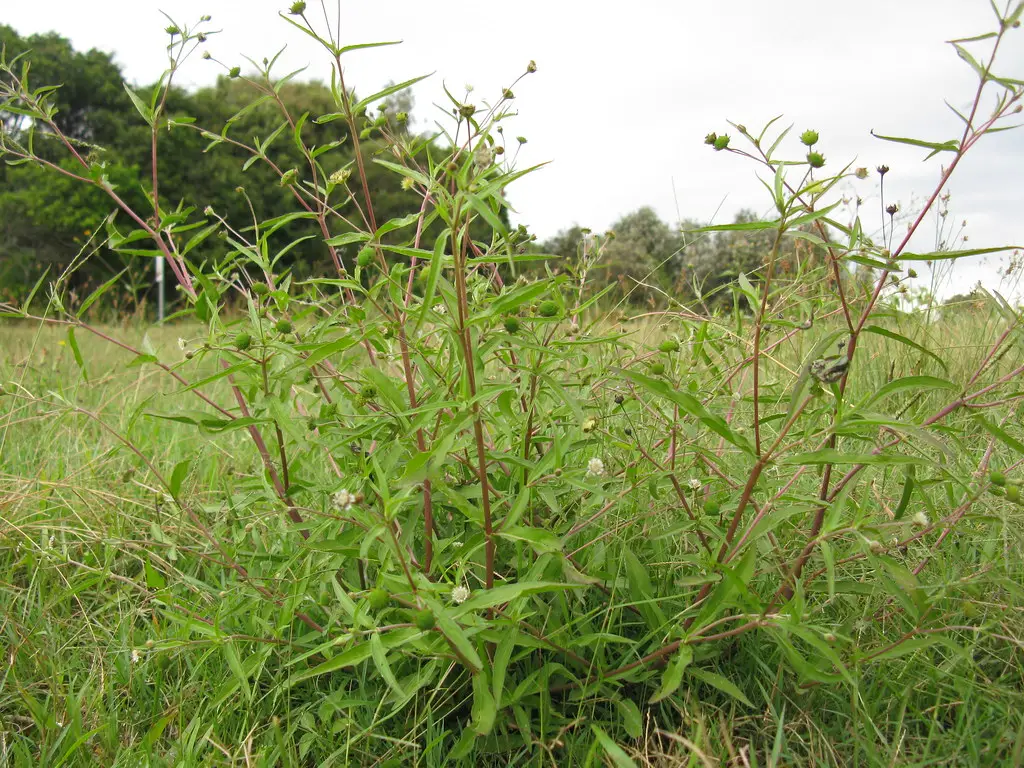
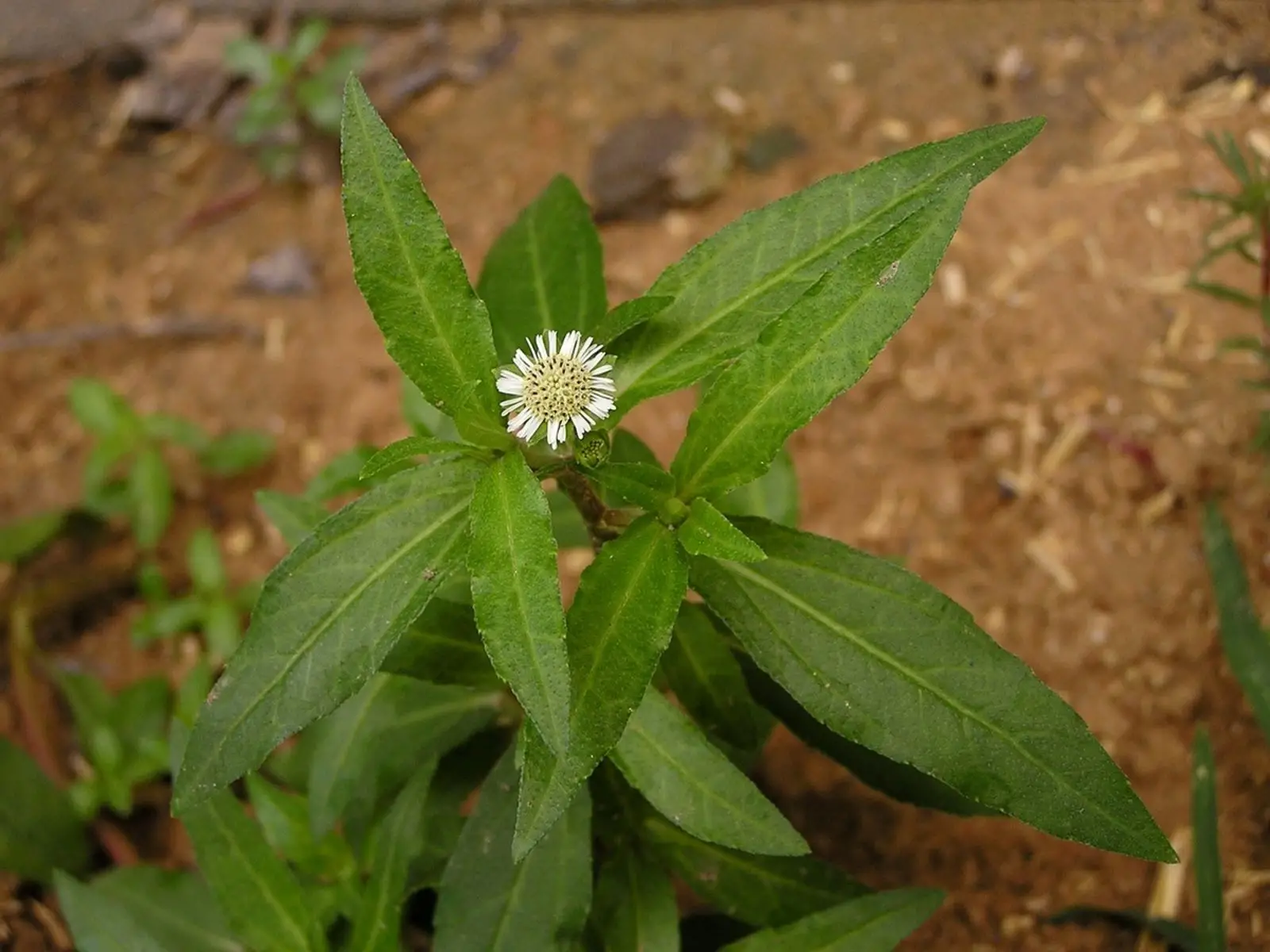
Eclipta prostrata is widespread across much of the world. his plant has cylindrical, grayish roots. Solid, circular, purplish stems with white fine hairs 0.8m. Leaves arranged in opposite pairs, hairy in two-sided, lanceolate, serrated 2–12.5 cm long, 5-35 mm wide. The solitary flower heads are 6–8 mm (0.24–0.31 in) in diameter, with white florets. The bumpy achenes are compressed and narrowly winged.
The plant has traditional uses in Ayurveda. In India, it is known as bhangra or bhringaraj. Wedelia calendulacea is known by the same names, so the white-flowered E. alba is called white bhangra and the yellow-flowered W. calendulacea is called yellow bhangra.
In Southeast Asia, the dried whole plant is used in traditional medicine, although there is no high-quality clinical research to indicate such uses are effective. The Balinese cook it as a vegetable, the Javanese consume this herb (orang-aring or urang-aring) as part of their lalap, they also infuse it with coconut oil as a kind of hair oil popular until the 1970s Its leaves are extracted as a black hair dye, and in tattooing.
Germination Guide
🌍 Tropical and subtropical Americas, now pantropically distributed
Easy
Eclipta prostrata, commonly known as False Daisy, is a fast-growing annual or short-lived perennial herb in the Asteraceae family, native to tropical and subtropical Americas and now naturalized worldwide. Seeds are strongly photoblastic and require light to germinate, with no dormancy period, making them easy to establish from seed. The species is highly adaptable and tolerant of various environmental conditions, preferring moist soils and warm temperatures.
Germination
Germination time
Expect germination in
7 – 24 days
Temperature
Min 10°C
Ideal 25°C
Max 35°C
🌡️ Temperature alternation recommended
— Alternating temperatures of 25/15 to 40/30°C significantly improve germination rates
Substrate moisture
💧 Medium
Substrate & Container
Recommended substrate
50% coconut coir or peat combined with 50% perlite or fine sand, pH 6.0-7.5
Recommended container
Seedling trays or containers with good drainage
Growing Tips
Seeds are strongly photoblastic and must not be covered—ensure they remain on or near the substrate surface for optimal germination. Maintain consistently moist (but not waterlogged) substrate and provide warm temperatures between 25-30°C for fastest germination. Germination typically occurs within 7-14 days under ideal conditions. Keep good air circulation to prevent fungal growth. Seedlings can be transplanted once 2-4 true leaves develop. This species is fast-growing and highly productive, capable of generating thousands of seeds per plant. Alternating day/night temperatures improve germination rates. Soil should be well-draining and pH can range from acidic to slightly alkaline (6.0-7.5).
Only logged in customers who have purchased this product may leave a review.

Reviews
There are no reviews yet.