Description
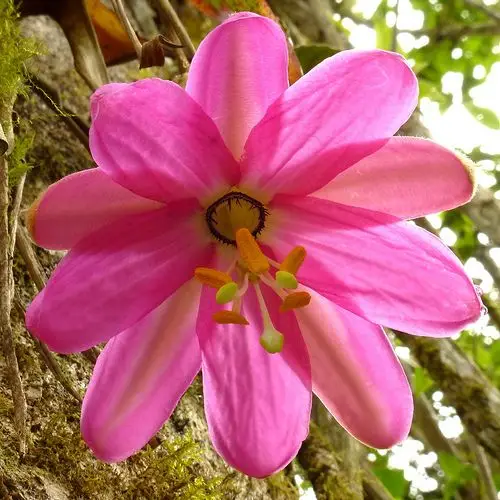
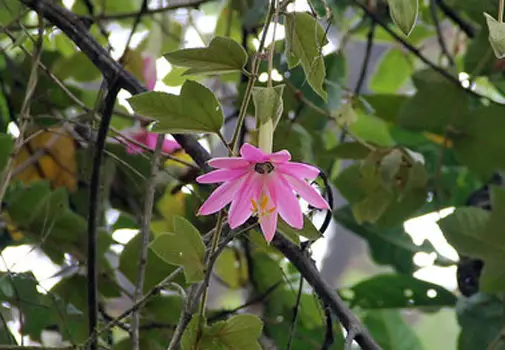
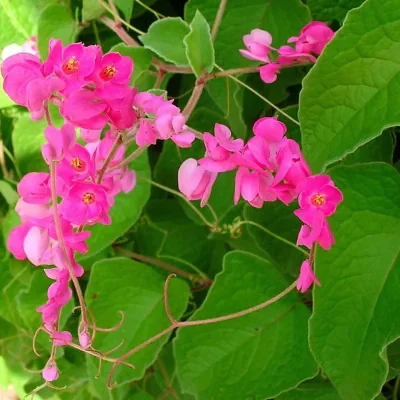
Picture a vine that blooms like it’s been painted by the hand of the Andes itself: tubular flowers of deep pink-red unfurling along stems that grow with almost reckless vigor, reaching 20 meters high and clothed in trilobed emerald leaves.
Passiflora coactilis is a botanical rarity hailing from the high-elevation cloud forests of Colombia and Ecuador, where it clings to the mountainside between 2,200 and 3,600 meters above sea level. This altitude pedigree makes it a singular treasure—a passionflower that thrives where others struggle, cold-hardy down to -5°C yet equally at home in warm temperate gardens. It belongs to the rare Tacosnia group of Passifloras, a distinction that itself marks it as something genuinely special. When frosts arrive, it merely retreats to its roots, bursting back with renewed vigor come spring.
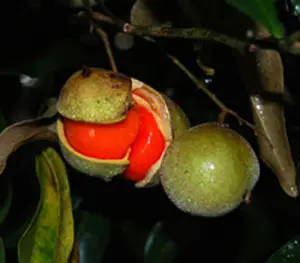
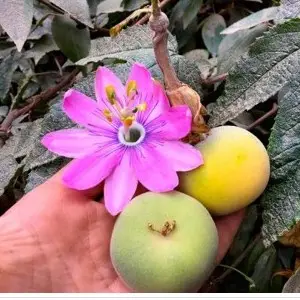
But here’s where passion meets purpose: this vine doesn’t just dazzle with flowers. After the blooms fade, it rewards you with round, golden-yellow fruits—fleshy, sweet, and intensely aromatic. These are genuinely edible treasures. The pulp is silken and flavor-packed, perfect for eating fresh, blending into smoothies, or infusing into desserts. The young leaves, too, are edible and nutritious, adding a unique dimension to your kitchen garden. Unlike ornamental passionflowers that tease with sterile beauty, Passiflora coactilis delivers the full promise: flowers, fruit, and flavor in one explosive package. Young leaves can be harvested carefully for culinary use, and the fruits come into production within just 1-2 years. This is edible horticulture at its most thrilling.
What makes growing this vine even more seductive is its willingness to cooperate. It’s a superfast-growing evergreen climber that reaches maturity in 1-2 years under good conditions. Give it 6-8 hours of sunlight daily, well-draining fertile soil with pH 6.0-7.0, and consistent moisture during the growing season, and it will reward your efforts with explosive growth. It adapts beautifully to warm temperate climates (USDA zones 9 and above), making it accessible to temperate gardeners who thought they could never grow something this exotic. Provide sturdy support—a trellis, fence, or arbor—and watch it climb. The vine is also a ecological powerhouse, attracting numerous species of birds, bees, and butterflies, transforming your garden into a living pollinator hub.
This is your invitation to grow something genuinely rare. To start a vine from seed that will, within two seasons, be producing its own edible treasure and attracting wildlife like a botanical beacon. To have friends ask, ‘What is that extraordinary pink flower?’ and to answer, ‘It’s from the Andes, and yes, we eat the fruit.’ Begin from seed now—start your own rare Andean legacy in a pot or directly in the ground.
Germination Guide
🌍 Southwestern Colombia to Ecuador, Andean cloud forests, 2200-3600 meters elevation
Moderate
Passiflora coactilis, known as Tauso Passionflower, is a vigorous evergreen vine native to Andean cloud forests of southwestern Colombia and Ecuador. It is distinguished by its exceptionally long androgynophore and produces pink flowers followed by round, aromatic yellowish fruits. Being well-adapted to cool conditions, it germinates best at moderate temperatures and prefers consistent moisture during seed establishment.
Germination
Germination time
Expect germination in
21 – 84 days
Temperature
Min 15°C
Ideal 18°C
Max 20°C
Substrate moisture
💧💧 High
Sowing depth
Lightly covered
Seed Pre-treatment
-
💧
Soaking — 24 hours
Soak seeds in warm water for 24 hours before sowing. This pretreatment improves germination rates and reduces germination time.
-
📋
Additional notes
Soaking in warm water for 24 hours is recommended. Seeds from fresh fruits may not require pretreatment.
Substrate & Container
Recommended substrate
Seed starting mix or perlite-peat blend, light and well-draining
Recommended container
Seed tray or plastic pot with transparent lid and drainage holes
Growing Tips
Use good light during germination but avoid direct intense heat. Keep seed starting mix consistently moist but not waterlogged. Seeds from fresh fruit clean of pulp germinate more readily than dried seeds. Provide bottom heat (70-80°F / 21-27°C) for faster germination. Once seedlings develop true leaves, transplant individually as they dislike crowding. Harden off seedlings gradually before exposing to outdoor conditions, as young plants are sensitive to temperature fluctuations.
Only logged in customers who have purchased this product may leave a review.

Reviews
There are no reviews yet.