

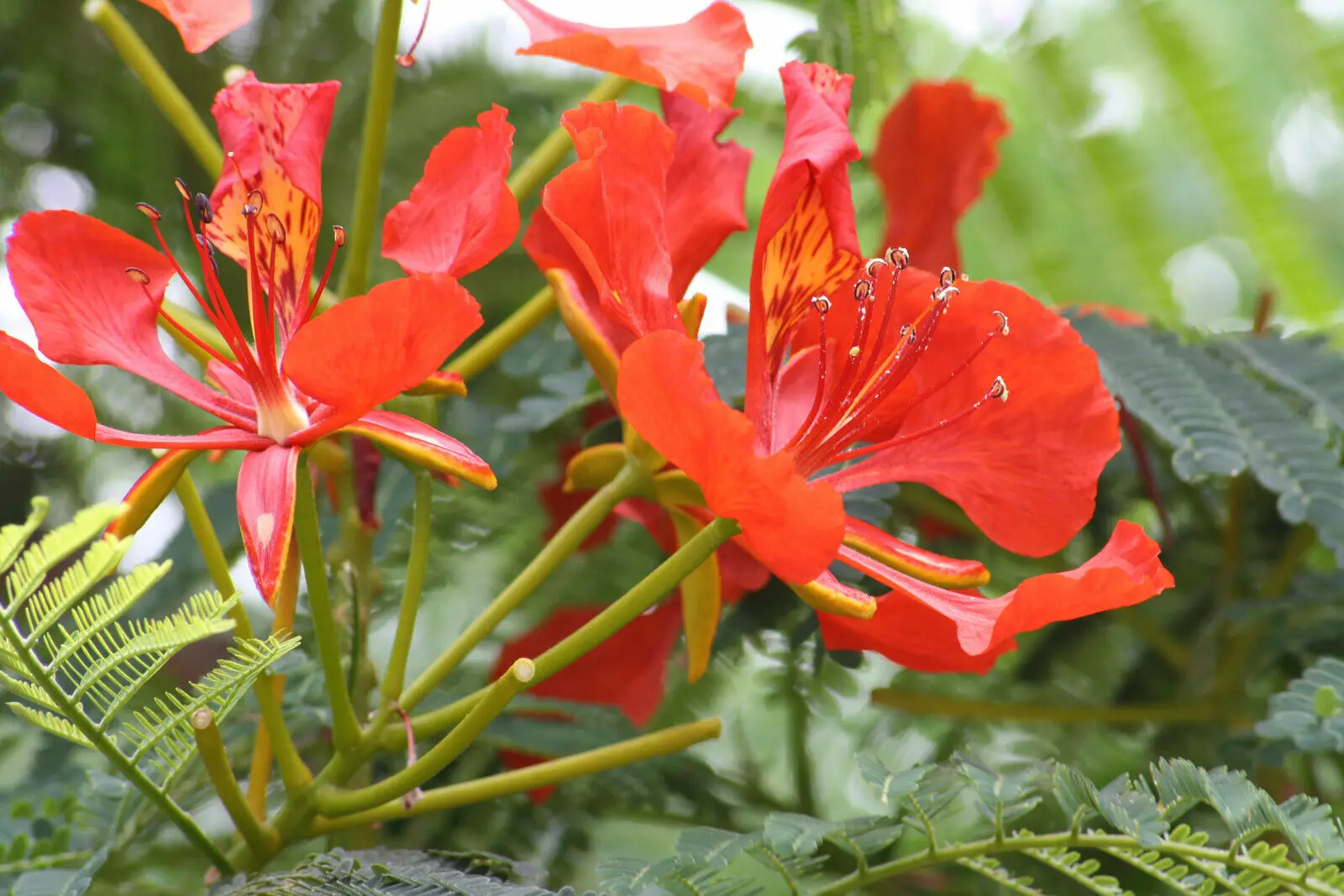
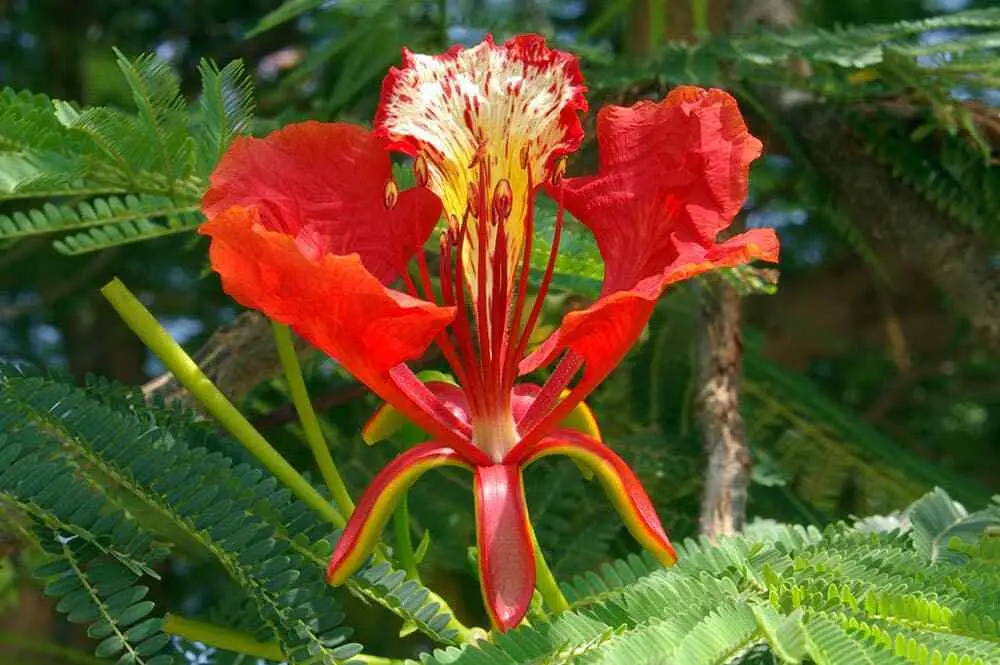

When this tree ignites in summer, it’s a spectacle rivals fireworks. Vivid scarlet-orange petals blanket the canopy in an orchid-like display while its umbrella crown bathes gardens in perfect dappled shade. Bonus: traditional cultures prized its flowers for wellness tonics. Moderate growing ease once established; grows fast in the tropics. Start your dynasty from seed.
€4.16
Imagine a tree that becomes a living cathedral of fire each summer—that’s Delonix regia, the Royal Poinciana, a tropical legend that stops traffic the moment it blooms.
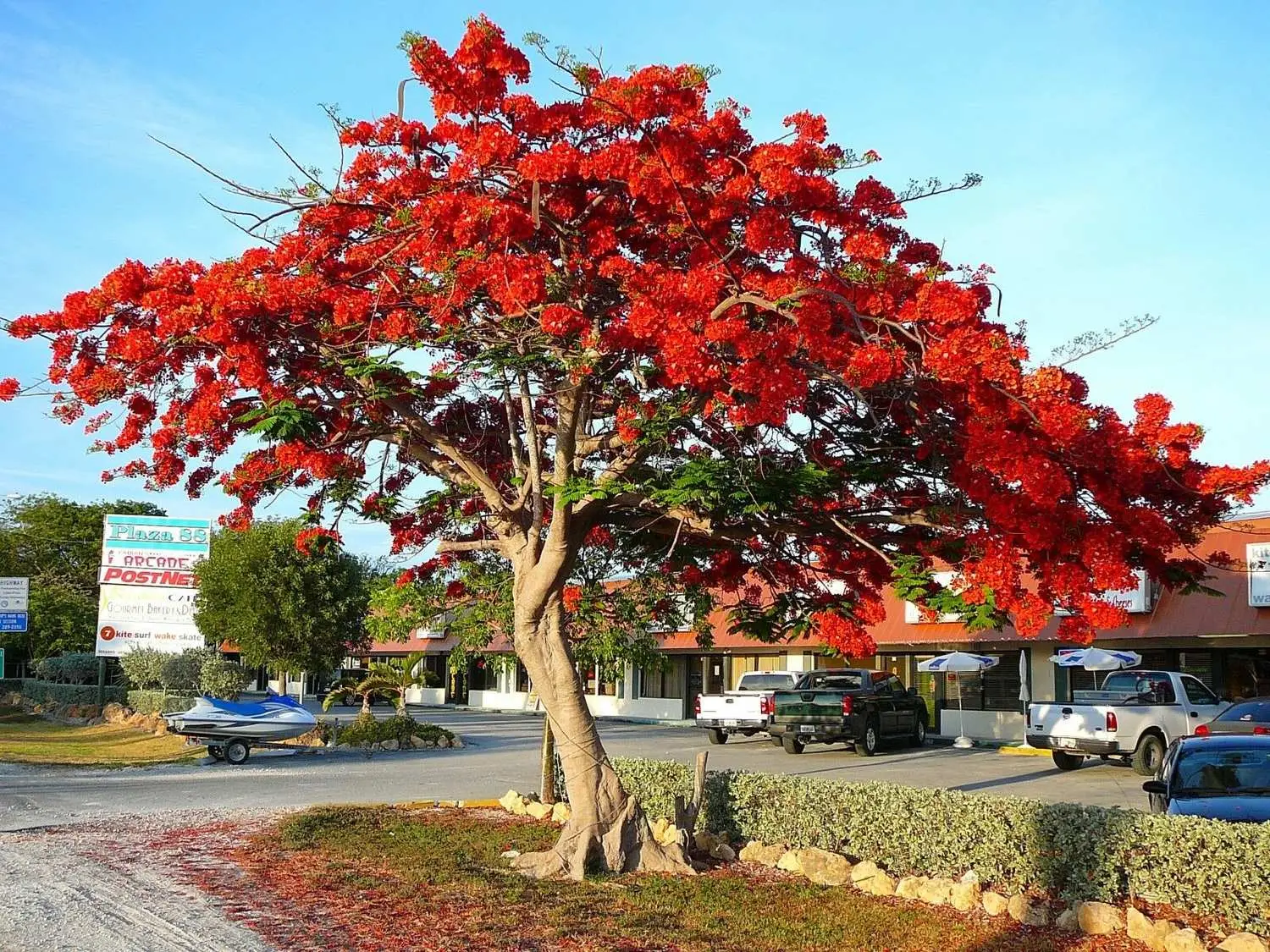
Native to Madagascar’s dry deciduous forests, this tree arrived in the world as botanical treasure. The name itself—derived from Greek words meaning ‘conspicuous claw’—hints at the audacity of its flowers. While now rare in its homeland, it has become a global ambassador of tropical splendor, earning spots as the national flower of St. Kitts and Nevis and official tree of Key West. Everywhere it grows, it commands attention.
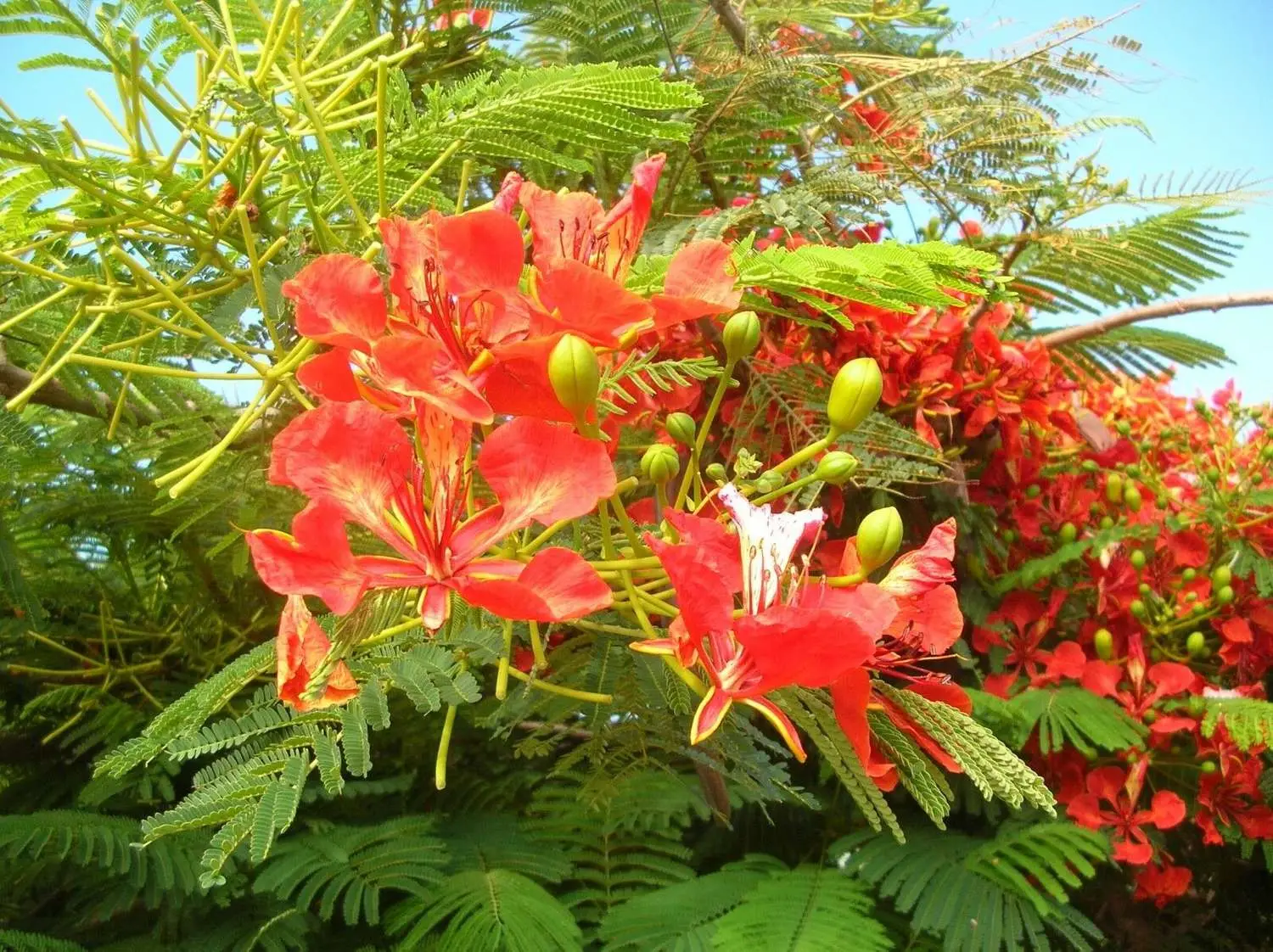
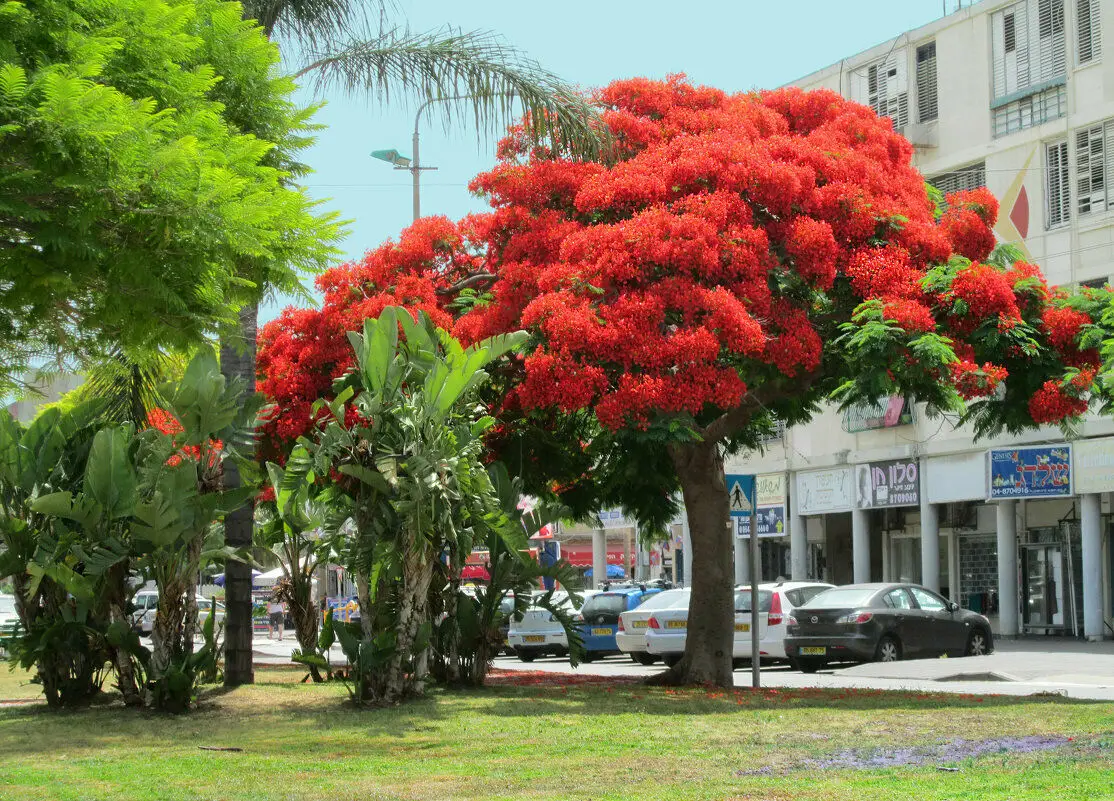
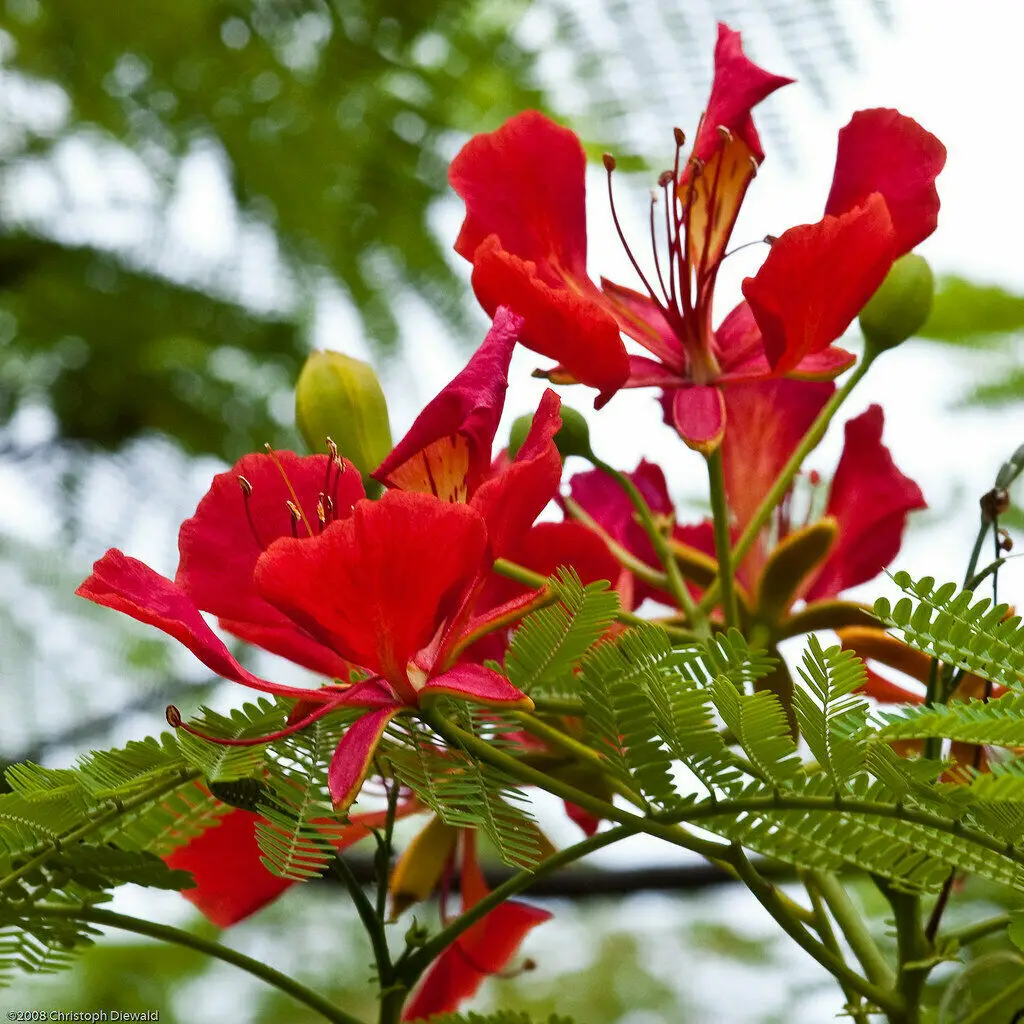
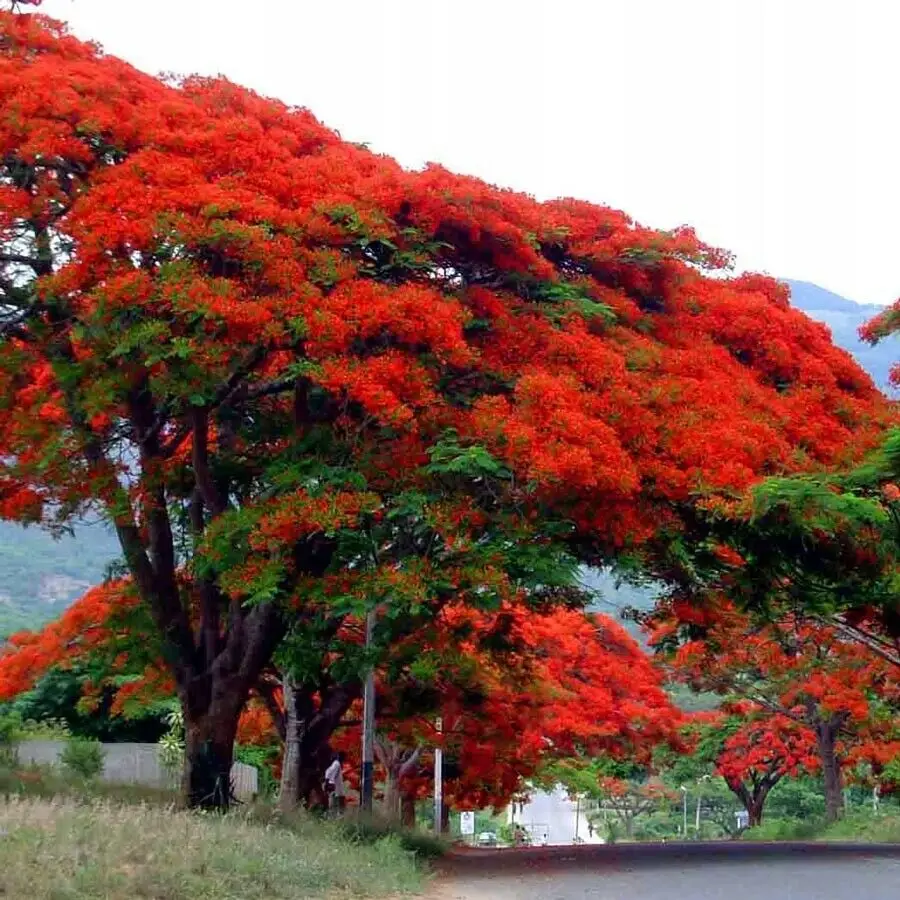
This is the tree that defines ‘spectacular.’ Each late spring and early summer, the entire canopy erupts with massive clusters of flowers—four spoon-shaped petals ranging from deep crimson to vivid orange-red, plus a fifth standard petal streaked with contrasting yellow and white. The botanical description can’t capture the reality: when fully abloom, a mature Royal Poinciana resembles a regal elephant adorned in flaming jewels. The flowers arrive in such abundance they transform the tree into a glowing monument.
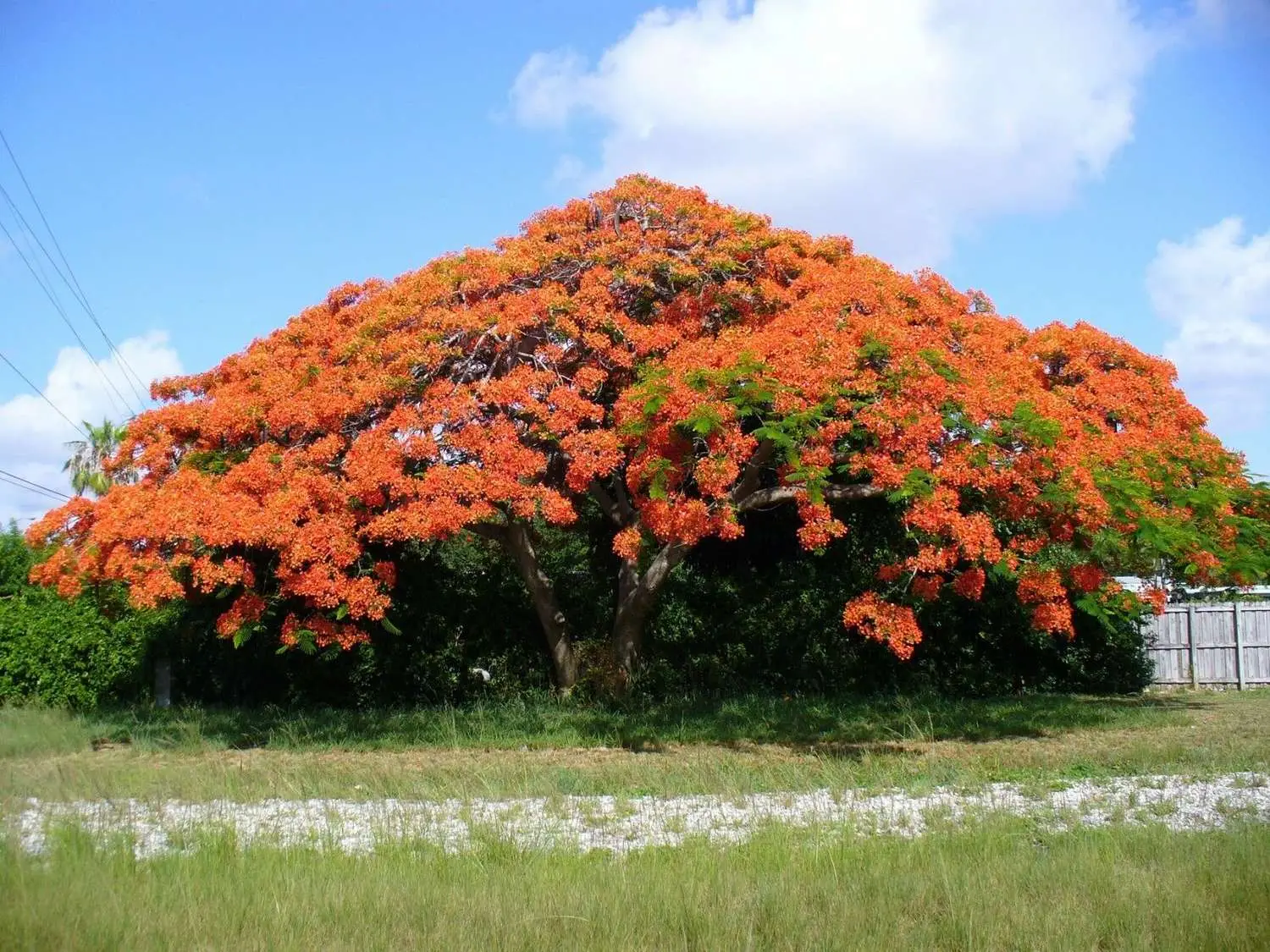
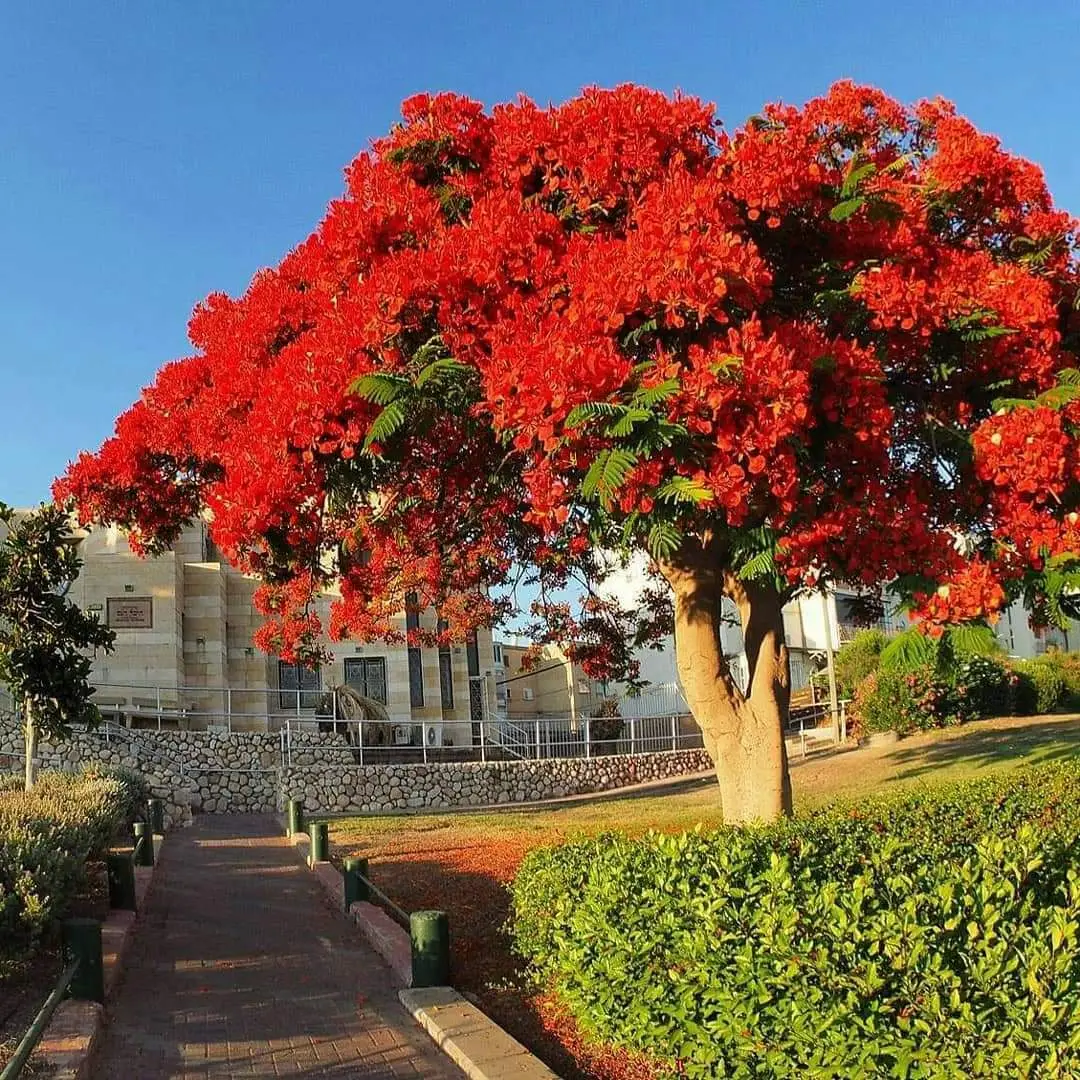
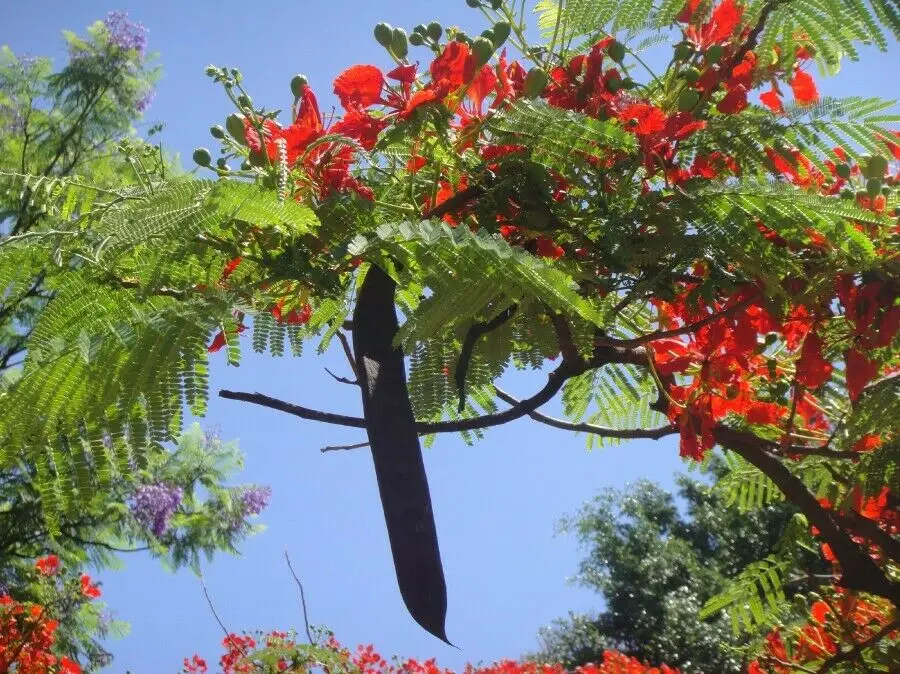
Beyond the theatrical blooms sits something equally precious: a naturally broad, umbrella-shaped crown that spreads 40–60 feet wide—wider than it is tall. This creates dense, graceful dappled shade that invites hammocks, afternoon repose, and garden gathering. The delicate, fern-like bipinnate foliage floats like lace against the blue sky, adding textural beauty that persists even when flowers fade.
Yet the Flamboyant holds secrets beyond ornament. For over two centuries, cultures across the tropics—from Kerala to India to the Caribbean—have valued its flowers, leaves, and pods for traditional wellness. Healers crafted teas and tinctures from the flowers to ease digestive discomfort; flower petals were applied to insect bites mixed with coconut oil; leaf decoctions addressed joint discomfort and inflammation. Modern science has validated many traditional uses, identifying compounds with anti-inflammatory, antimicrobial, and antioxidant properties. The flowers themselves are edible and packed with antioxidants—some chefs now craft iced teas and syrups blending petals with citrus for summer beverages. A tree that feeds body and spirit.
Here’s the beautiful surprise: once established, the Royal Poinciana is refreshingly easygoing. It thrives in full sun (6–8 hours minimum daily) and actually flowers more prolifically when kept slightly dry—a rare trait that makes it ideal for water-conscious gardeners. Soil demands are flexible: it tolerates sandy, loamy, acidic, or alkaline soils, so long as drainage is crisp. In tropical and subtropical zones (USDA 10–12, frost-free areas below 45°F), it grows rapidly—sometimes reaching full maturity in just 10 years, growing up to 5 feet per year under ideal conditions. Young seedlings appreciate consistent moisture until established; mature trees become remarkably drought-tolerant, even salt-tolerant. Pot it while young in well-drained, general-purpose potting mix if you need to move with the seasons. The tree rarely suffers major pest or disease issues, and seeds germinate readily when soaked or gently nicked before planting.
Growing Delonix regia from seed is an act of patience rewarded by legacy. You’re not just planting a tree; you’re cultivating a future masterpiece—one that will gift your children’s children with summer thunderstorms of fire and the profound peace of perfect shade. A tree that heals, inspires wonder, and asks so little in return. This is the one.
Only logged in customers who have purchased this product may leave a review.

Reviews
There are no reviews yet.