Description
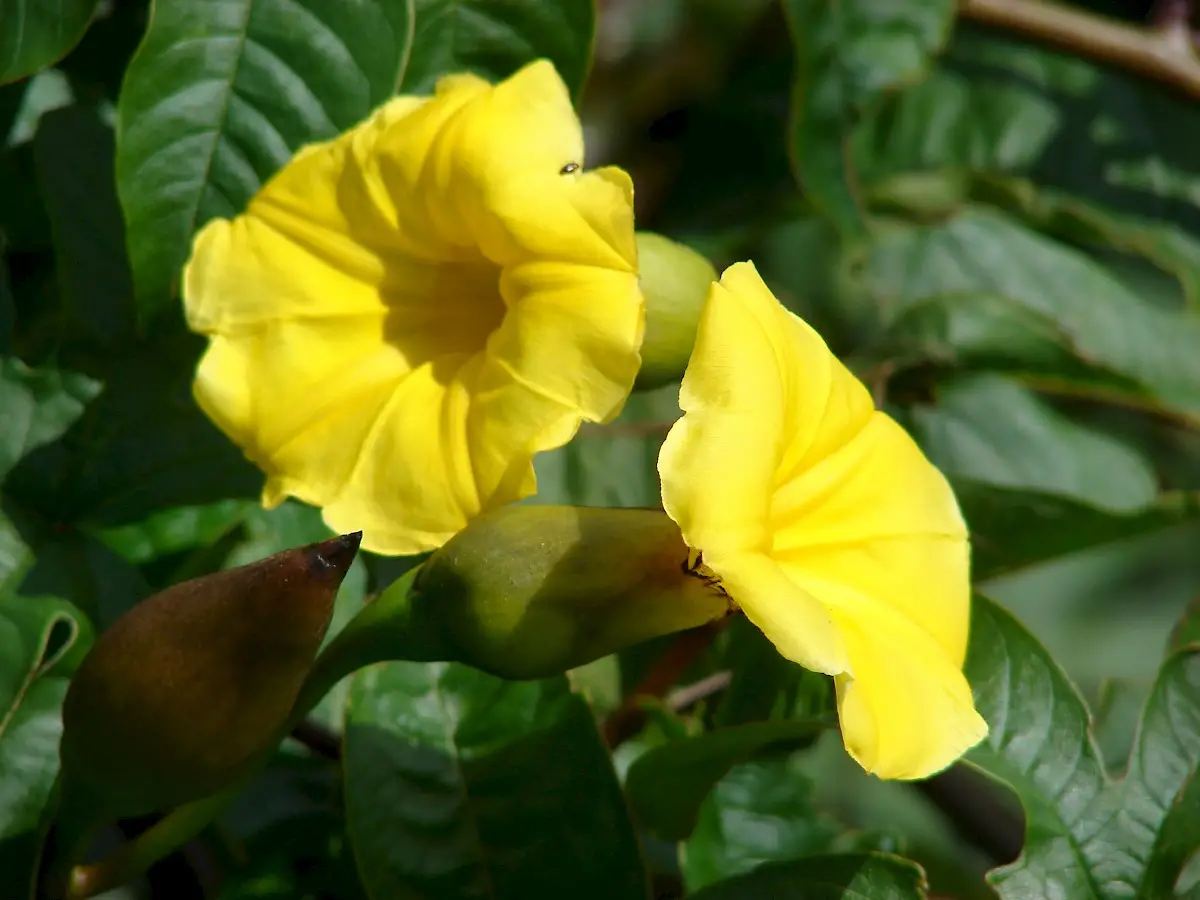
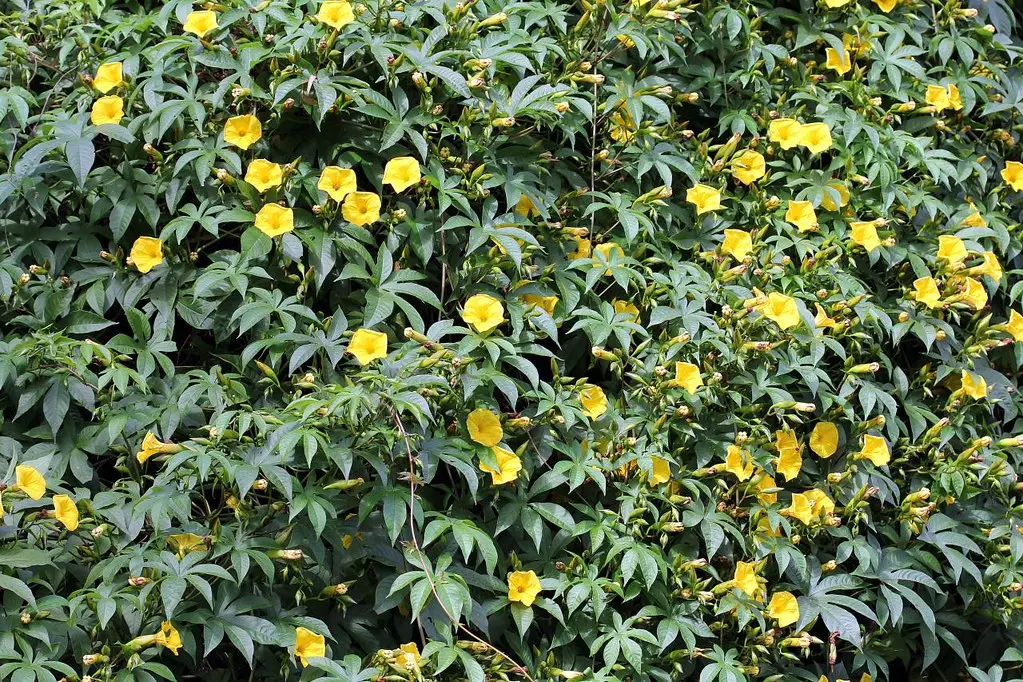
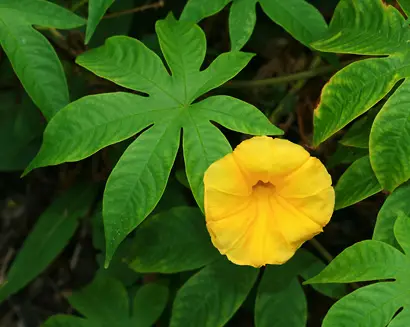
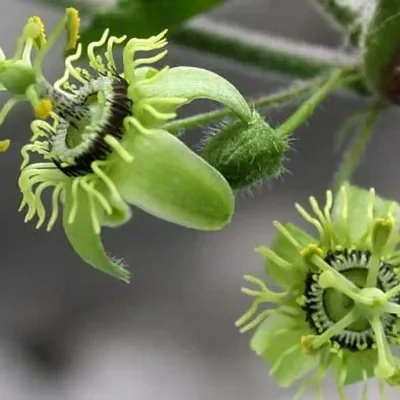
Flowers: Inflorescence a 2 to 7-flowered raceme about 7-13 cm long. Calyx lobes glabrous, about 30 x 20-25 mm clasping the base of the flower. Corolla trumpet-shaped, about 4.5-5.5 x 5 cm. Stamens irregular in length, about 6-18 mm long. Filaments thickened and hairy towards the base. Anthers about 6 mm long with two rows of glands on the back. Disk about 1.5 mm high, surrounding the ovary. Ovary globose, about 3 mm diam. Style about 15 mm long. Stigma globose, 4-lobed. Ovules 2 per locule.
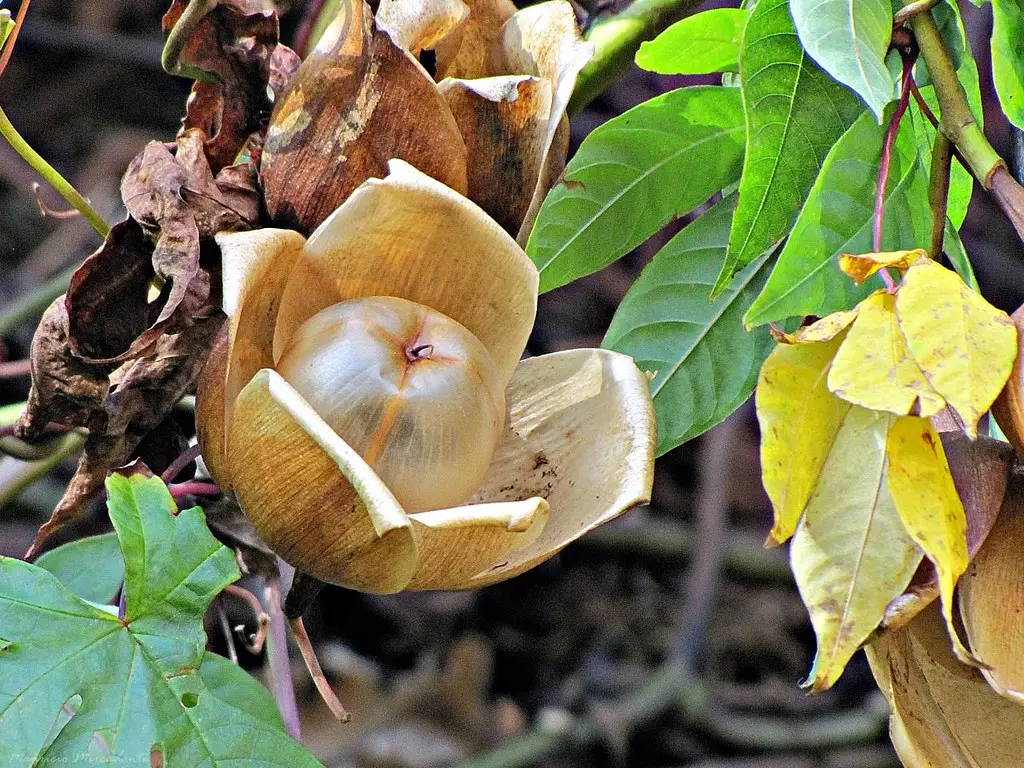
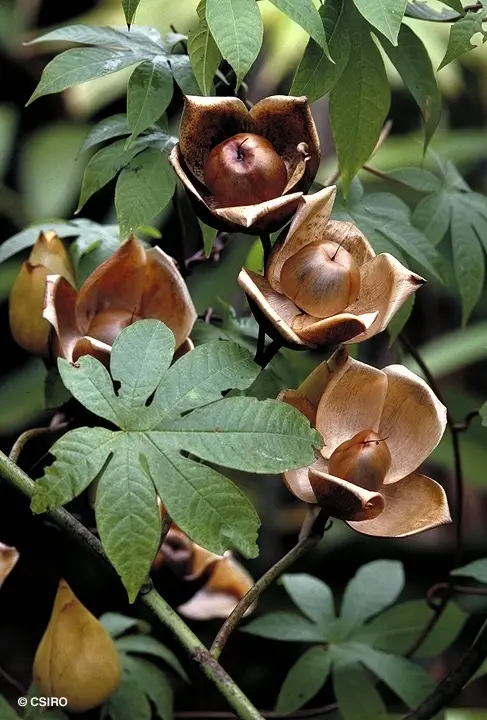
Fruit: Fruits globose, about 3.5-4 cm diam., enclosed by the persistent sepals forming a structure about 8-10 cm diam. Seeds 1-4 per fruit, each seed about 20 x 15 x 10 mm, clothed in black prostrate hairs.
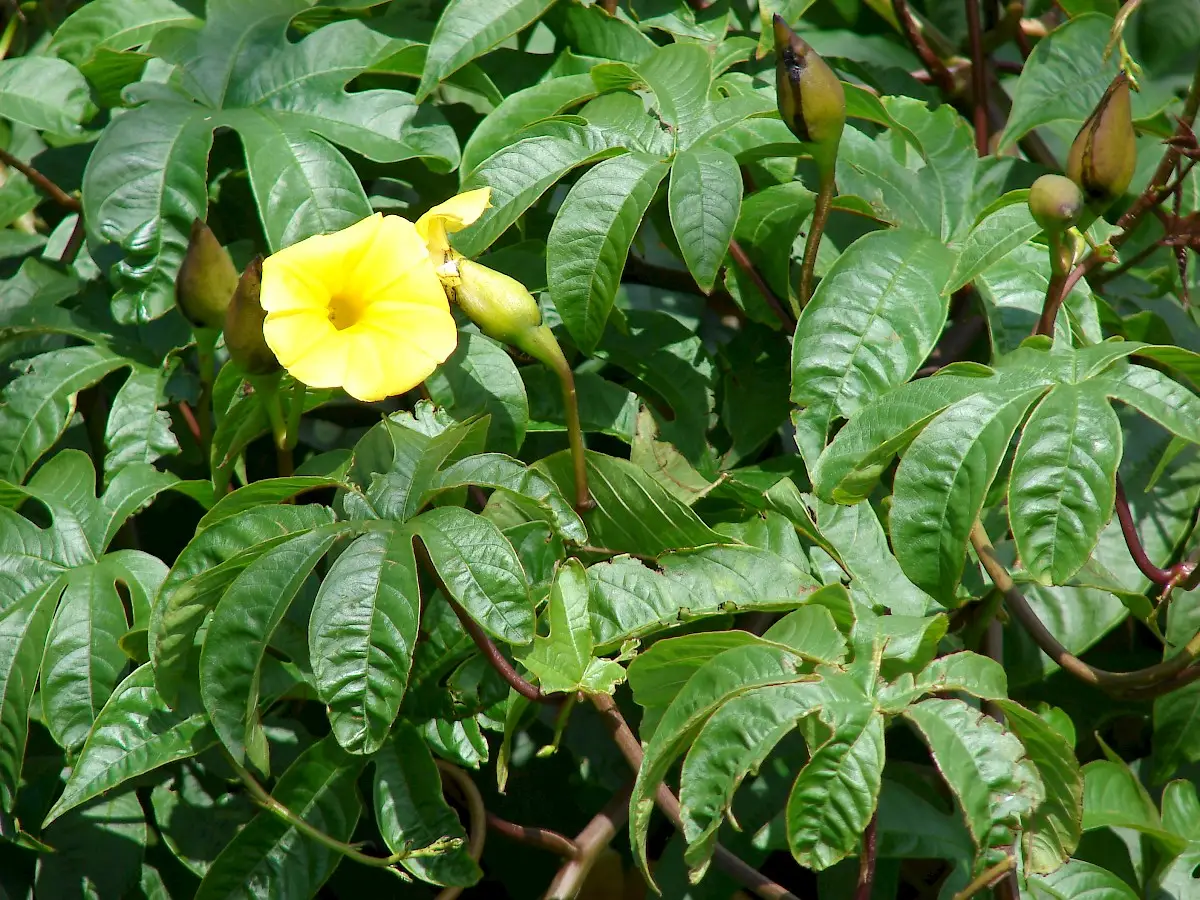
Leaves: Leaf blades deeply and palmately divided usually with 7 lobes, leaf blades about 8.5-14 x 9.5-18 cm overall, petioles about 5.5-12 cm long. Oil dots streaky. Each lobe of the leaf blade has a major middle vein and attached lateral veins. Stems and petioles produce a milky exudate.
Seedlings: First leaves glabrous, deeply and narrowly palmately five-lobed. At the tenth leaf stage: leaf blade palmatisect, five-lobed, sometimes appearing seven-lobed because of additional lobing on the basal pair of lobes. Midrib and lateral veins depressed on the upper surface. Minute oil dots barely visible with a lens. Plant twining. Seed germination time 34 days.
Germination Guide
🌍 South Mexico to Tropical America
Moderate
Distimake tuberosus, a vigorous tropical vine in the Convolvulaceae family, is native to South Mexico through Tropical America. Hypogeal germination occurs.
Germination
Germination time
Expect germination in
3 – 10 days
Temperature
Min 26°C
Ideal 26°C
Max 40°C
Substrate moisture
💧 Medium
Sowing depth
Lightly covered
Seed Pre-treatment
-
💧
Soaking — 24 hours
Soak for 24 hours or until it swells.
-
🔨
Mechanical scarification
Scarification required. Cut a nick in the seed coat with a hacksaw or cut the small end of the seed off.
-
📋
Additional notes
Mechanical scarification of seedcoat is essential for germination.
Substrate & Container
Recommended substrate
peat moss
Recommended container
bowl or cup, covered with plastic wrap
Growing Tips
Place seed in damp peat moss, cover with plastic wrap, and maintain temperature of at least 80°F (26°C) over pilot light or similar warm source. Check every few days. Very easy to grow after sprouting.
Only logged in customers who have purchased this product may leave a review.

Reviews
There are no reviews yet.