Description
Afzelia quanzensis is a magnificent deciduous tree native to eastern and southern Africa, valued for its durable timber, ornamental beauty, and ecological importance. Growing 15 to 35 meters tall, it develops a broad, rounded crown supported by a sturdy trunk with distinctive gray to reddish-brown bark. The foliage consists of glossy, compound leaves with several pairs of leathery leaflets, creating a dense canopy that provides excellent shade.
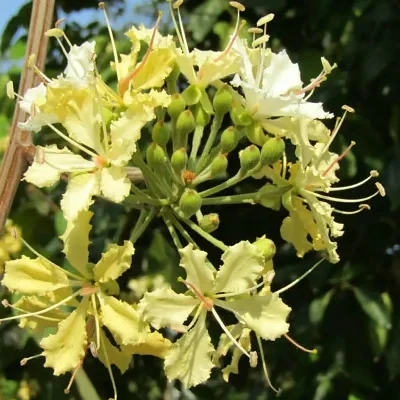
During the flowering season, the tree produces attractive clusters of white to pinkish flowers marked with red or purple accents. These are followed by large, woody seed pods that split open when mature, revealing striking black seeds partially covered by a bright orange to scarlet aril. The contrast between the seeds and arils makes the fruits particularly ornamental.
Afzelia quanzensis thrives in tropical and subtropical climates, where it is commonly found in woodlands, savannas, and coastal forests. It prefers full sun and well-drained soils and is highly tolerant of seasonal drought once established. Its valuable hardwood is prized for furniture, flooring, boat building, and decorative woodworking due to its strength, durability, and attractive grain.
Germination Guide
🌍 India and tropical Asia
Difficult
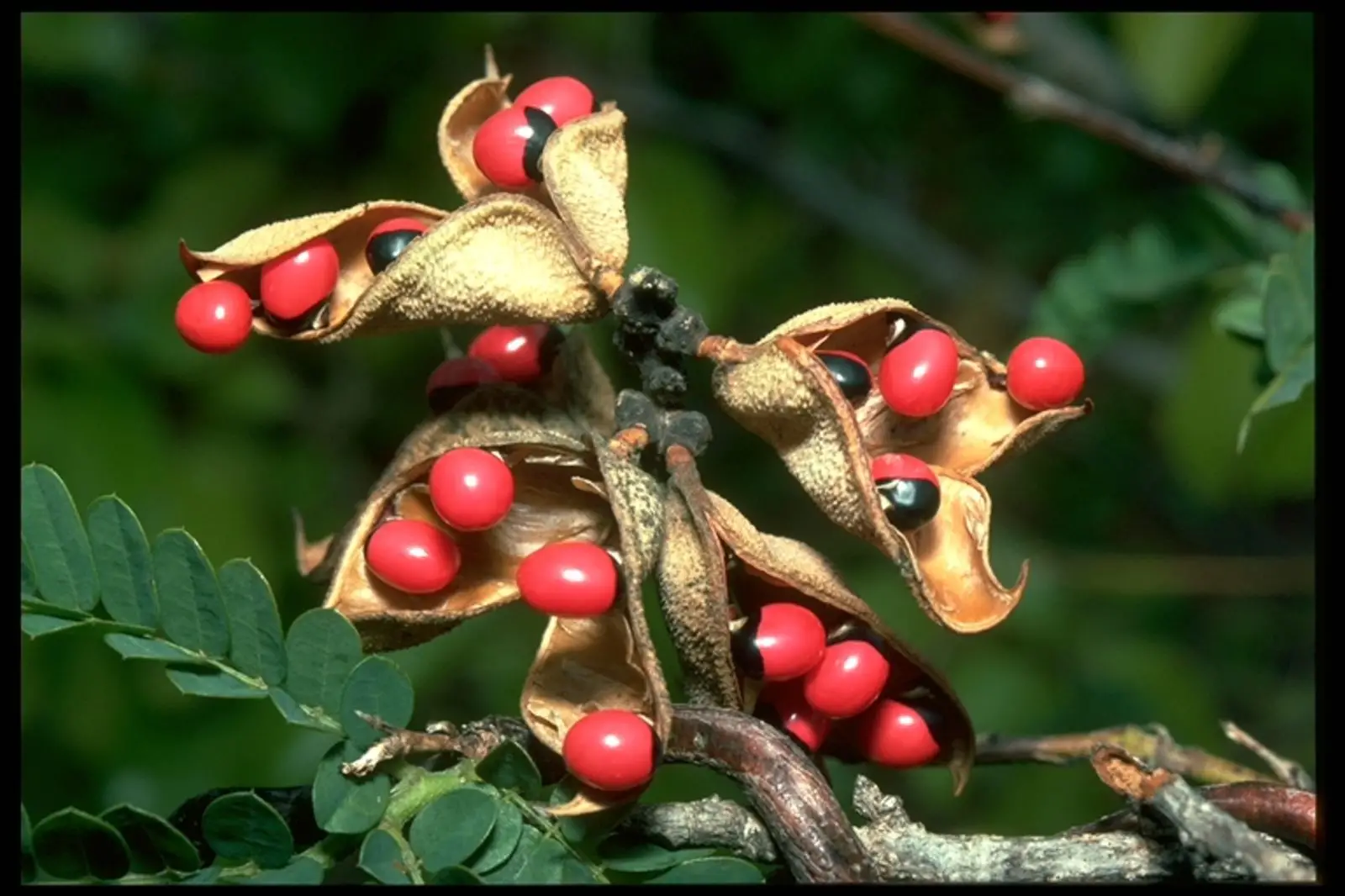
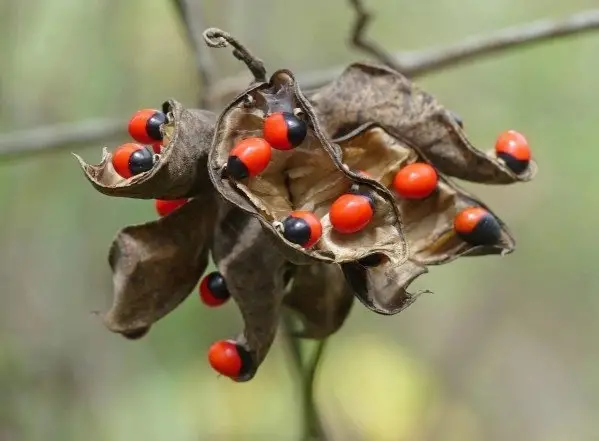
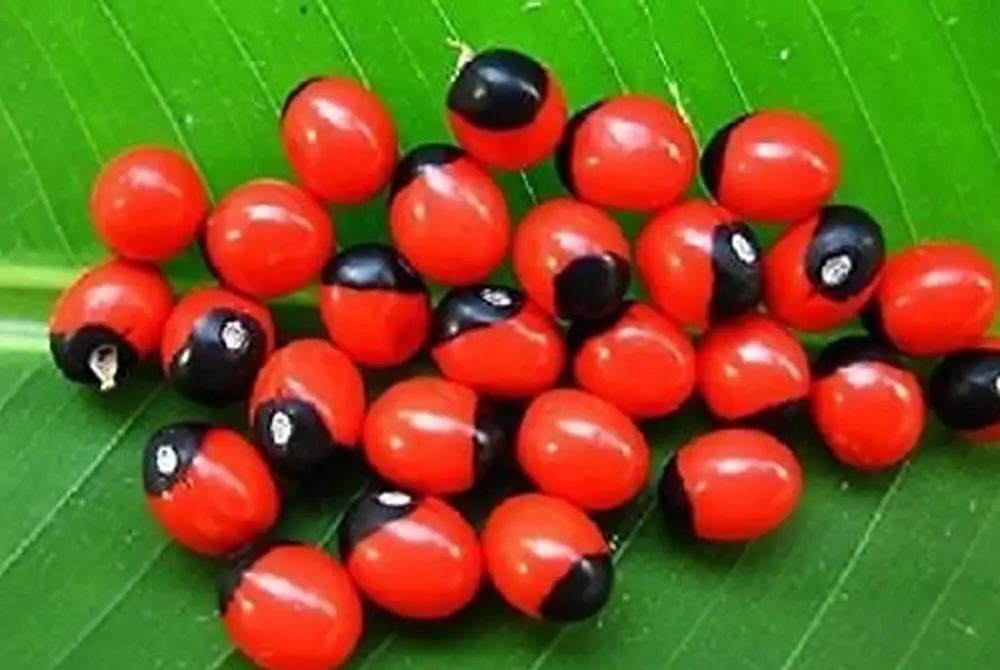
Abrus precatorius is a slender perennial climbing vine native to India and tropical Asia. Known as rosary pea or jequirity bean, it produces distinctive bright red seeds with black tips used in jewelry and prayer beads. The plant has highly toxic seeds containing abrin and requires careful pre-treatment for germination.
Germination
Germination time
Expect germination in
4 – 21 days
Temperature
Min 25°C
Ideal 30°C
Max 35°C
🌡️ Temperature alternation recommended
— Alternating temperatures 25/15°C and 35/25°C with 12h light/dark improve germination; higher temperatures reduce germination time
Substrate moisture
💧💧 High
Seed Pre-treatment
-
💧
Soaking — 6 hours
Hot water soak overnight or until seeds swell; 3% hydrogen peroxide for 6 hours at 32°C also effective
-
🔨
Chemical scarification
Concentrated H2SO4 for 120 minutes yields 100% germination; 60 and 90 minutes yields 70-85%; mechanical scarification also effective
-
📋
Additional notes
Seeds have hard seed coat and primary dormancy; require scarification to break dormancy; without treatment seeds fail to germinate
Substrate & Container
Recommended substrate
well-draining loamy soil or seeding mix
Growing Tips
Scarification is essential - untreated seeds show no germination; acid treatment for 120 minutes at 30°C achieves 100% germination in 4 days; hot water soaking overnight until seeds swell is alternative method; germination can occur with or without light; requires consistent moisture during germination phase but avoid waterlogging; prefers sunny location; handle seeds with gloves due to toxicity
Only logged in customers who have purchased this product may leave a review.

Reviews
There are no reviews yet.