
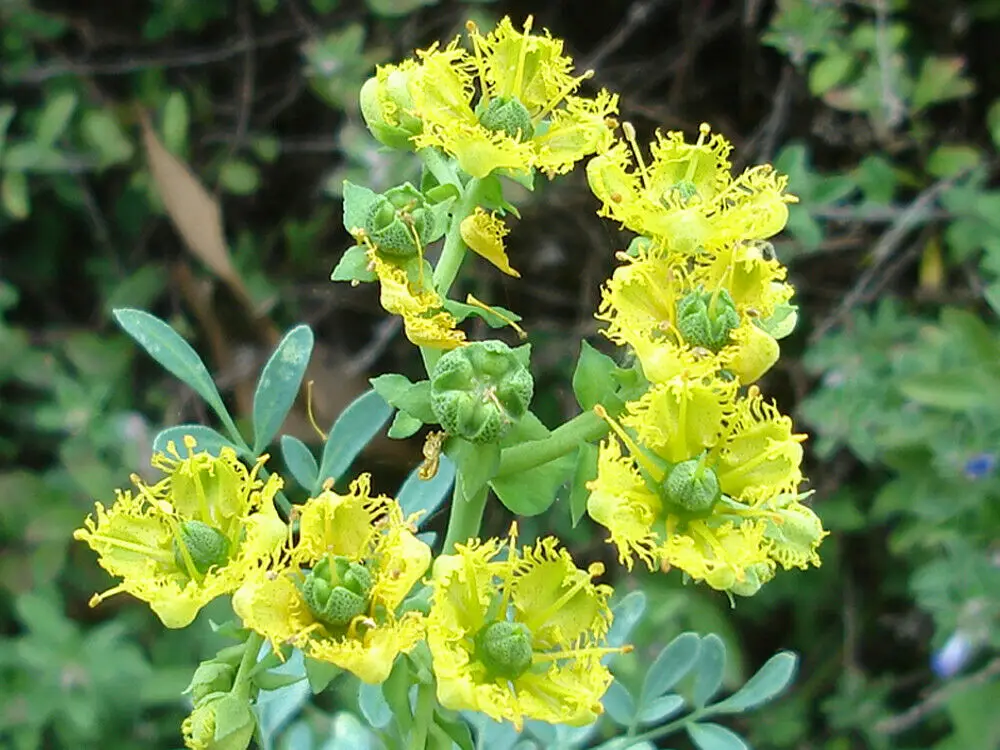
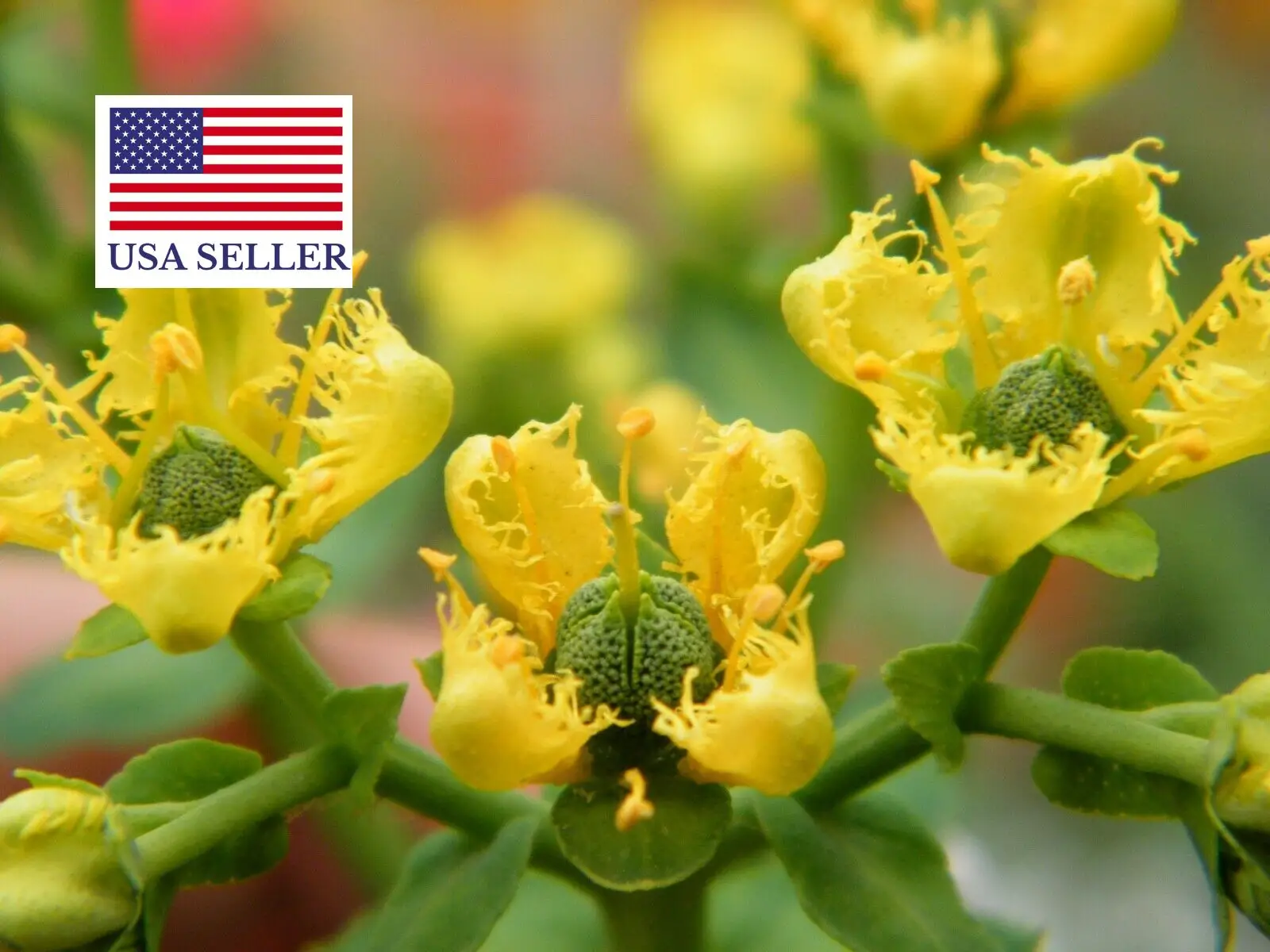
Grow the legendary herb that flavors grappa and perfumes history. Ruta graveolens—with its exquisite blue-green, fern-like foliage and delicate yellow summer flowers—transforms into liquid silk when infused in spirit or vinegar. Beloved since Roman times and easy to cultivate, this aromatic treasure thrives on neglect, rewarding patient gardeners with fragrant harvests year after year. Start from seed today.
€3.43
There is a plant so old, so revered, that Shakespeare named it—and you can grow it from seed. Ruta graveolens, the legendary Herb of Grace, arrived in gardens as sacred ritual, stayed as ornament, and endures as one of spirit-making’s best-kept secrets. Its story is one of alchemy: taking something bitter and transforming it into something transcendent.
Native to the Balkan Peninsula and the sun-baked slopes of southern Europe, rue belongs to the Rutaceae family—the same lineage as citrus. Over centuries, it traveled from Mediterranean temples to Victorian parlors to Italian mountain distilleries. Its specific epithet, graveolens, means ‘heavenly scented,’ a name earned by leaves that release a potent, complex aroma when bruised—peppery, slightly smoky, unmistakably itself.
But here’s what makes rue truly magical: a single branch, placed in a bottle of grappa, transforms the entire spirit. This is grappa alla ruta—an Italian tradition where rue’s bitter, spicy essence mellows the harsh burn of the liqueur, adding depth and sophistication. The plant’s aromatic compounds—alkaloids and essential oils developed over millennia—dissolve into alcohol like memory into time. Beyond grappa, rue has been infused into vinegars, used as a culinary accent in Mediterranean dishes, and treasured in herbal medicine traditions across continents. Historically prized for its supposed antispasmodic and anti-inflammatory properties, rue earned reverence as something between herb and cure-all. Today, it remains a living connection to those older herbals—a plant that remembers what our ancestors knew. Growing it means holding a piece of that continuum.
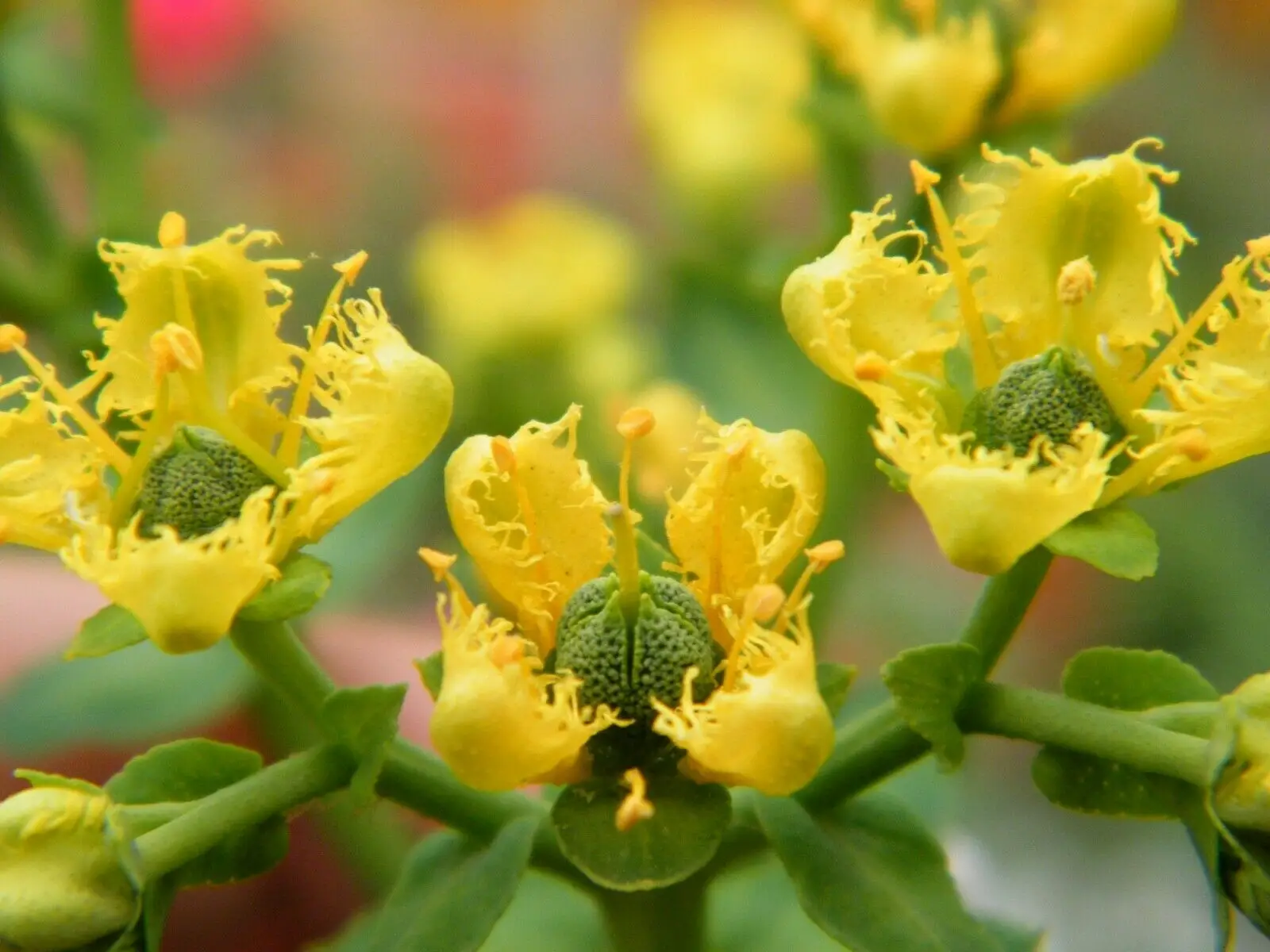
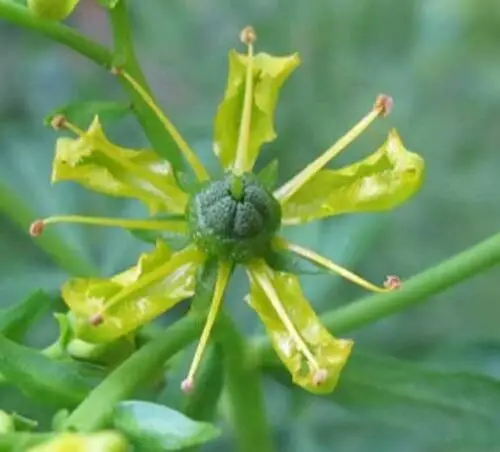
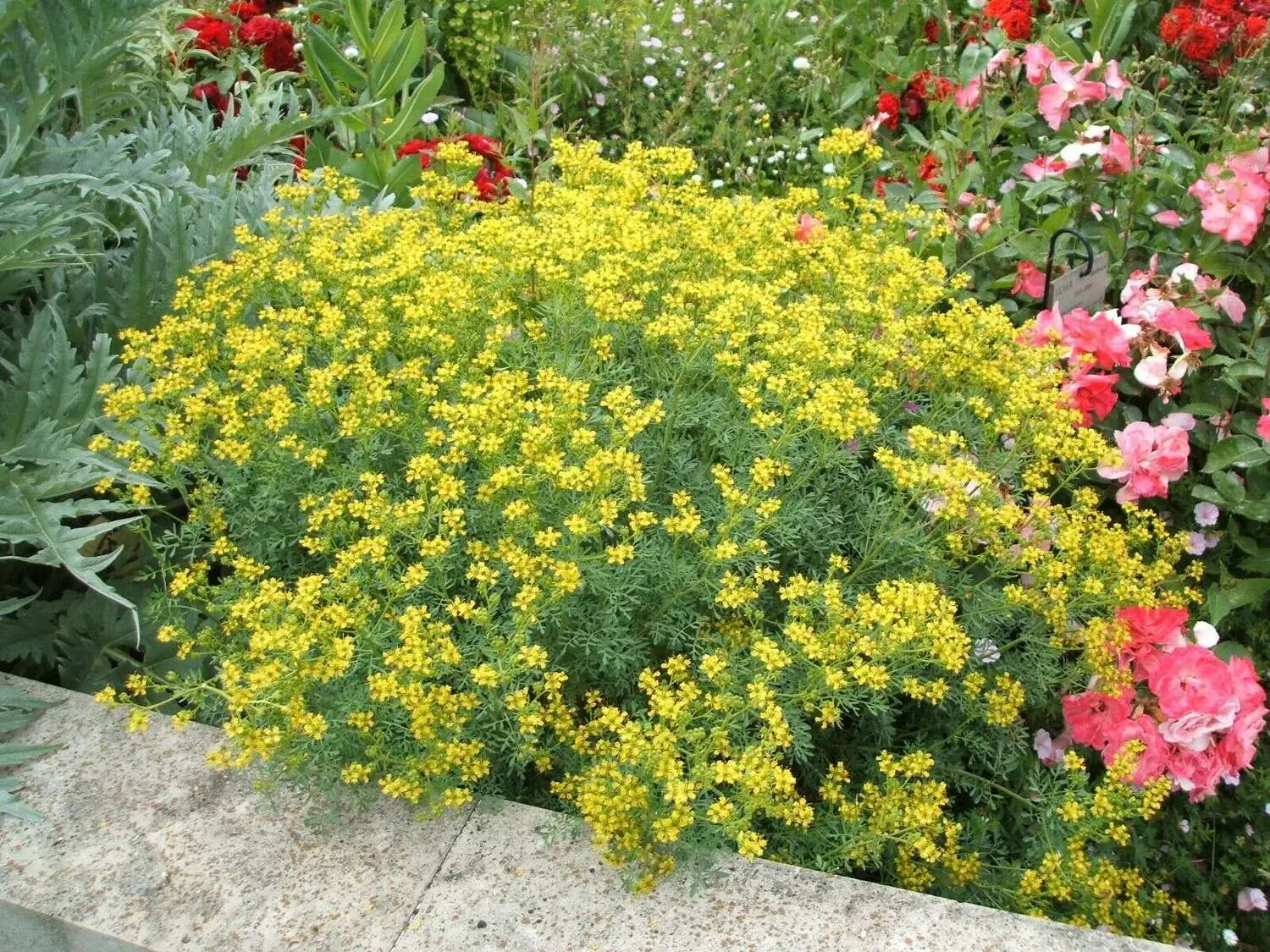
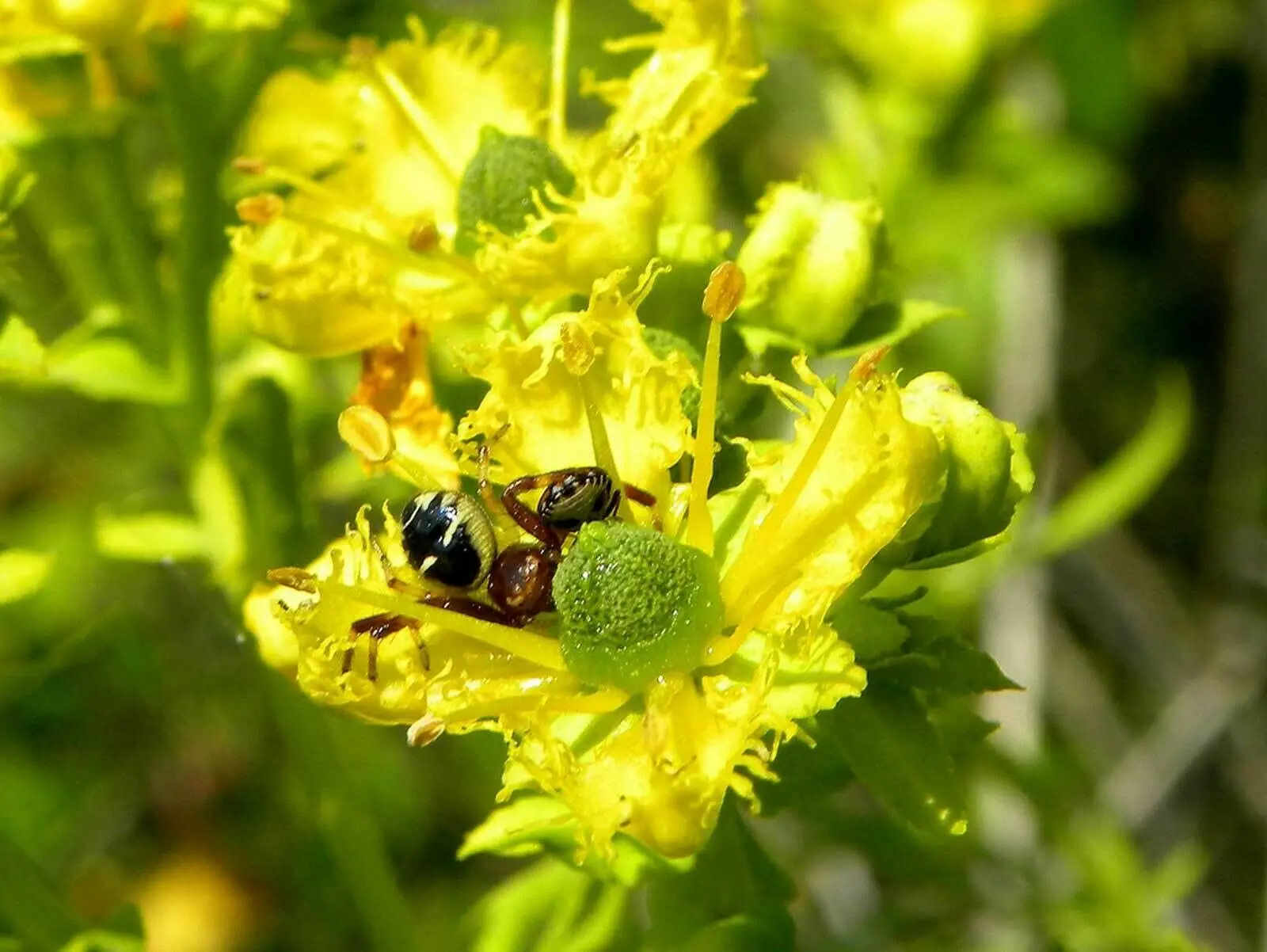
Rue is remarkably forgiving. It grows best in full sun to part shade, in well-drained soil where it tolerates both poor nutrients and drought once established. This is a plant that doesn’t demand; it rewards. Hardy in zones 4–8, it forms a compact, woody subshrub reaching 2–3 feet tall, clothed year-round in delicate blue-green pinnate foliage that looks like tiny fern fronds or even cartoon hands. In June and July, small clusters of pale yellow flowers rise above the leaves, inviting butterflies—particularly swallowtails, which lay eggs on rue as a host plant. The seeds need light to germinate, so scatter them on soil surface and keep evenly moist until sprouted. Within weeks you’ll see green emerge. Within a year, you’ll have enough foliage to harvest. By the second year, you can begin clipping stems for your first infusions.
This is the kind of plant that changes how you think about gardening. It’s not a showstopper demanding praise; it’s a silent collaborator, a green alchemist waiting in the corner. Plant it now. In a year, surprise someone with a bottle of your own rue-infused grappa. Or simply brush past it on a summer evening and let its aroma remind you that some plants carry the weight of history in their leaves. Start your Ruta graveolens from seed and join centuries of gardeners who knew what we’re only now remembering.
Only logged in customers who have purchased this product may leave a review.

Reviews
There are no reviews yet.