
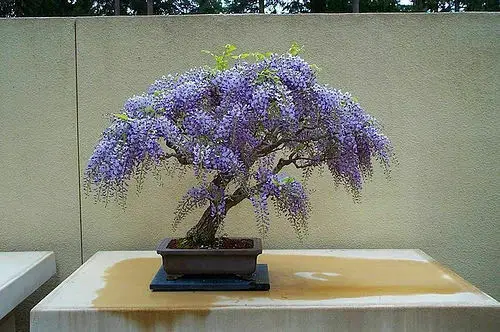
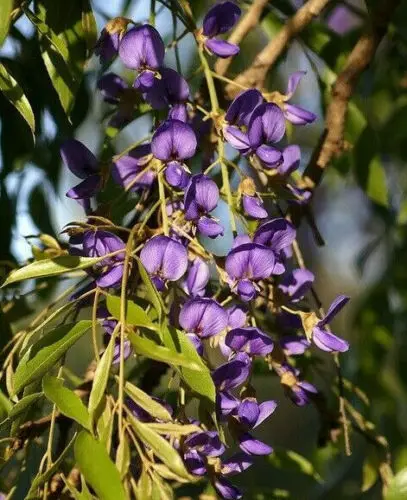
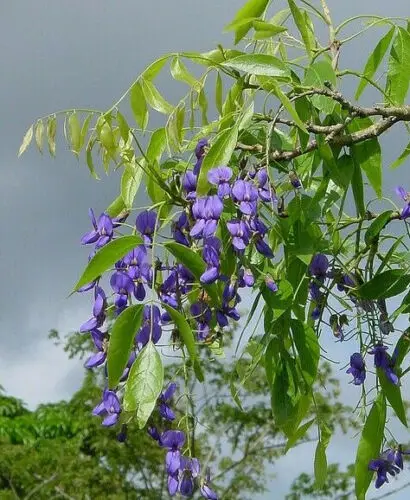
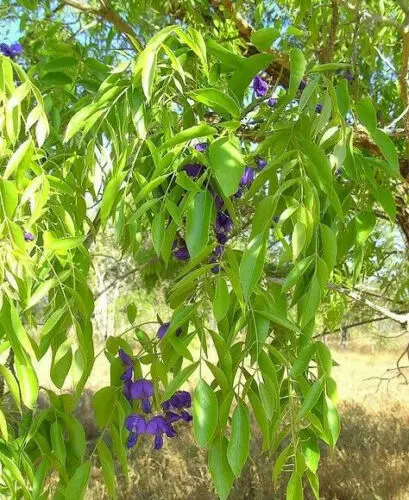
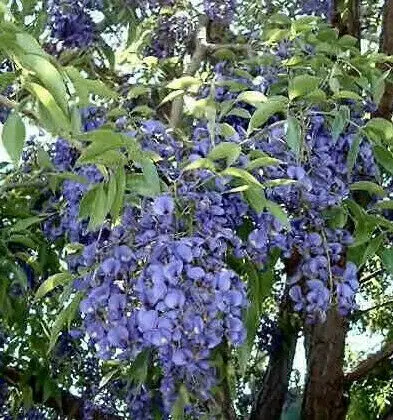
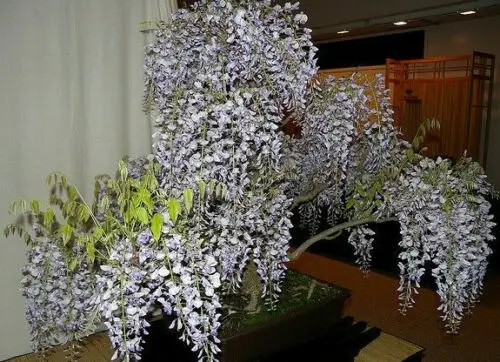
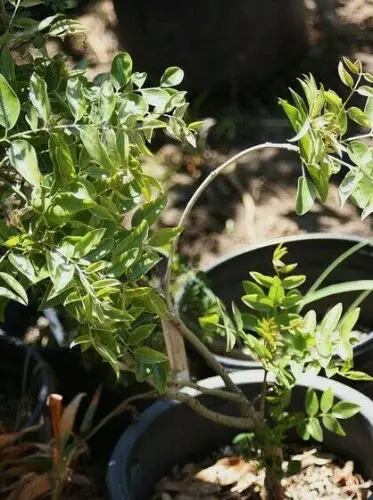
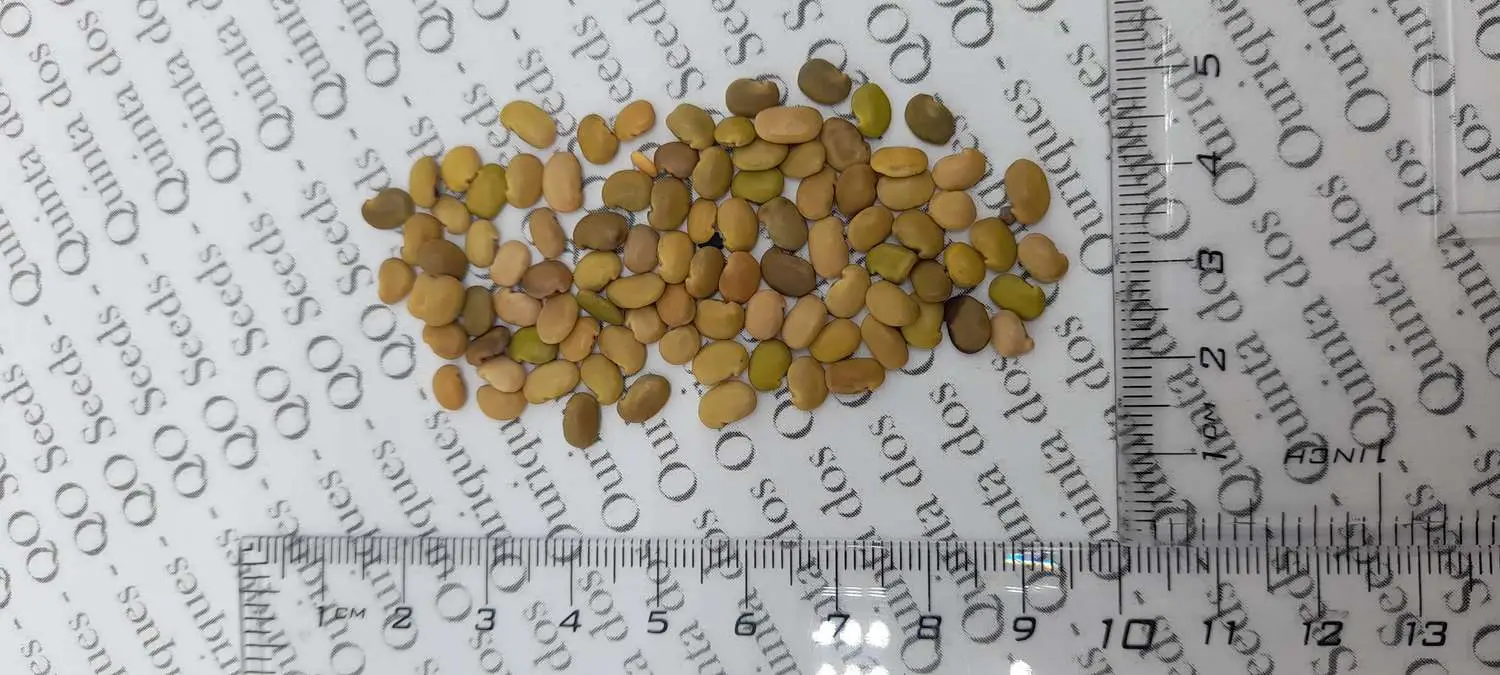
Grow a bonsai legend from seed. Bolusanthus speciosus—Africa’s answer to wisteria—produces luminous purple flower cascades and naturally ribbed bark that begs to be sculpted. Trainable into stunning multi-stem forms or elegant single trunks, it thrives in containers and rewards you with blooms faster than you’d expect. Easy to germinate with a simple hot-water soak. Your patience becomes art.
€2.13
Imagine cascading clusters of violet-blue flowers emerging from dramatically fissured bark, all contained in a pot on your patio—this is the spell of Bolusanthus speciosus, the African tree that rewrites what bonsai can be.
Native to south-eastern Africa, ranging from Zambia through Mozambique, Zimbabwe and Botswana, this legume carries the weight of centuries of traditional use. The name honors Harry Bolus, a South African botanist, and ‘speciosus’ means beautiful or showy in Latin—a fitting tribute to a tree that stops people mid-stride.
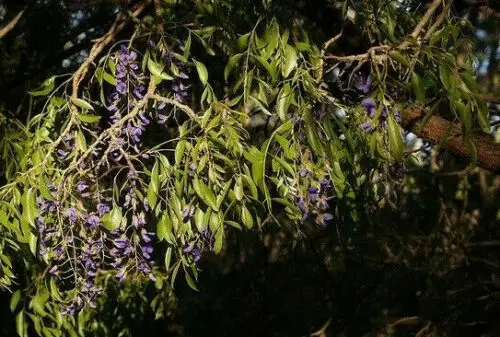
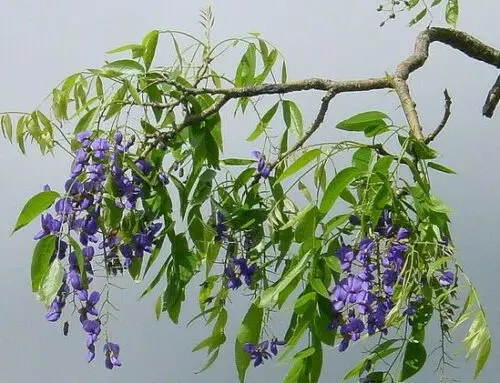
But here’s where Bolusanthus truly shines as a bonsai specimen: Its attractively ribbed bark and small leaves make it an excellent candidate for bonsai. Unlike conventional bonsai subjects, this tree is naturally inclined toward artistic form. Its easy adaptation to pruning makes it an ideal subject for bonsai treatment. Typically 5 to 10 meters tall in nature, it develops multiple trunks supporting a rounded crown with gently drooping branches—characteristics that translate beautifully to container cultivation. It can be grown in a container and looks spectacular on any sunny patio. For collectors, this means you’re working with a tree that *wants* to be shaped, that develops character quickly, and that rewards your vision with drama.
The flowers arrive like a gift. Purple flowers bloom on grape-like clusters that hang from the tips of branches, creating a showy display of color. The blooming is literally covered with clusters of falling flowers, going from light blue to indigo and ending on beautiful purple, lasting up to three months and fragrant. The violet-blue flowers are fragrant, attracting birds and butterflies. For beekeepers, the flowers are a rich source of nectar. Even the wood has admirers: The wood is heavy and naturally resistant to rot, decay and wood-boring insects.
Cultivation is forgiving. Seeds germinate by placing them in near-boiling water and leaving them to soak and cool, and the tree performs best on free-draining clay-loam or sandy-loam soils with pH 6.5 to 8.0 and full sun exposure. With good care, this tree can grow up to 800 mm per year—rapid enough to see results, slow enough to enjoy the journey. It can also survive periods of drought, making it forgiving in variable conditions. As a leguminous nitrogen-fixing tree, it thrives on nutrient-poor soils. It can be grown in a container and looks spectacular on any sunny patio. It can withstand moderate frost, but will need protection for the first few years.
This is your chance to grow something rare, something sculptural, something that blooms with purple fire. Bolusanthus speciosus waits in a seed—patient, ready to become the bonsai that makes collectors pause and ask, “What *is* that?” Start from seed, and grow not just a tree, but a conversation piece.
Only logged in customers who have purchased this product may leave a review.
Reviews
There are no reviews yet.