
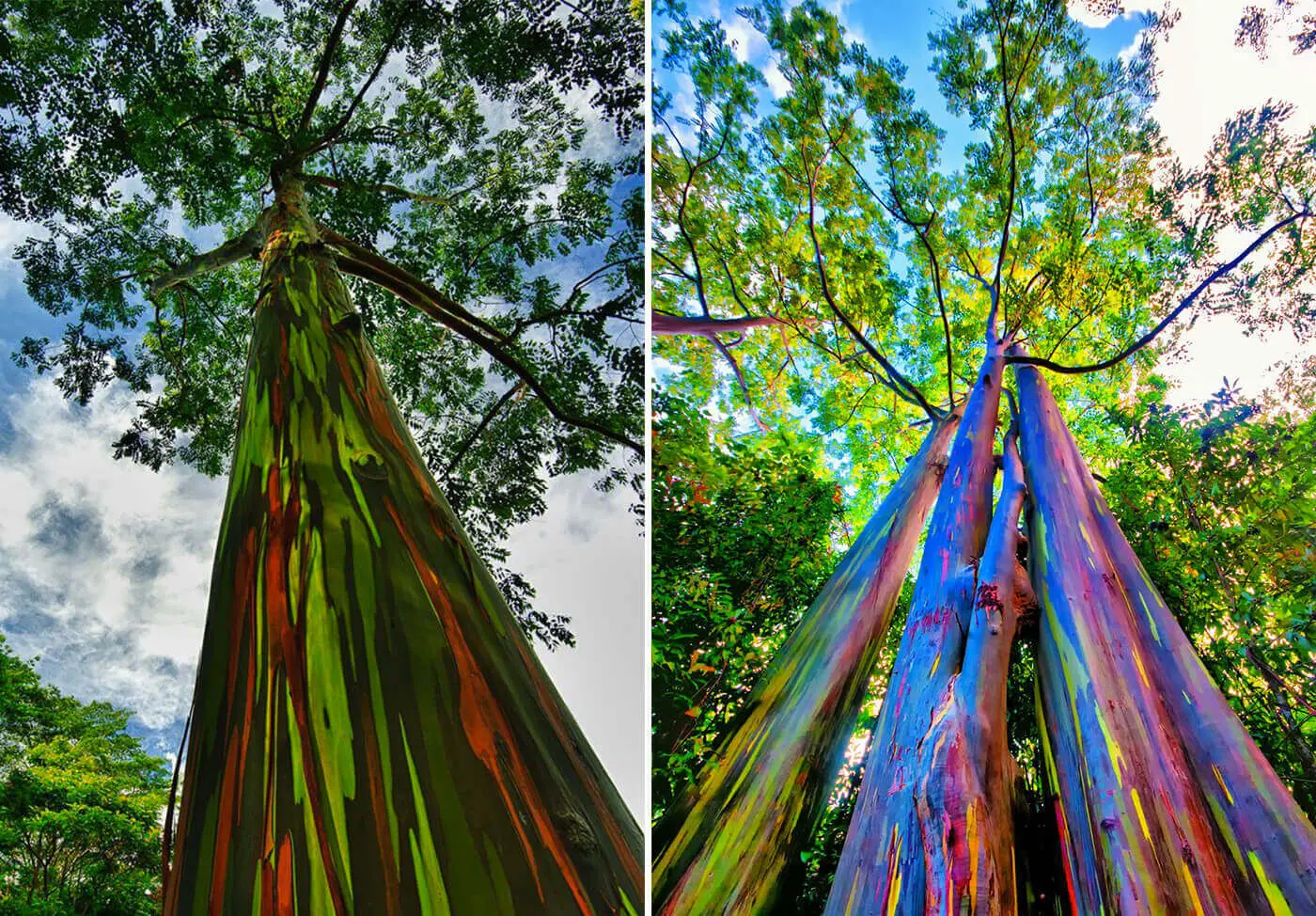
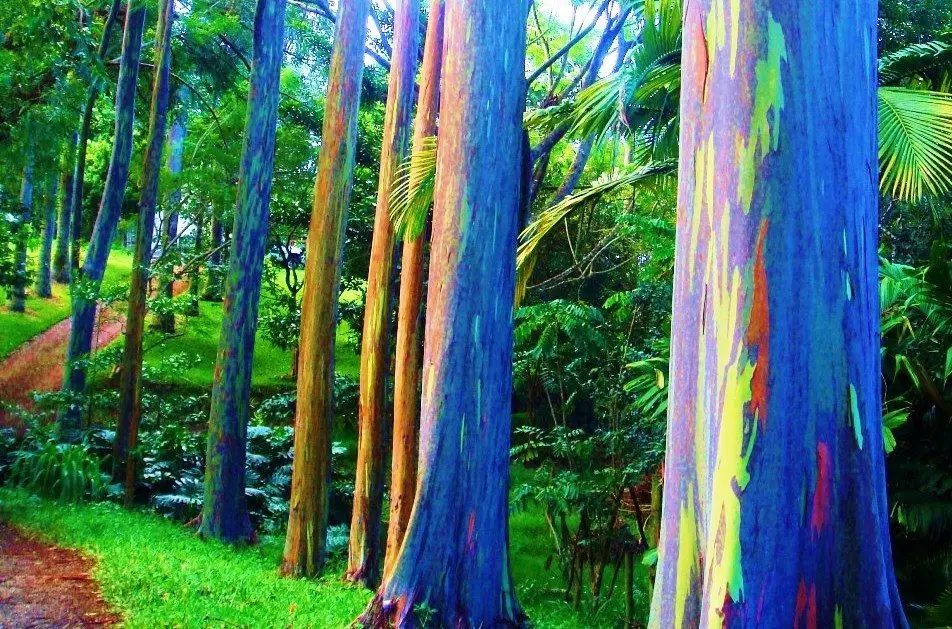
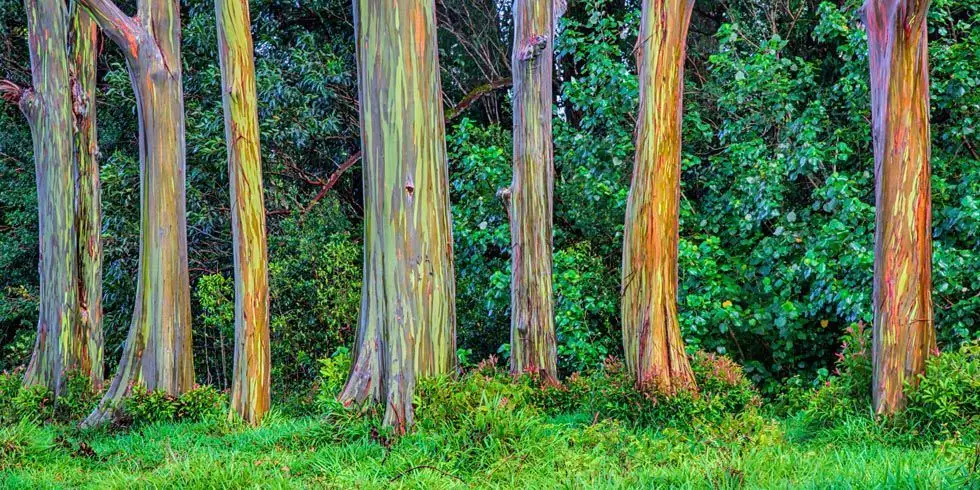
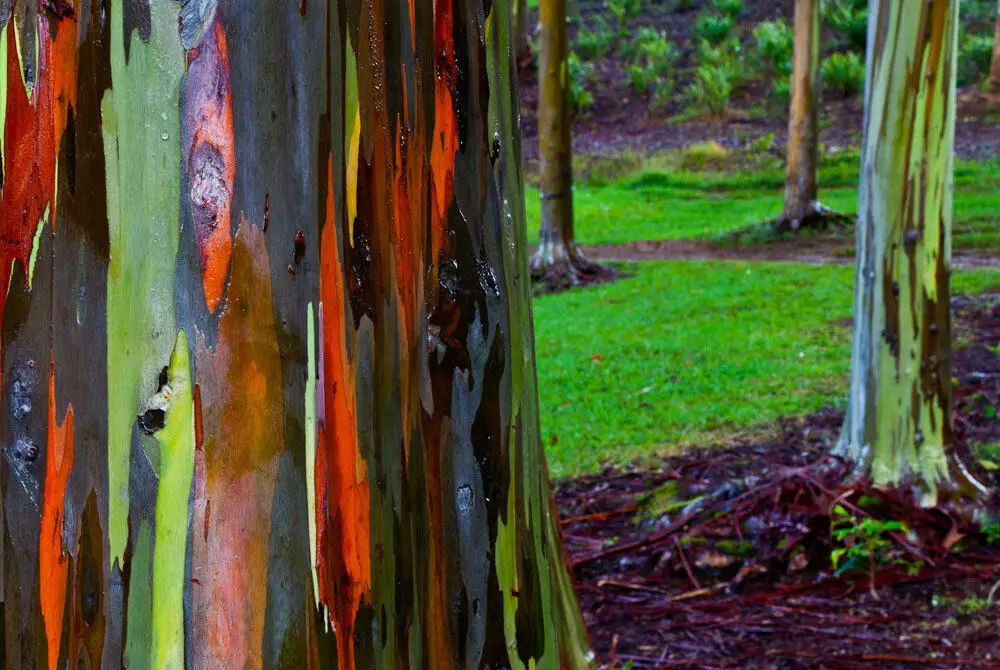
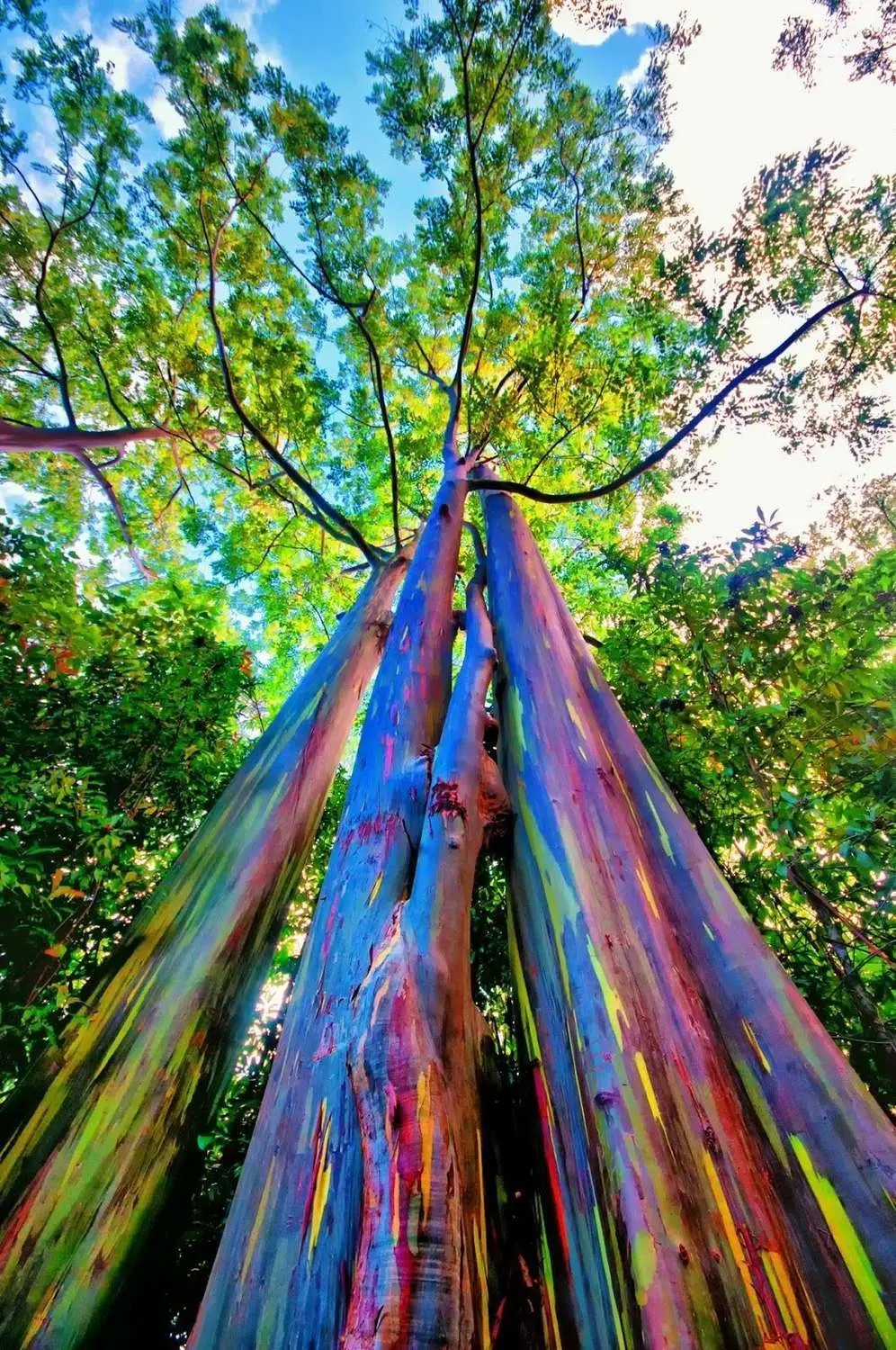
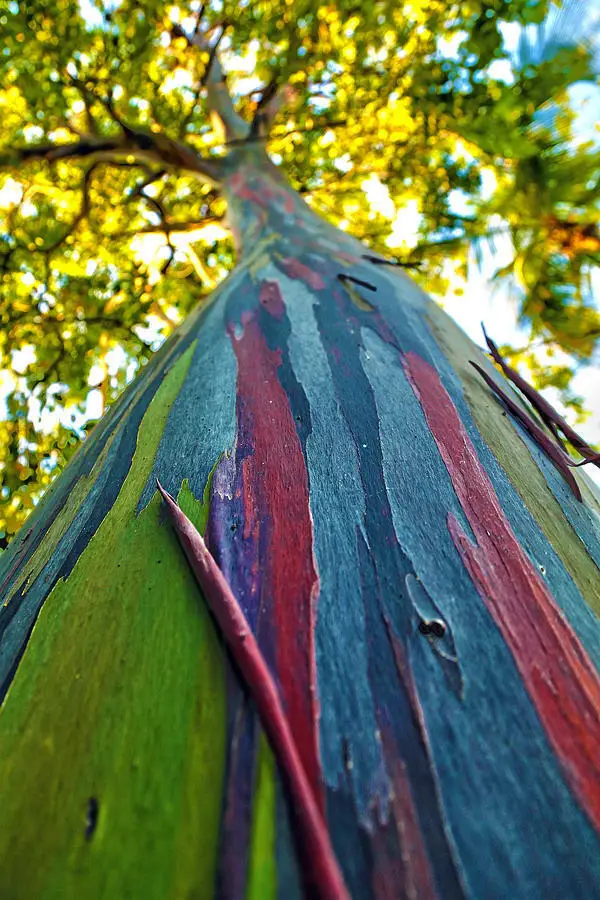
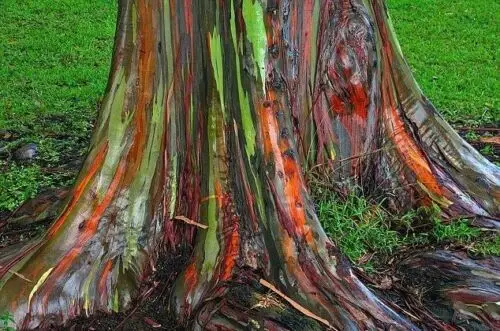
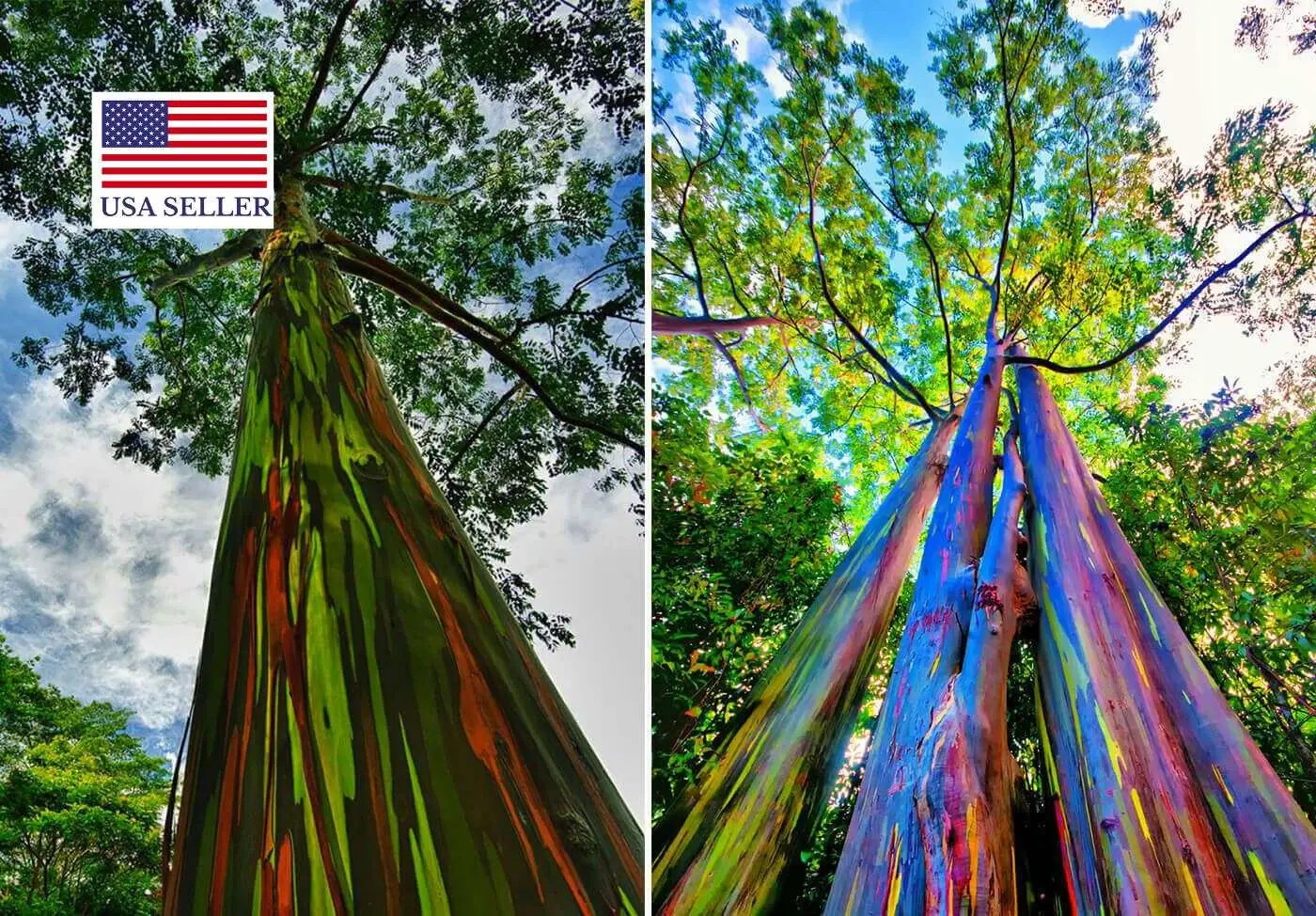
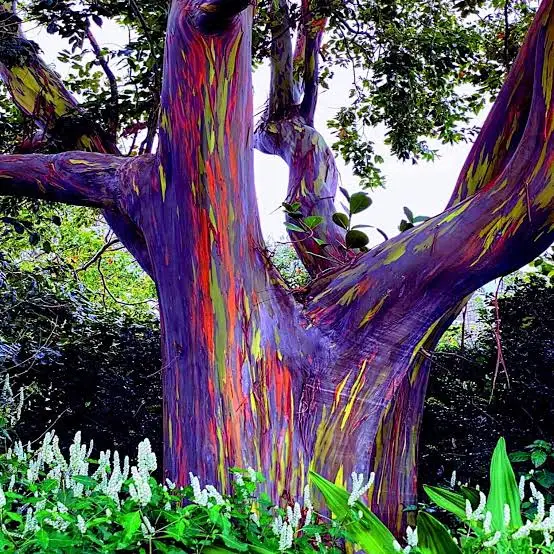
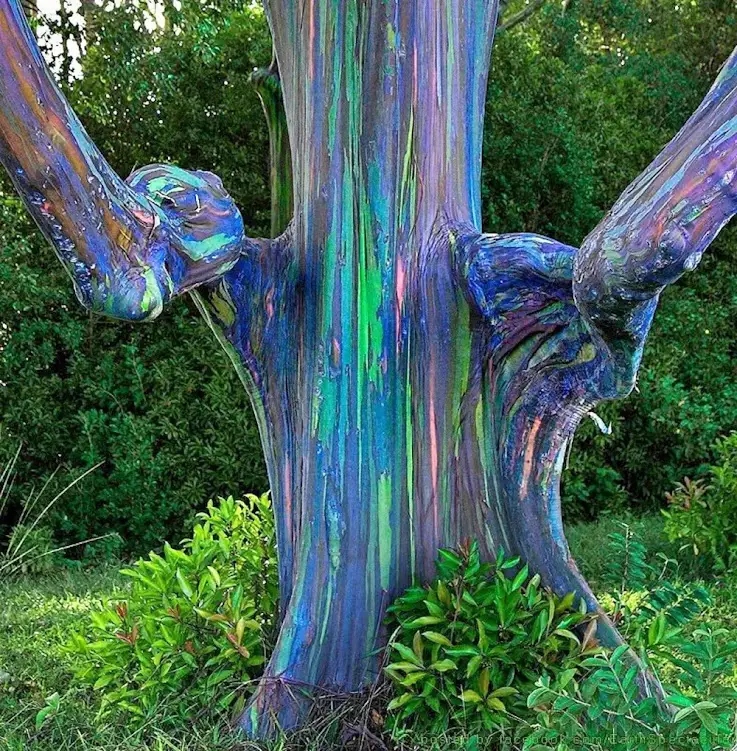
Witness bark that changes before your eyes. Each season, Eucalyptus deglupta sheds its outer skin to reveal an impossible palette: electric green, blushing pink, fiery orange, deep purple, and moody maroon—a different composition on every tree. Grow this botanical miracle from seed and watch it explode upward at breathtaking speed. In 14 years, reach 54 meters. Full sun, well-drained soil, consistent water. This is the tree that makes people stop mid-strid
€1.92
Imagine a tree that looks like it’s been painted by an artist in a trance state, where the canvas shifts and transforms with each passing season. That tree is Eucalyptus deglupta—the Rainbow Eucalyptus—and it is real, it is alive, and you can grow it from seed.
Native to the rainforests of the Philippines, Indonesia, and Papua New Guinea, the Rainbow Eucalyptus is the only eucalyptus species that naturally thrives in tropical rainforest (not the arid outback). It earned its fame not through utility or scent, but through sheer, audacious beauty. First formally described in 1850 by botanist Carl Ludwig Blume, its name—deglupta, Latin for “peeled off”—captures the essence of its most extraordinary feature: bark that continuously sheds, revealing the most stunning color transformation in the plant kingdom.
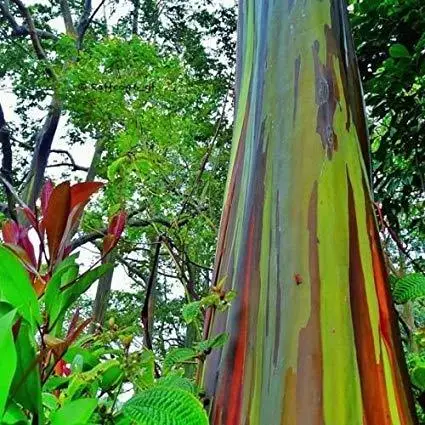
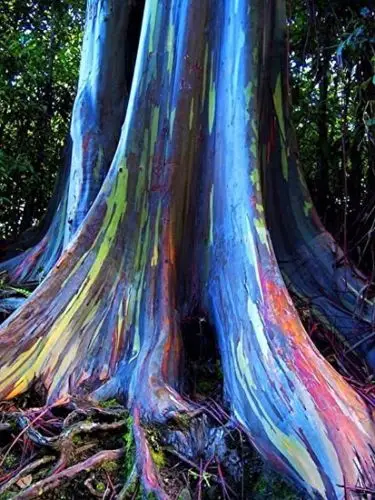
Here is where the magic lives: As the outer bark peels away in strips throughout the year, it exposes the bright green inner bark beneath. But this green doesn’t stay green. Over weeks and months, it oxidizes and matures through shades of brilliant blue, soft purple, warm orange, golden yellow, and rich maroon—creating a living rainbow that covers every millimeter of the trunk. No two trees are identical. No two views of the same tree are the same. In tropical climates where the humidity is high and the sun beats relentlessly, the colors reach their most vivid expression—a true spectacle. Even in cooler or drier regions, the display remains stunning, simply more subtle. This continuous peeling creates a mosaic effect; at any given moment, your tree wears multiple colors simultaneously, as different patches shed at different times. It’s not decoration. It’s not paint. It’s biochemistry at its most beautiful, oxidation transformed into art. Beyond ornament, the leaves hold traditional medicine: antiseptic properties used for generations in the Philippines to treat wounds, coughs, and respiratory ailments. You’re not just growing beauty; you’re cultivating a plant with history, healing, and purpose.
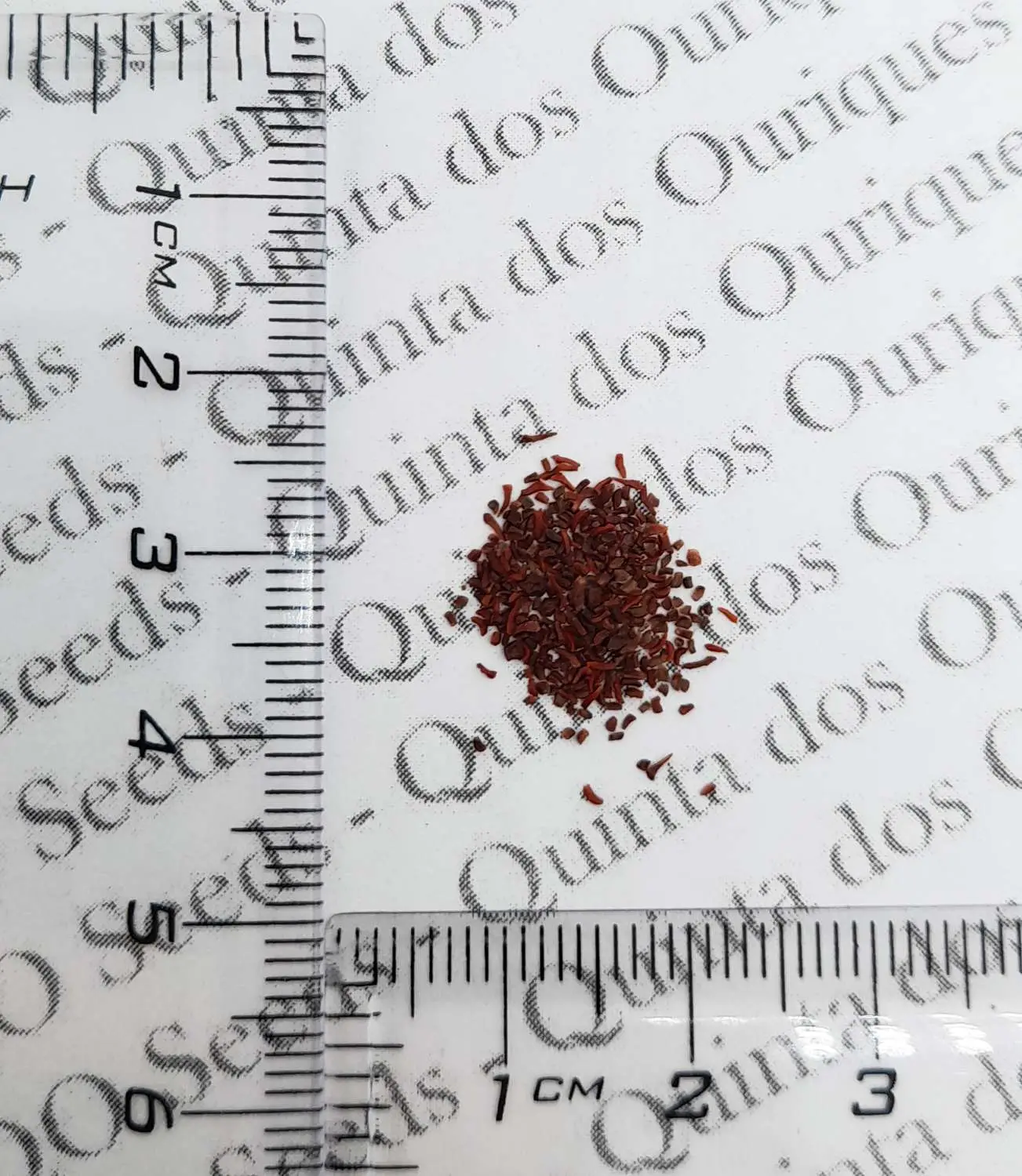
Cultivation is a pleasure, not a trial. The Rainbow Eucalyptus is a fast-growing evergreen—one of the fastest on Earth. In its native environment, specimens reach 60–78 meters; in cultivation outside the tropics, expect 30–50 meters given space and time. Growth rates are staggering: 3 feet per year once established, sometimes more. For light, demand full sun—this is non-negotiable if you want those colors to sing. The bark’s vibrancy depends on sunlight hitting that exposed inner wood. Provide well-draining, rich soil with consistent moisture, especially during the establishment phase. Avoid waterlogging, which invites root rot, but don’t let it dry completely. In tropical and subtropical zones (USDA 9–11), it flourishes outdoors. In cooler climates, grow it in a large container (at least 60 cm diameter) and bring it indoors or protect it when temperatures drop below 10°C. The tree appreciates humidity—misting young plants is beneficial. Seeds germinate readily with warmth, moisture, and indirect light; by the time seedlings develop three sets of leaves, they’re ready to transition to their permanent home. This is a tree that rewards attention with explosive growth and color that deepens your connection to living things.
There is a reason travelers trek through Hawaiian rainforests to photograph this tree. Why botanical gardens worldwide feature it as a centerpiece. Why people fall in love with a single glimpse. You are not planting a tree; you are cultivating wonder. You are growing a living sculpture that announces itself in every season, in every light, revealing new colors, new patterns, new conversations between sunlight and chemistry and time. Start from seed. Watch it transform from a small green shoot into a giant canvas of moving color. This is the closest you will come to painting with nature’s hand. Grow Eucalyptus deglupta. Let your garden become a rainbow.
Only logged in customers who have purchased this product may leave a review.


Reviews
There are no reviews yet.