
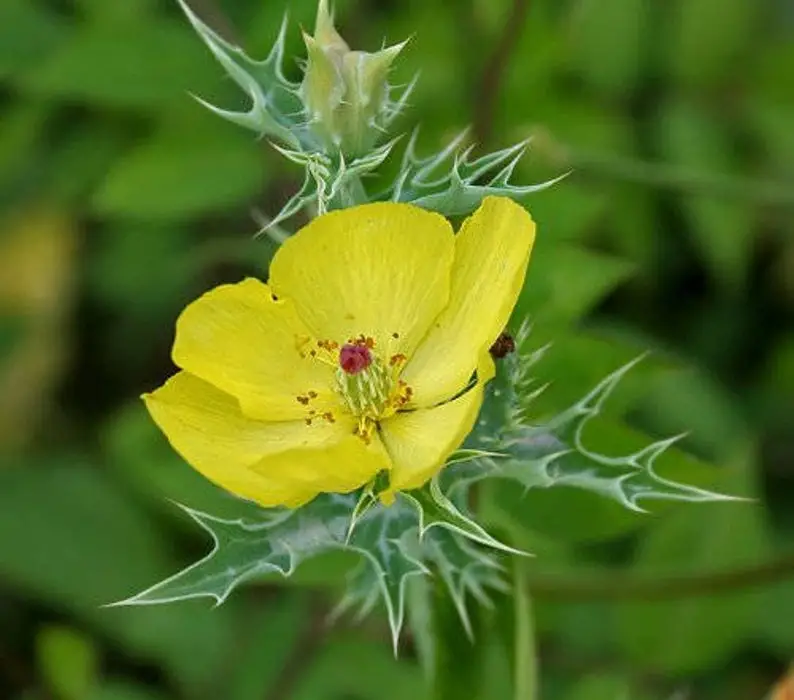
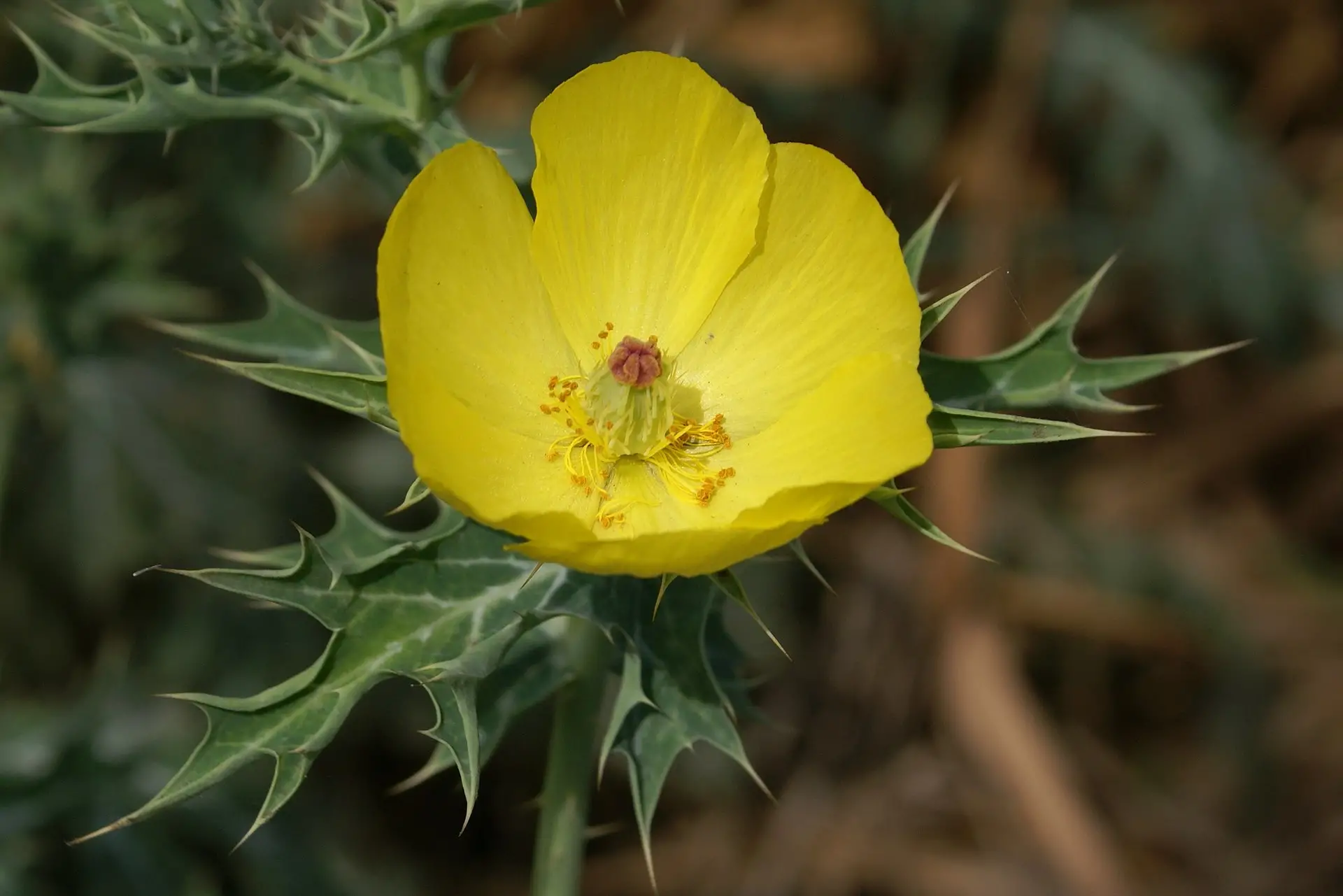
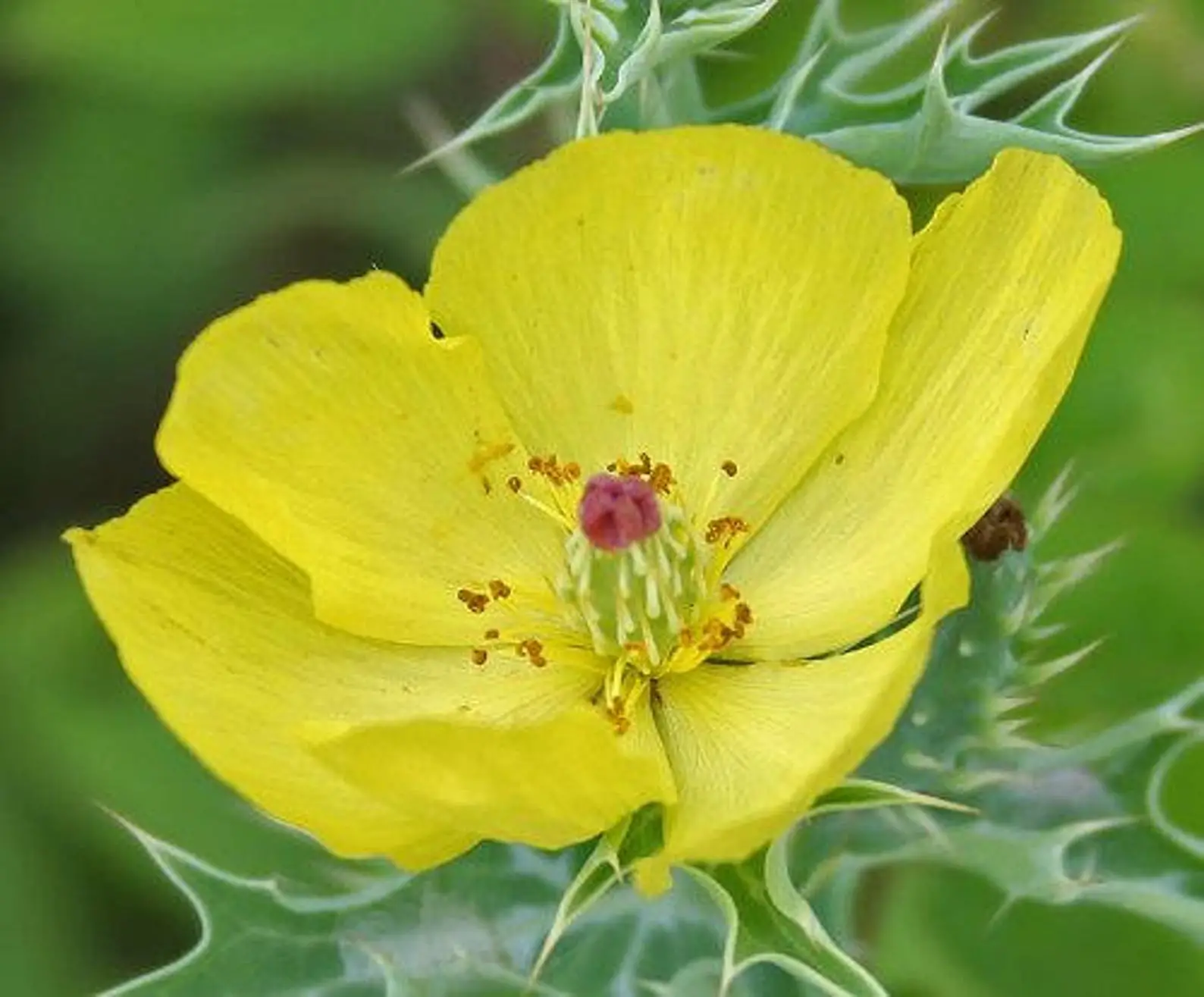
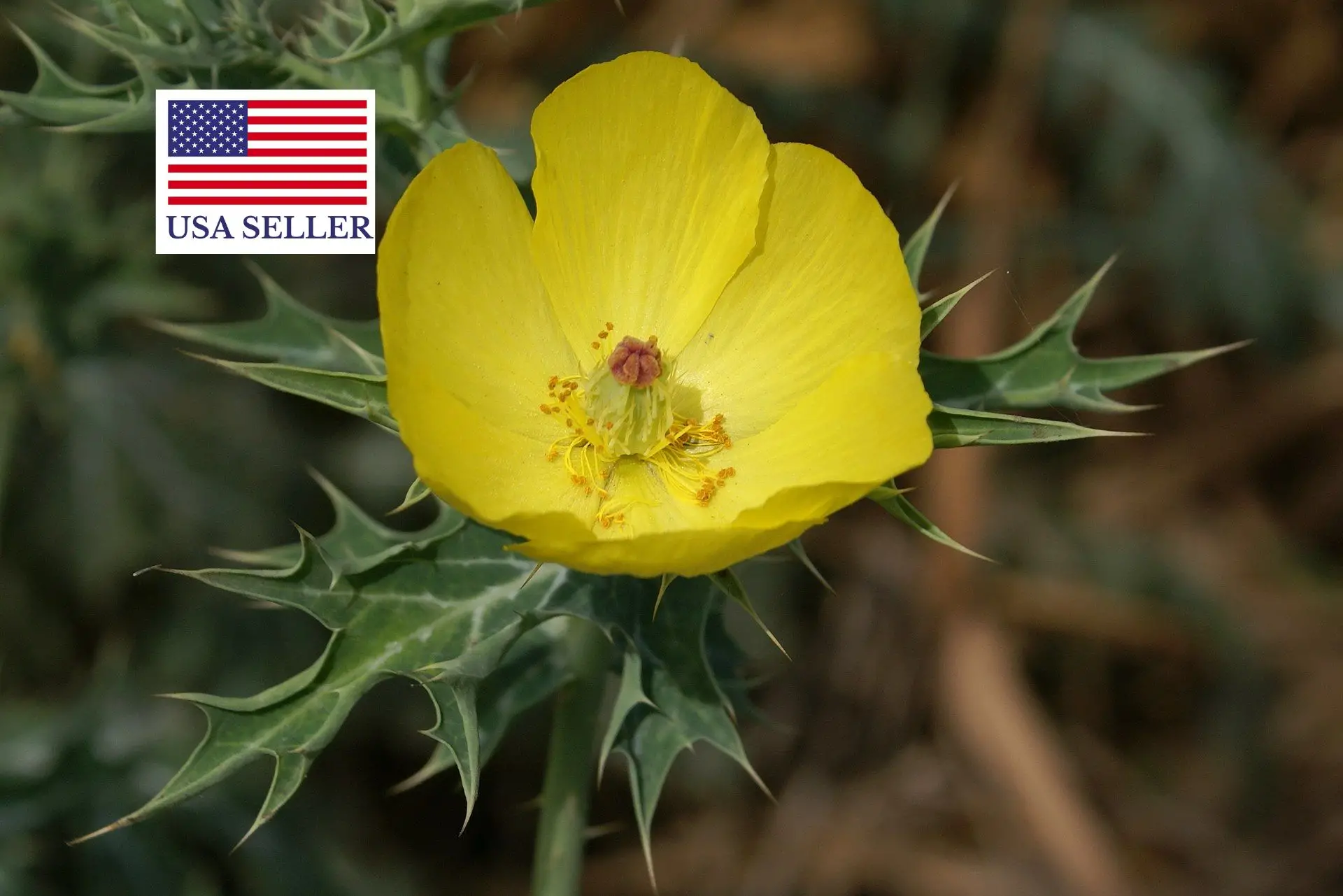
Grow the legendary Mexican healer—Argemone mexicana. Stunning golden flowers crown spiky blue-green foliage, but the real magic lives inside. For centuries, indigenous healers wielded its brilliant yellow sap as a potent antimicrobial and anti-inflammatory remedy. Science confirms it: documented antioxidant and antimicrobial properties make this poppy a true apothecary in bloom. Thrives in poor soil with minimal water. Start from seed—easy, rewarding, unfo
€8.05
A stunning poppy rooted in centuries of traditional medicine, Argemone mexicana blooms as both ornamental treasure and healer’s ally.
Native to Mexico and the southwestern United States, this extraordinary annual or short-lived perennial has spread across tropical and subtropical regions worldwide—not by accident, but by design. Indigenous peoples in Mexico, India, West Africa, and beyond discovered something remarkable in this humble plant and guarded its secrets for generations. The Spanish explorers called it “cardosanto” (holy thistle) and carried it back across continents. Where other plants wilt, Argemone thrives. An extremely hardy pioneer, it colonizes the harshest ground: dry roadsides, depleted soils, disturbed earth that most plants avoid. Yet from these harsh conditions it rises—defiant, showy, undeniable.
The traditional medicine story is where Argemone truly shines. Indigenous peoples and traditional healers across Mexico, India, Mali, and the Caribbean have relied on this plant’s brilliant yellow sap and leaf extracts for centuries—using it to treat wounds that heal slowly, respiratory ailments, blood disorders, skin conditions, and inflammation. Modern scientific research validates what healers knew: Argemone mexicana exhibits potent antimicrobial and antioxidant properties, with documented cytotoxic effects on certain cancer cell lines, making it a genuine candidate for drug discovery. The whole plant—leaves, roots, and that distinctive golden latex that bleeds when cut—contains bioactive alkaloids similar to those found in opium poppies, compounds with real pharmacological potential. In India, it’s called “Satyanashi.” During the Holi festival each March, when this poppy reaches peak bloom, it’s worshipped and offered as a sacred flower. In Mali, a simple tea treats malaria. This is not folklore—this is lived knowledge spanning continents and centuries, now being taken seriously by modern medicine. Growing Argemone from seed is your invitation into this legacy.
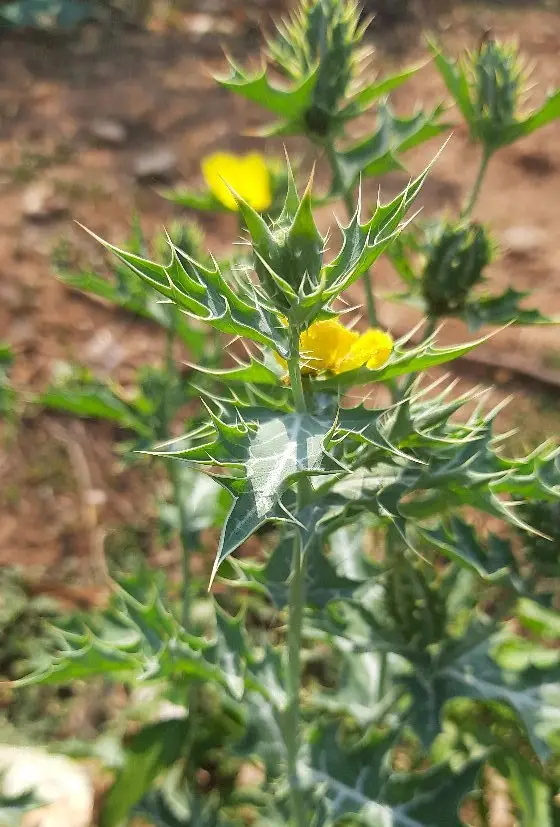
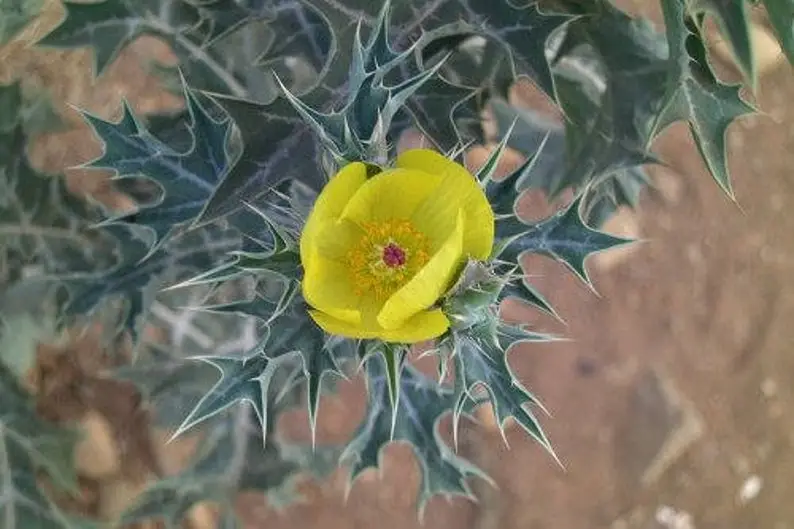
The ornamental presence alone justifies growing this poppy. The flowers—brilliant golden yellow, 2.5 inches across, with numerous stamens in shades of yellow or deep reddish-orange—appear singly at the branch tips and bloom prolifically from late spring through early fall. The foliage is equally striking: deeply lobed, thistle-like leaves in bluish-green, armed with sharp prickles, dramatically veined in conspicuous gray-white. When you brush the plant or cut a stem, a milky yellow latex oozes—it’s both beautiful and functional, a visible reminder of the plant’s medicinal potency. The whole plant forms a compact, upright mound reaching 8–18 inches tall in most conditions. Pollinators flock to it: bees, butterflies, beetles, and flies recognize Argemone as a nectar and pollen source worth visiting. Grow it in a wildflower garden, a medicinal herb bed, a cottage garden, or even in a container on a sunny patio.
Cultivation is refreshingly easy—this is where Argemone rewards even the most inexperienced gardener. It demands full sun and well-drained soil, but beyond that, it asks almost nothing. Poor, sandy, nutrient-depleted soils? Perfect. Argemone laughs at drought and thrives in dry conditions where fussier plants surrender. It requires minimal water—sow it, water initially to establish, then let it do its thing. No fertilizer needed; in fact, over-feeding can harm it. Sow seeds directly where you want them after the last frost date (seeds require light to germinate, so don’t bury them). The plant self-seeds readily, guaranteeing a return visit year after year. Hardiness extends from temperate zones to tropical regions. No pests, no diseases, no complicated protocols. Just sun, well-drained soil, and patience.
Grow Argemone mexicana from seed and you’re holding 500 years of botanical wisdom in your hands. You’re planting a connection to indigenous healers, to festival-goers in India, to herbalists and researchers betting on its pharmacological futu
Only logged in customers who have purchased this product may leave a review.

Reviews
There are no reviews yet.