Description
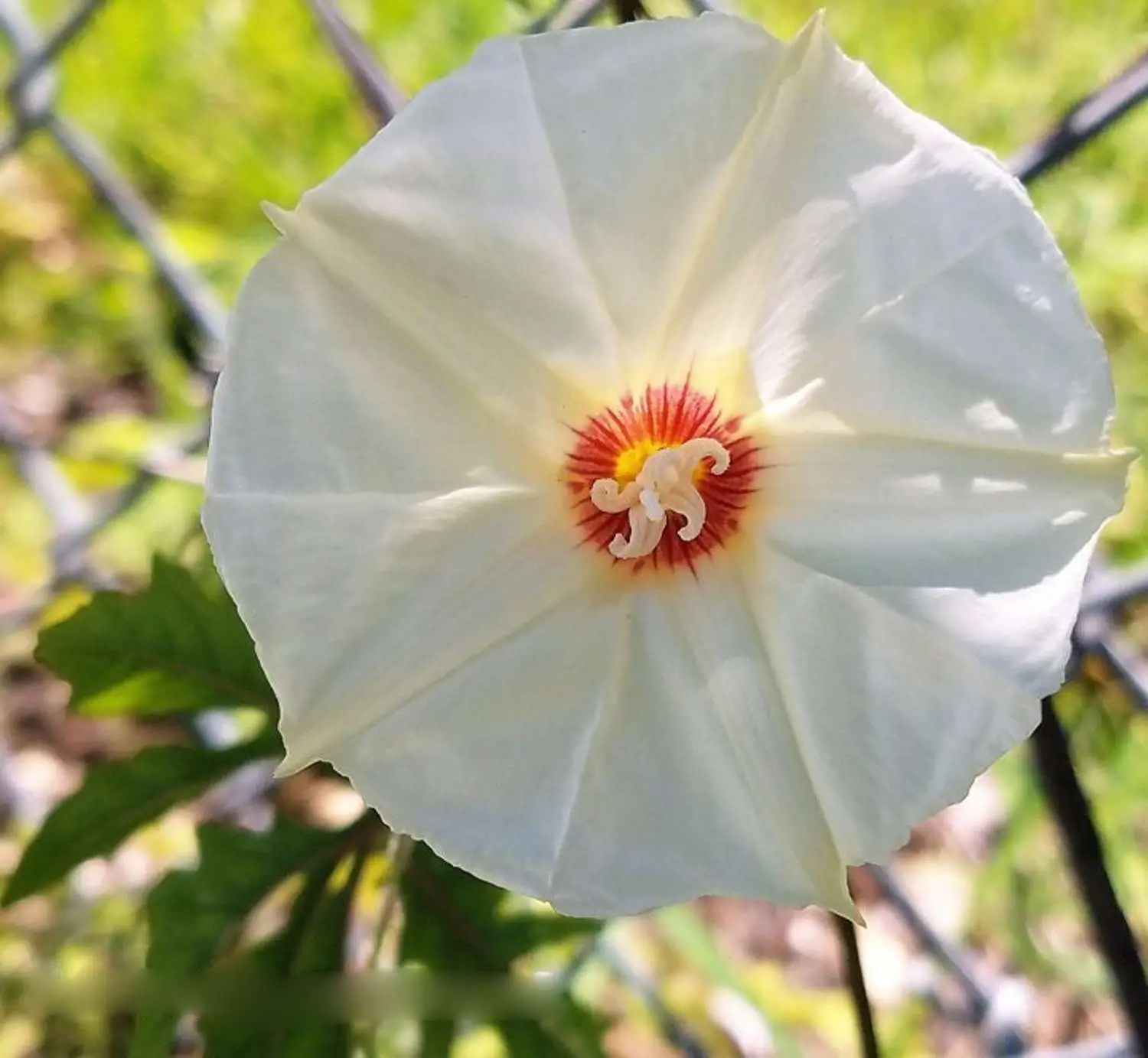
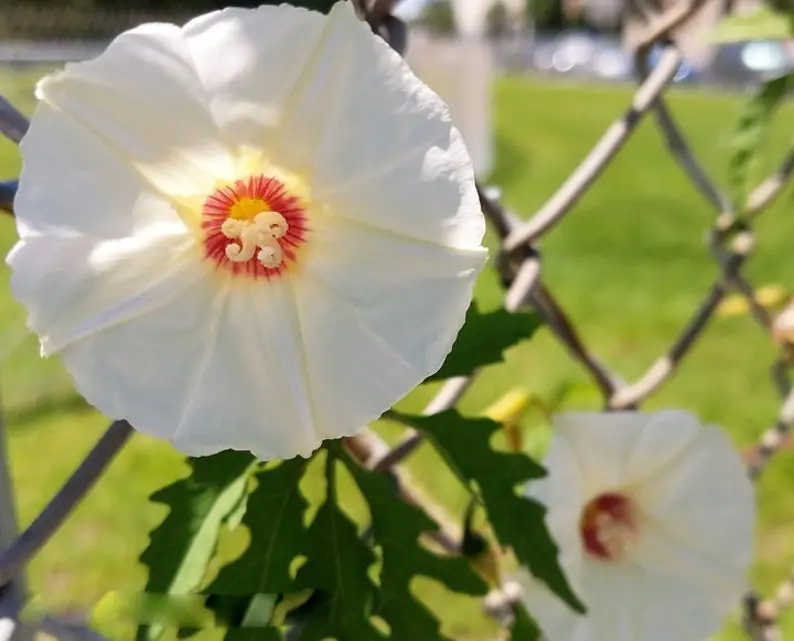
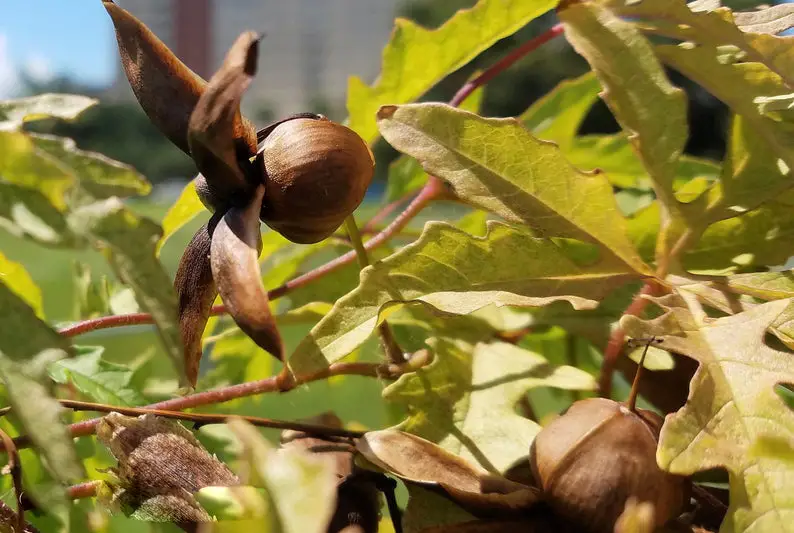
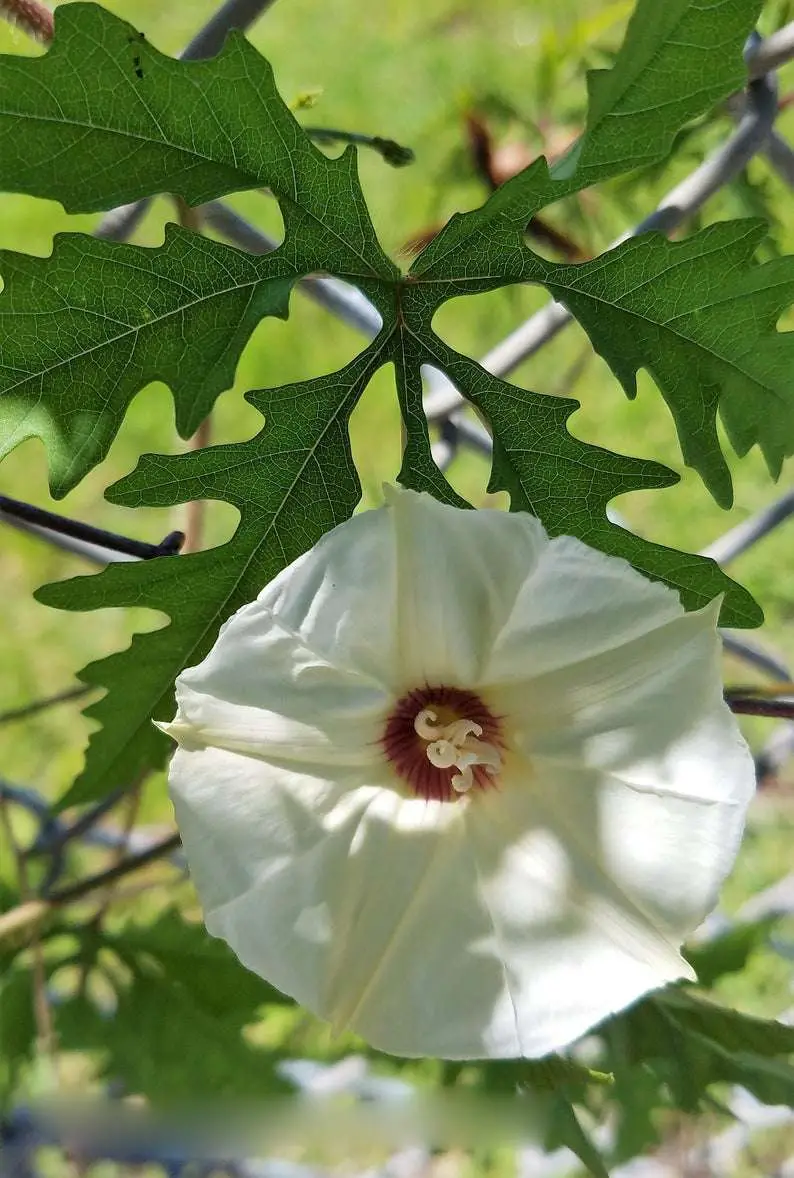
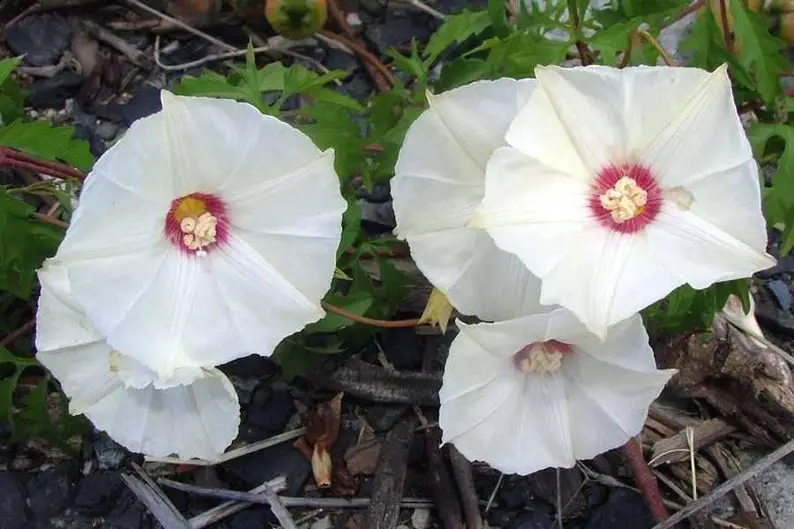
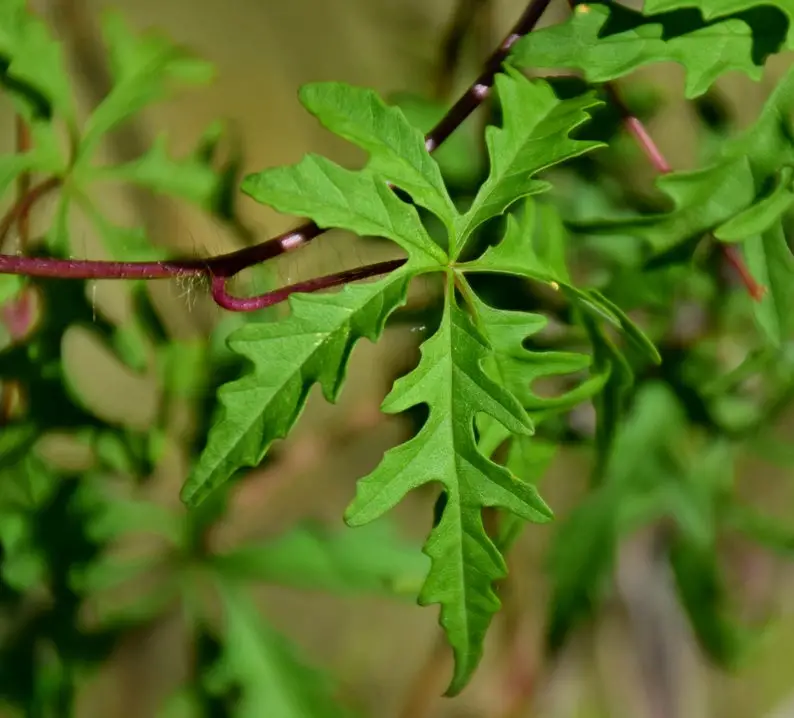
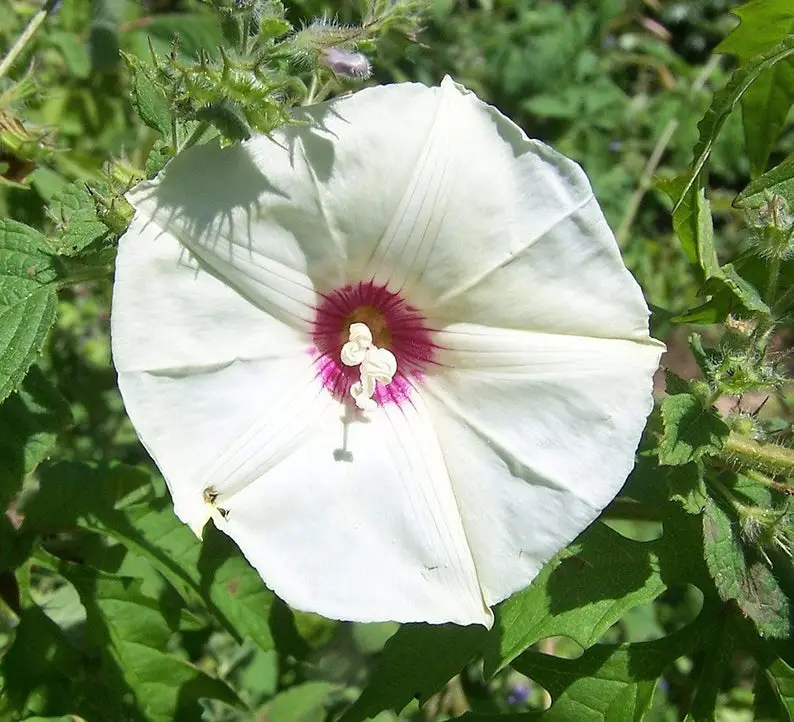
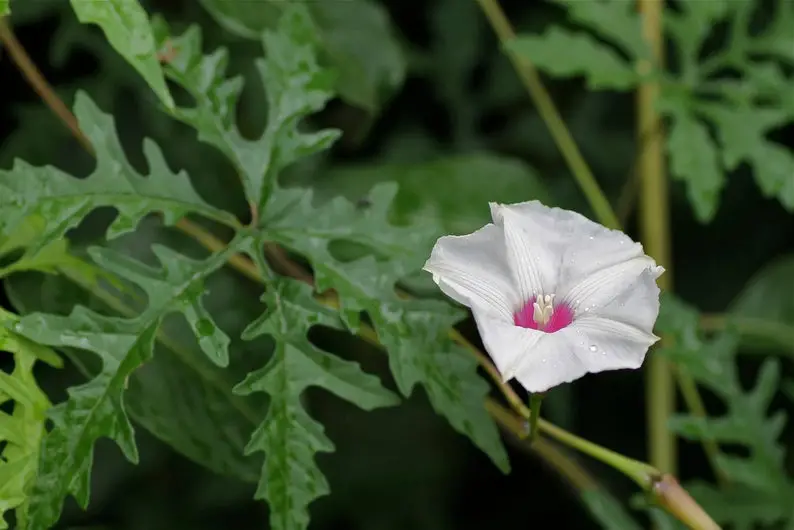
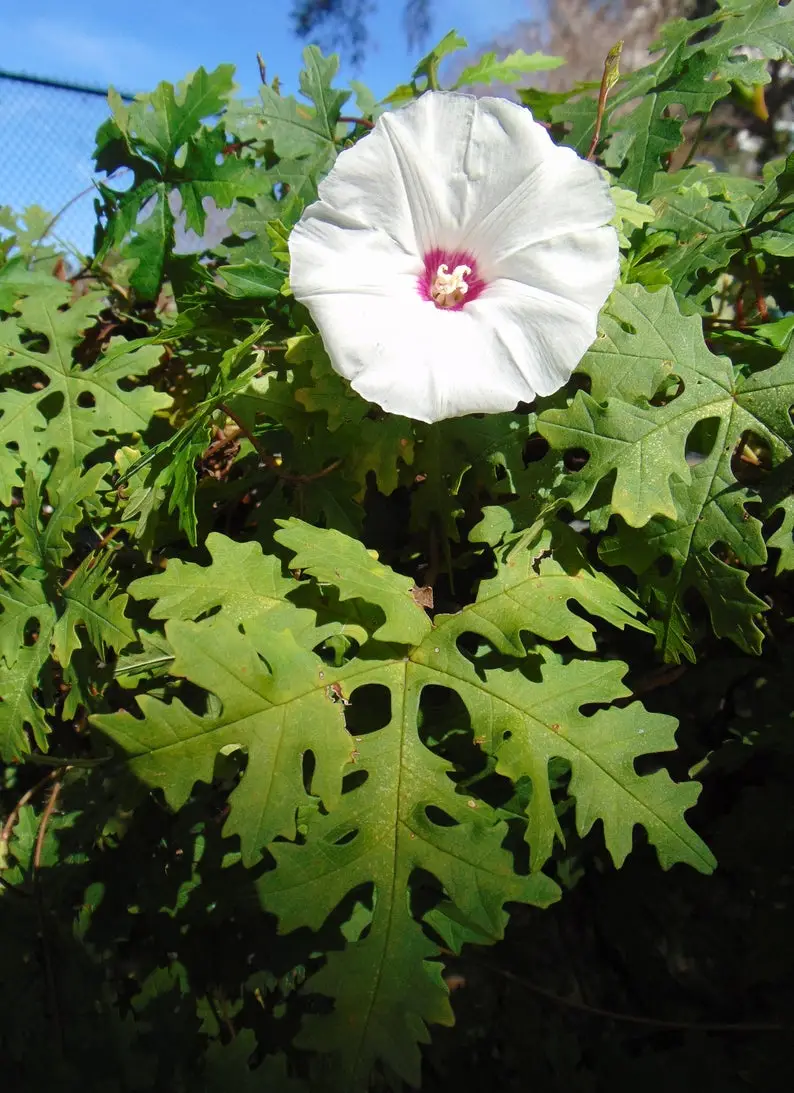
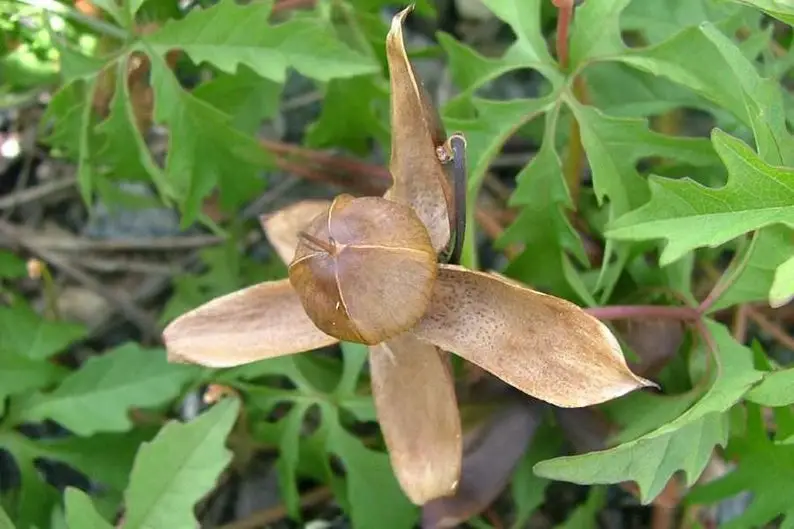
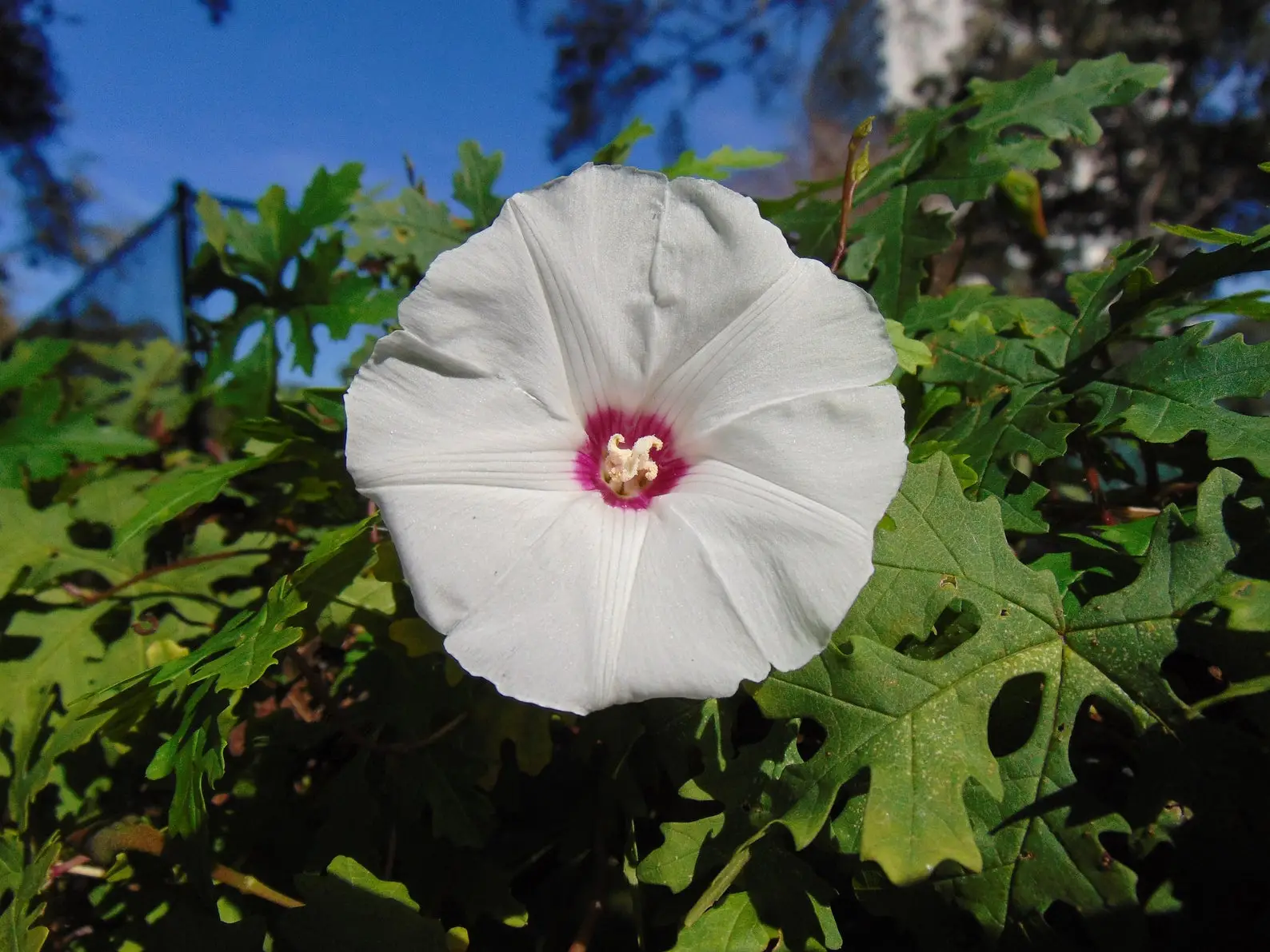
The Cutleaf Morning Glory is a vine that has unusual and very decorative, palmate, deeply lobed leaves with toothed and wavy margins. It has large, white flowers with pink or red throats. The flowers bloom in the afternoon, unlike many morning glories which open their flowers in the morning. It is also called wood-rose because the brown seed capsules have 5 large sepals and resemble rose flowers that are made from wood. This large, fast growing vine is native to the southeastern U.S. and the Caribbean region. It is grown as an ornamental plant and is useful to cover walls and trellises. It is also used as a condiment and as a medicine. The underground tubers are edible. It has an almond taste and is used to flavor foods and medicines. It is easy to grow and is drought resistant.
Growing Instructions
1. Sand or nick the seed coat to allow water to enter the seeds.
2. Soak the seeds for 24 hours.
3. Sow the seeds in moderately fertile, well-drained soil in pots or outdoors if the temperatures are 60 degrees F or warmer. Put them in an area in full sun or light shade.
4. Cover the seeds with a thin layer of soil.
5. Water the seeds.
6. Fertilize the seeds.
7. Water the plants during dry periods. A trellis, arbor or pergola can be used to support the vines.
Germination Guide
🌍 Central America, South America, Caribbean
Easy
Merremia dissecta (Alamo vine) is a perennial morning glory vine native to Central and South America with white funnel-shaped flowers featuring burgundy centers
Germination
Germination time
Expect germination in
14 – 84 days
Substrate moisture
💧 Medium
Seed Pre-treatment
-
💧
Soaking — 24 hours
Soak scarified seeds in warm water for about 24 hours
-
🔨
Mechanical scarification
Scarify with sandpaper or nick seed coat with knife to break hard seed coat
-
📋
Additional notes
Mechanical scarification followed by warm water soaking
Substrate & Container
Recommended substrate
well-draining potting mix with peat moss, perlite or vermiculite
Recommended container
seed tray or pots
Growing Tips
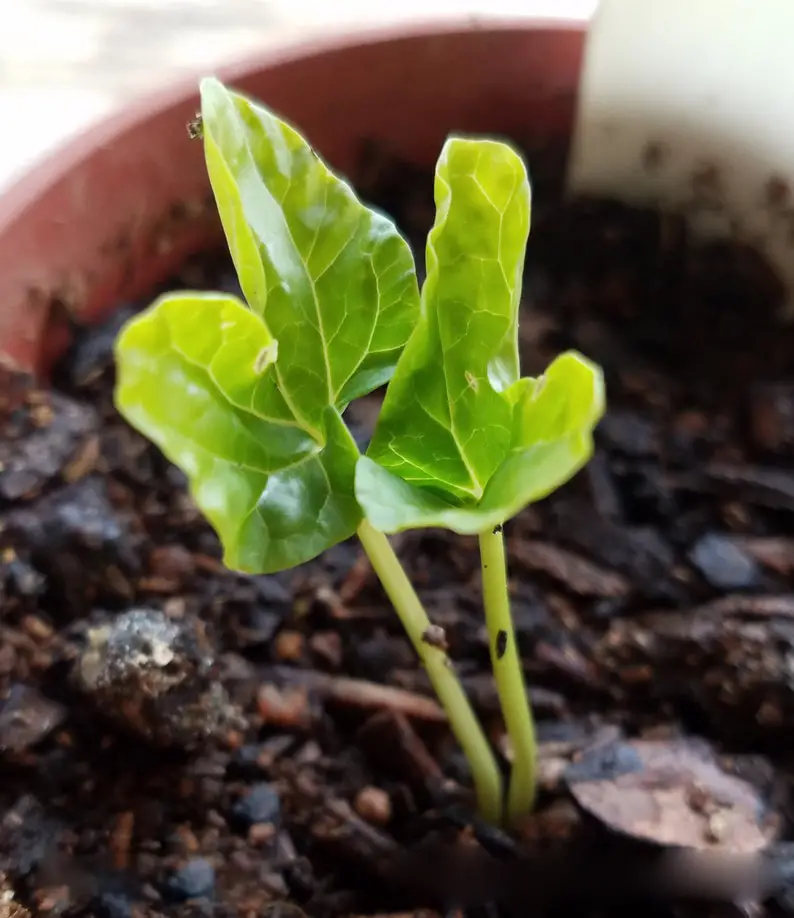
Seeds germinate readily. Plant in warm location with indirect sunlight. Keep soil consistently moist but avoid overwatering. Germination may take a few weeks to a few months. Use well-draining potting mix. Press seeds lightly into soil after planting.
Only logged in customers who have purchased this product may leave a review.

Reviews
There are no reviews yet.