Description
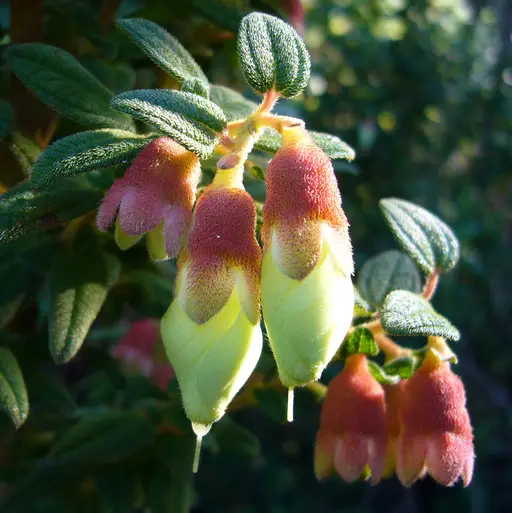
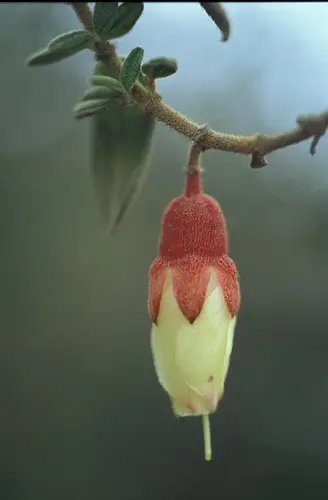
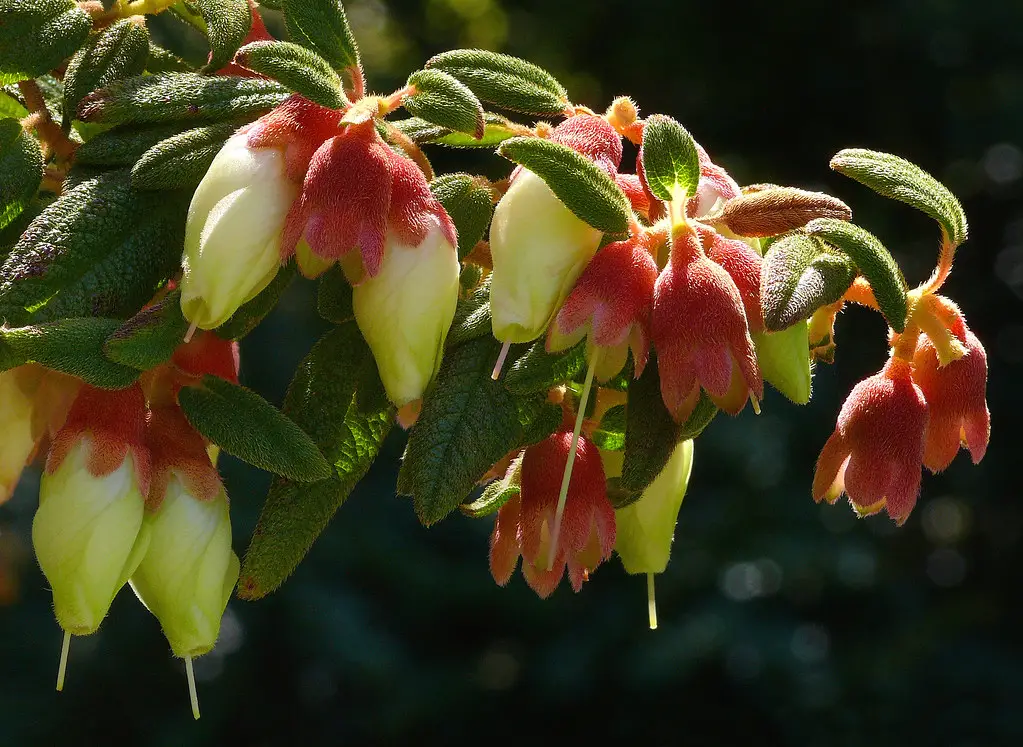
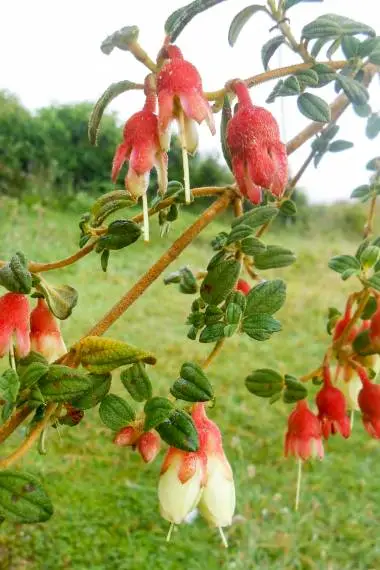
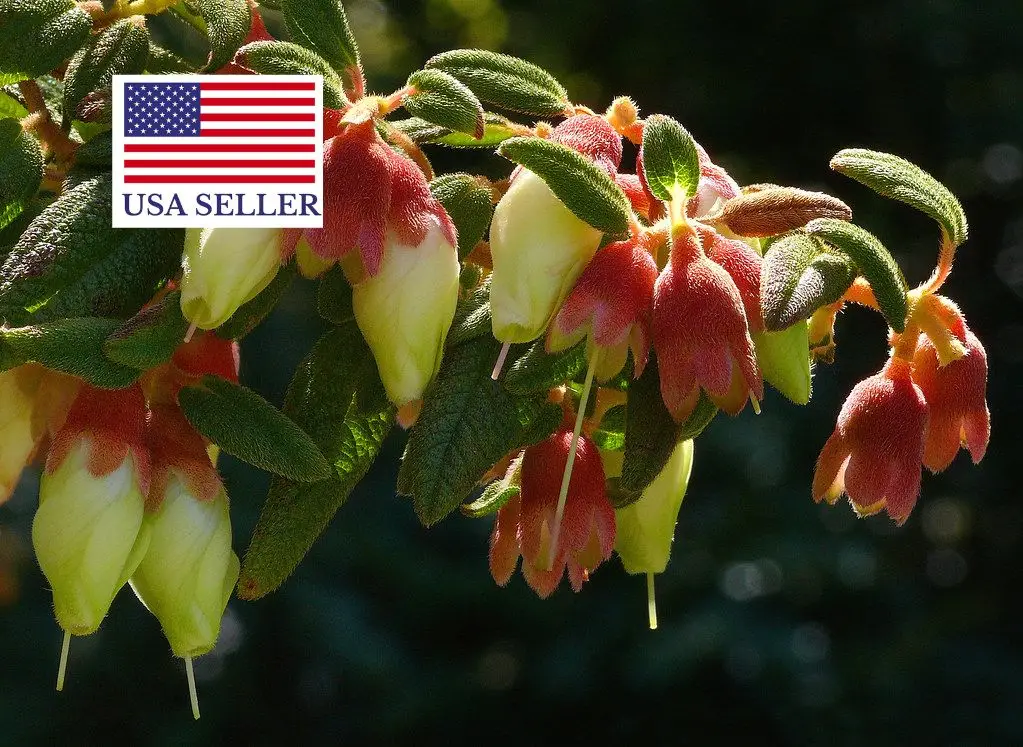
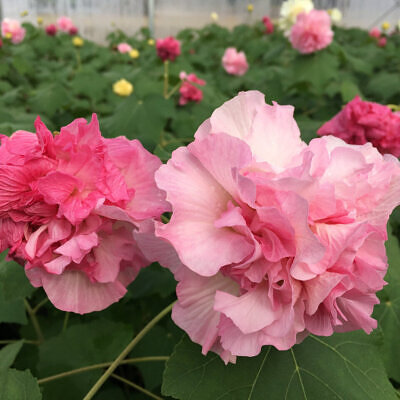
With an almost perpetual year-round flowering season, the unusual flowers never completely open out, remaining somewhat like a furled hibiscus flower. This is Brachyotum ledifolium, a plant that seems too remarkable to be real—yet there it stands in the cloud forests and paramo highlands of the Andes, spinning color and abundance through every season.
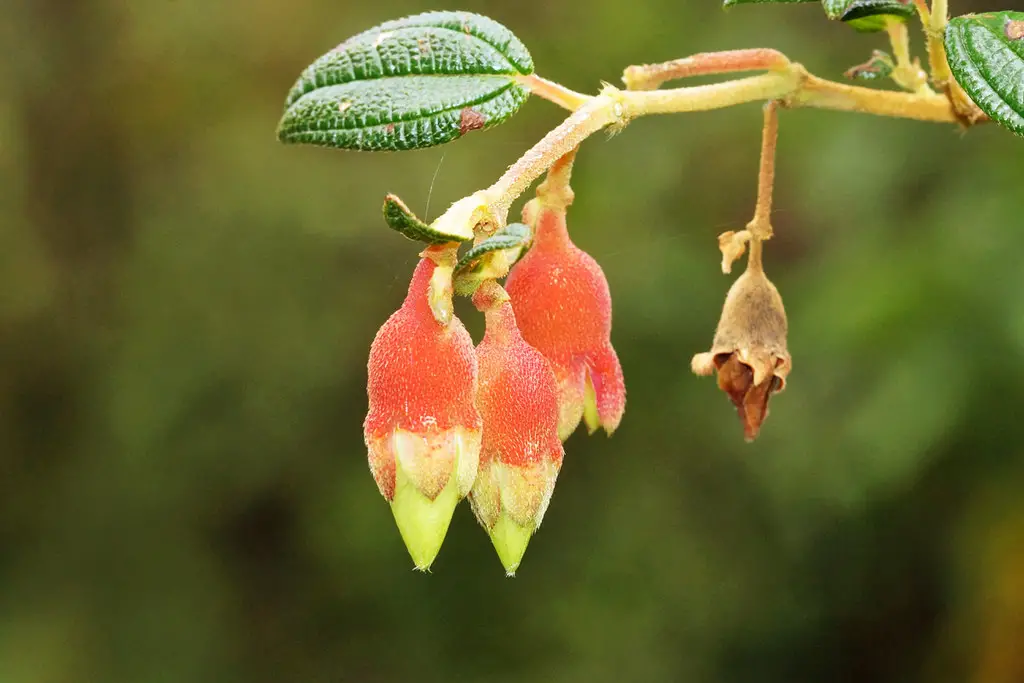
Brachyotum ledifolium, also known as pucachaglla, is a plant of the genus Brachyotum that grows in the lower elevations of the Andean Páramo. They are in the same family, Melastomataceae, as the well-known Tibouchina (Purple Princess Flower), but where Tibouchina shouts drama, ledifolium whispers intrigue. This plant has odd-looking green flowers with red scallops that look like they belong on a jester. The foliage is equally enchanting—soft, fuzzy green leaves with striking veining that catches light like a woodland painting.
But here’s where passion becomes palate: Its fruits are edible. This is the treasure hidden in plain sight. Le Pucachaglla est un arbuste apprécié pour ses fruits charnus et sucré pouvant se planter en bac ou en pleine terre. Imagine combining prolific flowering with the bonus of edible, sweet fruits on a single plant. From seed, you’re not just growing an ornamental—you’re cultivating a living bridge between Andean mountain culture and your own table. The fruits are small, tender jewels that reward patience and proper care.
**Growing Your Pucachaglla from Seed:** This is where commitment meets ease. Plante des tropiques, le Pucachaglla requiert un apport en eau régulier et abondant surtout en période de croissance. Think humidity and consistent moisture—it’s a cloud forest plant at heart, so avoid drying completely between waterings. In winter, il convient de le garder à 5 à 10°C et réduire l’arrosage de sorte à humidifier uniquement le substrat. Well-draining soil is essential; tropical potting mixes with peat or coir work beautifully. Grow it in bright, indirect light—direct sun in hot climates can stress the soft foliage. As a shrub reaching 1.5–2 meters, it adapts to containers or gardens in frost-free zones, making it perfect for conservatory, greenhouse, or tropical gardens. The plant rewards consistent care with uninterrupted blooms and, eventually, fruit production that feels genuinely miraculous.
Start your seeds now and join a small circle of growers discovering what Andean gardeners have known for centuries: that Brachyotum ledifolium is not just a plant to admire, but one to love. From the first tiny seedling to the moment you taste your first homegrown fruit beneath perpetual blossoms—this is the magic that happens when you grow something truly rare.
Germination Guide
🌍 Colombia to Peru; Andean Páramo
Moderate
Brachyotum ledifolium, member of family Melastomataceae, native to Andes cloud forests and paramo vegetation at high elevations (1800-4200m) in Colombia, Ecuador, and Peru. This species is rarely found in cultivation and produces edible fruit.
Germination
Substrate moisture
💧 Medium
Sowing depth
Lightly covered
Growing Tips
Species appears not to have publicly available detailed germination documentation. Some growers report soaking seeds for 24 hours and using seed trays with success, but formal protocol is not established.
Only logged in customers who have purchased this product may leave a review.


Reviews
There are no reviews yet.