

Grow the wood that craftspeople crave. Monkeypod yields stunningly figured timber in rich cream and chocolate tones—prized for fine furniture, carvings, and bowls. Add a bonus: spectacular pink powder-puff flowers, fern-like foliage that folds at nightfall, and rapid growth. Hardy, forgiving, and beautiful from seed to harvest.
Imagine cultivating a tree whose wood becomes more precious with time—a living investment in beauty and craftsmanship.
Albizia saman, the legendary monkeypod or rain tree, is native to the tropical forests and savannahs of Central and South America, where it has earned reverence as a multi-purpose giant. Yet its greatest gift—the reason collectors and woodworkers speak its name with near reverence—is its wood. When you grow Albizia saman from seed, you’re nurturing timber that will be sought after. This is not a tree you plant and forget; it is a future heirloom.
The wood of Albizia saman is the heart of its allure. Highly prized for fine woodworking, it displays a striking contrast between creamy white sapwood and deep chocolate-brown heartwood, creating wild grain patterns and beautiful swirls that make each board unique. The wood is light yet remarkably durable, resistant to rot and decay, and shrinks so little from green wood that master carvers fashion pieces directly without fear of splitting or warping. In Hawaii, the demand for monkeypod bowls, boxes, and carved goods is so fierce that local supplies are exhausted and supplemented with imports from Indonesia and the Philippines—a testament to its enduring prestige. Fine furniture makers, instrument builders, and artisans prize it as a substitute for rarer tropical hardwoods, valuing its strength, workability, and lustrous finish. Growing your own monkeypod means becoming part of a craft tradition spanning centuries.
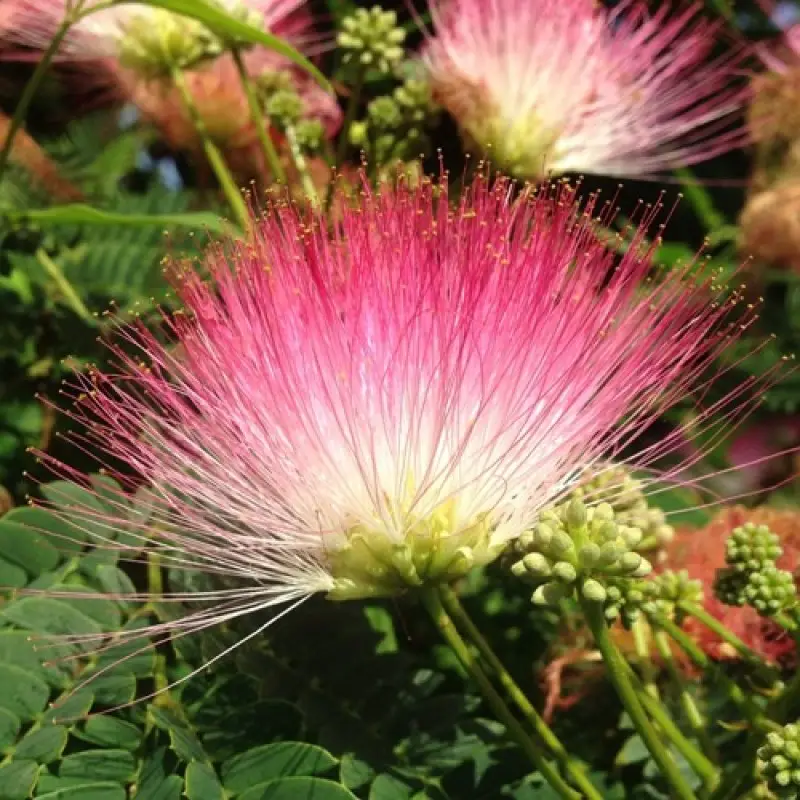
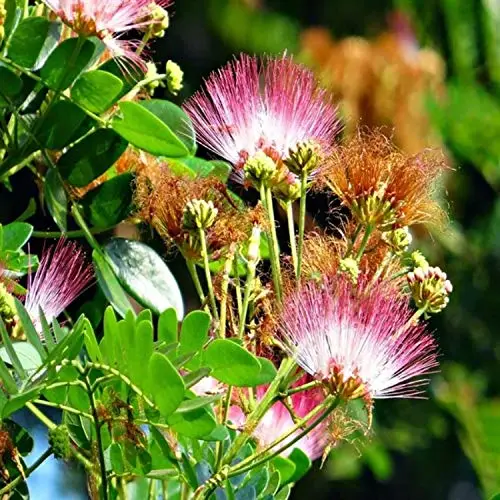
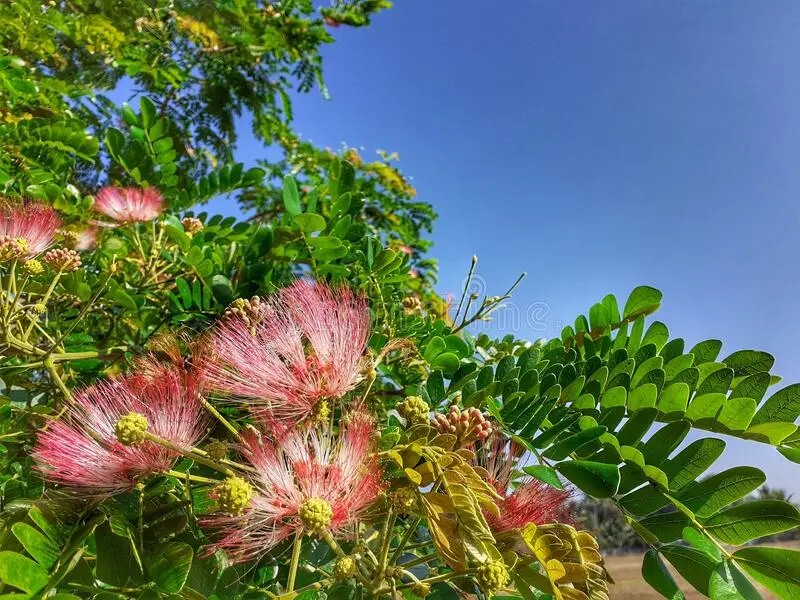
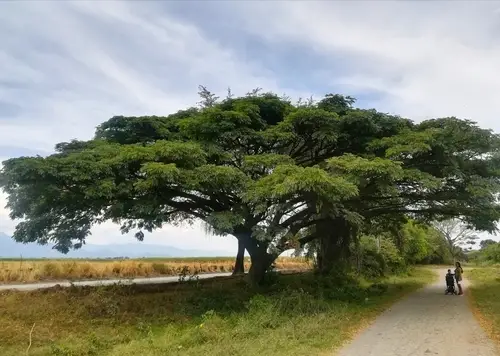
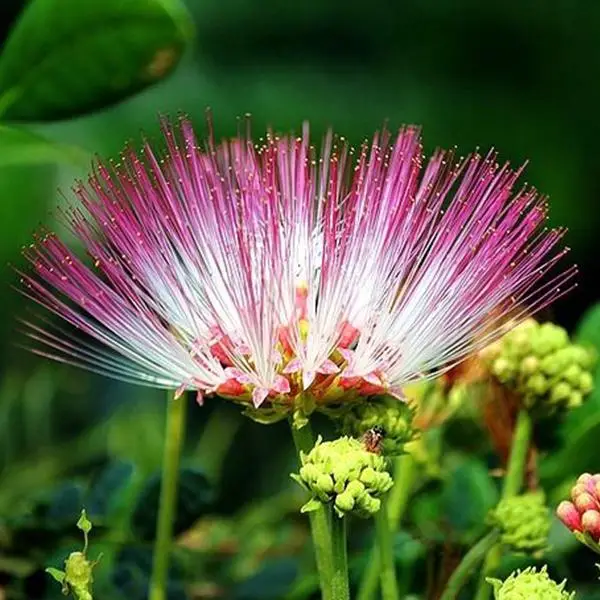
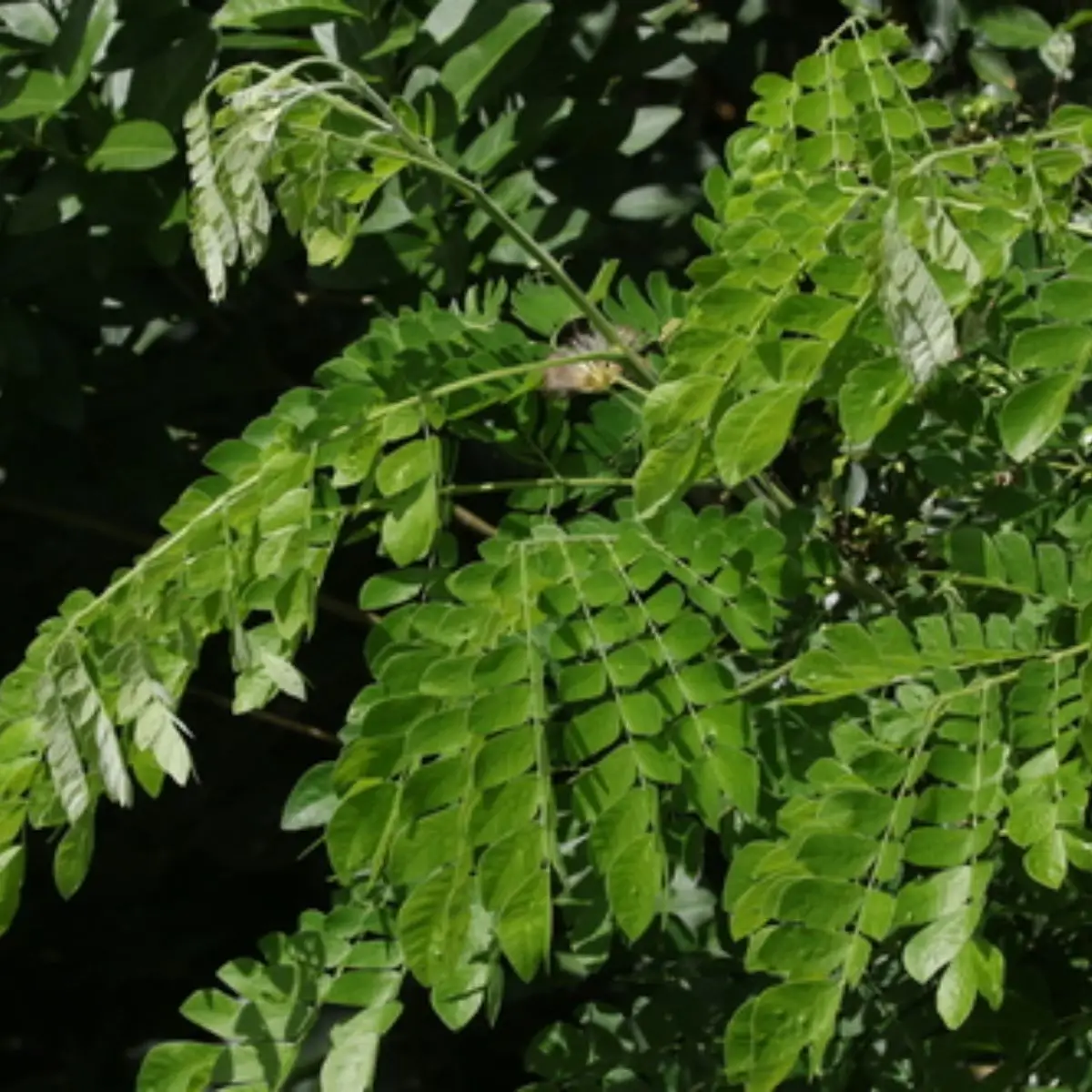
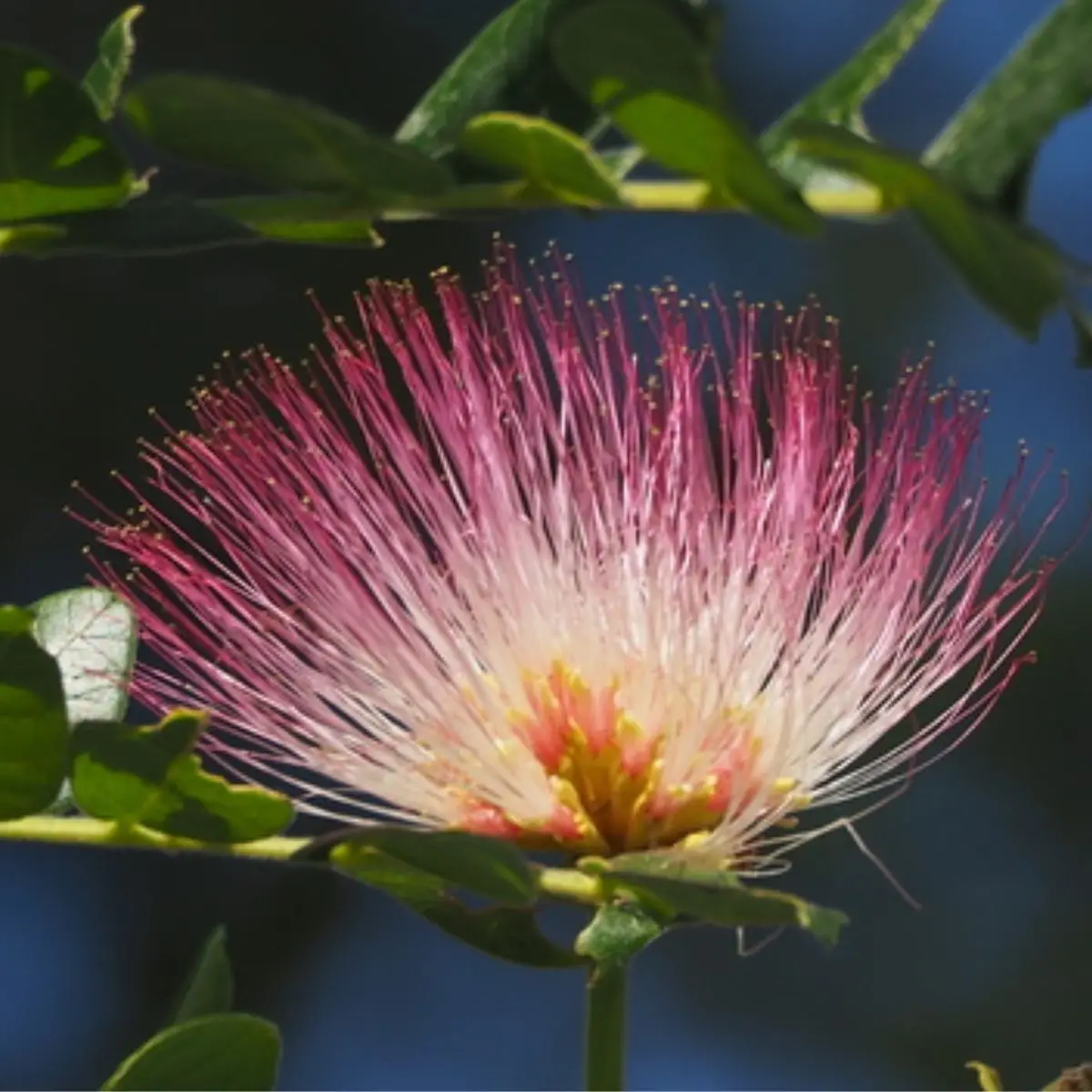
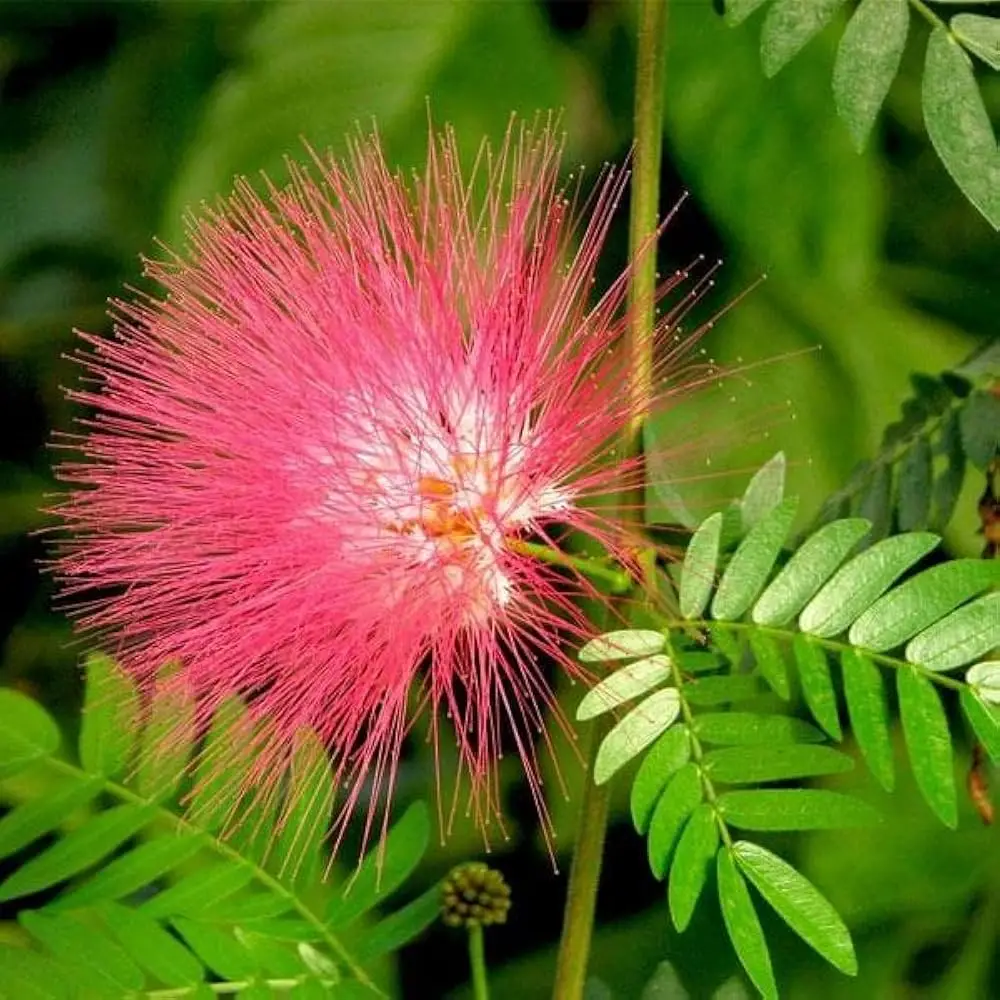
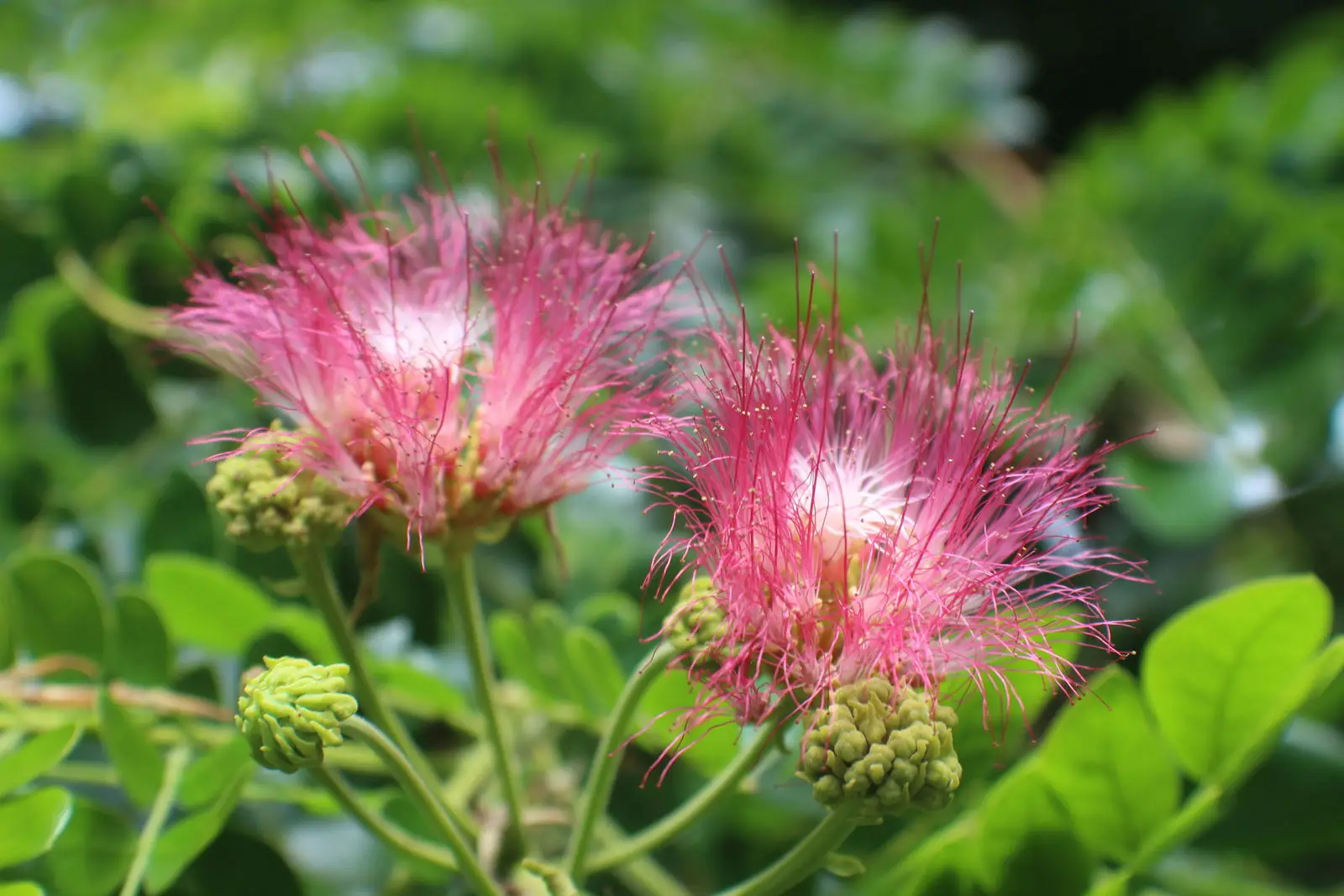
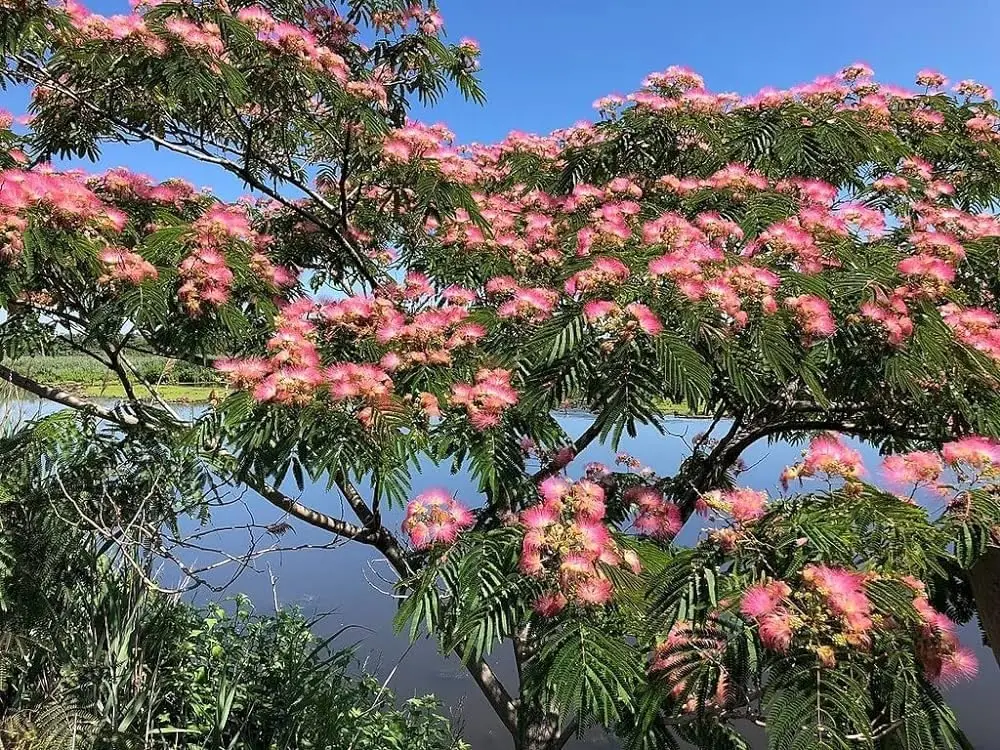
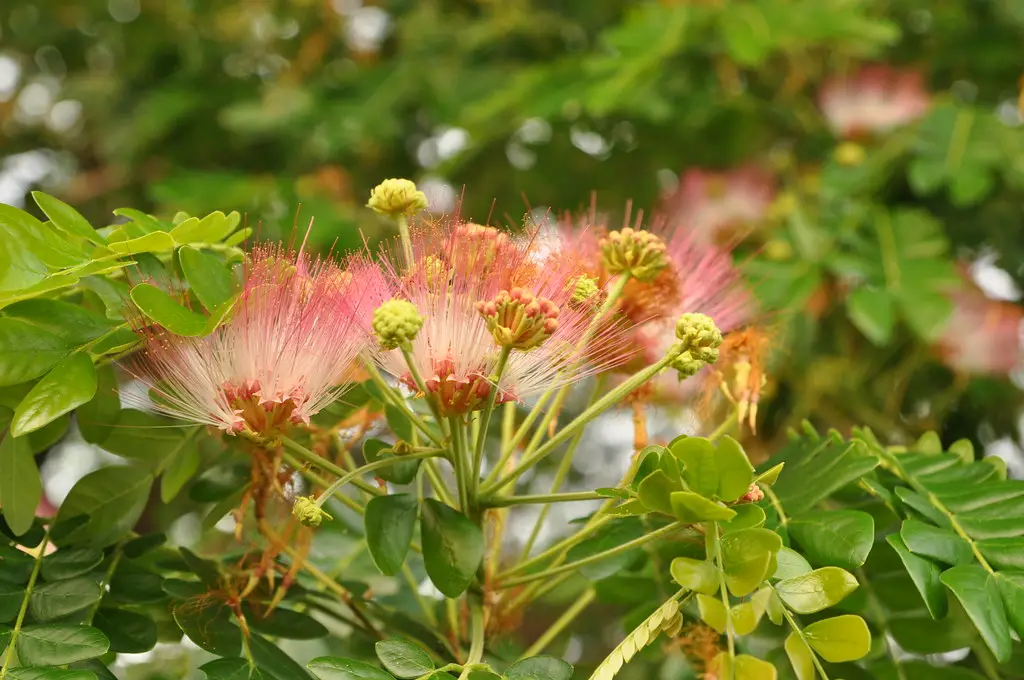
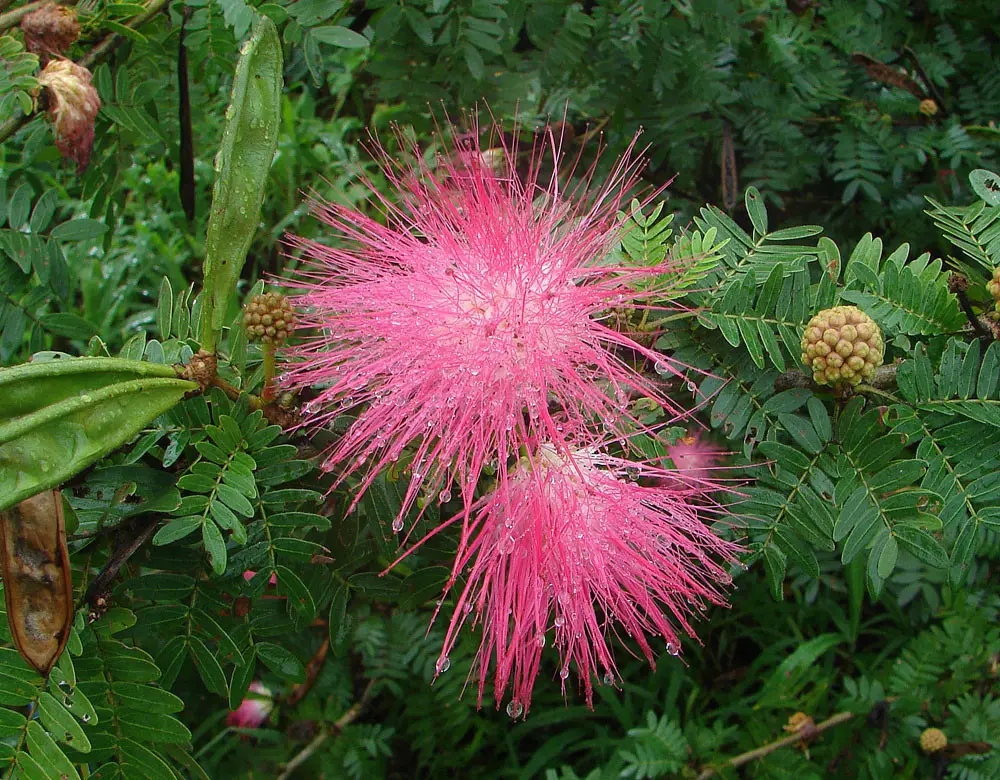
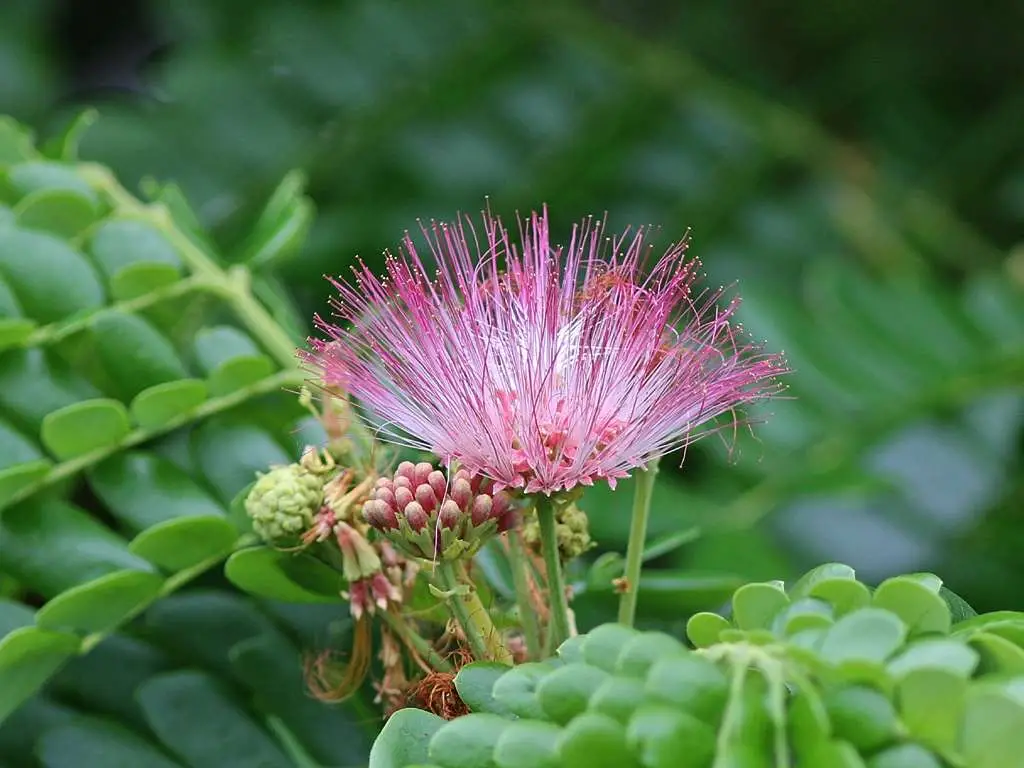
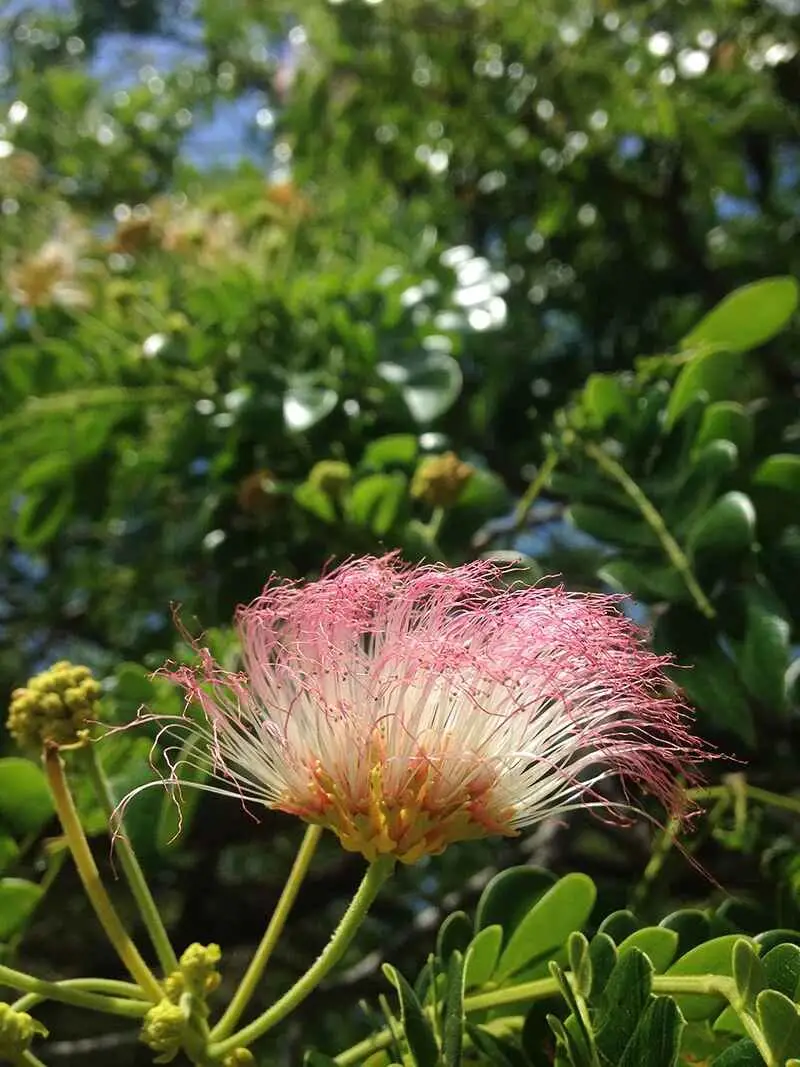
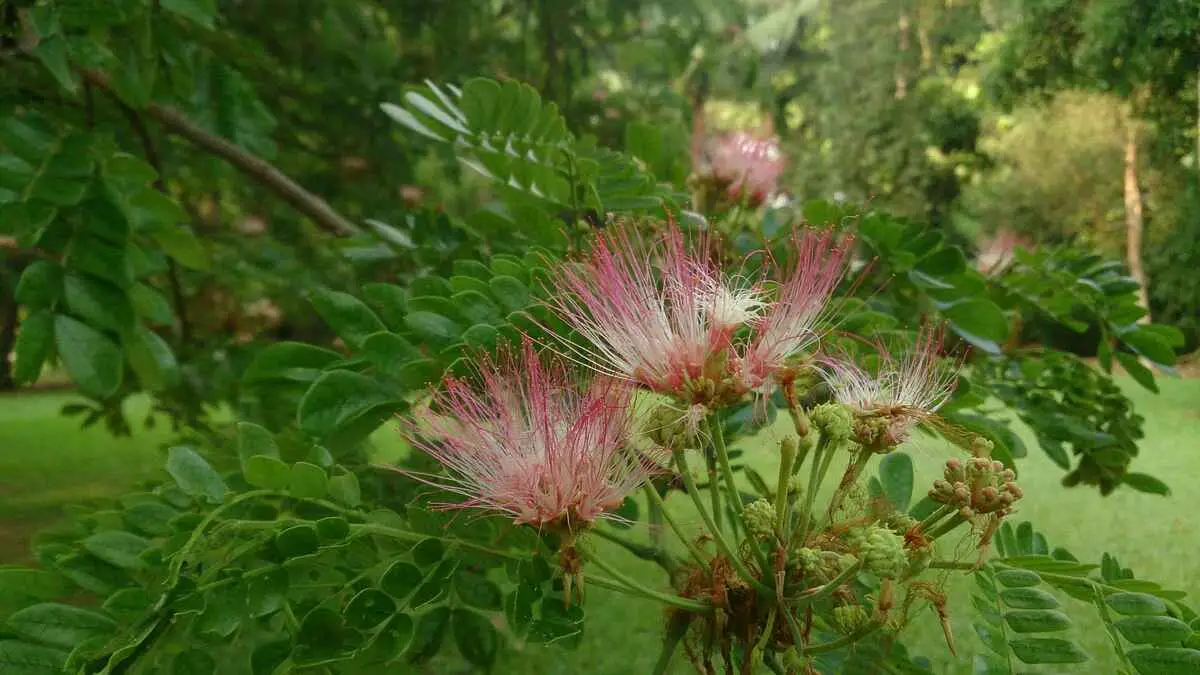
But the treasures don’t end in the wood shop. The living tree is an ornamental marvel. Each spring, Albizia saman erupts in thousands of delicate pink pompom-like flower heads—each a massed cluster of tiny flowers with white stamens tipped in crimson-pink, held slightly above the fern-like foliage. These blooms attract bees and butterflies in abundance, and the tree also produces honey that is prized in traditional beekeeping. The bipinnate leaves, impossibly delicate and fern-like, possess a mesmerizing quality: they fold inward during rainy days and at nightfall in a phenomenon called nyctinasty, mysteriously revealing the greenery beneath and allowing rainfall to penetrate more easily—giving the tree its enchanting common name. The broad, umbrella-shaped canopy spreads gracefully to provide magnificent shade. As a legume, monkeypod also fixes nitrogen in the soil, enriching the earth beneath it and supporting the lush grass and ecosystems around it. The sweet, edible seed pods are relished by wildlife and humans alike.
Cultivating Albizia saman is a pleasure, not a burden. This is a fast-growing, vigorous species that tolerates poor, acidic, and alkaline soils with ease. It thrives in full sun and medium moisture, well-drained conditions, yet once established it shrugs off drought with grace. The seeds have a hard coat, requiring scarification or hot water treatment to germinate, but germination is reliable and robust. Young trees grow with such vigor that you’ll see impressive size within just a few years. Unlike many fine-timber trees that demand perfectionistic conditions, monkeypod adapts to a wide range of tropical and subtropical climates (USDA Zones 10–11), making it achievable for passionate growers across the warm world. Whether in large landscapes, home gardens, or specialized collections, this tree establishes easily and rewards patience with abundance.
To hold a mature Albizia saman seed in your hand is to hold a promise: a living sculpture in waiting, a future masterpiece of wood grain and form, a shade provider, a sanctuary for pollinators, a nitrogen-builder, a living artwork. Start from seed now, and one day you will know the satisfaction of seeing your monkeypod wood transform into something magnificent—a bowl a craftsperson treasures, a table that graces a home, a legacy carved from your own garden. This is the magic of patient, purposeful cultivation.
Only logged in customers who have purchased this product may leave a review.

Reviews
There are no reviews yet.