Description
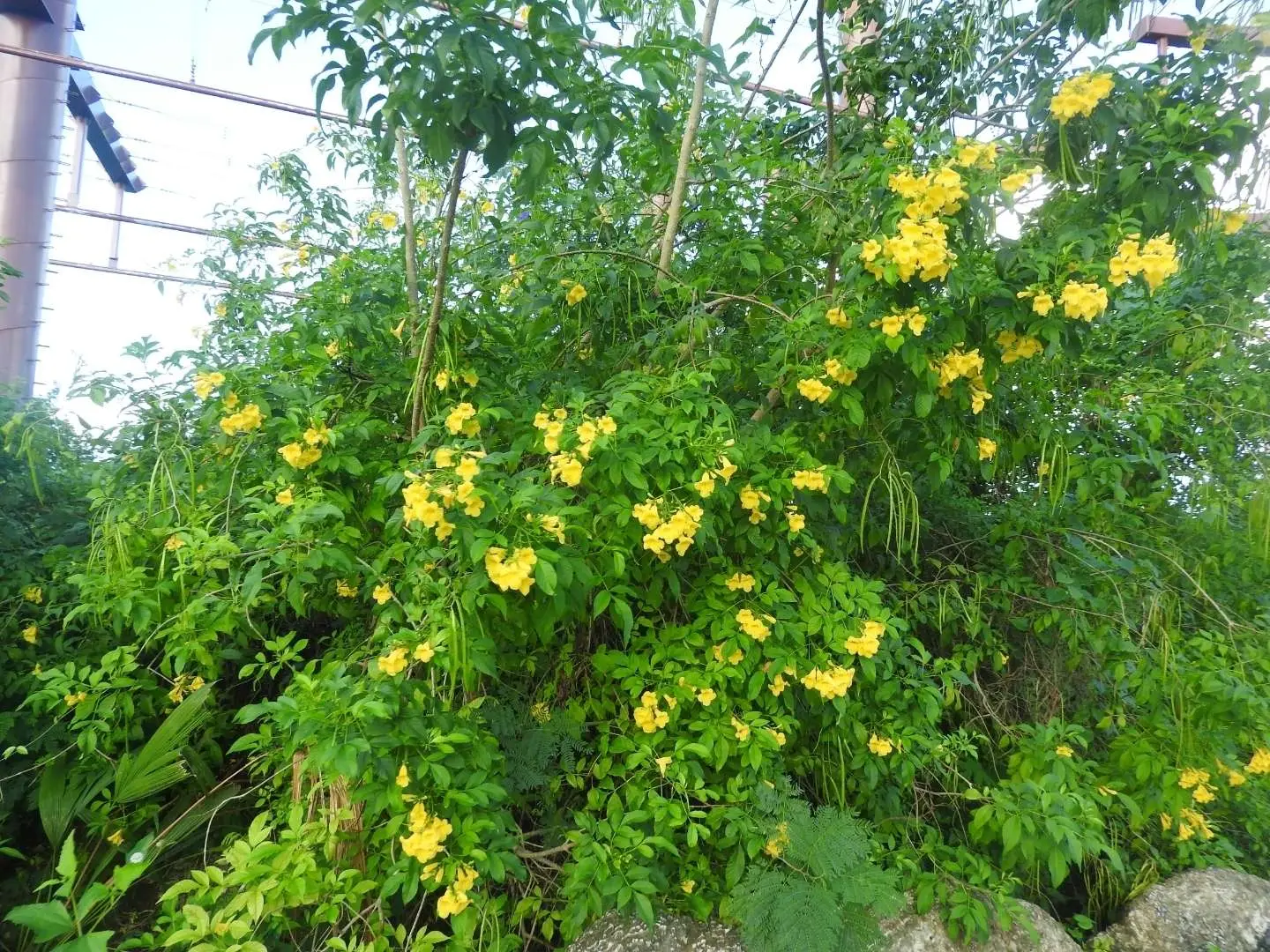
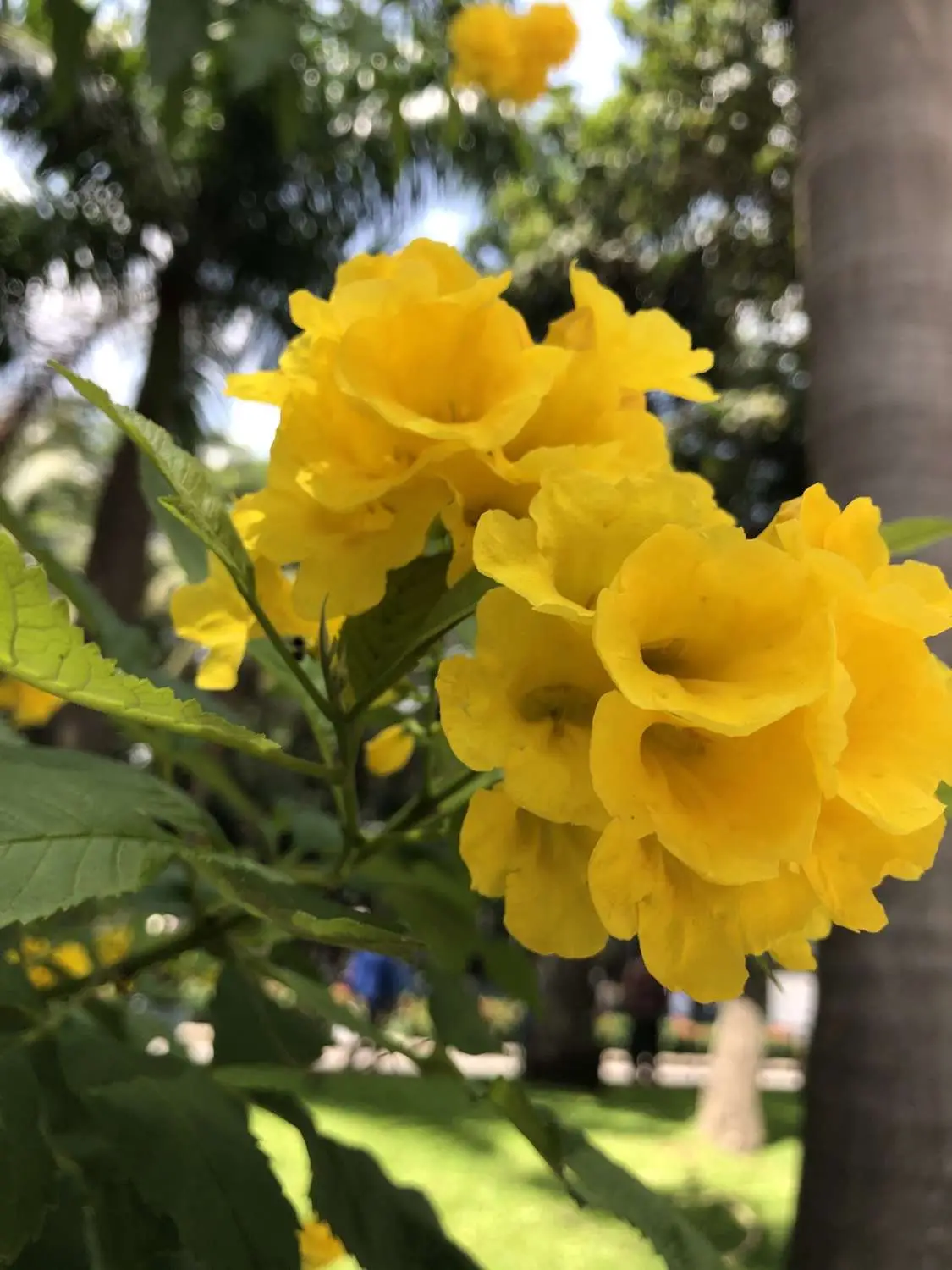
Tecoma stans is a species of flowering perennial shrub in the trumpet vine family, Bignoniaceae, that is native to the Americas. Common names include yellow trumpetbush, yellow bells, yellow elder, ginger-thomas. Tecoma stans is the official flower of the United States Virgin Islands and the floral emblem of The Bahamas.
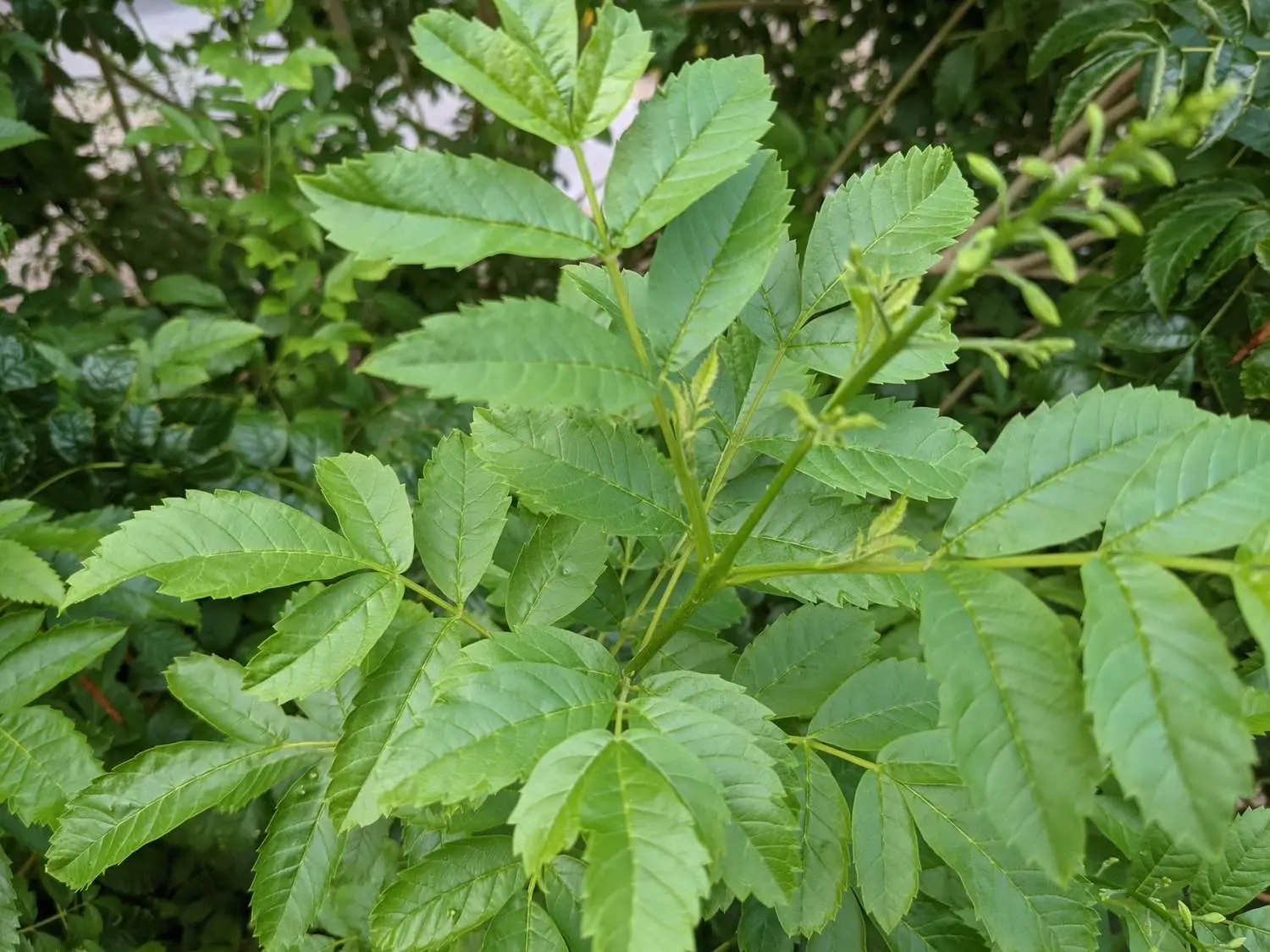
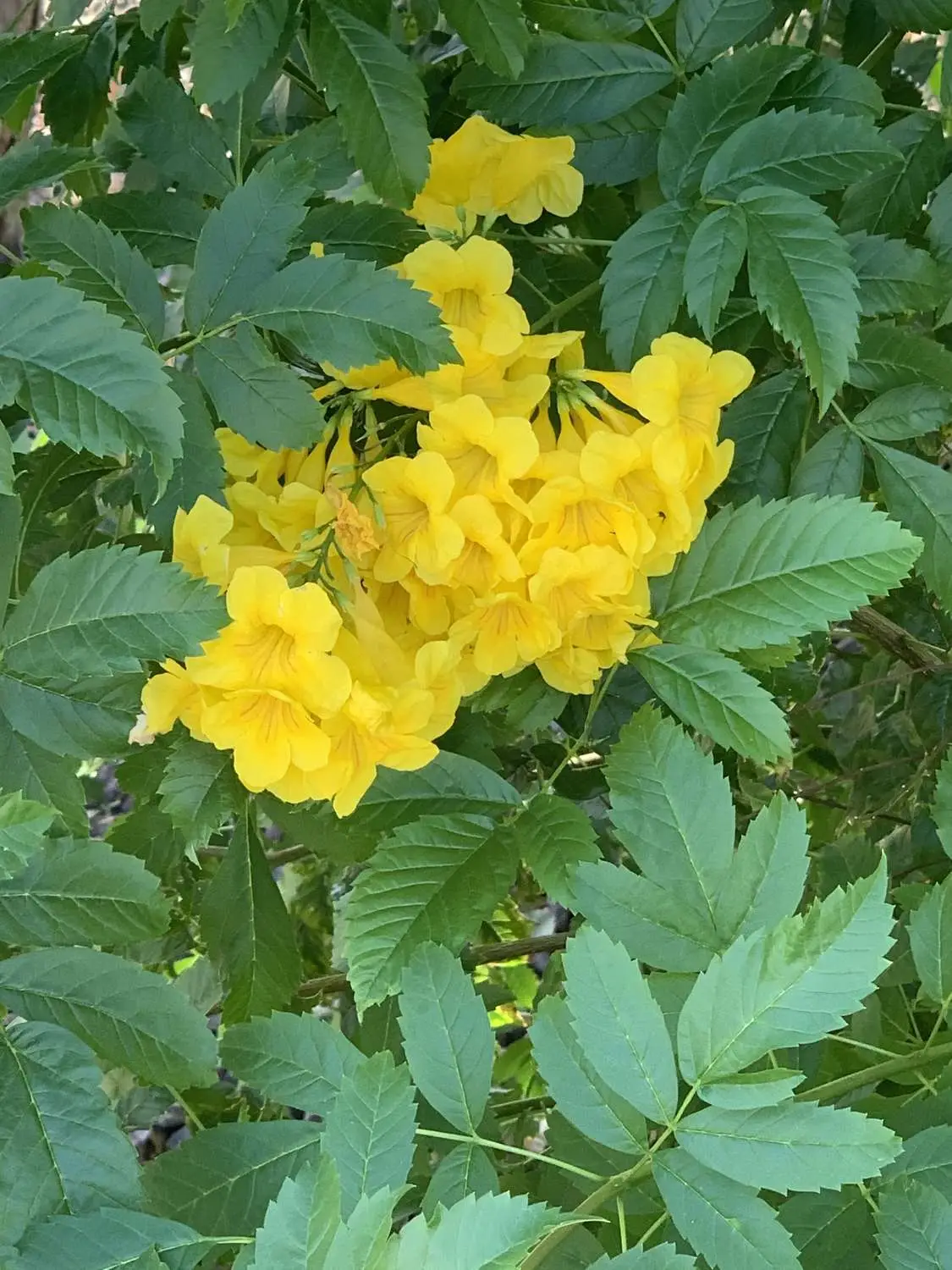
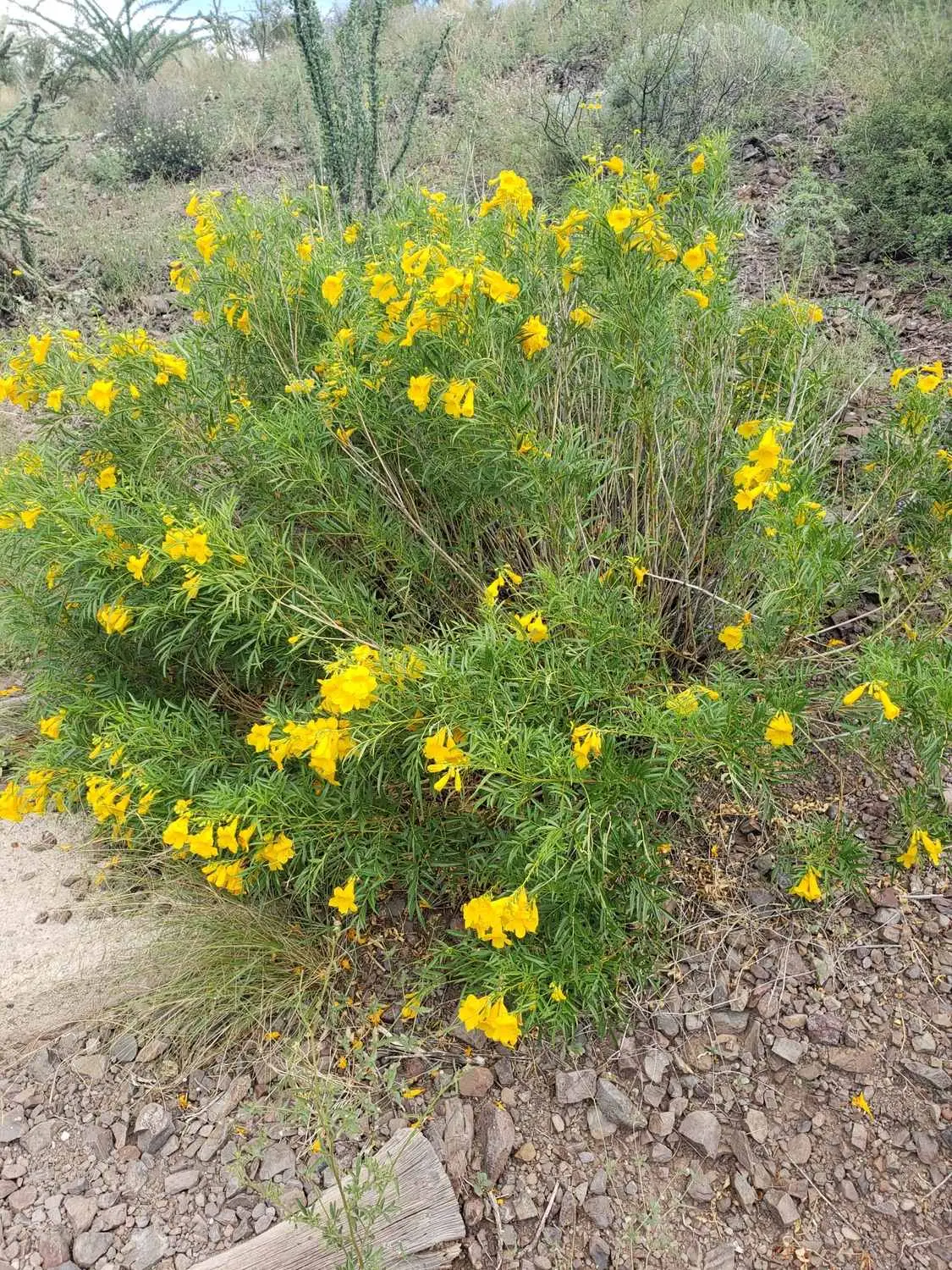
A semi-evergreen shrub that can grow to a small tree, it features sharply toothed, opposite green leaves that are pinnate unpaired, with 3 to 13 serrate, 8 to 10 cm long leaflets. The leaflets, glabrous on both sides, have an elliptical lanceolate blade 2–10 cm long and 1–4 cm wide, with a long acuminate apex and a wedge-shaped base. The margin is finely toothed It reaches heights of 6 to 9 meters.
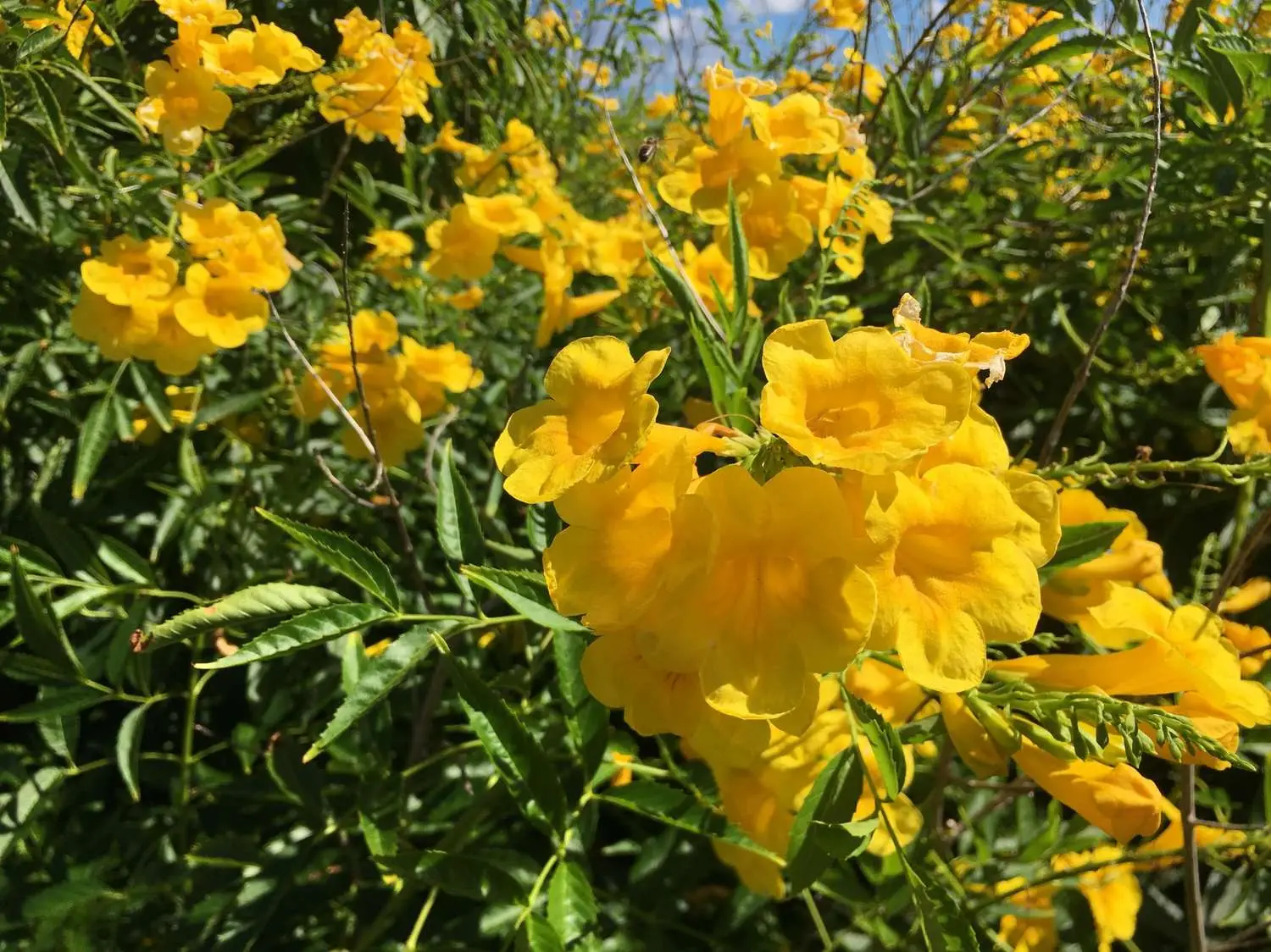
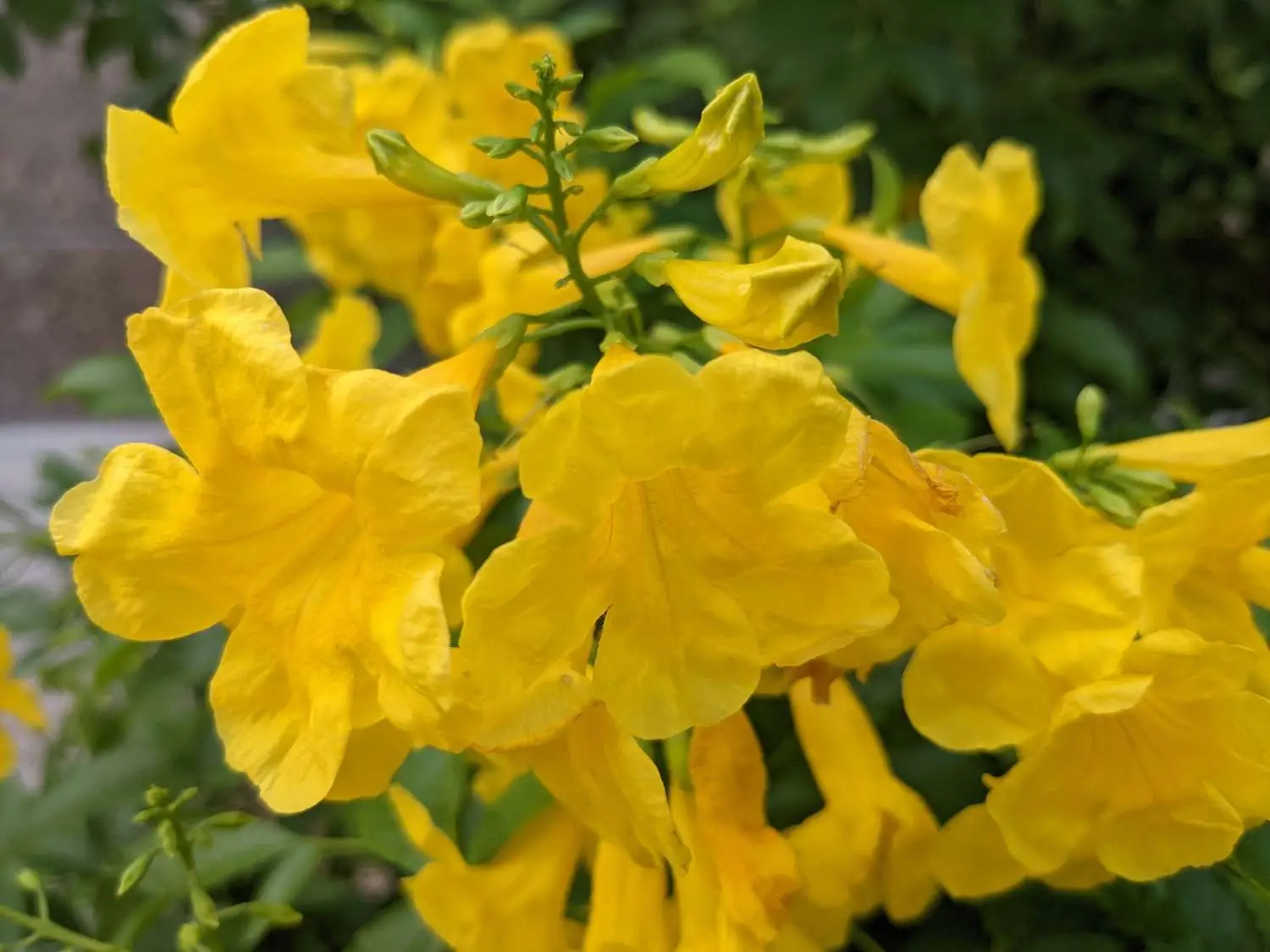
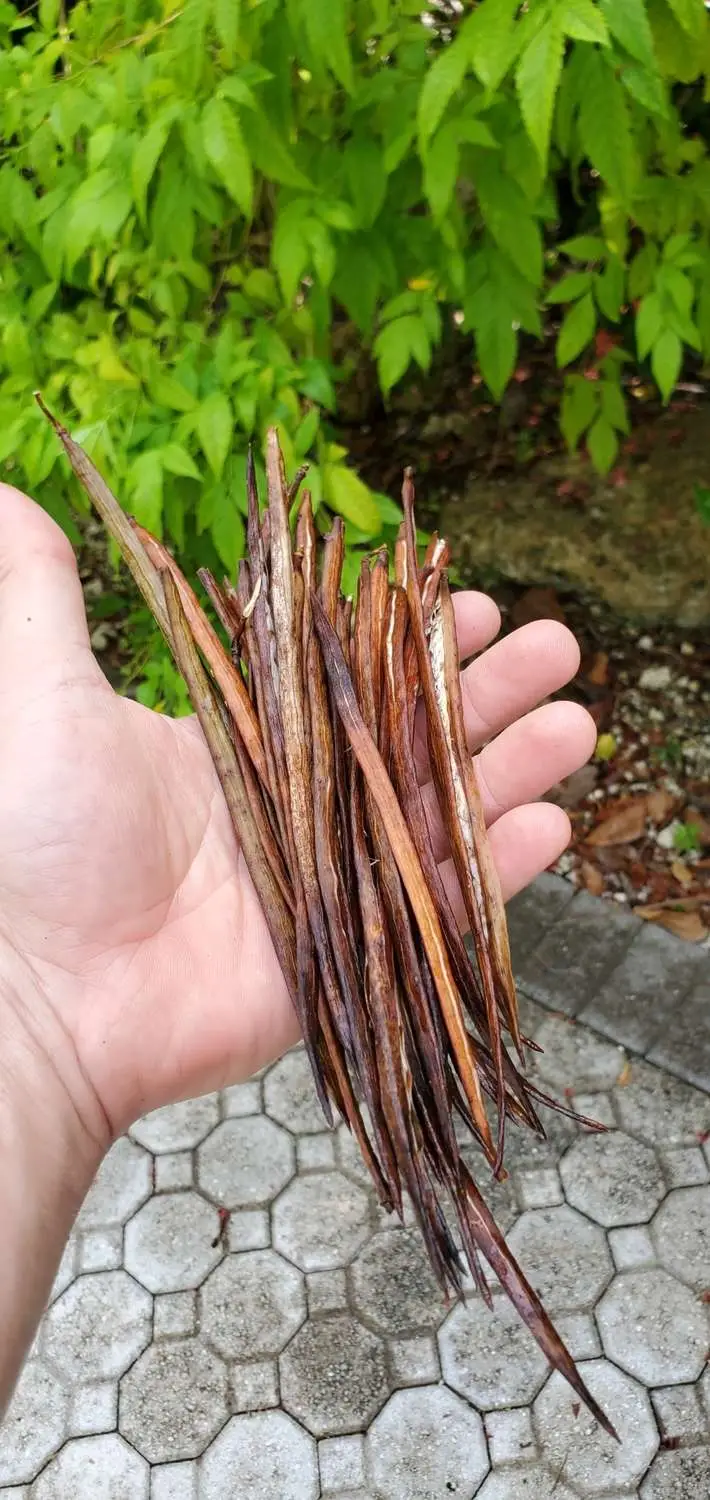
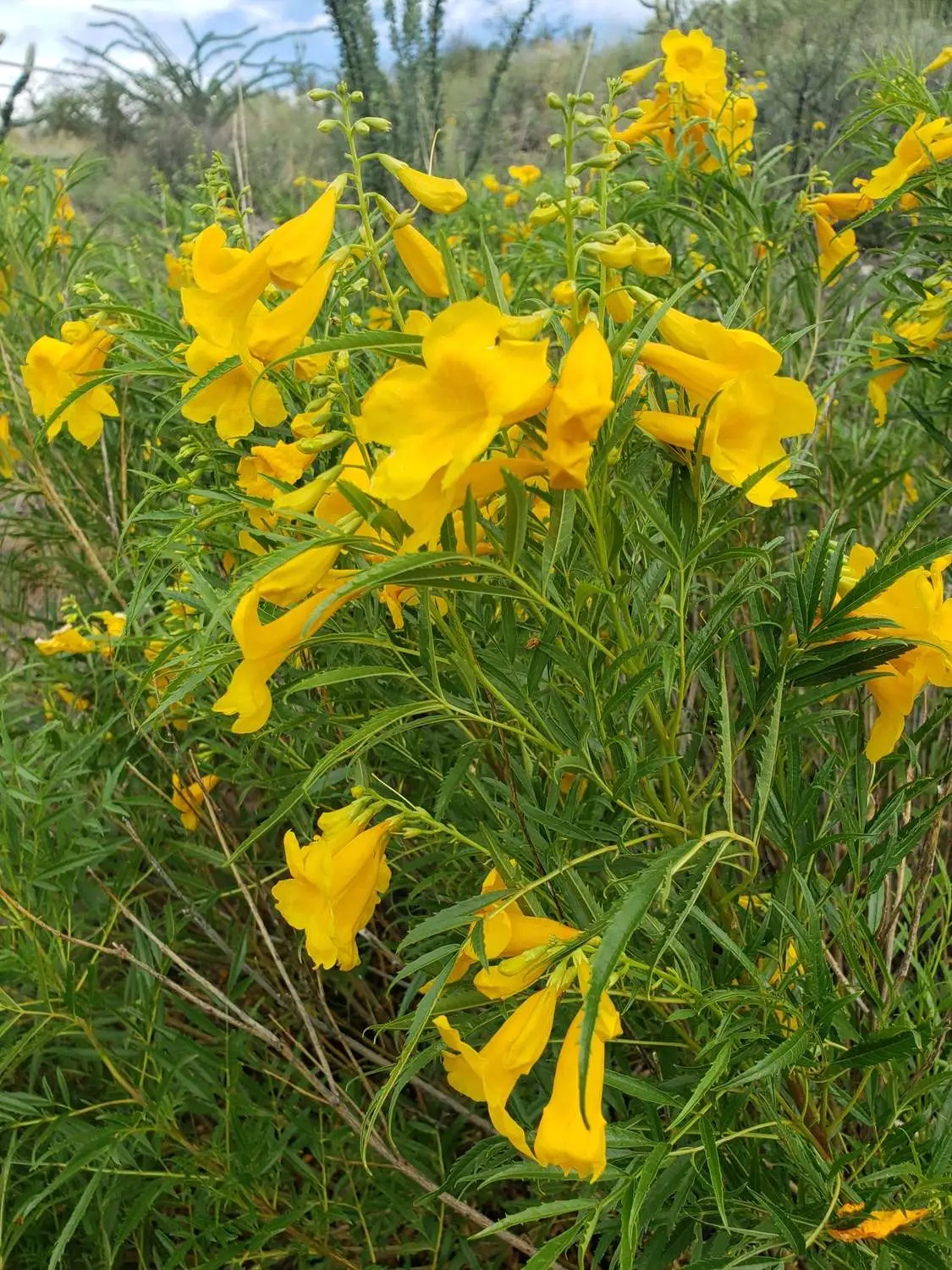
The large, showy, golden yellow, trumpet-shaped flowers are in clusters at the branch ends, are bell-shaped-funnel-shaped, five-lobed (with weakly two-lipped), often reddish-veined in the throat and 3.5 to 8.5 cm long. Flowering takes place all year round. The fruits arise from two carpels and are up to 25 cm long, narrow capsules. The flowers attract bees, butterflies, and hummingbirds. The plant produces pods containing yellow seeds with papery wings. They release many seeds with membranous wings when they open. Tecoma stans reproduces sexually (by anemochory) or asexually.
Tecoma stans is native to the Americas. It extends from the southern United States through Mexico, Central America, and the Antilles to northern Venezuela, and through the Andes mountain range to northern Argentina. It was introduced in southern Africa and Hawaii
Yellow trumpetbush is a ruderal species, readily colonizing disturbed, rocky, sandy, and cleared land and occasionally becoming an invasive weed. It thrives in a wide variety of ecosystems, from high altitude temperate forests and tropical deciduous and evergreen forests, to xerophilous scrub and the intertropical littoral. It quickly colonizes disturbed, rocky, sandy, and cleared fields. The species prefers dry and sunny regions of the coast.
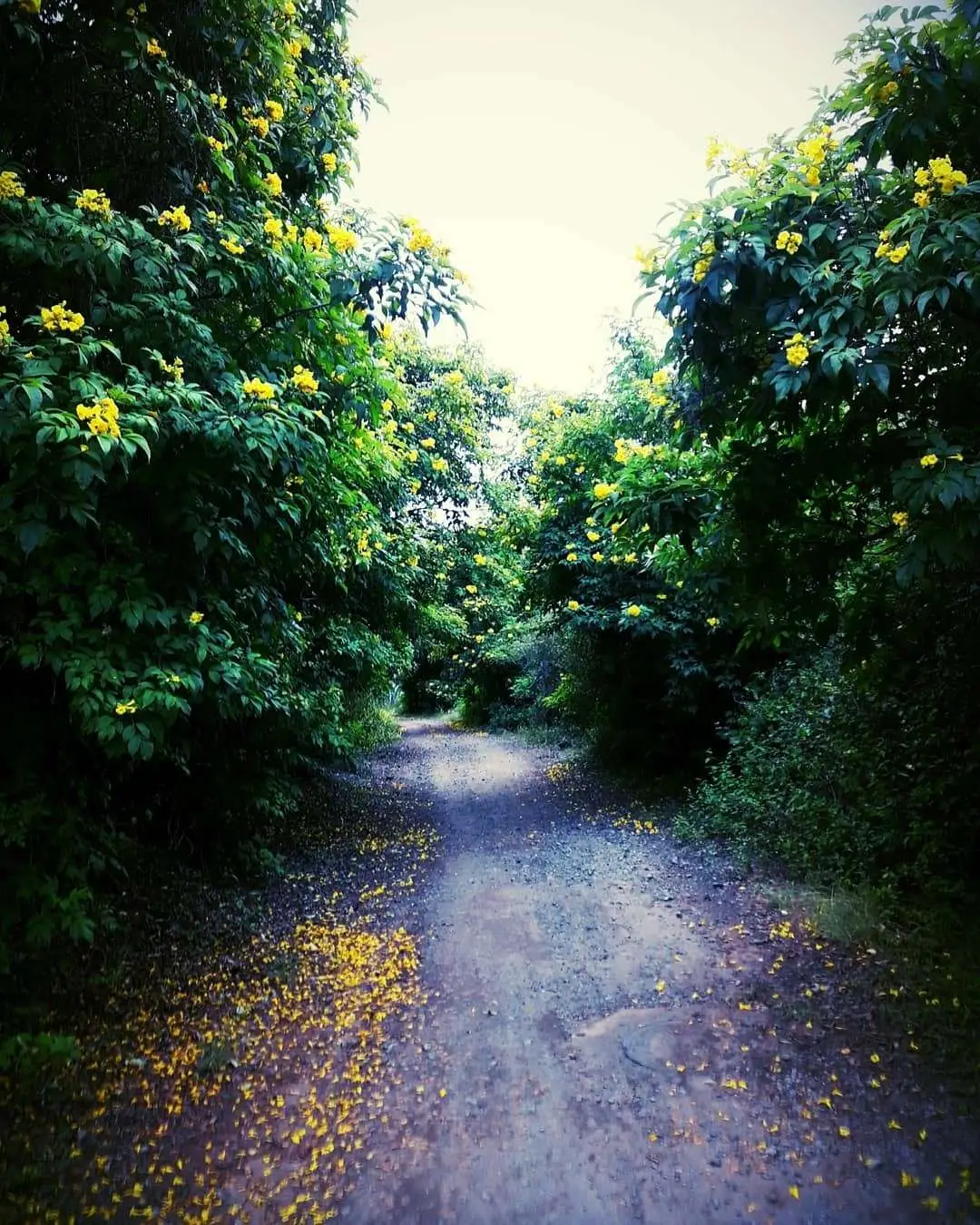
Esperanza is drought-tolerant and grows well in warm climates. It is an attractive plant that is cultivated as an ornamental. They are grown in many parts of the world for their beautiful flowering, to adorn streets and gardens. It can be easily propagated by stem cuttings.
The wood is used in rustic architecture like bahareque, for the construction of furniture and canoes, or as firewood or charcoal. It is a medicinal plant used against diabetes and against diseases of the digestive system, among other uses. The plant is desirable fodder when it grows in fields grazed by livestock.
Germination Guide
🌍 Sonoran Desert (Arizona, California), North America, South America, Central America, Mexico, Caribbean
Easy
Tecoma stans (Yellow Bells) is a tropical shrub native to the Sonoran Desert and tropical Americas. Seeds germinate readily without scarification or stratification. Seeds tolerate water stress and germinate at high percentages across temperature ranges. Light requirements are not restrictive.
Germination
Germination time
Expect germination in
7 – 21 days
Temperature
Min 20°C
Ideal 25°C
Max 30°C
Substrate moisture
💧 Medium
Substrate & Container
Recommended substrate
Loose, moist, fine soil; well-draining soil with sandy composition
Recommended container
Seed trays or pots with drainage
Growing Tips
Keep seedlings lightly moist to avoid rot and mold; reduce water after sprouting. Seeds germinate faster at 70-85°F (21-29°C). Sow after winter season ends. Seeds are wind-dispersed with papery wings. Plant produces seeds year-round in warm climates.
Only logged in customers who have purchased this product may leave a review.

Reviews
There are no reviews yet.