Description
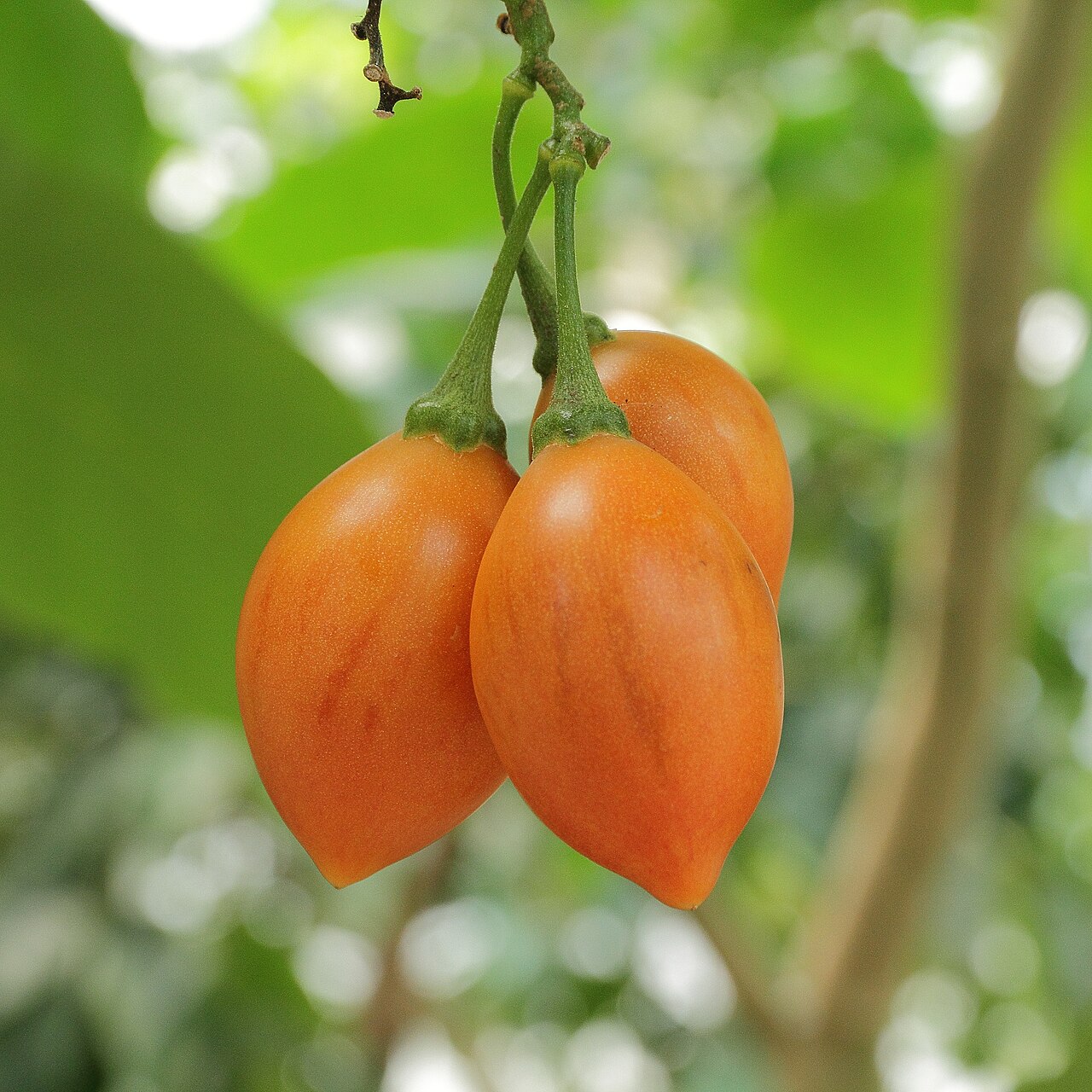
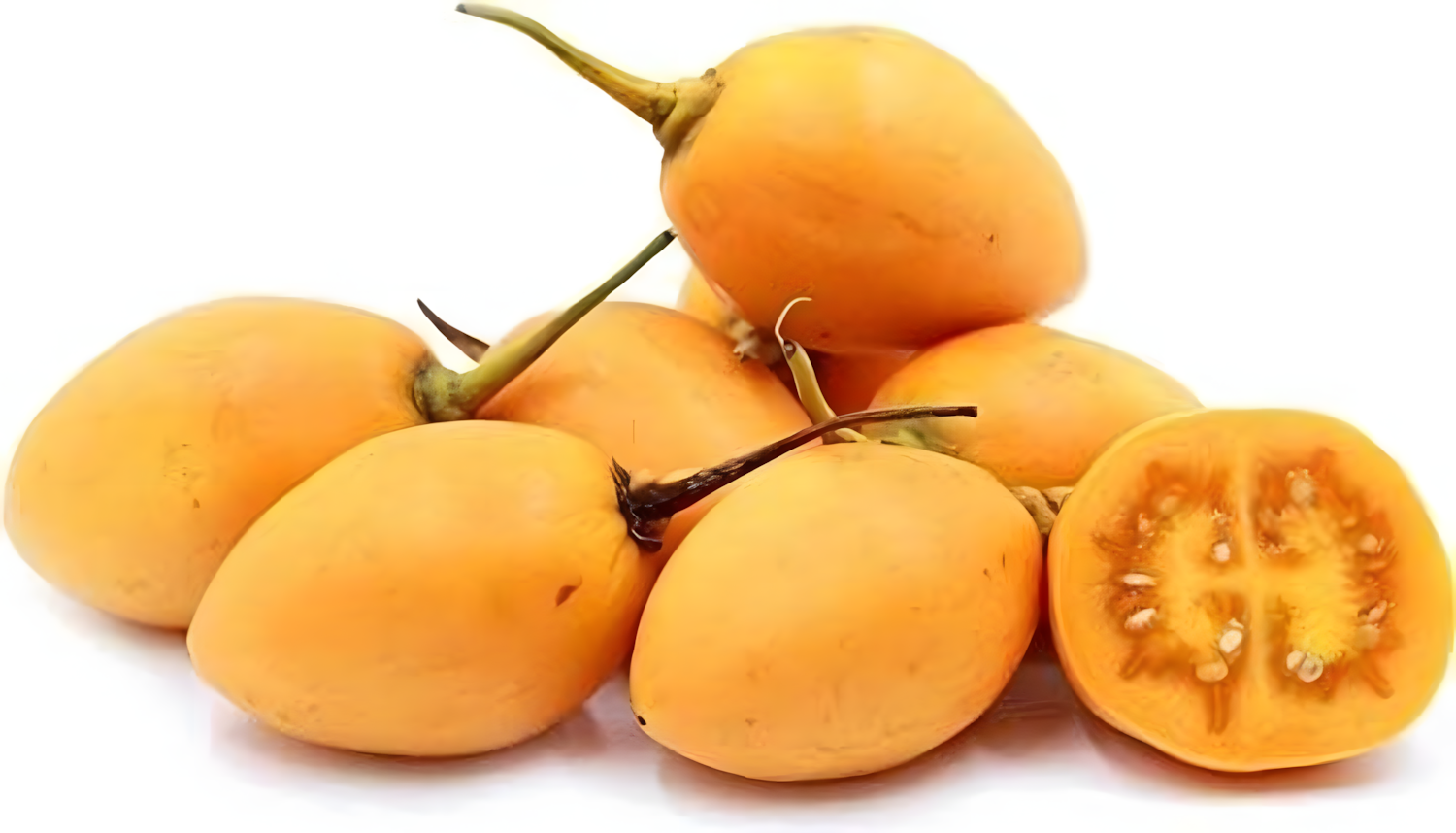
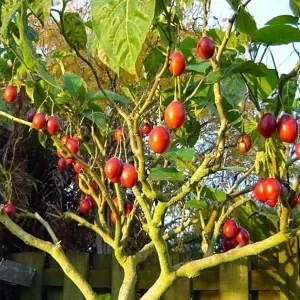
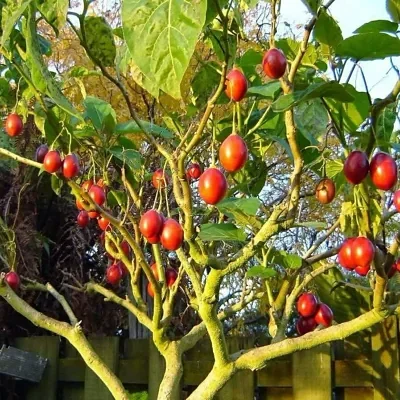
Cyphomandra betacea ‘Yellow Fruit’ is a productive tamarillo cultivar grown for its attractive golden-yellow fruits and mild, sweet flavor. This fast-growing evergreen shrub or small tree is native to the Andean regions of South America and typically reaches 2 to 4 meters in height. Its large, heart-shaped leaves and open, spreading canopy give it a lush, tropical appearance, making it both an ornamental and fruit-producing plant.
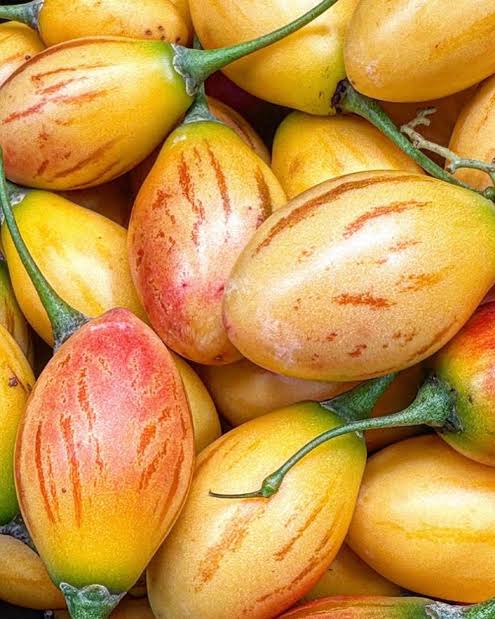
Clusters of fragrant pinkish-white flowers appear throughout the growing season and develop into smooth, egg-shaped fruits that ripen to bright yellow or golden-orange. The flesh is juicy and aromatic, generally sweeter and less acidic than red-fruited tamarillo varieties, making it particularly suitable for fresh eating, juices, desserts, preserves, and fruit salads.
This cultivar thrives in mild tropical, subtropical, and highland climates. It performs best in full sun to partial shade and prefers fertile, well-drained soil rich in organic matter. Regular watering is important for vigorous growth and fruit production, while protection from strong winds and severe frost will help maintain plant health.
Germination Guide
🌍 South America, Andean regions of Peru, Ecuador, Bolivia, Colombia, Argentina, and Chile
Easy
Solanum betaceum, commonly known as tamarillo or tree tomato, is a fast-growing subtropical evergreen shrub native to the Andean highlands of South America. The yellow-fruited cultivar produces sweet, mild flavored fruits and requires warm, consistently humid conditions with bright light for successful germination, typically sprouting in 2-4 weeks when kept at 20-25°C.
Germination
Germination time
Expect germination in
7 – 28 days
Temperature
Min 15°C
Ideal 20°C
Max 25°C
Substrate moisture
💧 Medium
Sowing depth
Lightly covered
Seed Pre-treatment
-
💧
Soaking — 24 hours
Soak seeds in warm water for 24 to 48 hours to soften seed coat and eliminate mucilaginous residue, improving germination
-
🔨
Mechanical scarification
Light scarification or sanding the seed coat can improve germination rates by allowing water penetration
-
📋
Additional notes
Extract and clean seeds from ripe fruit; optional: freeze seeds for 24 hours before planting to speed germination
Substrate & Container
Recommended substrate
Well-draining seed-starting mix, sterile compost, or organic-rich soil
Recommended container
Seed trays or containers with drainage; transplant to individual 4-inch pots when seedlings reach 3 inches tall
Growing Tips
Surface sow seeds on moist seed-starting mix without burying deeply; use bottom heat (heat mat) at 20-25°C and maintain consistent humidity with a clear plastic cover. Seeds require light exposure, so avoid covering completely. Water seedlings sparingly after germination as stems are prone to rot. Once seedlings develop 2-3 true leaves, transplant to individual pots. Avoid waterlogging. Yellow varieties typically ripen earlier in the season and produce sweeter fruits compared to red cultivars.
Only logged in customers who have purchased this product may leave a review.


Reviews
There are no reviews yet.