
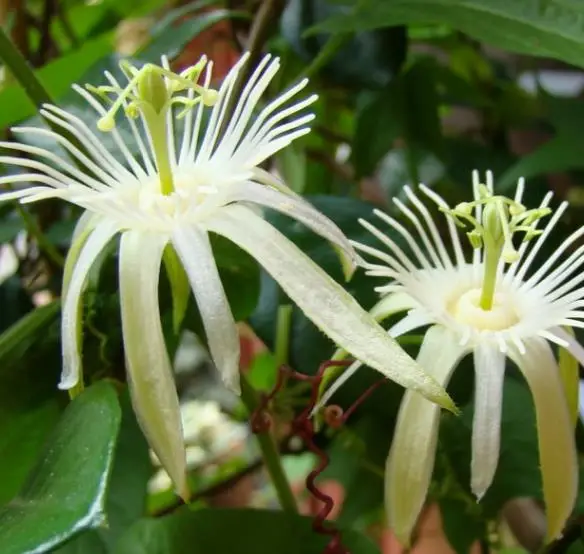
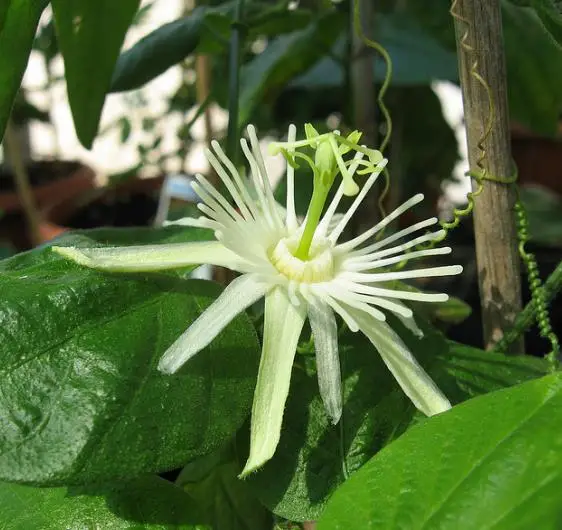
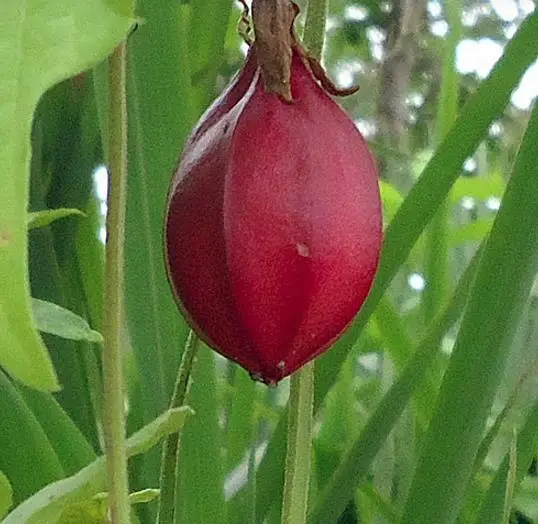
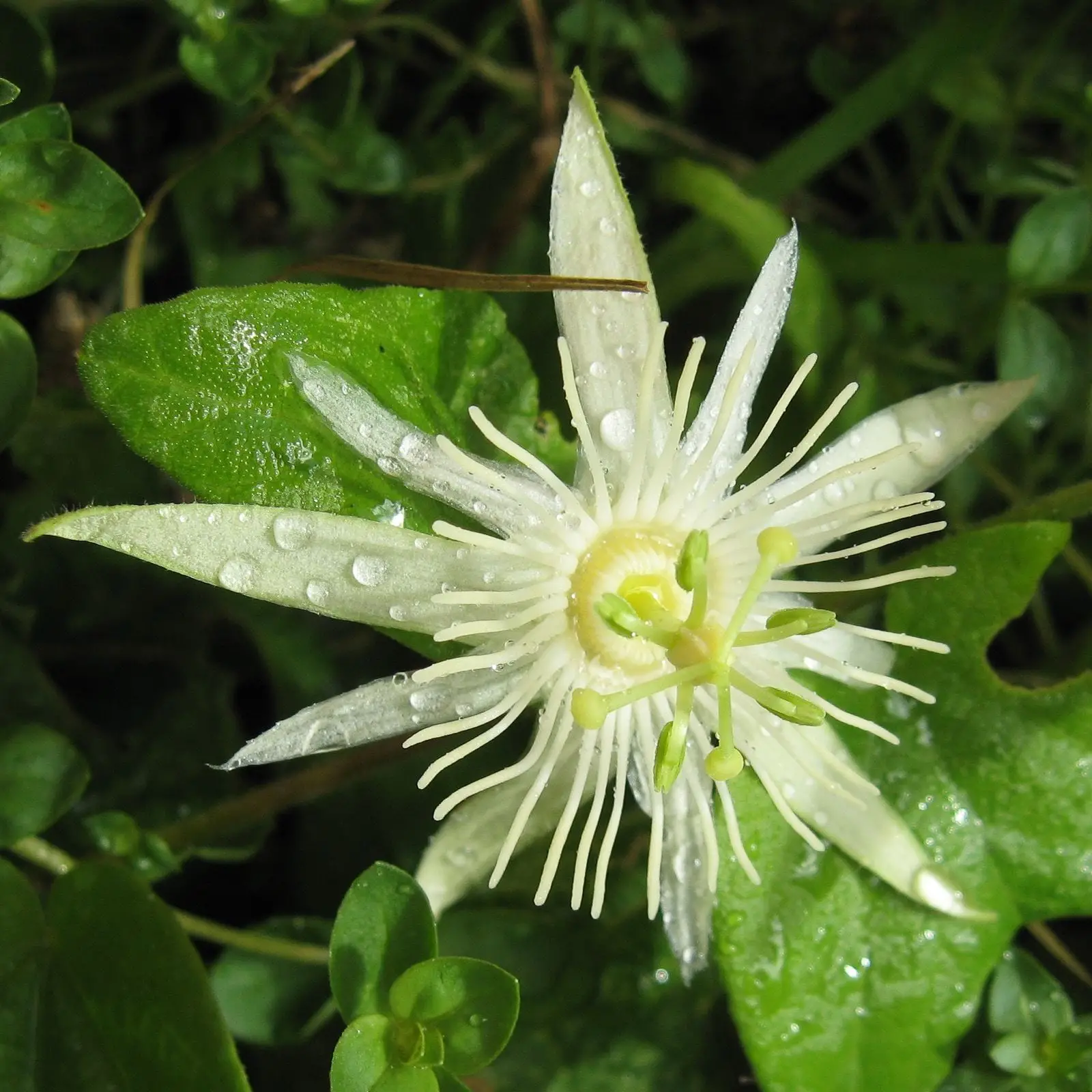

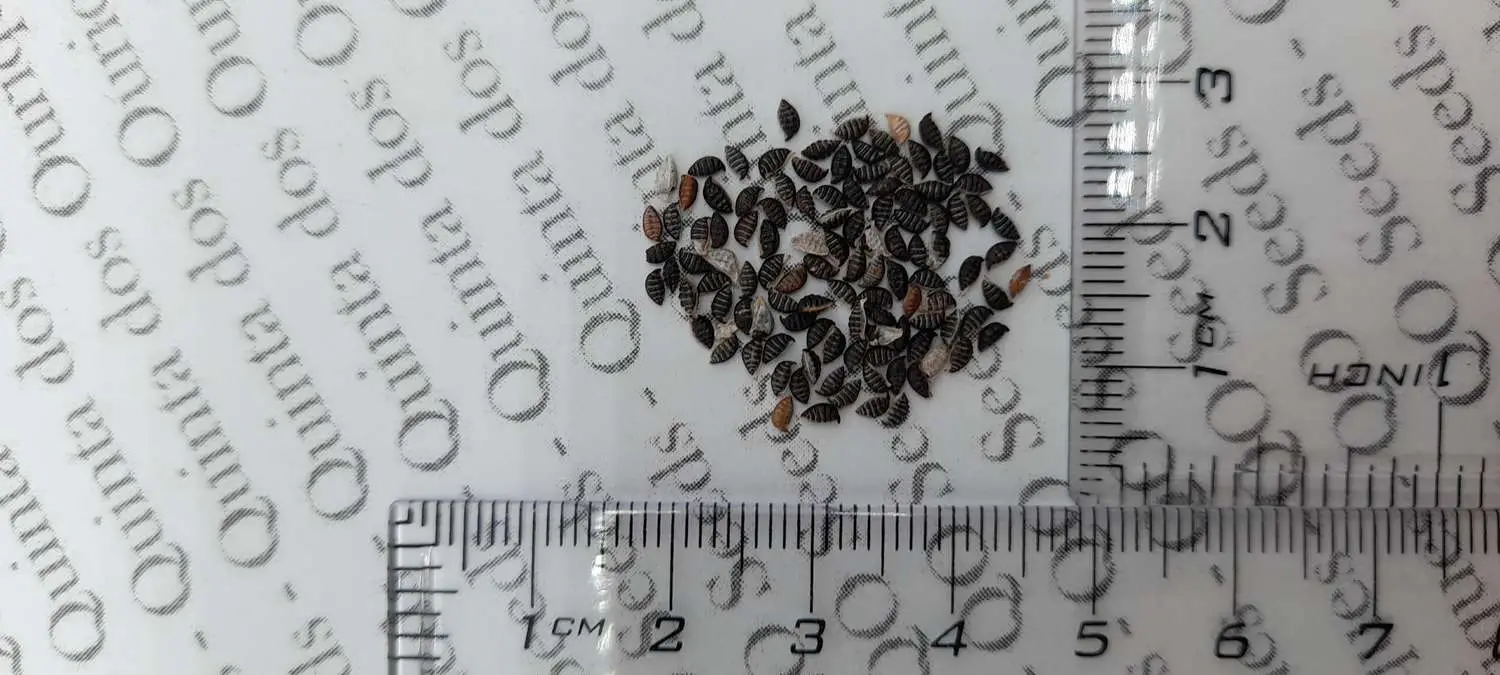
Discover the rarest passion flower in cultivation: delicate white blossoms that exhale the purest vanilla fragrance, paired with extraordinary ruby-red ribbed fruits that burst open like botanical theater. Easy to grow in pots, utterly reliable down to 5°C. Start from seed and grow your own scented marvel—still barely known, purely unforgettable.
€4.93
Imagine flowers that perfume the air with vanilla. Passiflora capsularis is that plant—still so rare that most gardeners have never heard of it, which makes growing it from seed an act of botanical rebellion.
This gem comes from the northwestern regions of South America, where it evolved in cloud forests and forest edges. While its cousins (P. edulis and the granadillas) have conquered global commerce as passion fruit suppliers, P. capsularis refused domestication. It was never bred for yield or shipped in volume. Instead, it was prized by collectors and those with refined sensibilities for one magical feature: its flowers.
The flowers themselves are modest in size—delicate, white, five-petaled stars around 5 centimeters across—but their fragrance is anything but understated. It smells of warm vanilla, sweet and intoxicating, the kind of scent that stops you mid-step and makes you lean in close. Every bloom is a small luxury. Beyond the flowers lies another surprise: the fruits. They don’t ripen to serve you juice; instead, they swell into unusual ribbed ellipsoids, deep reddish-purple, then burst open dramatically at maturity to reveal black seeds nestled in inedible (but intriguingly architectural) pulp. These fruits are pure theater—botanical spectacle that confounds anyone who approaches expecting a food crop.
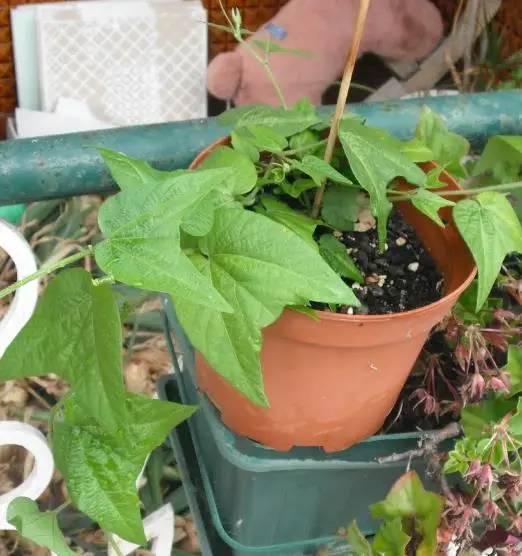
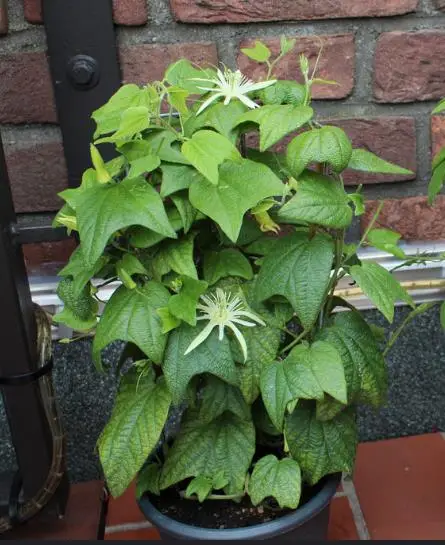
What makes P. capsularis truly special as a home-grower’s plant is its absolute indifference to confinement. It flowers and fruits abundantly in small pots. It tolerates cool winters down to 5°C and will tolerate brief dips even colder. This is not a tropical plant that demands a greenhouse; it’s adaptable, compact, and rewards even modest care with cascades of vanilla-scented blooms and those peculiar, architectural fruits. Grow it on a sunny windowsill, in a conservatory, or outdoors in warm climates as a container specimen. It reaches only 3–6 meters (10–20 feet), manageable and elegant.
Start P. capsularis from seed, and you’ll join a small circle of gardeners who actually know this plant exists. You’ll be one of the few whose guests pause mid-conversation to ask: ‘What is that incredible smell?’ You’ll watch its tiny white flowers appear month after month, each one a release of pure vanilla into the room. And when the fruits ripen and burst open, you’ll have a plant that tells a story—of rarity, of tropical mystery, of beauty that serves no purpose but to enchant. This is the passion flower for the gardener who already has all the common ones.
Only logged in customers who have purchased this product may leave a review.
Reviews
There are no reviews yet.