Description
The Elegant Aristolochia ( Aristolochia elegans , syn. A. littoralis ) is a plant of the Aristolochiaceae family, invasive in many tropical regions and causing the decline of a butterfly species in Queensland (Australia).
It can be found under the name Aristolochia elegans Mast. (1885) and Aristolochia littoralis Parodi. (1878). These two names are synonymous but have sometimes been treated as different species, considering A. littoralis as the endemic species of Argentina and A. elegans as the species found elsewhere.
Classification databases treat them as synonyms, but preferentially use A. elegans .
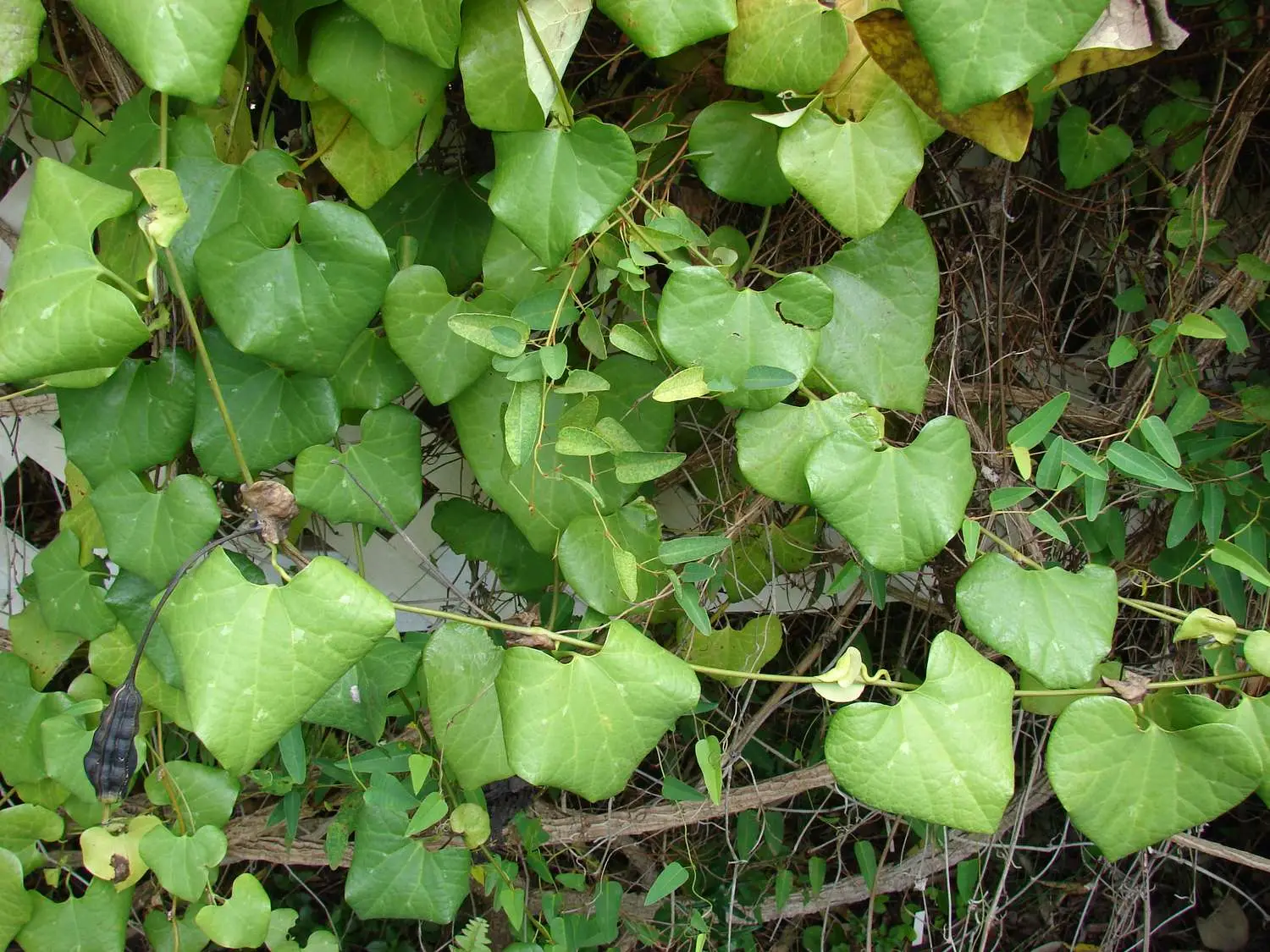
It is a vine (vine) whose port can rise from 3 to 7 m. Its intertwined stems surround a solid support and bear numerous solitary flowers with the peduncle inserted in the axils of the leaves.
The stems are cylindrical and glabrous. They are thin and greenish when young, but harden and turn brown with age.
The leaves are also hairless, with the upper side bright green and the underside paler. Their veins are membranous and their shape resembles a heart: they are wide (3-12 cm x 3-10 cm), entire, chordate or kidney-shaped, with a chordate base and obtuse apex. They are simple leaves, carried by a petiole 15 to 50 mm long, at the base of which there is a pseudostipule, the petiole is auricular. Its arrangement on the stem is alternate.
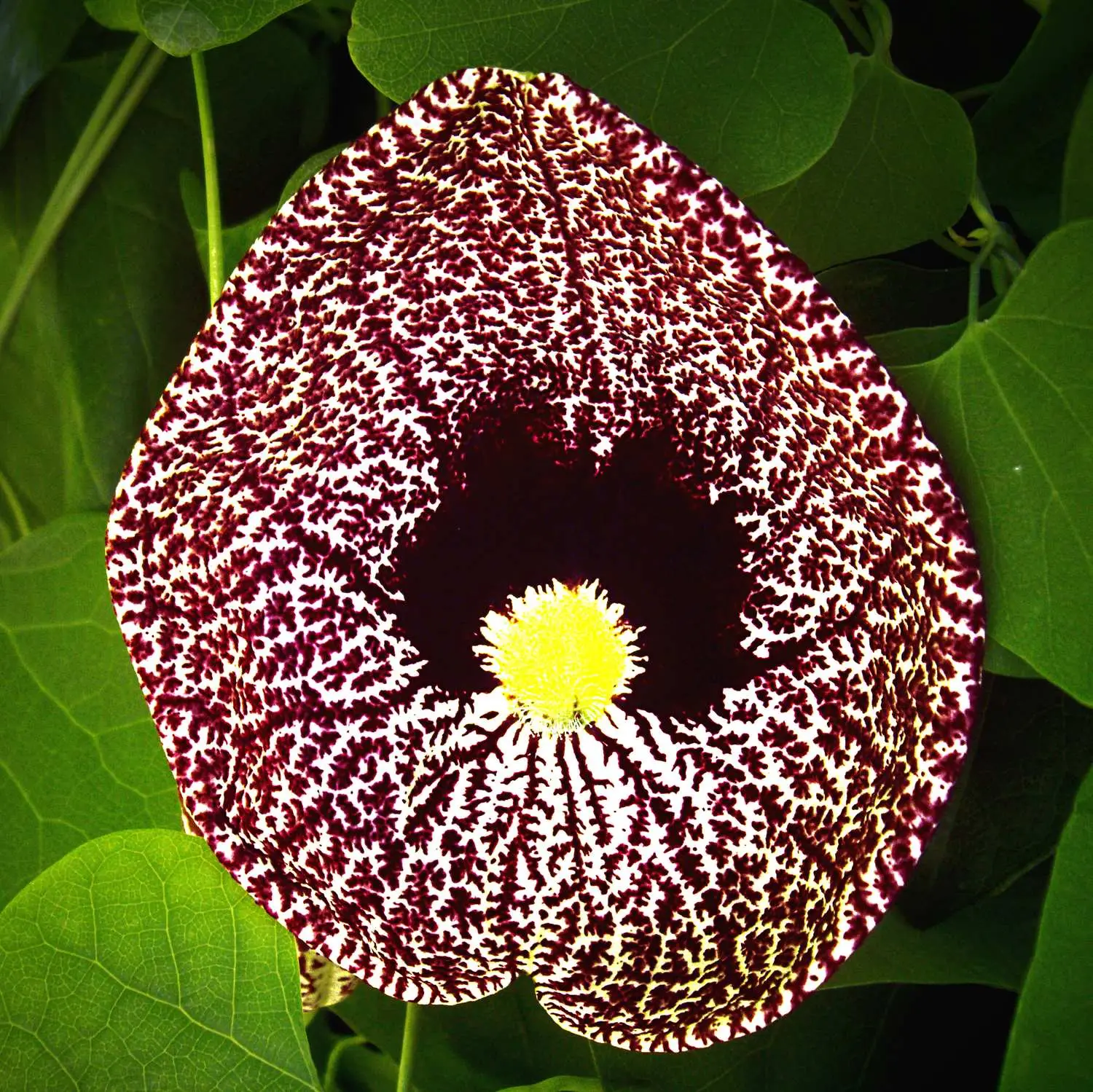
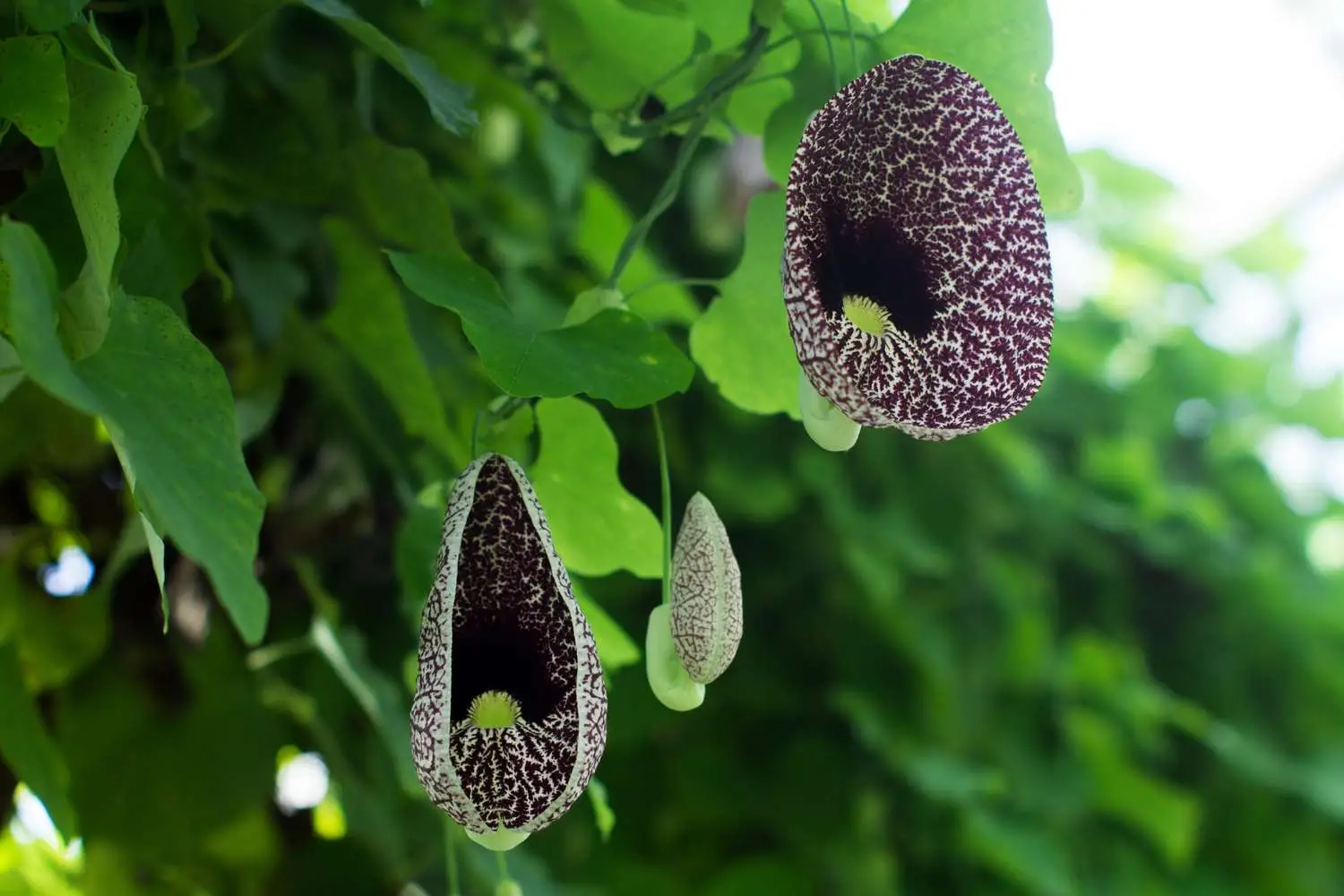
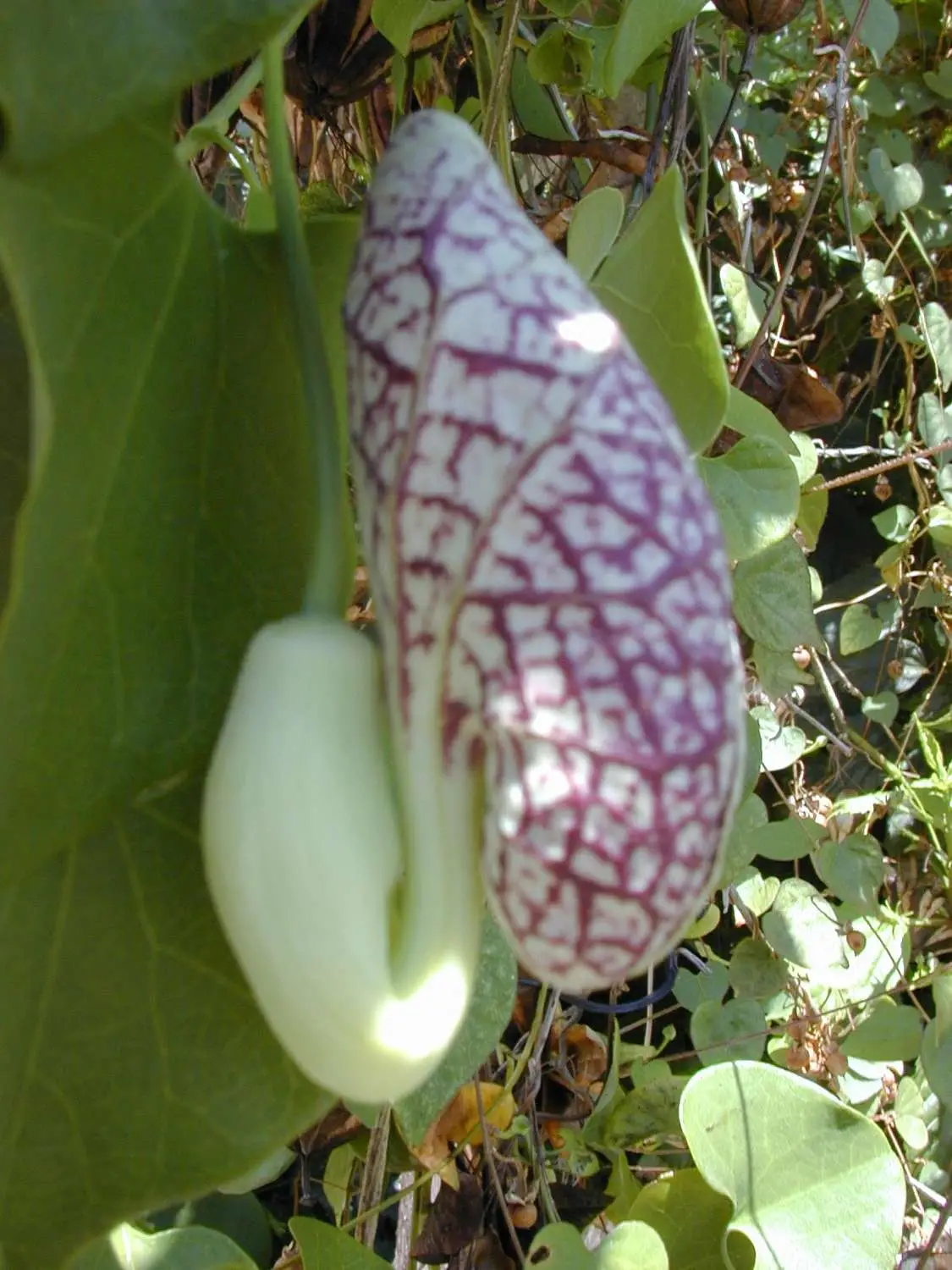
The flowers are hermaphrodite and carried by a pendulous peduncle. They have no petals, but sepals that have fused for most of their length, forming a long tube open at the end and exhibiting an abaxial curvature of almost 360°.
The color of this calyx changes from pale green (along the length where the sepals merge) to cream and purple-brown (from the beginning of the opening).
The open end resembles an upside-down heart, about four inches in diameter, with a throat in the center with inner trichomes pointing downwards.
A flower has a carpel of 6 cells, around which 6 stamens have fused together to form a 6 x 5 mm tube. The flowers are melliferous.
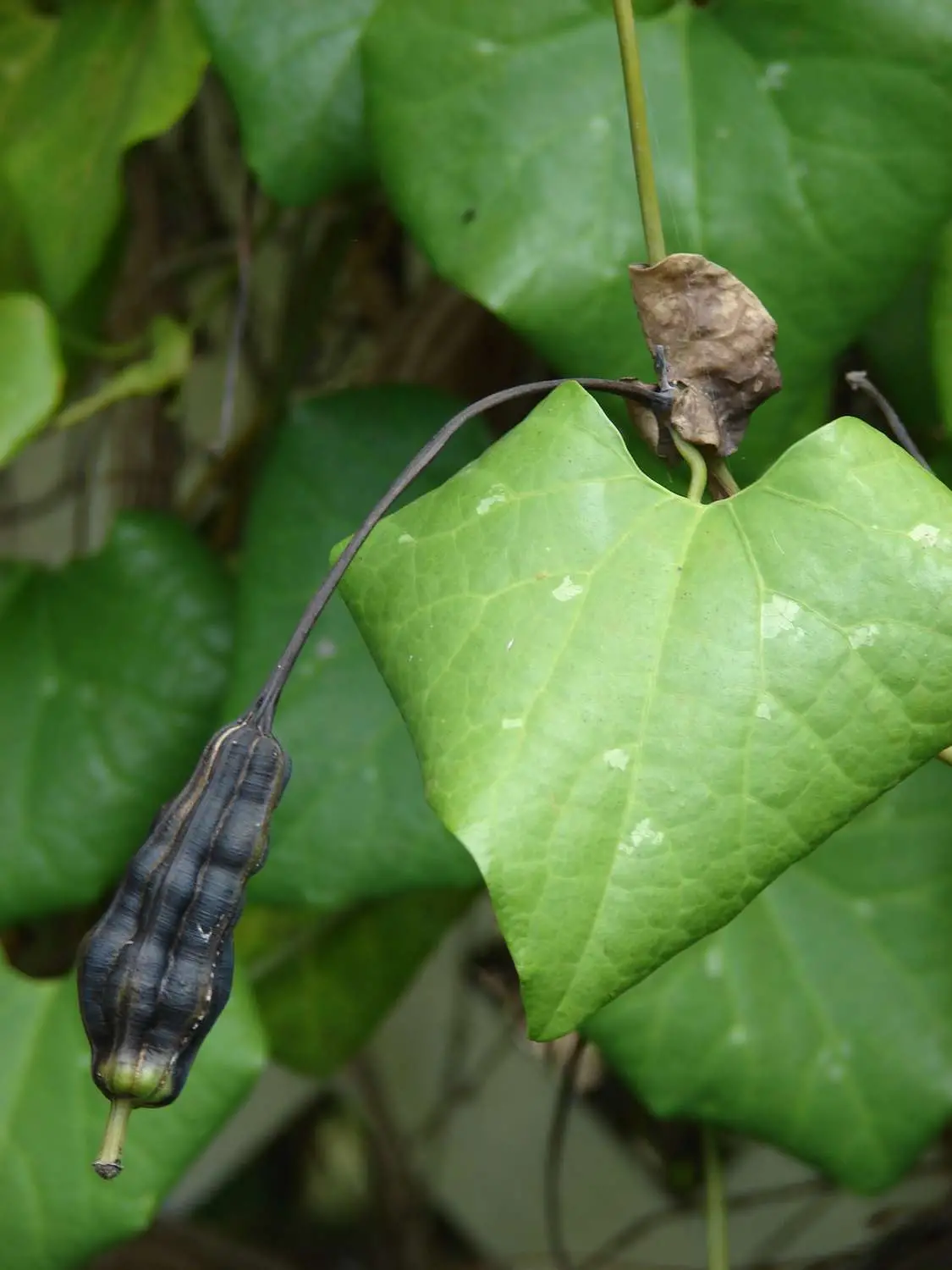
The fruits are cylindrical capsules with 6 parallel and closed internal pockets. They are 4 to 6 cm long and 2 to 3 cm wide, with a slender projection 1 cm long at the tip.
At the time of dehiscence, the fruit opens at its attached end and releases about 350 triangular-shaped seeds with rounded edges, 6 mm long and 4 mm wide. These seeds have a flat belly with a prominent midline and a flat, grainy back. They are very light and therefore easily dispersed by wind and water.
Germination Guide
🌍 South America (Brazil, Bolivia, Colombia, Ecuador, Paraguay, Argentina)
Moderate
Aristolochia elegans is an evergreen climbing vine widely appreciated for ornamental use, featuring distinctive pipe-shaped flowers with intricate purple-brown markings.
Germination
Germination time
Expect germination in
30 – 90 days
Temperature
Min 17°C
Ideal 29°C
Max 30°C
Substrate moisture
💧💧 High
Sowing depth
Lightly covered
Seed Pre-treatment
-
💧
Soaking — 48 hours
Hot water soaking 12-48 hours beneficial for germination
-
🔨
Hot water scarification
Soak in hot water for 12-48 hours, changing water as it cools
-
📋
Additional notes
Hot water soaking essential; gibberellin (100-300 mg/L) had no significant effect
Substrate & Container
Recommended substrate
soil-based compost, paper blotting, or peat-perlite mix
Recommended container
propagation containers with bottom heat or 4-inch pots
Growing Tips
Germination slow and variable (2-3 months or longer). Bottom heat 75-85°F recommended. Keep soil barely damp. Light requirement variable. Multiple germination methods reported: hot water soak 12-48 hours; 6 months cold stratification for related species; or sow without treatment.
Only logged in customers who have purchased this product may leave a review.

Reviews
There are no reviews yet.