
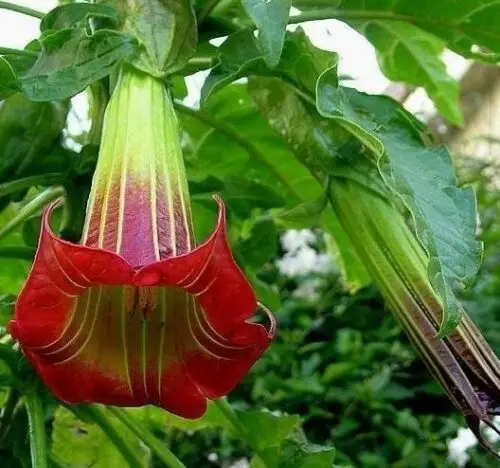
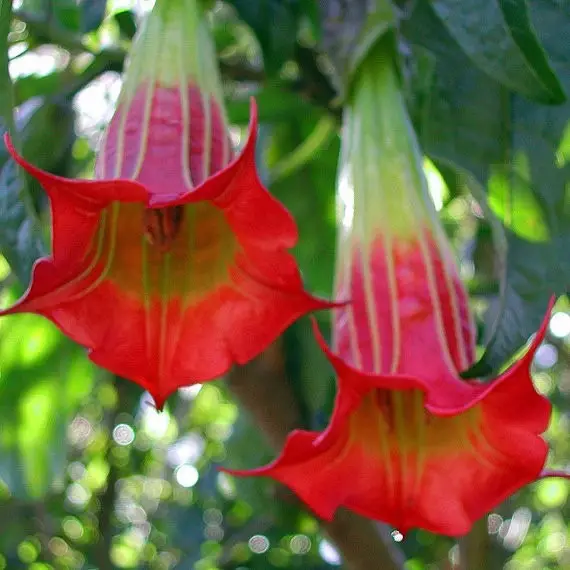
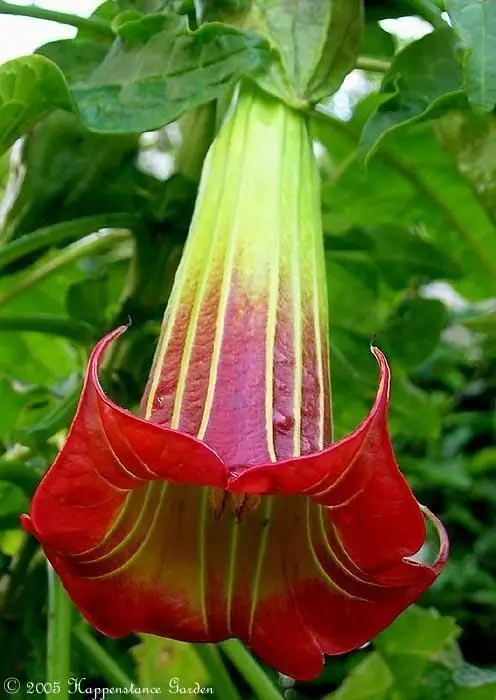
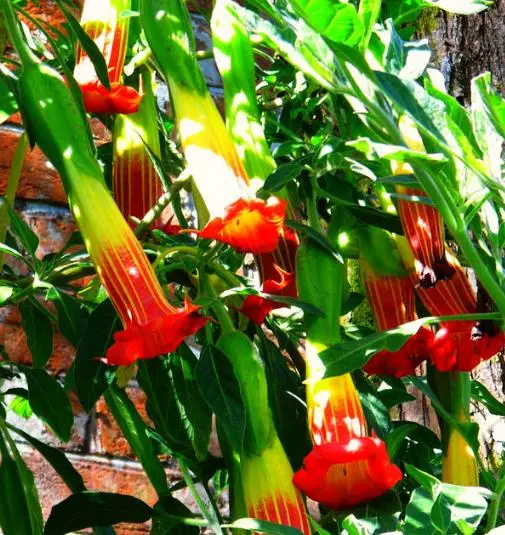
Grow the rarest Angel’s Trumpet: vibrant red-and-gold trumpets that dangle like jewels and summon hummingbirds to your garden. This hardy Andean native blooms prolifically from late summer through winter—40 flowers at once—and thrives where other brugmansias fail. Easy from seed, thrives in moderate sun, rewards with pure drama.
€3.00
Imagine hummingbirds zeroing in on your garden, mesmerized by flowers of shocking red and gold dangling from every branch.
Brugmansia sanguinea is not another fragrant night-blooming trumpet. It is something wilder and rarer: a high-altitude Andean native sculpted by hummingbirds over millennia, now extinct in the wild and cultivated only by passionate growers like you. This is the statement plant—the one that stops visitors mid-conversation.
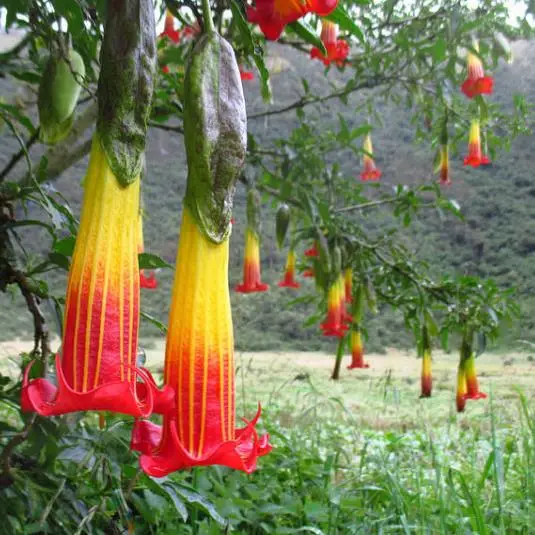
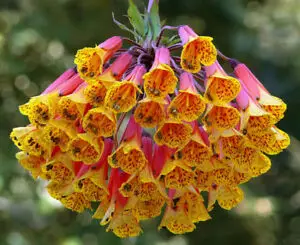
What makes Brugmansia sanguinea utterly distinctive is its evolutionary design for hummingbird pollination. Unlike its scented cousins that attract nocturnal moths, this species evolved in the cool Andes mountains where bright daylight and vivid color ruled. The result: pendulous trumpet flowers measuring 6–10 inches long in a color combination you’ve never seen before—a green base fading to golden-yellow sides crowned with a brilliant scarlet mouth accented by golden veins. The visual impact is almost otherworldly. And the abundance: mature plants produce up to 40 flowers simultaneously, blooming from late summer straight through winter. Walk past your plant every morning and you’ll find fresh crimson bells swaying in the breeze. Your garden becomes a hummingbird sanctuary.
Brugmansia sanguinea carries the soul of the Andes. Native to the misty high-elevation forests of Colombia, Ecuador, Peru, and Bolivia, this species holds centuries of ceremonial significance in indigenous cultures. It was known to shamans, treasured for ritual, and has now vanished from its native habitat—making every plant you grow an act of botanical conservation. When you nurture this seed, you’re bringing back a living piece of disappearing Andean heritage. That weight, that meaning, is part of what makes growing it so deeply rewarding.
Here’s the game-changer for growers outside the tropics: Brugmansia sanguinea is the hardiest species in the genus. Known as the coldest-tolerant Brugmansia, it tolerates light frosts and thrives where other angel’s trumpets would sulk or die. It actually *prefers* cooler conditions—temperatures above 71°F can inhibit flowering, making it ideal for cool temperate and Mediterranean zones. Afternoon shade in hot climates keeps it blooming steadily. This is the Brugmansia for gardeners in cooler regions who thought tropical drama was out of reach. Plant it, watch it establish, and witness a transformation: from seed to flower-laden specimen in just a few seasons.
Growing Brugmansia sanguinea is straightforward when you understand what it wants. Place it in full sun to partial shade (afternoon shade is appreciated in genuinely hot regions). Give it organically rich, moist, well-draining soil—think Andean mountain soil, humus-dense and alive. Water regularly and deeply; the plant will signal thirst through leaf wilting. Feed with a balanced fertilizer during the growing season to fuel the prolific blooming. In containers, a 5–7 gallon pot suits a mature specimen well; in the ground, it grows into a shrub or small tree reaching 8–12 feet tall. In cooler zones, move containerized plants indoors before frost, keep barely moist through winter, and bring them back into light in early spring. The plant is vigorous and accommodating—this is not fussy aristocracy, but a willing partner in your garden vision.
Every seed you sow is an invitation to wildness, color, and the hypnotic dance of hummingbirds. Brugmansia sanguinea from seed is the ultimate reward for patience: watch it emerge from darkness, unfold its first waxy leaves, grow thick and woody, and then—in that magical moment—produce its first cascading red trumpet. That moment never gets old. Grow this scarlet messenger from the lost cloud forests of the Andes. Become a keeper of its story. Let your garden become the sanctuary it was always meant to find.
Only logged in customers who have purchased this product may leave a review.
Reviews
There are no reviews yet.