FREE SHIPPING OVER €30 FREE SHIPPING OVER €30

Adansonia gregorii – Australian baobab, Baobab, Boabab, Baob, Bottle tree

Botanical nomenclature: Adansonia gregorii
Common name: Australian baobab, Baobab, Boabab, Baob, Bottle tree
Kingdom: Plantae
Clade: Tracheophytes
Clade: Angiosperms
Clade: Eudicots
Clade: Rosids
Order: Malvales
Family: Malvaceae
Genus: Adansonia
Species: A. gregorii

12.99

You May Also Like

Description

Adansonia gregorii, commonly known as the boab and also known by a number of other names, is a tree in the family Malvaceae, endemic to the northern regions of Western Australia and the Northern Territory of Australia. The specific name “gregorii” honours the Australian explorer Augustus Gregory.

The common name “boab” is a shortened form of the generic common name “boabab”, and is the most widely recognised common name. It does, however, have a large number of other common names. Similar names include:

– baobab — the common name for the genus as a whole, but often used in Australia to refer to the Australian species
– Australian baobab
– boabab was in common use from the late 1850s (Perhaps the origin of boab)
– baob

Gadawon is one of the names used by the local Aboriginal Australian groups. Other names include larrgadi or larrgadiy, which is widespread in the Nyulnyulan languages of the Western Kimberley.

Other names include:
– bottle tree or bottletree
– cream of tartar tree
– gourd-gourd tree
– gouty stem tree
– monkey bread tree
– sour gourd
– upside down tree
– dead rat tree

Endemic to Australia, boab occurs in the Kimberley region of Western Australia and east into the Northern Territory. It is the only baobab to occur in Australia, the others being native to Madagascar and mainland Africa and the Arabian Peninsula. There are various theories as to how the tree got to Australia, with A. gregorii and Adansonia digitata, its African relative, being very similar genetically.

It can grow from sea level up to about 300 m (980 ft) in altitude, and is most often found in open forest and rocky areas, but is also seen in monsoon forest.

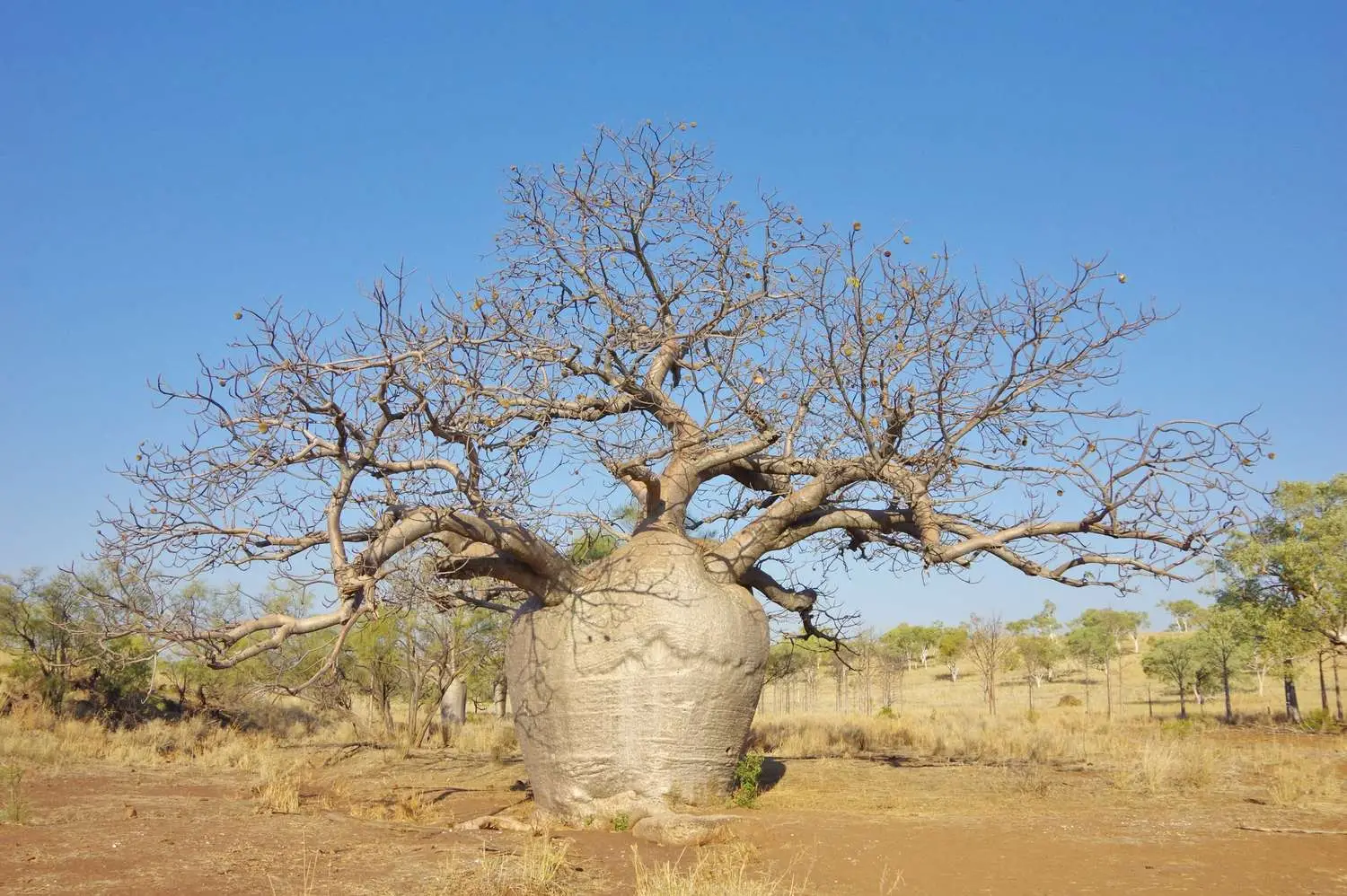
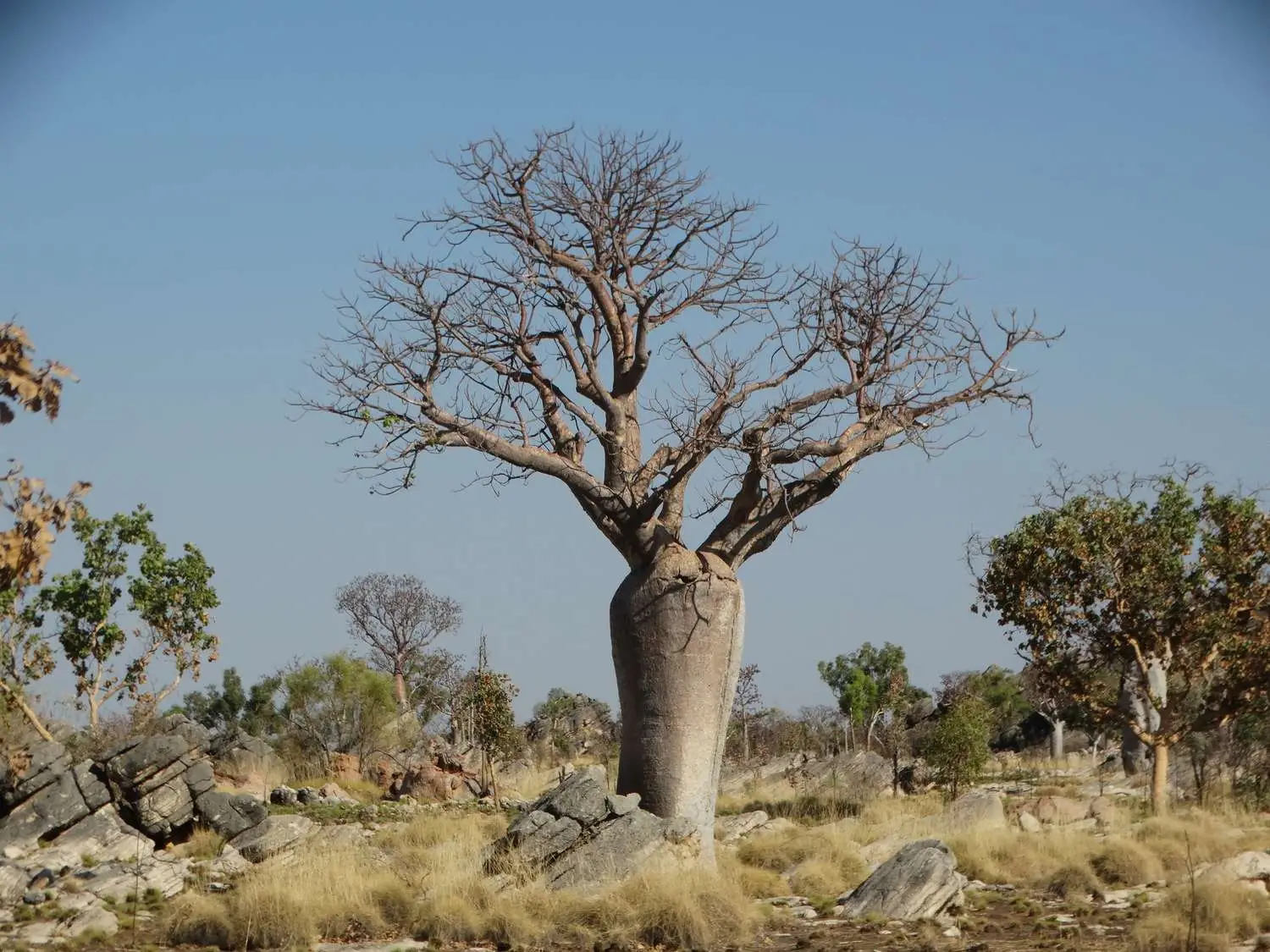
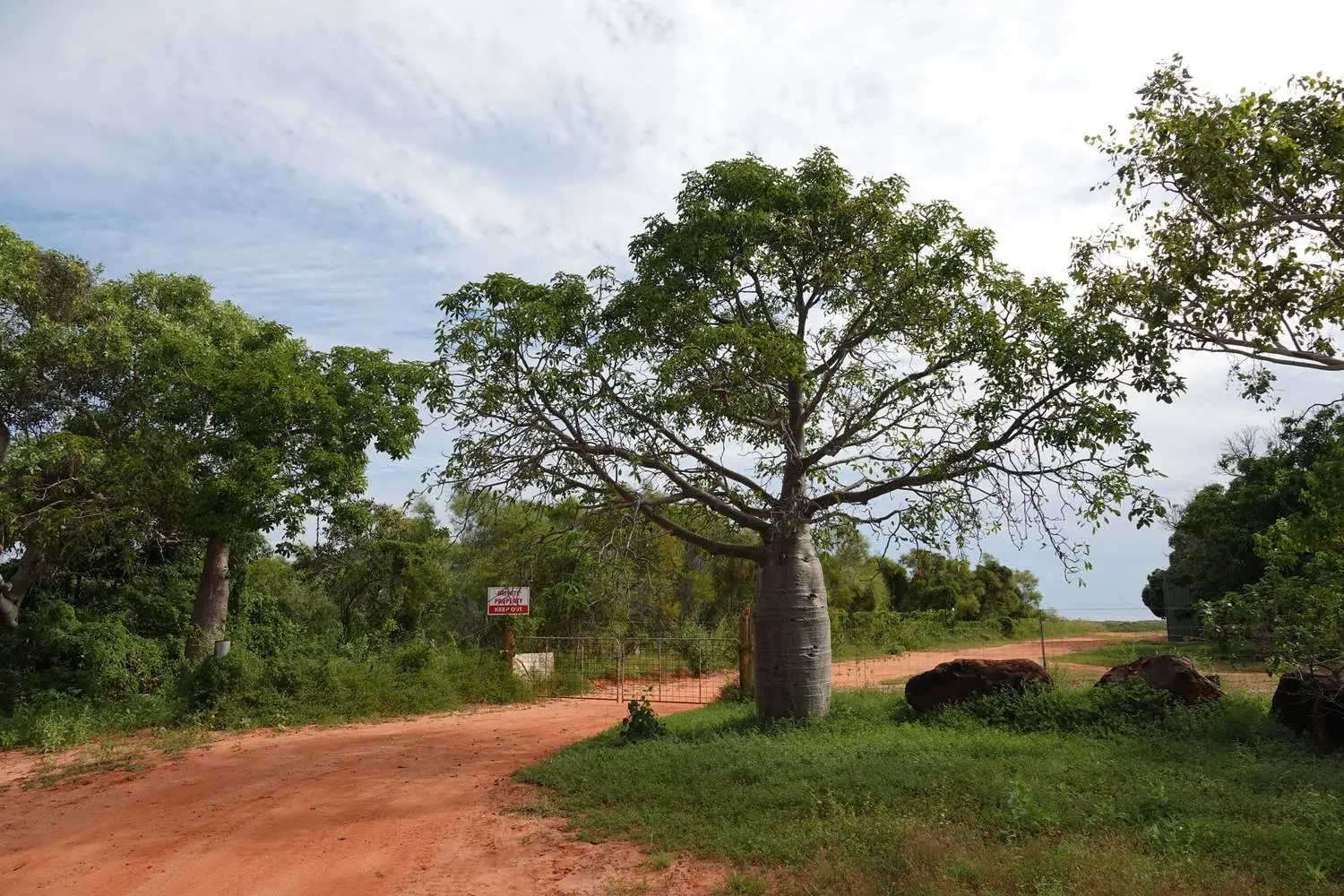
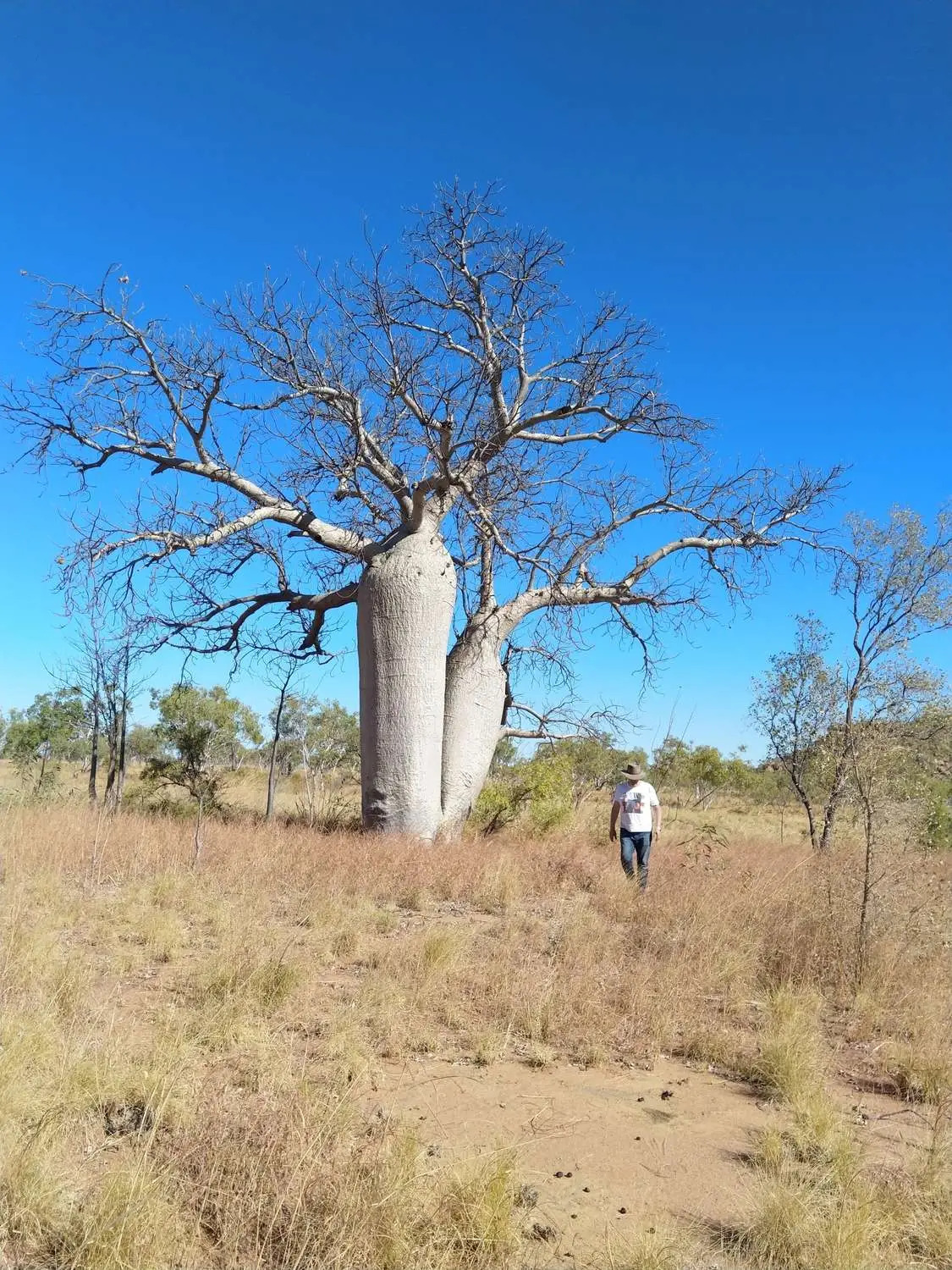
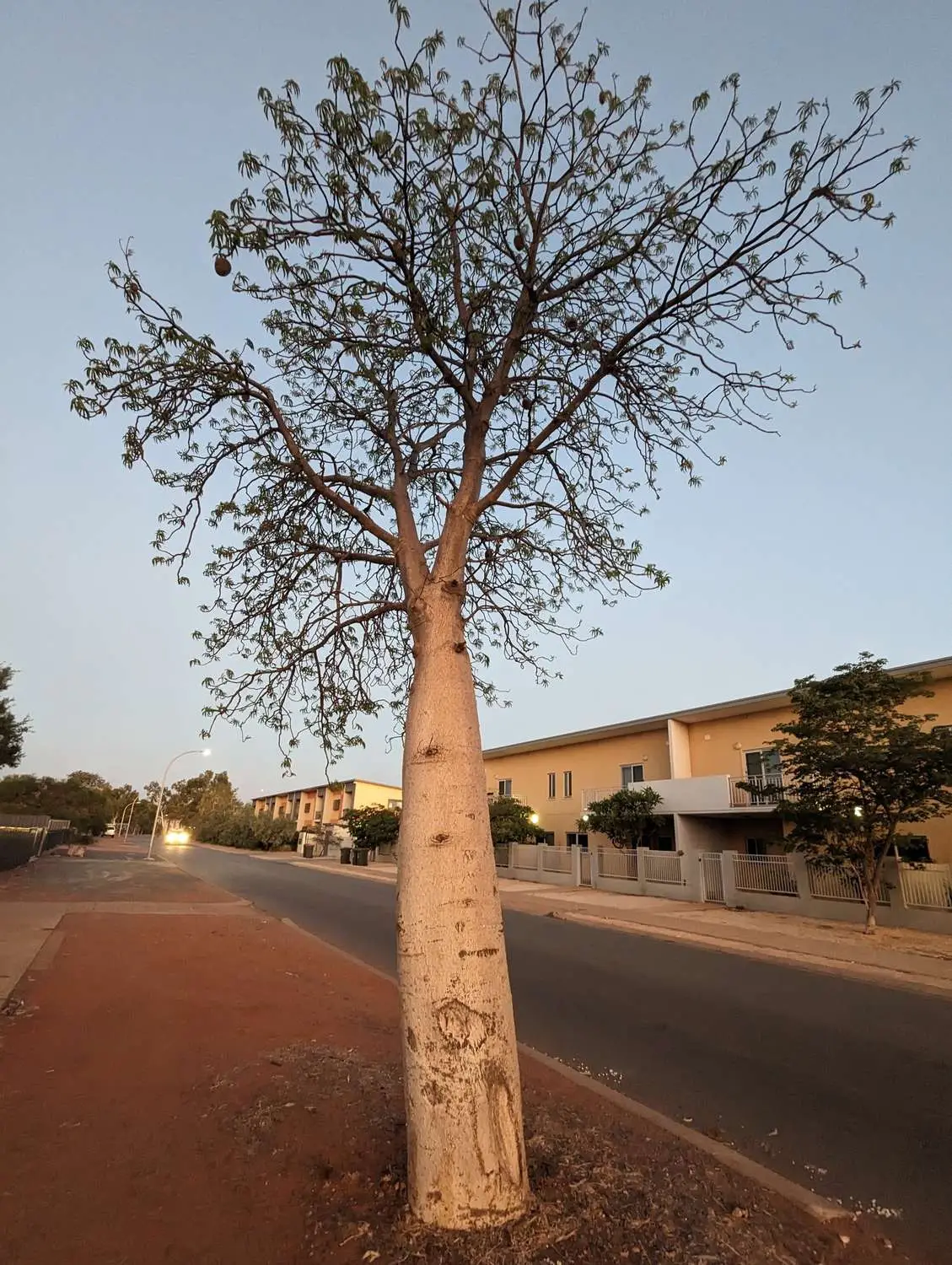
As with other baobabs, Adansonia gregorii is easily recognised by the swollen base of its trunk, which forms a massive caudex, giving the tree a bottle-like appearance. Boab ranges from 5–15 m (16–49 ft) in height, usually 9–12 m (30–39 ft), with a broad bottle-shaped trunk, up to 5 m (16 ft) in diameter.

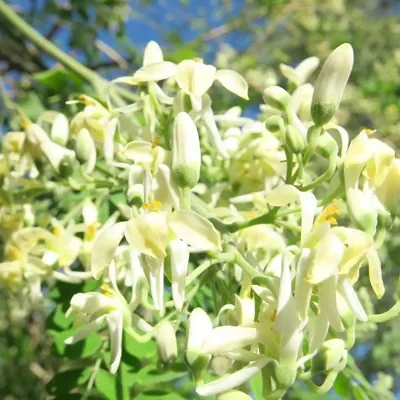
A. gregorii is deciduous, losing its leaves during the dry winter period and producing new leaves and large white flowers between December and May, up to 75 mm (3.0 in) long. The flowers open at night, and have a calyx about 6 cm (2.4 in) long. The inner surface is densely sericeous. Boabs are pollinated by the convolvulus hawk-moth Agrius convolvuli.

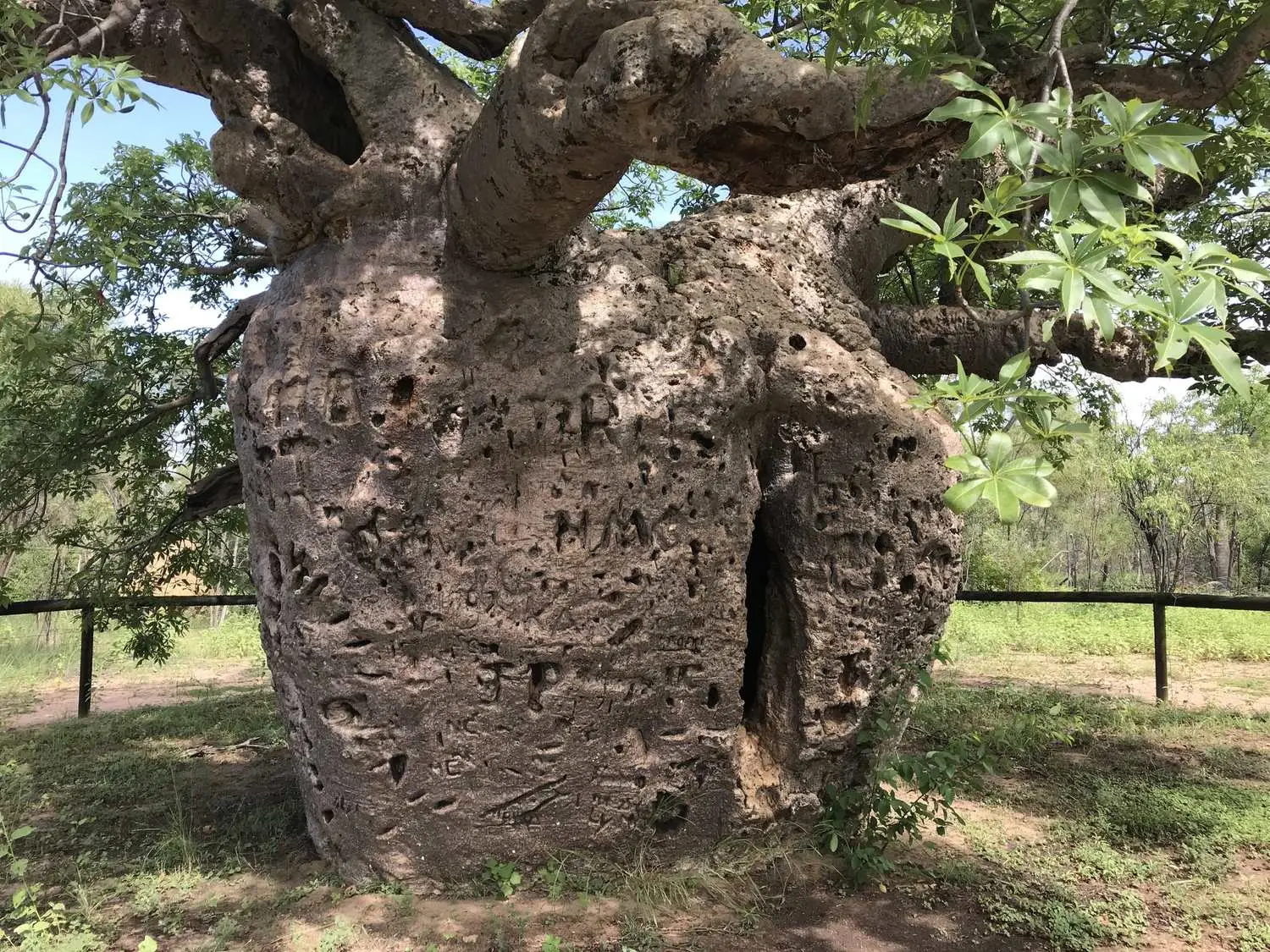
The tree’s bark has a remarkable property, in that it can maintain inscribed markings for long periods of time, over more than a century. Some specimens of the African relative of boabs have been estimated to live close to 2,000 years, but the Australian ones are not as well-documented.

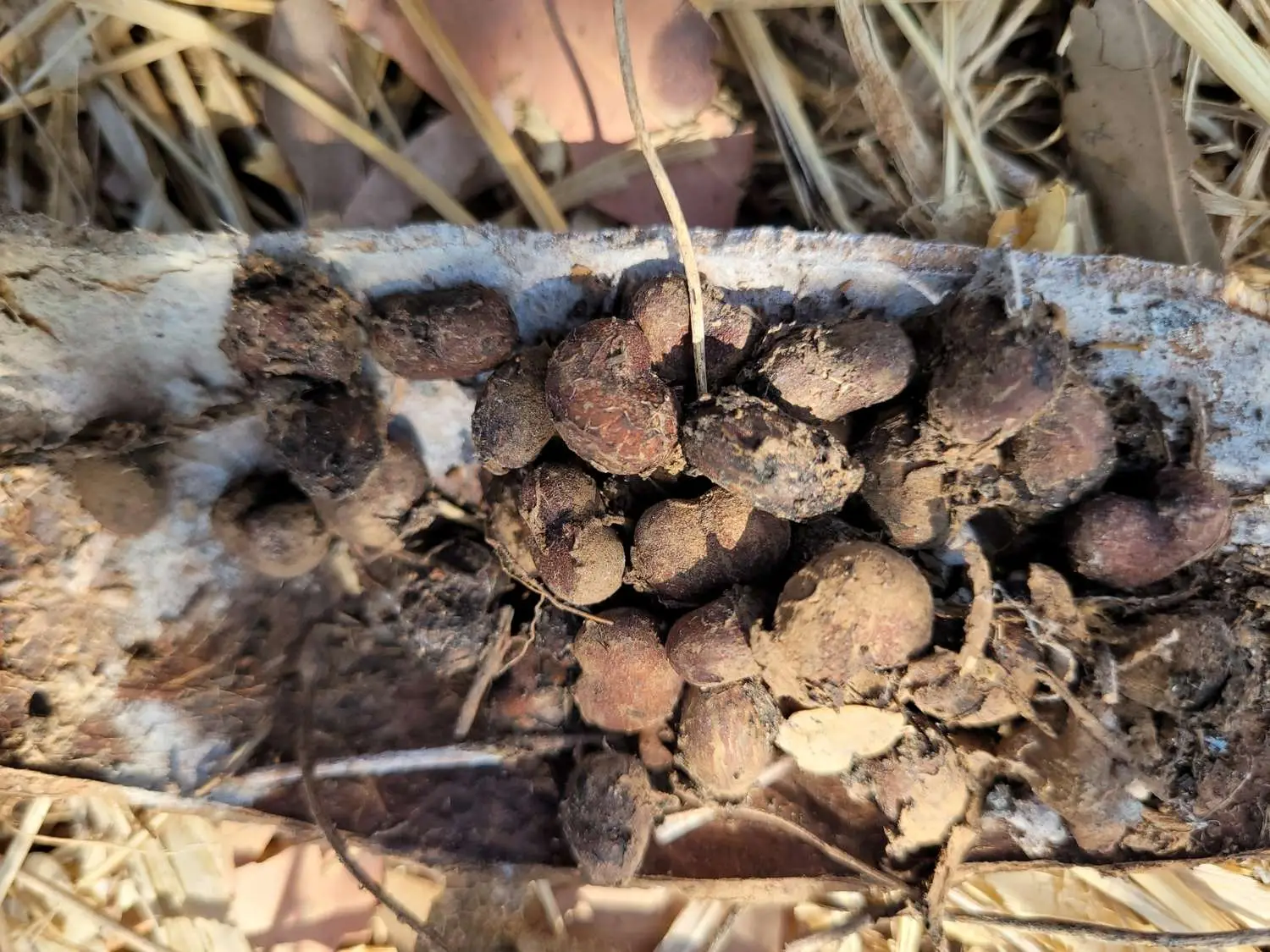
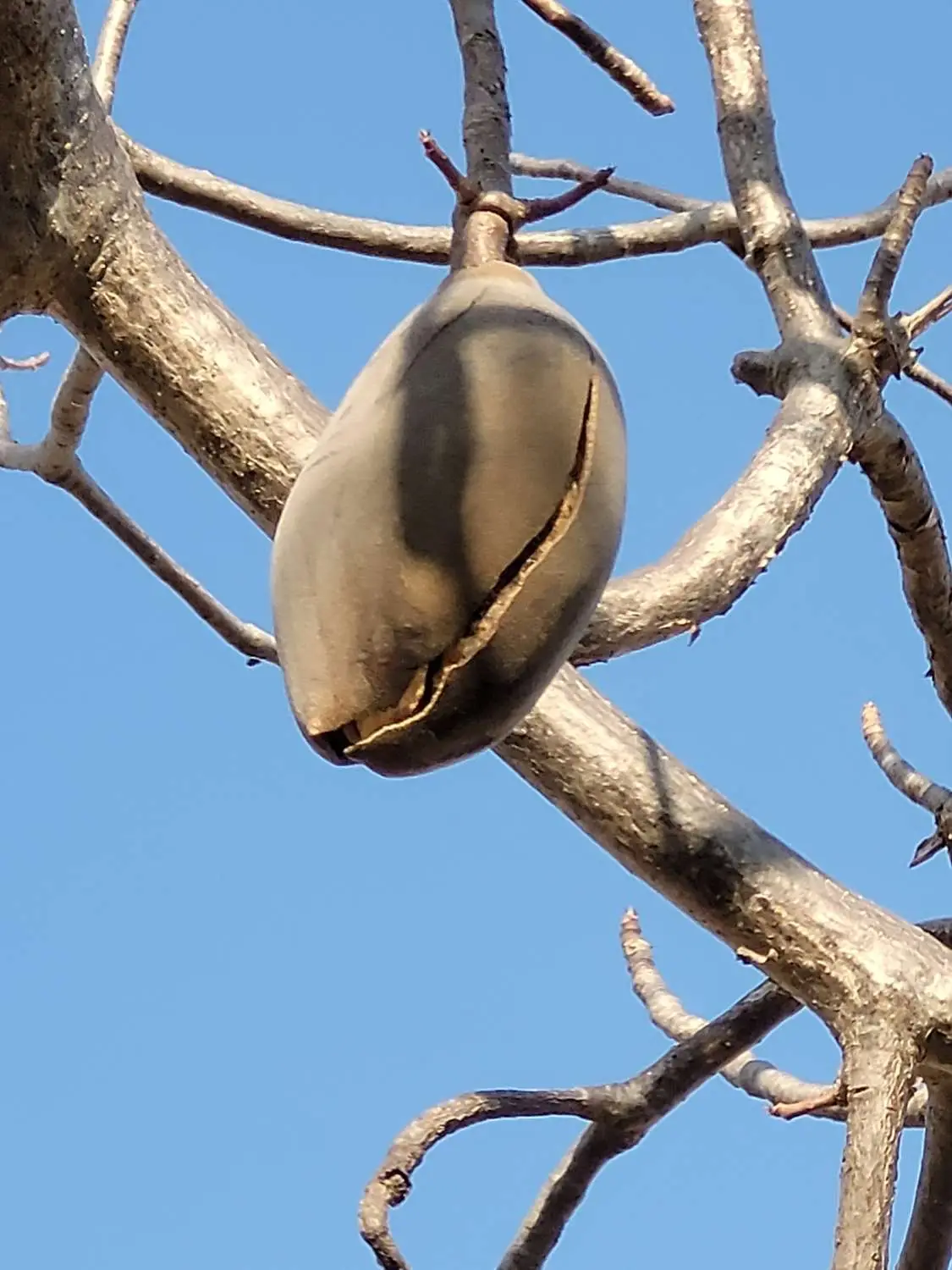
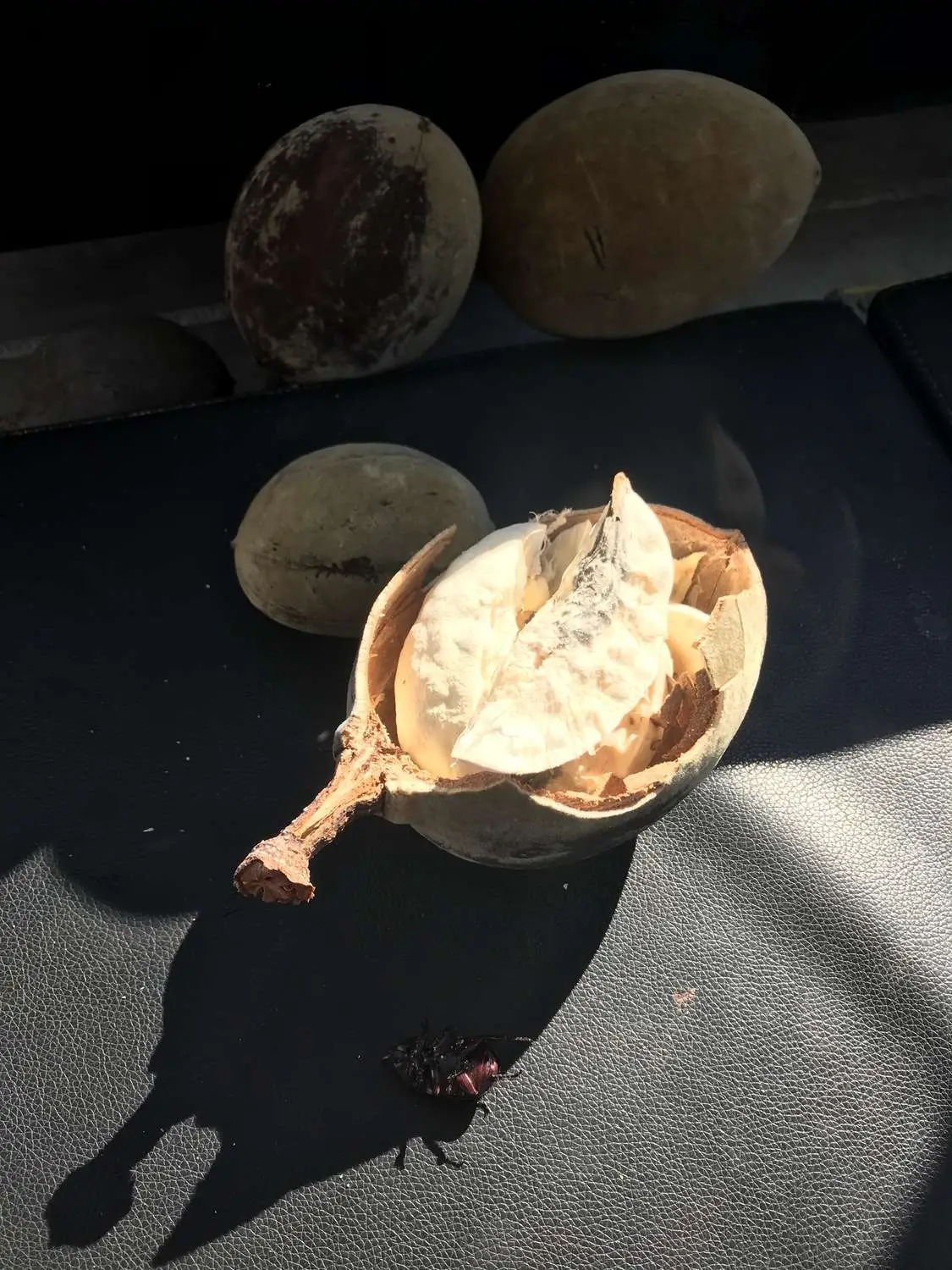
The plant has a wide variety of uses; most parts are edible and it is the source of a number of materials. Aboriginal Australians obtained water from the tree, owing to its ability to store huge amounts of water; some of the oldest and largest trees can hold more than 100,000 L (22,000 imp gal; 26,000 US gal) of water in their trunks. They also use the white powder that fills the seed pods (or pith, said to taste like sherbet or cream of tartar) as a food.

Decorative paintings or carvings were sometimes made on the outer surface of the fruit. The root fibres are used to create string. The 1889 book Useful native plants of Australia states that “The dry acidulous pulp of the fruit is eaten. It has an agreeable taste, like cream of tartar”. European use of the trees has included letter boxes and jails.

The leaves may see a future use prepared as food, due to their high iron content. The leaves can be boiled and eaten as a spinach; the seeds can be ground and used as a coffee-like beverage, and fermenting the pulp creates a type of beer.

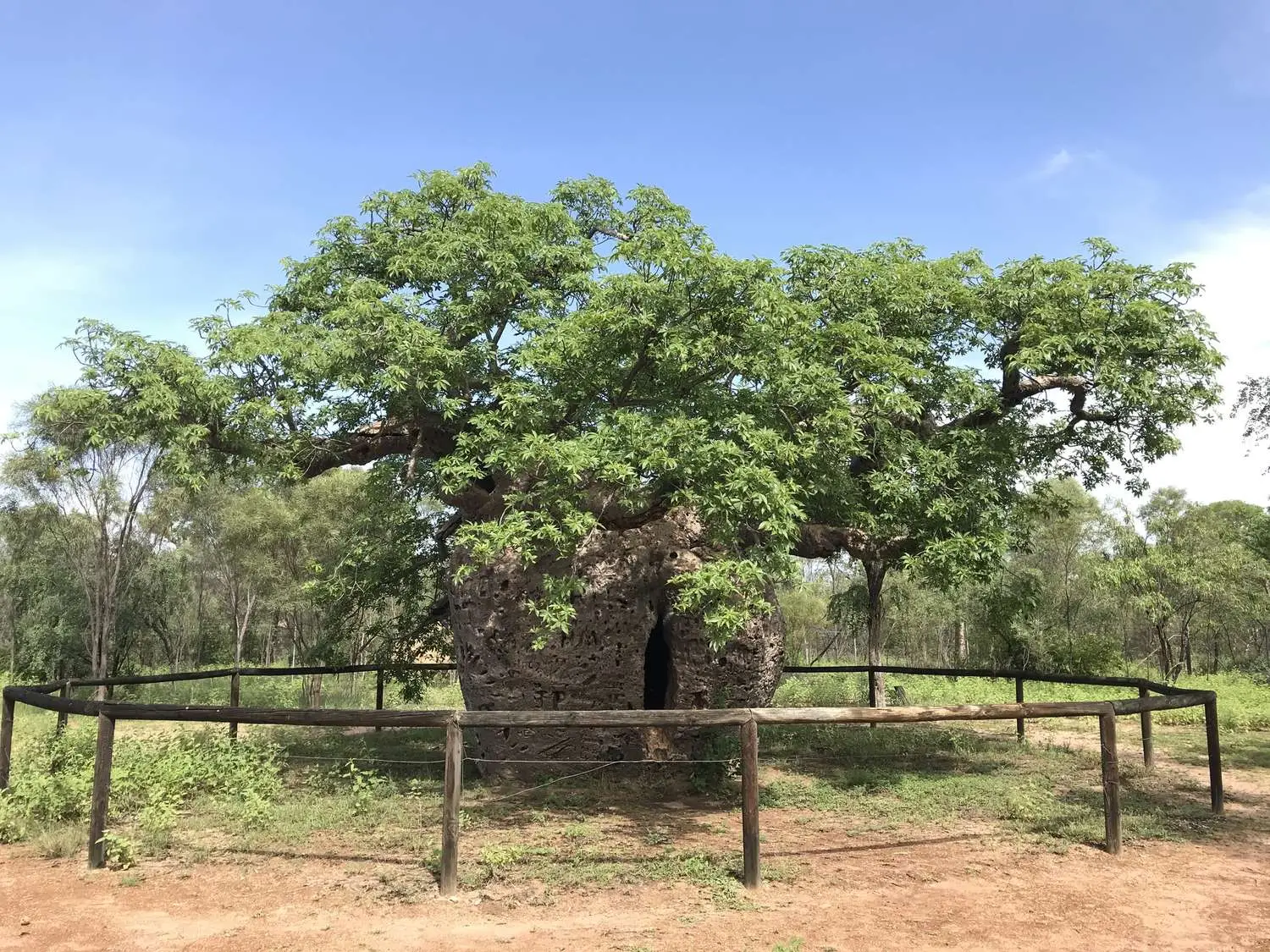
A large hollow boab south of Derby, Western Australia is reputed to have been used in the 1890s as a lockup for Aboriginal prisoners on their way to Derby for sentencing. The Boab Prison Tree, Derby is now a tourist attraction.

Another hollow boab near Wyndham, Western Australia was also used as a prison tree. The Hillgrove Lockup or Wyndham Prison Tree is on the King River Road out of Wyndham near the Moochalabra Dam. There is also a boab tree located within the Wyndham Caravan Park that is billed as “the biggest boab in captivity”.

Gija Jumulu is a large boab which was transported from Warmun in the Kimberley region to Kings Park in the Western Australian capital city, Perth in 2008. As of 2019 the tree was growing well, after an initial period showing signs of stress after the move, demonstrating the adaptability of the species in a different climate.

Germination Guide

🌍 Kimberley region of Western Australia and Northern Territory, Australia
Easy

Adansonia gregorii, commonly known as the Australian Baobab or Boab, is a distinctive bottle-shaped tree native to the Kimberley region of Western Australia and Northern Territory. Seeds display physical dormancy and germinate readily once water permeable, making them relatively easy to grow from seed with proper scarification and warm, moist conditions. This iconic Australian species is valued for its drought tolerance, edible seeds and fruit pulp, and cultural significance to Indigenous peoples.

Germination
Germination time
Expect germination in

8 – 21 days

Temperature

Min 20°C
Ideal 30°C
Max 35°C

Light
☁️ Indifferent

Substrate moisture
💧💧 High

Sowing depth
1 cm

Germination rate
82 %


Seed Pre-treatment
  • 💧

    Soaking — 36 hours
    Soak seeds in warm water (not boiling) for 24-48 hours, changing water frequently every 12 hours to maintain warmth. Water should be warm but not hot.
  • 🔨

    Mechanical scarification
    Mechanical scarification such as light sanding or nicking the seed coat to allow water penetration. Avoid boiling water as seeds are unusually sensitive to heat treatment.
  • 📋

    Additional notes
    Scarify seeds mechanically by light sanding or nicking the seed coat, then soak in warm water for 24-48 hours with frequent water changes. Seeds have physical dormancy and germinate readily once water permeable.

Substrate & Container
Recommended substrate
Well-drained, light, porous substrate. Mix sand and compost in equal parts, or use mixture of perlite and peat moss.

Recommended container
Container with clear plastic cover to maintain humidity; at least 10 cm deep to accommodate developing taproot. Ensure drainage or ventilation to prevent mold.


Growing Tips
Keep seeds at constant temperatures between 20-30°C, ideally 25-30°C for faster germination. Maintain high humidity by covering container with clear plastic but ventilate occasionally to prevent mold and fungal growth. Water regularly but avoid waterlogging to prevent root rot. Do not use boiling water treatment as seeds are sensitive to high heat. Once germinated, keep seedlings in their germination environment for the first 3 months while they develop their characteristic taproot system. Transplant carefully to avoid damaging roots. Provide bright light and ensure well-drained substrate after germination.

Reviews

There are no reviews yet.

Only logged in customers who have purchased this product may leave a review.
Related Products