
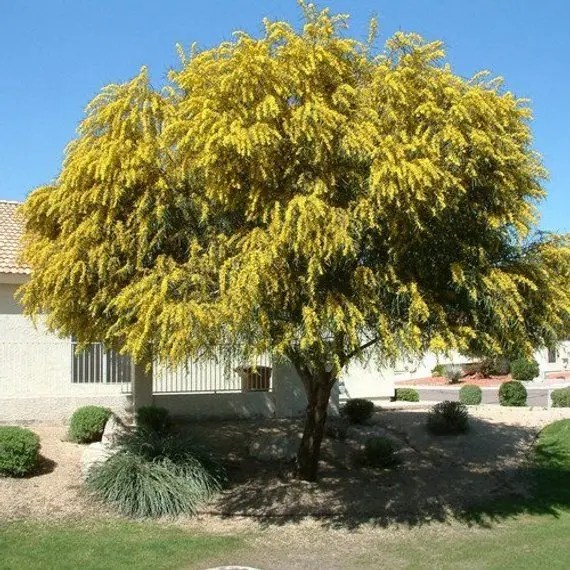
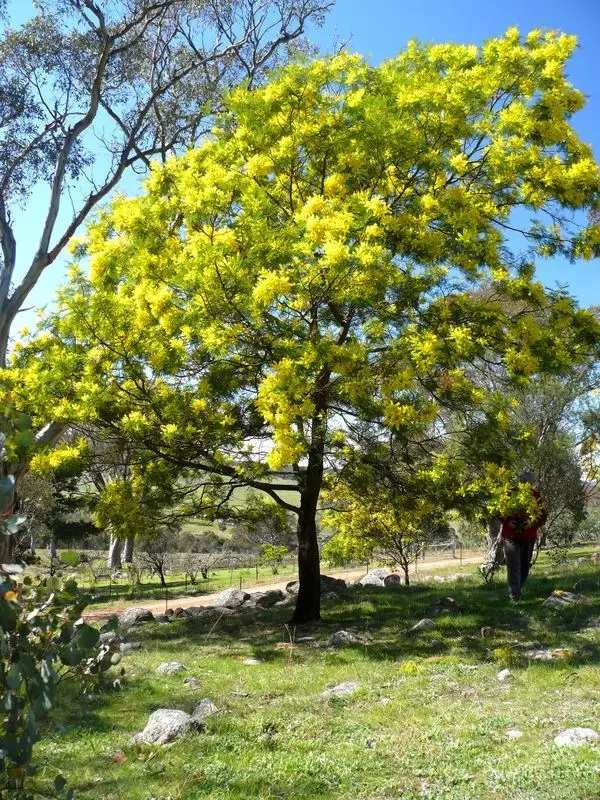
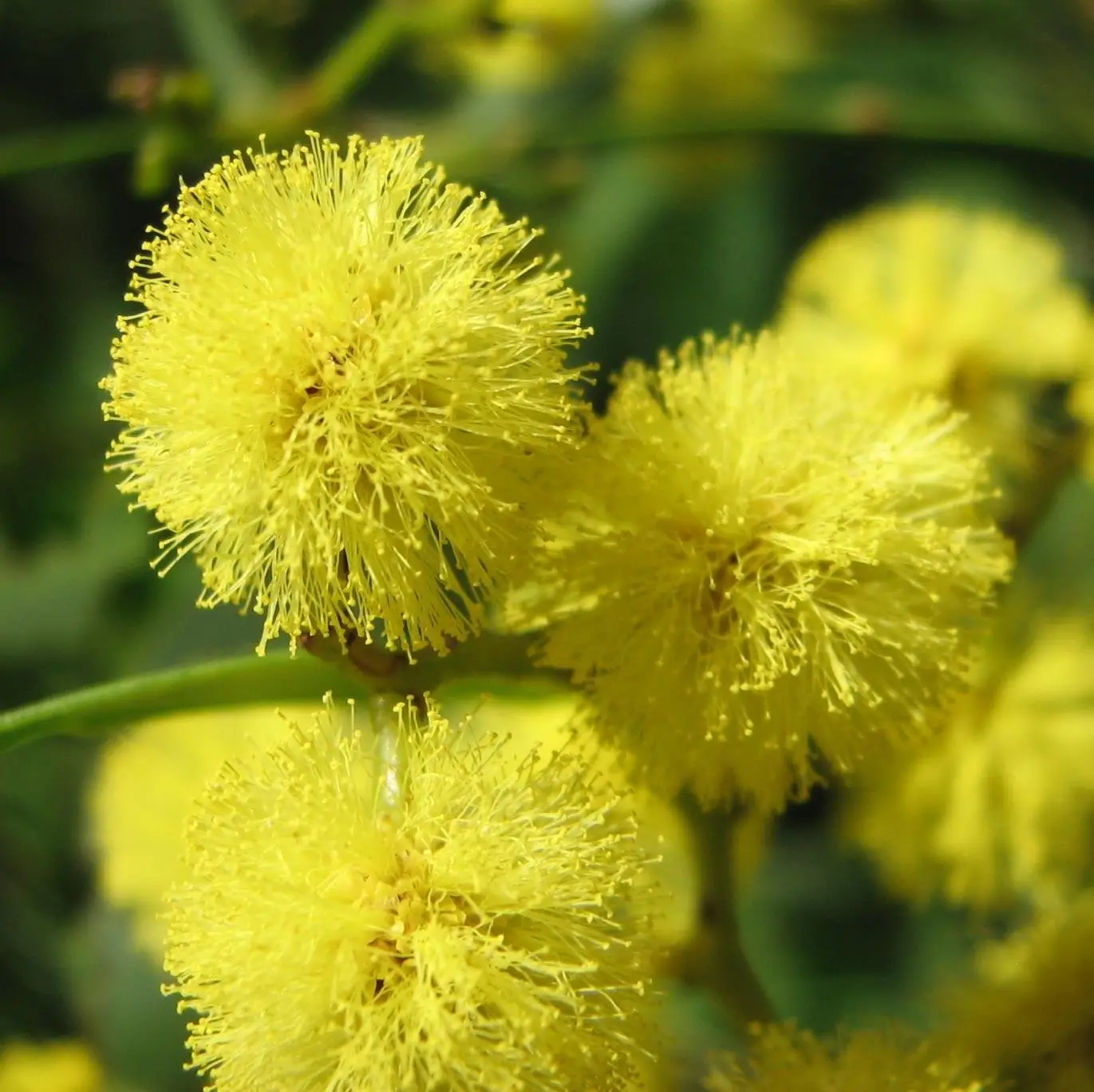
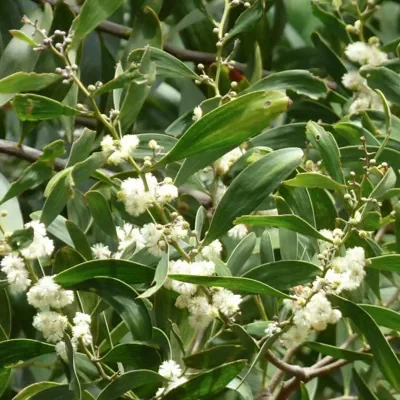
Grow this stunning Australian wattle for its luminous golden flowers that burst in spring—and unlock a wealth of tannin-rich bark and flower extracts prized by the cosmetics industry. Fast-growing from seed with feathery, fern-like foliage that reaches full beauty in just 5–7 years. Ideal for growers seeking both ornamental drama and genuine commercial potential. Thrives in well-drained soil and full sun.
€1.92
This is the tree that captures the Australian spring in a single bloom—and then pays you back tenfold.
Acacia decurrens is a tale of dual beauty: the ethereal golden flower displays that light up coastal gardens every April, and the far more precious gift hiding beneath: bark and flower tissues loaded with tannins and phenolic compounds that power the global cosmetics and natural skincare industry. Native to the tablelands and coast of southeastern Australia, this fast-growing evergreen has escaped cultivation worldwide because it works. It simply works—adapting to diverse soils, establishing rapidly, flowering abundantly, and offering genuine commercial value that goes far beyond ornamental charm.
**The Real Treasure: Tannins & Cosmetic Potential**
While the golden spring flowers—clustered in spherical heads, rich with pollen—steal the show (and yes, they’re edible, traditional in fritters), the true wealth lies in the bark and flower extracts. Acacia decurrens bark contains approximately 37–40% tannin by weight, making it a serious source material for the cosmetics and natural skincare sector. These tannins are used as astringents, skin-conditioning agents, and anti-inflammatory compounds in premium skincare formulations, creams, and botanical extracts. The flowers themselves yield an absolute oil treasured in high-end perfumery and skincare—a heady, tenacious floral with exceptional fixative properties that extend the life of blended scents. Growers serious about value capture harvest flowers in March–April at peak bloom, and the bark becomes increasingly valuable as the tree matures. Beyond cosmetics, the traditional medicinal uses—the bark as an astringent for wounds, skin conditions, and digestive support—underscore why this species has been cultivated continuously since European settlement in Australia. This is a plant that pays dividends the longer you grow it.
**How to Grow It: Remarkably Forgiving**
Acacia decurrens is genuinely easy to medium difficulty—a major selling point for growers. It demands full sun (at least 6 hours daily) and well-drained soil, preferably sandy or loamy, with a pH between 6.0 and 7.5. It tolerates drought once established and actually prefers not to be overwatered; waterlogging is its only serious enemy. The tree is a nitrogen-fixer thanks to symbiotic soil bacteria, enriching the ground for companion plants while asking little in return. Growing from seed is straightforward: scarify or soak seeds in warm water for 12 hours, sow in spring in a warm greenhouse, and germination occurs in 3–4 weeks at 25°C. Seedlings are hardy, establish quickly, and can be planted out after the last frost. In mild temperate climates (USDA zones 9–11, or UK zone 7 onwards), it thrives outdoors year-round. Even in harsher winters, it typically resprouts from the base. Growth is impressively rapid—5–7 years to reach mature height and productive flowering. Minimal pruning needed; the tree naturally forms an open, airy canopy with feathery dark-green foliage that filters light beautifully. Mature trees reach 10–25 metres but remain manageable in larger gardens and parks.
**From Seed to Harvest: Your Path Forward**
Begin with our seeds and you’re not just planting a beautiful tree—you’re investing in a living asset. Within a few years, you’ll have spring golden blooms to rival any ornamental specimen. Within 5–7 years, you’ll have bark and flowers to begin extracting tannins and essences. Whether you grow for the sheer visual joy of those luminous spring clusters, the traditional craft of natural skincare production, or simply to own a piece of Australian botanical heritage that thrives almost anywhere, Acacia decurrens rewards patience and care with abundance. Sow it now, tend it with sunlight and well-drained earth, and watch as it transforms your garden—and possibly, your supply chain.
Only logged in customers who have purchased this product may leave a review.

Reviews
There are no reviews yet.