
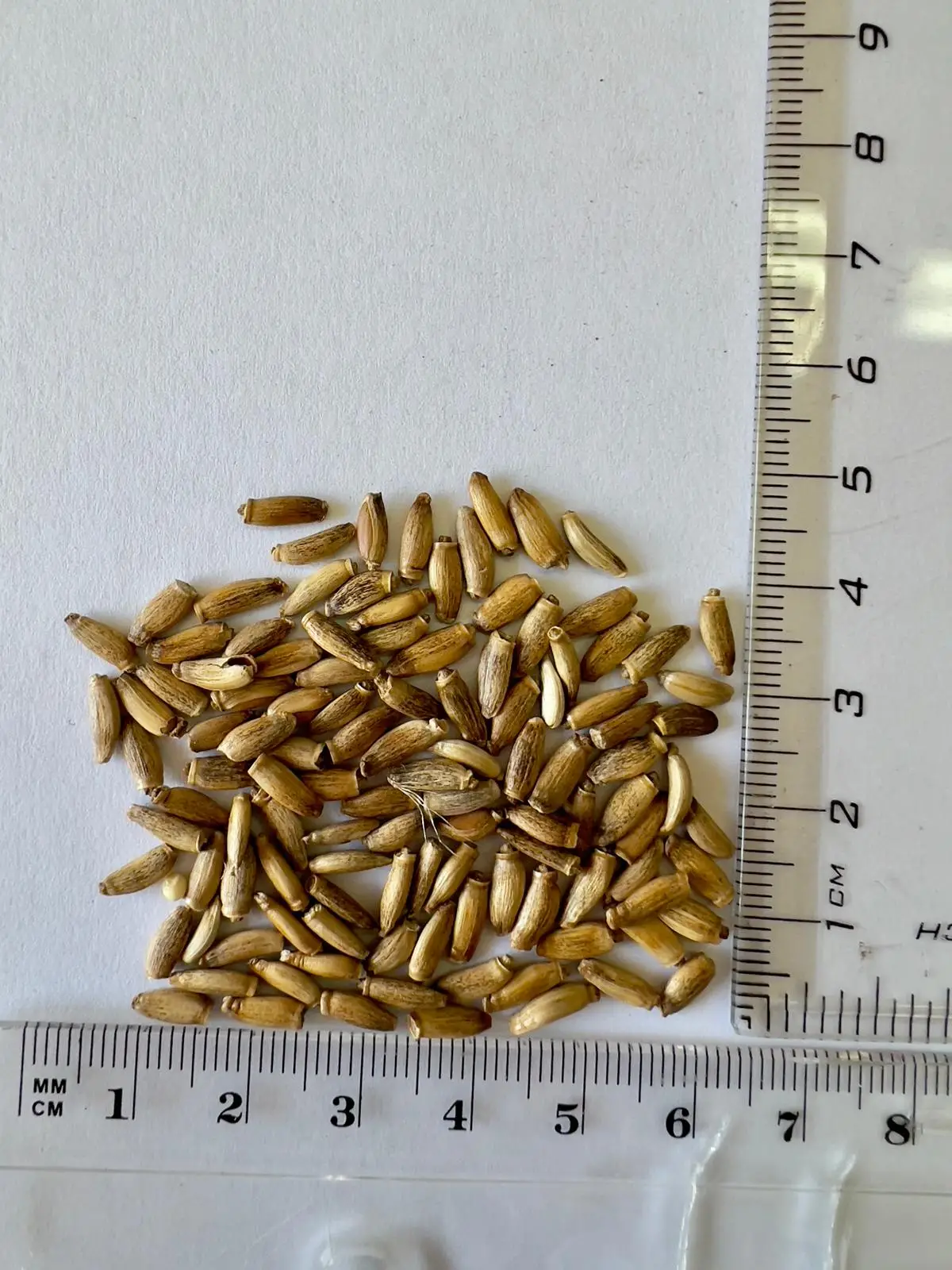
Grow the world’s most revered medicinal thistle—the seeds contain silymarin, nature’s most powerful liver protector and used by healers for millennia. Its stunning variegated leaves and electric purple flowers also attract bees by the hundreds. Dead-simple to grow from seed, drought-tolerant, thrives anywhere. Medicine, beauty, pollinator magnet: one plant.
€1.92
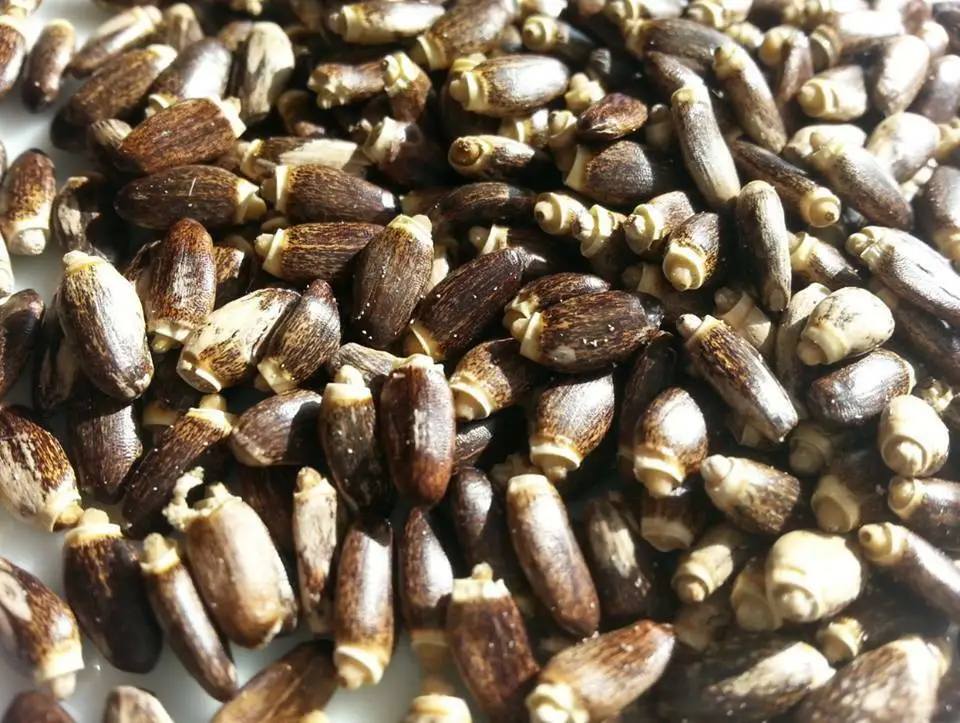
This is the thistle that changed healing forever. Silybum marianum—the milk thistle—carries within its seeds one of nature’s most studied, most proven botanical medicines: silymarin, a flavonolignan complex so potent that the WHO itself recognized it as an official hepatoprotective agent in the 1970s. But beyond the pharmacy, this plant is pure poetry.
Native to the warm Mediterranean basin where it grew wild from Southern Europe through Asia, milk thistle earned its sacred name from an old and beautiful legend: the milky-white veins that marble its leaves are said to be drops of the Virgin Mary’s milk. Medieval herbalists knew what they had—for over 2000 years, healers have turned to the seeds of this thistle to shield the liver, to detoxify the body, to restore what toxins damage. Today, silymarin remains pharmaceutical-grade medicine in Europe, prescribed alongside chemotherapy to protect patients’ livers from drug damage. You’re not growing decoration. You’re growing legacy.
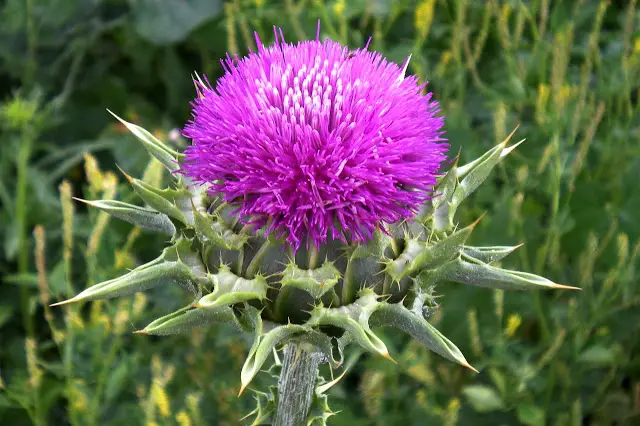
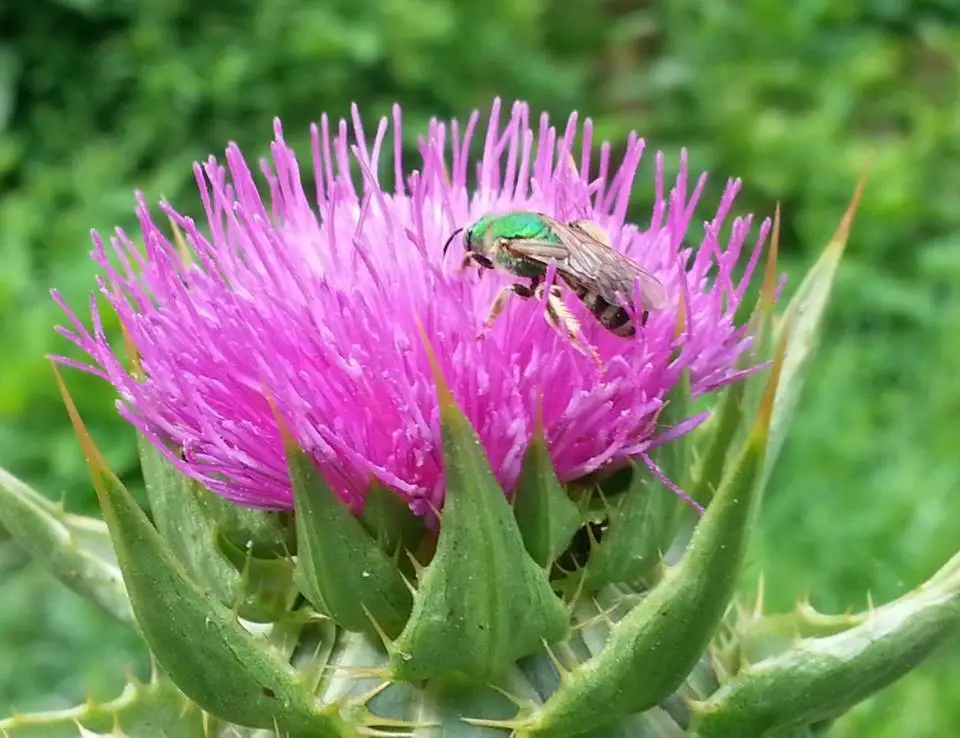
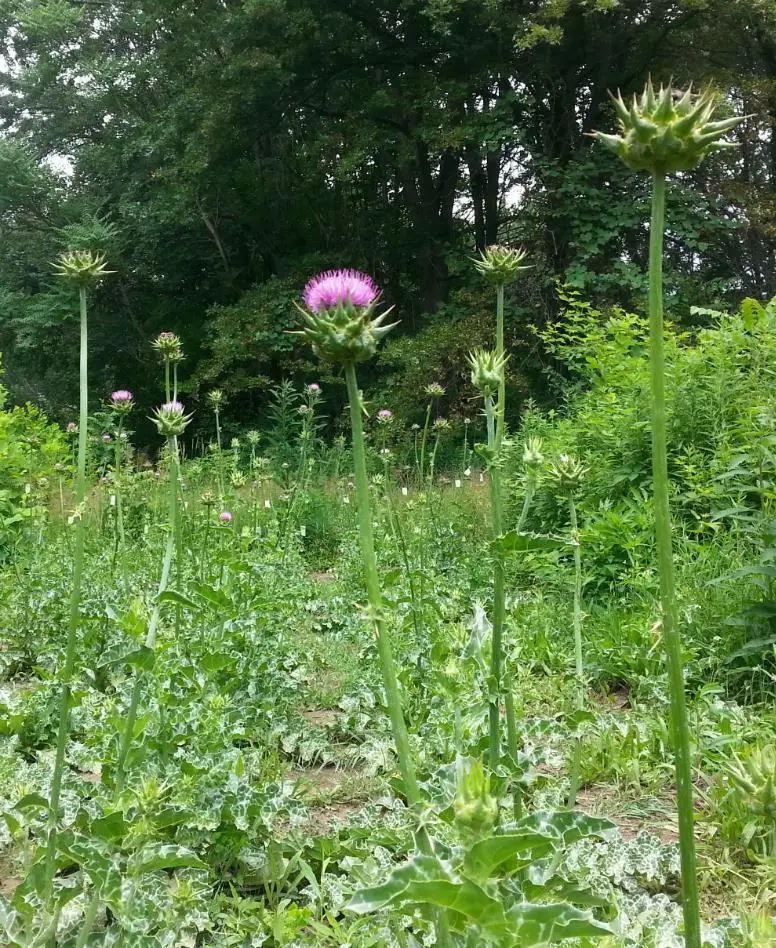
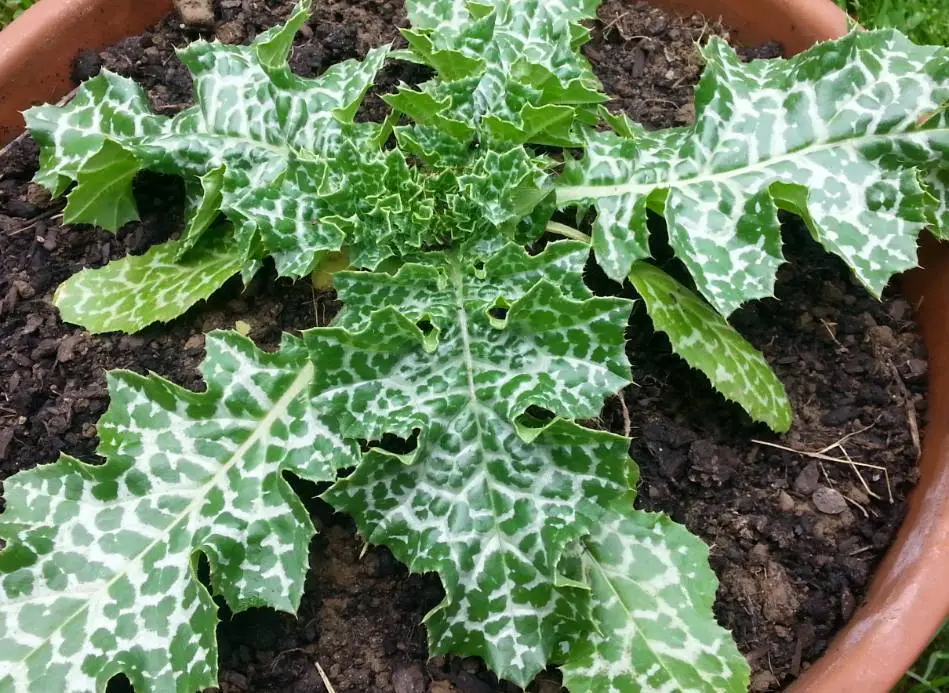
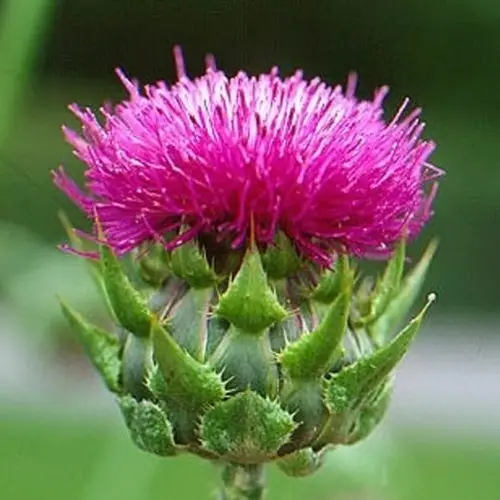
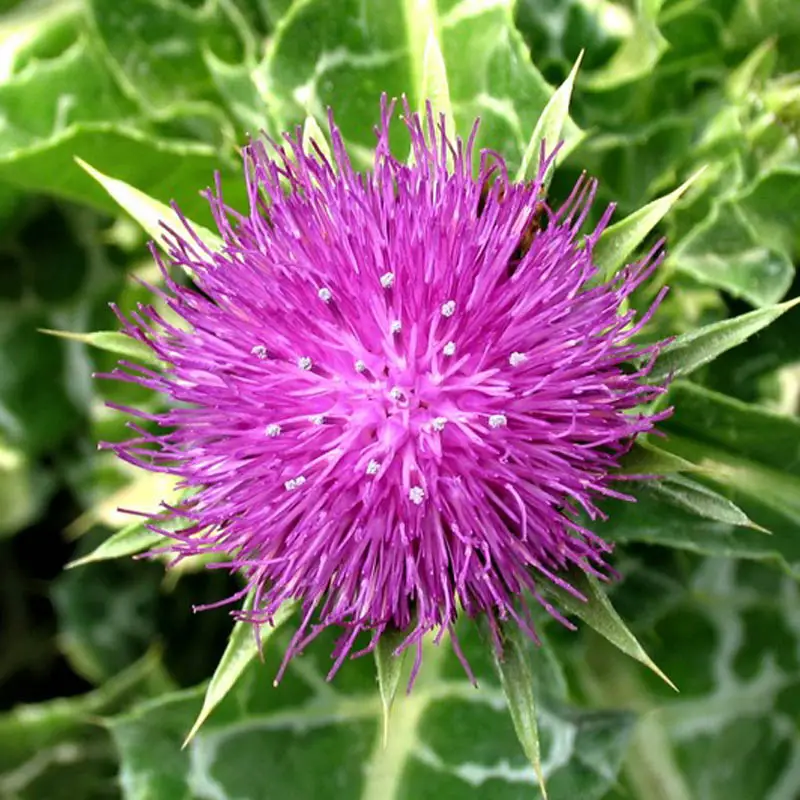
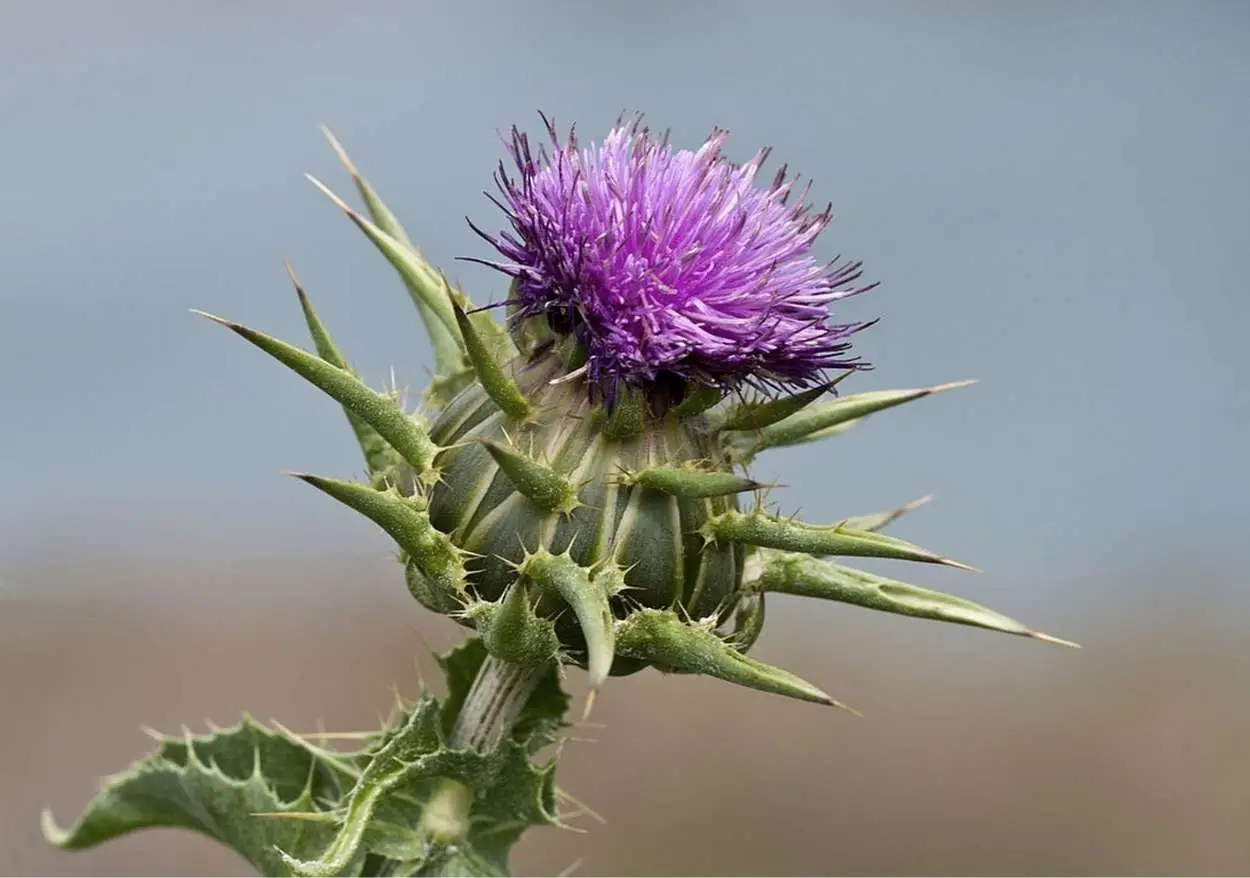
But here’s where it becomes irresistible for the gardener: the medicinal power lives in the seeds, and to harvest those seeds, you must grow the plant to its full glory. And what glory it is. Milk thistle explodes into life as a sturdy, upright biennial reaching 1.5–2 meters tall, its massive leaves—deeply lobed, almost spiky-edged—blaze with that distinctive white variegation that stops people mid-step. Then, from July through August in the northern hemisphere, it crowns itself with spherical flower heads of the most arresting purple-violet, dense with tubular florets that look like fine silk threads woven tight. These flowers are not decoration alone: they’re medicine-making factories, and they’re a magnet for pollinators. Bees descend on milk thistle flowers in clouds. Beekeepers cultivate this plant specifically for the nectar and pollen it provides—the flowers carry immense amounts of both, and the honey produced is liquid gold. Wild bees, honeybees, butterflies, beneficial flies: all arrive as if summoned. Grow milk thistle and you’re not just producing medicine; you’re feeding the pollinators your garden—and your neighborhood—desperately needs.
Now, the part that seals the deal for any gardener: milk thistle is almost absurdly easy to grow. It asks for almost nothing and delivers almost everything. Full sun to part shade? Yes to both. Rich soil or poor soil? Doesn’t matter much—this plant has low nutrient requirements and is strikingly drought-tolerant. Clay, sand, rocky ground, compacted earth? Its deep taproot penetrates where other plants surrender. Sow seeds directly into soil in autumn or early spring, depending on your climate. They’ll germinate in cool conditions (as low as 2°C) and establish with minimal fussing. Water occasionally when young; once established, milk thistle laughs at drought. No special feeding needed—in fact, it often thrives on neglect. This is a plant for real gardeners, the ones who want results without theater.
When you sow milk thistle seeds, you’re not starting a garden project—you’re planting a bridge between ancient healing and modern life. You’re inviting pollinators into your space. You’re harvesting your own liver medicine, your own seeds for next year’s crop, your own reminder that plants are still, after all these centuries, our deepest teachers. Grow this thistle from seed. Let it rise. Let it flower. Watch what arrives. The bees will know.
Only logged in customers who have purchased this product may leave a review.

Reviews
There are no reviews yet.