
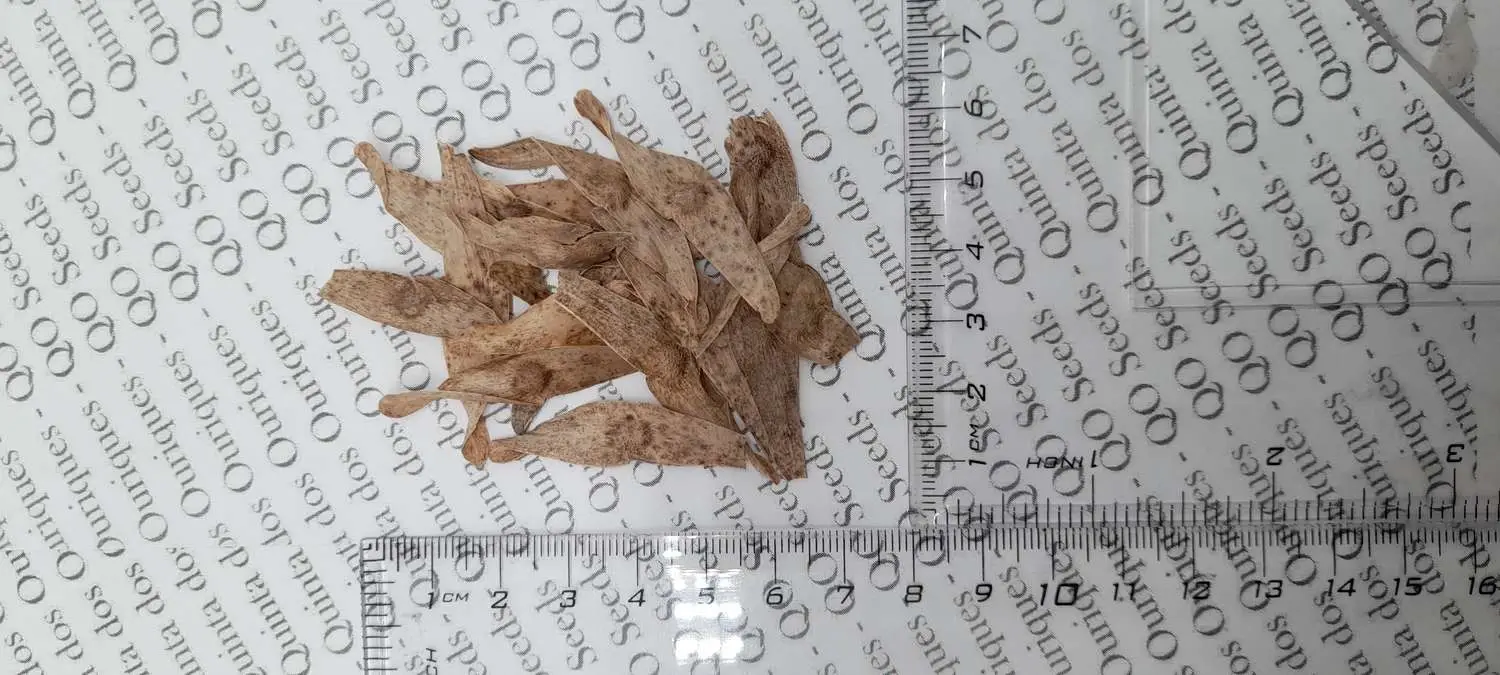
When nothing else survives, the Tree of Heaven takes root—in toxic soil, contaminated sites, and degraded landscapes where other trees surrender. Fast-growing and unflinching, this ancient Chinese restoration specialist reclaims what seems lost. Ideal for ecological remediation, urban brownfield recovery, and sites poisoned by mercury and heavy metals. Grows from seed with remarkable vigor, thriving where gentler trees fail. A functional hero for the harde
€1.92
When a landscape has been poisoned—by industry, neglect, or catastrophe—most trees cannot survive. Ailanthus altissima arrives with an uncompromising spirit.
Native to northeast and central China and Taiwan, Ailanthus altissima carries millennia of survival encoded in its genetics. The name itself—meaning “tree reaching for the sky”—reflects an ancient reverence in its homeland, where it is mentioned in the oldest extant Chinese texts. This is not a tree bred for ornamental gardens; it is a tree forged by necessity, a pioneer drafted into service across millennia.
TODAY’S CRITICAL USE: ECOLOGICAL REMEDIATION AND SITE RESTORATION
In an era of industrial contamination and ecological collapse, Ailanthus altissima has found its true calling—one that transcends ornamental value. This tree possesses extraordinary tolerance for conditions that kill conventional trees. It thrives in severely degraded, compacted, contaminated, and nutrient-poor soils. Mercury. Sulfur. Saline contamination. Low pH. Heavy metals leaching from abandoned mines, factory sites, and urban brownfields—Ailanthus survives where nothing else will. Scientists and restoration ecologists now recognize this tree as a proven remediation specialist, capable of stabilizing and greening the worst-damaged landscapes while more sensitive species are carefully reestablished. Its rapid growth and aggressive root systems can begin the long work of healing poisoned earth, allowing disturbed sites to transition from biological wastelands to productive ecosystems.
In the context of site restoration and ecological recovery—particularly on severely contaminated or degraded lands where conventional trees fail—Ailanthus altissima is a tool of necessity. When a brownfield must be stabilized, when mining waste must be anchored, when a toxic site must begin its rehabilitation: this is the tree that says yes.
BOTANICAL CHARACTER AND GROWTH
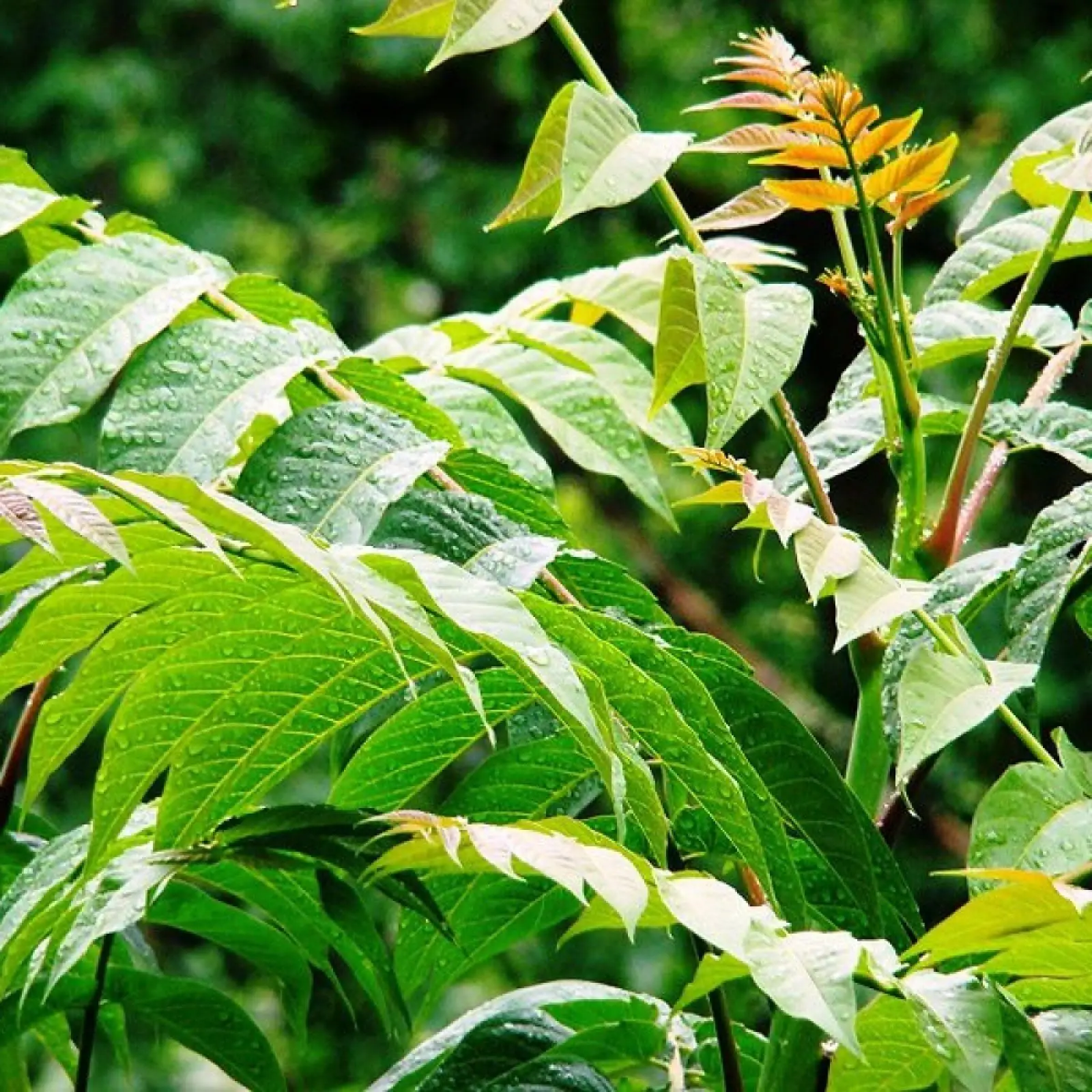
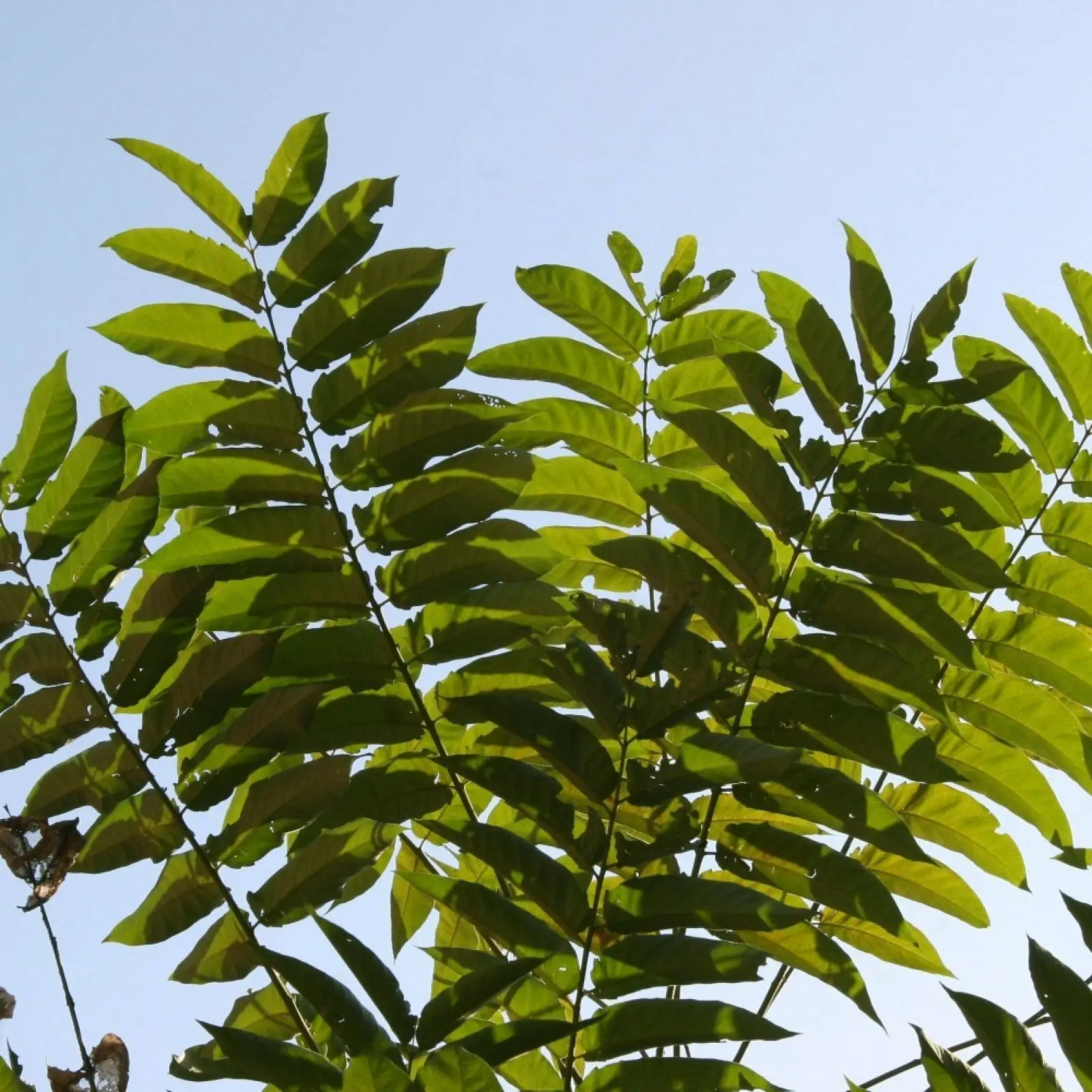
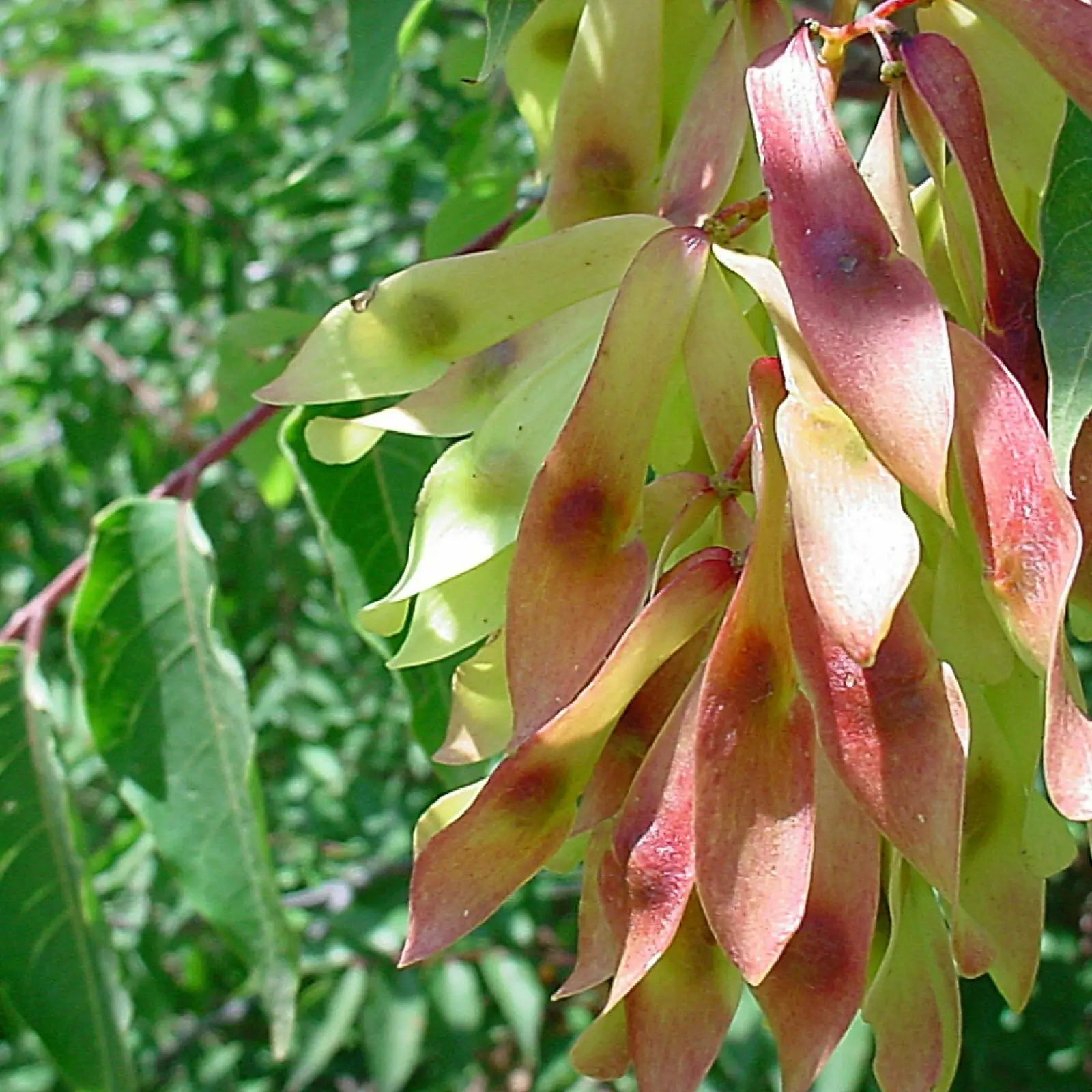
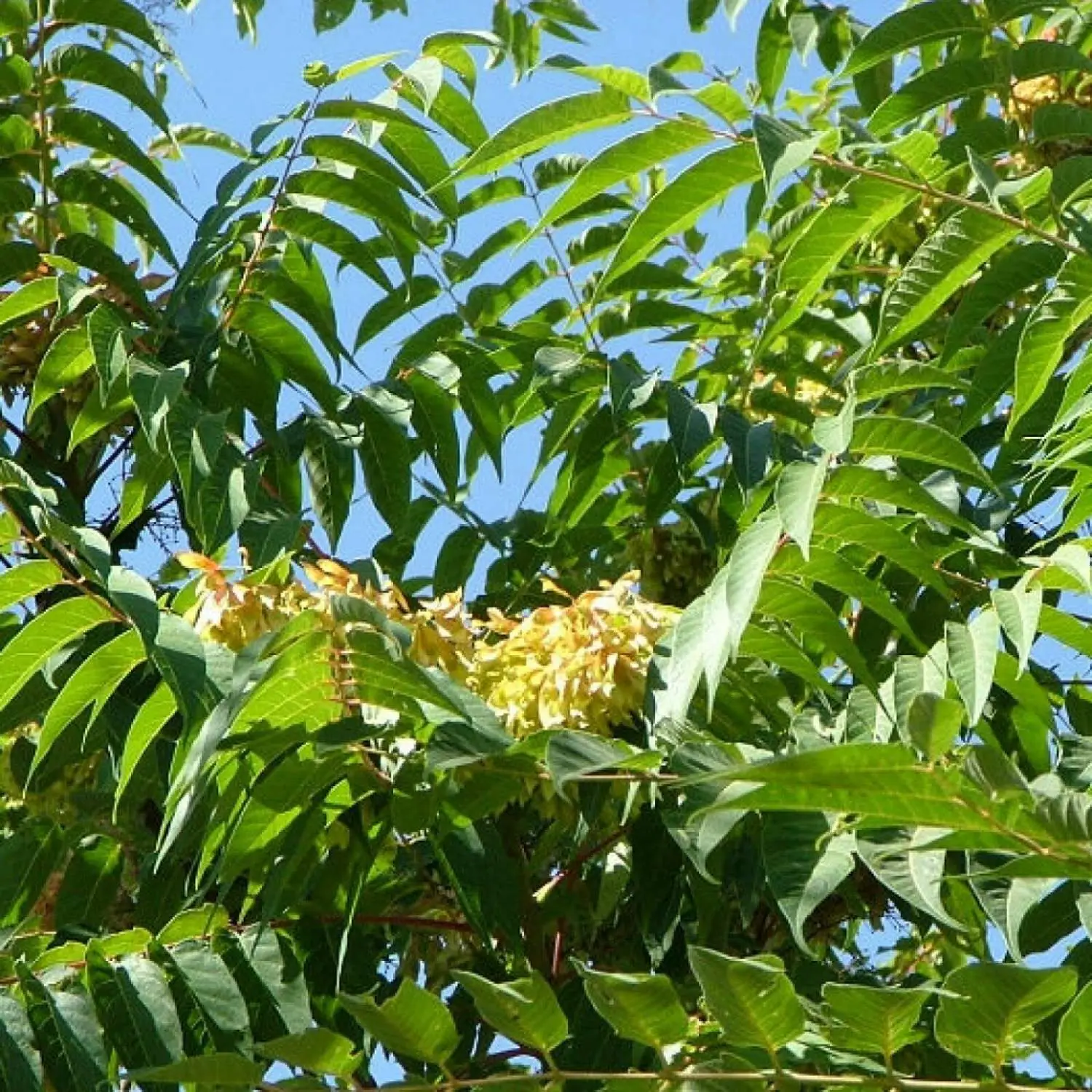
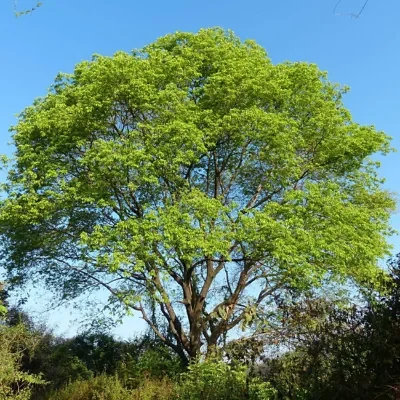
Visually, Ailanthus commands attention through sheer exuberance. Large pinnately compound leaves (18–25 leaflets each) give the crown a lush, almost tropical appearance—a green gesture toward regeneration. The small yellow-green flowers arrive in dense clusters in early summer, followed by distinctive winged fruits (samaras) that ripen to reddish-brown and persist through winter, creating a crown of ember-colored brilliance. The bark is pale, smooth gray, lending an elegant restraint to the overall vigor.
But what makes this tree invaluable to the restoration specialist is its character: rapid juvenile growth, extreme adaptability, and an almost supernatural ability to root itself into damaged ground. Growing from seed is remarkably straightforward—seeds germinate readily when stratified and sown in spring, nestled under a thin layer of soil. The tree demands full sun, tolerates virtually any soil type (or lack thereof), and requires minimal intervention once established. Drought means nothing to it. Pollution? A minor inconvenience. It is indifference to suffering made botanical.
GROW FROM SEED: ACCEPT THE CHALLENGE
If you are reclaiming land—truly reclaiming it from industrial waste, urban neglect, or ecological collapse—this seed is for you. Not for the suburban garden or the aesthetic collection, but for the restorative act. Growing Ailanthus altissima from seed is a commitment to ecological triage, to choosing function and healing over beauty alone. Your hands in that soil, your patience with those seeds, becomes an act of restoration. This is the tree for the landscape architect with a mission, the ecological pioneer, the botanist willing to work with nature’s roughest instruments to rebuild what has been broken.
Only logged in customers who have purchased this product may leave a review.
Reviews
There are no reviews yet.