
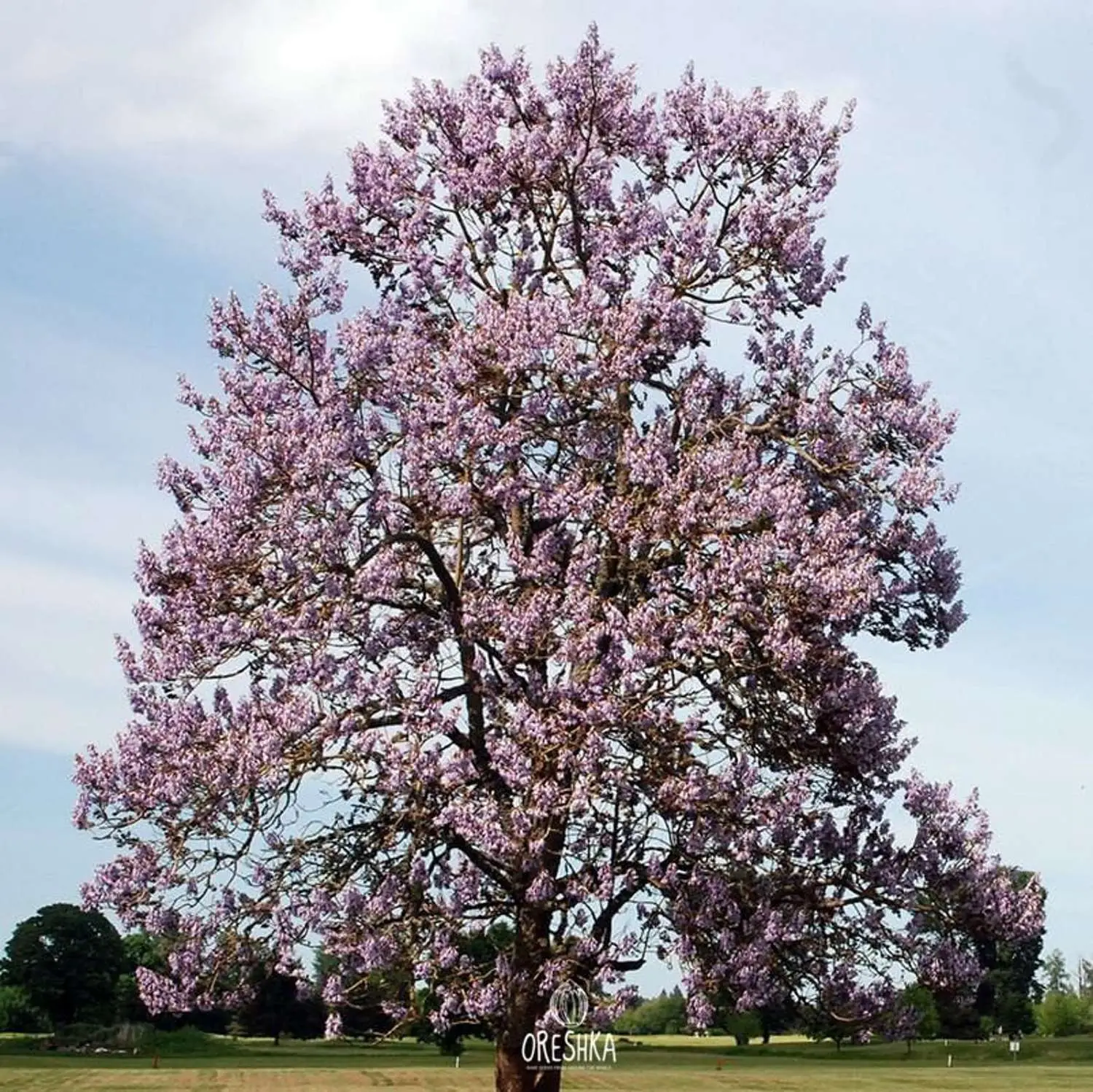
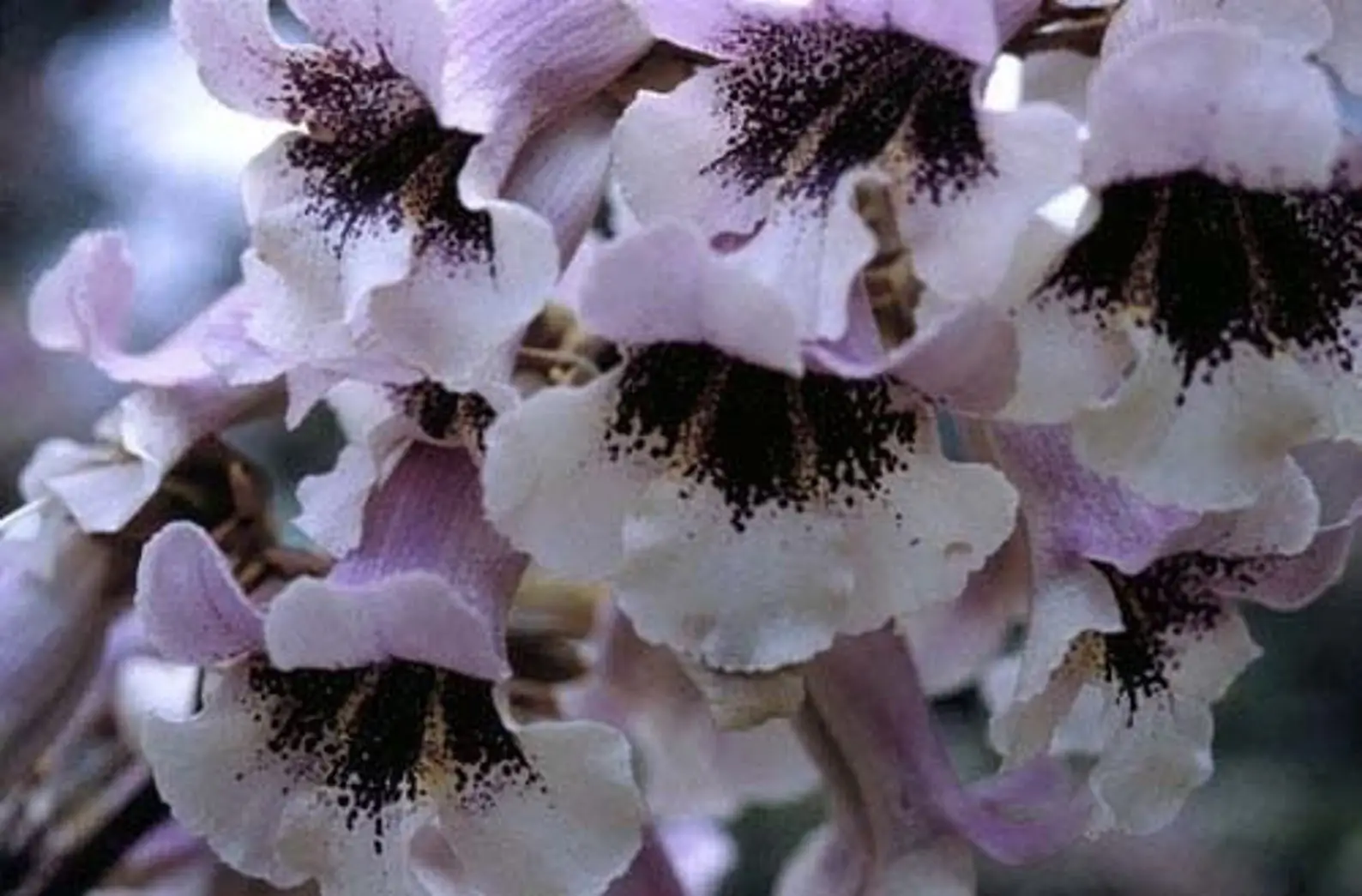
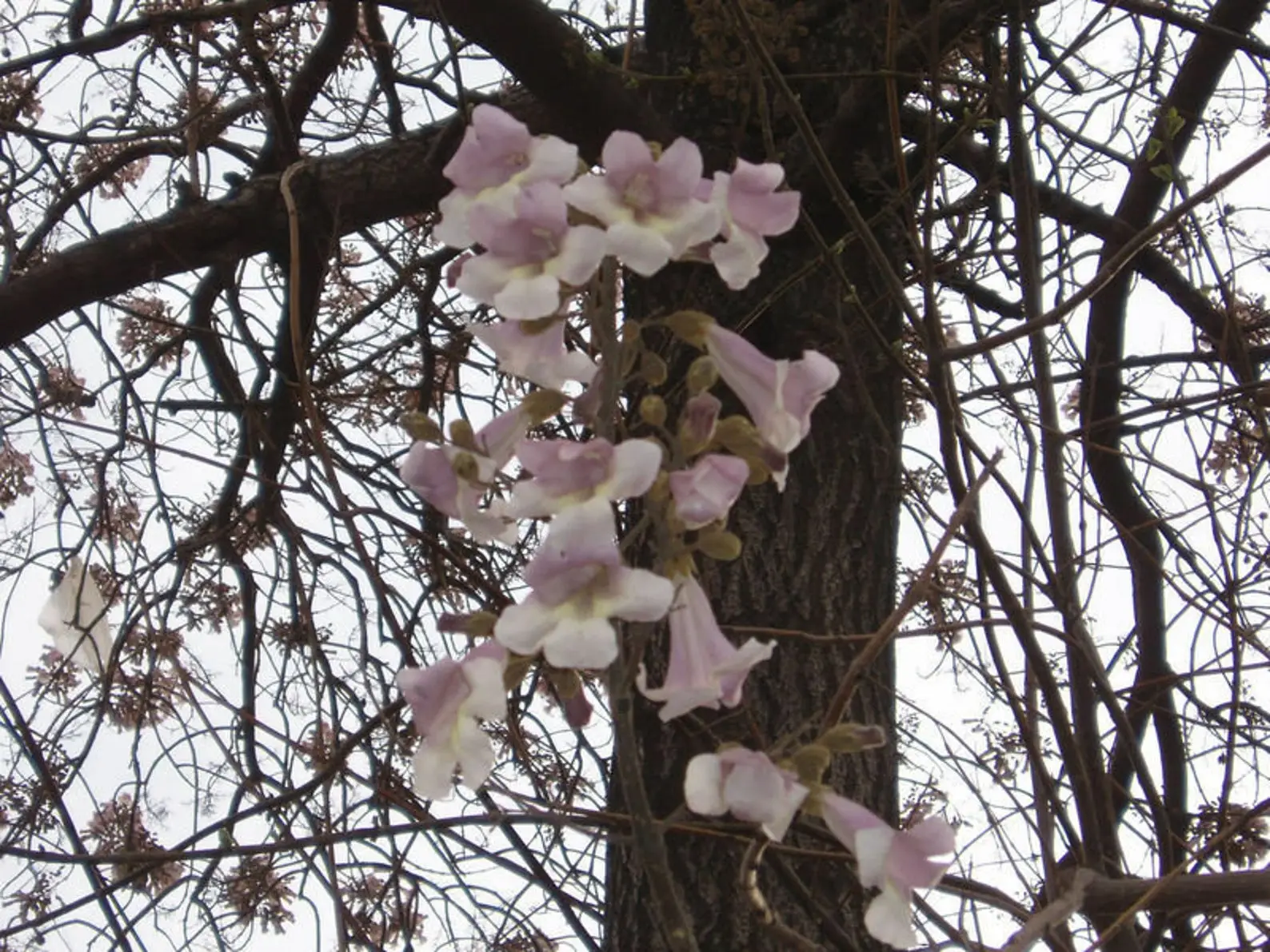
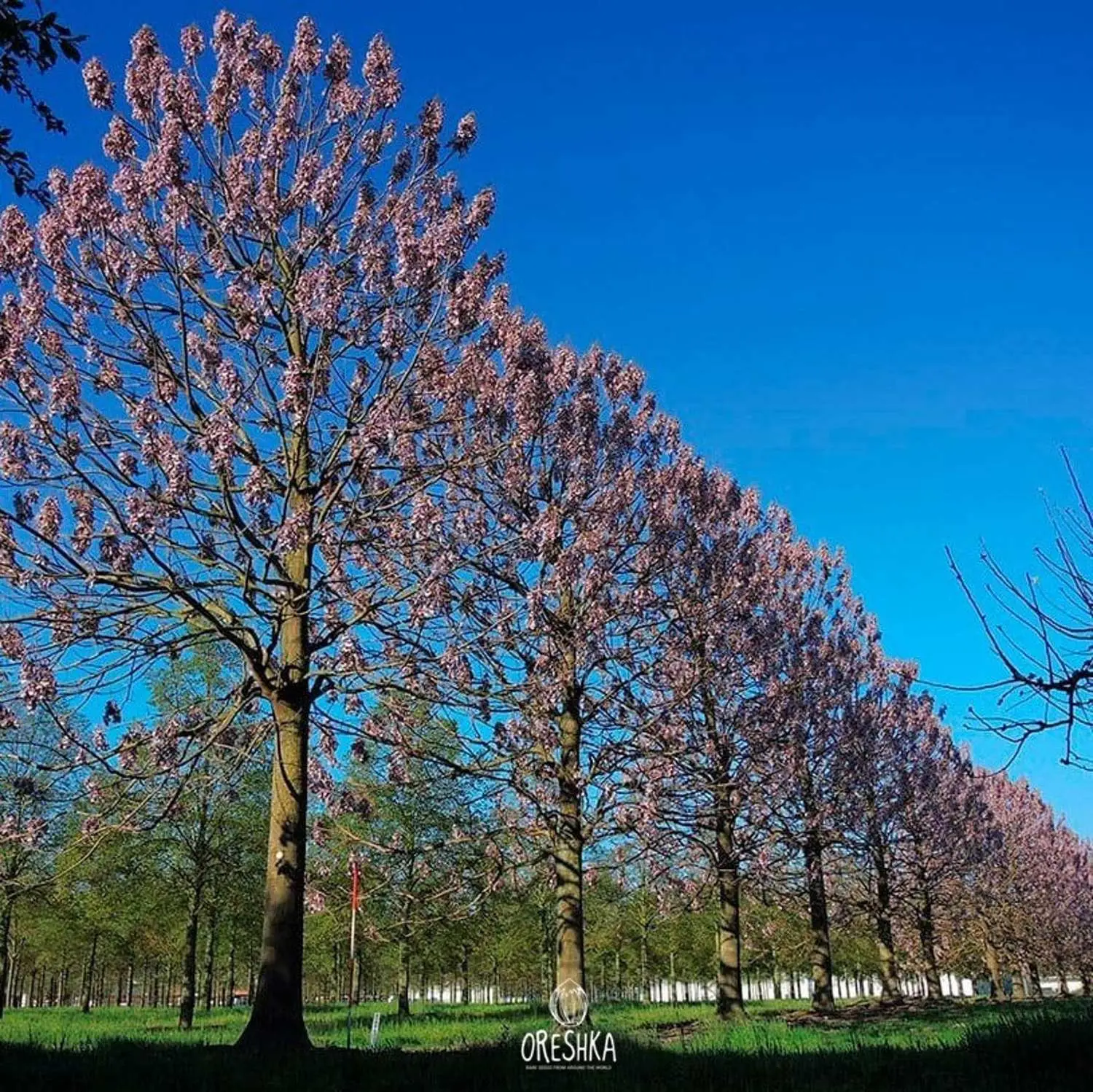
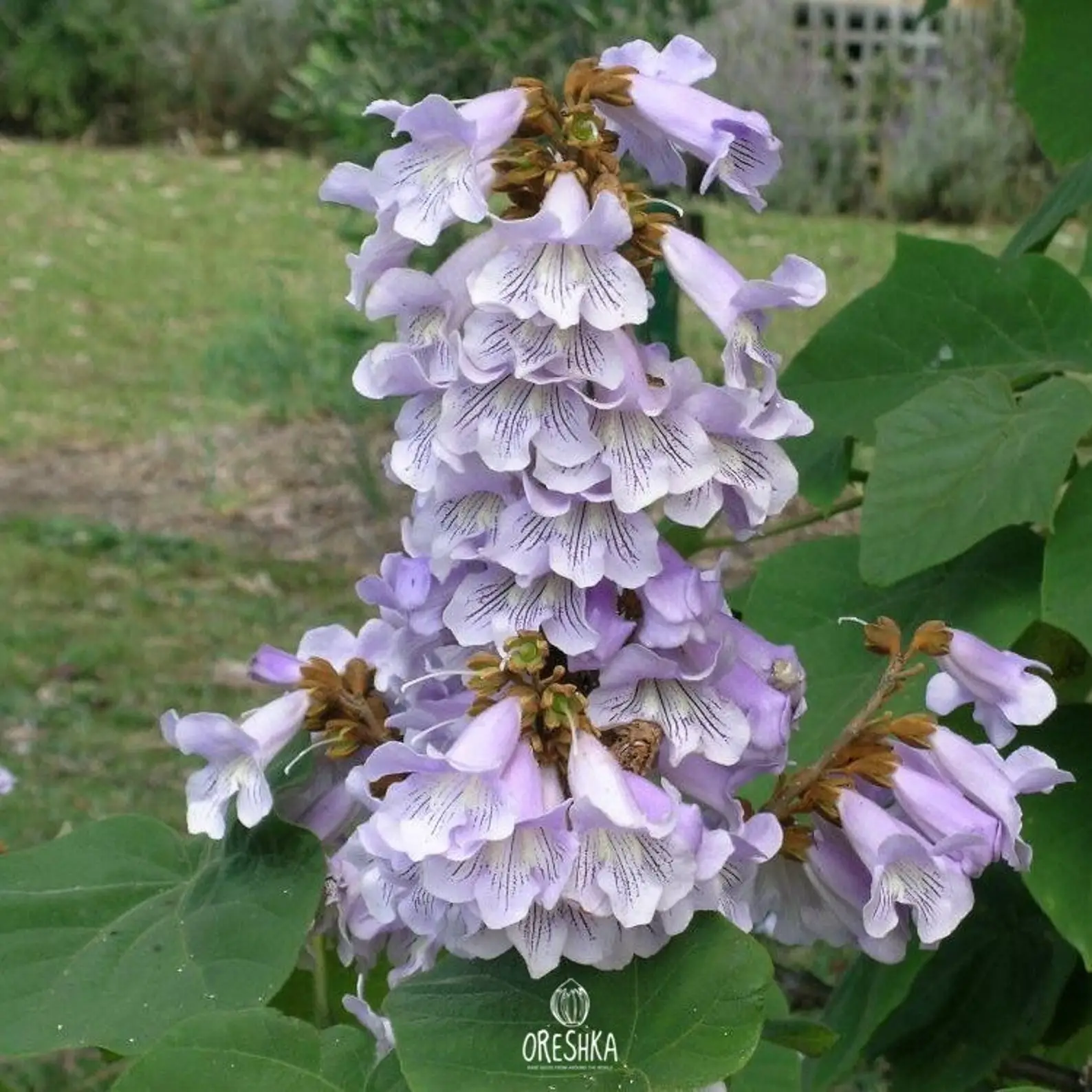
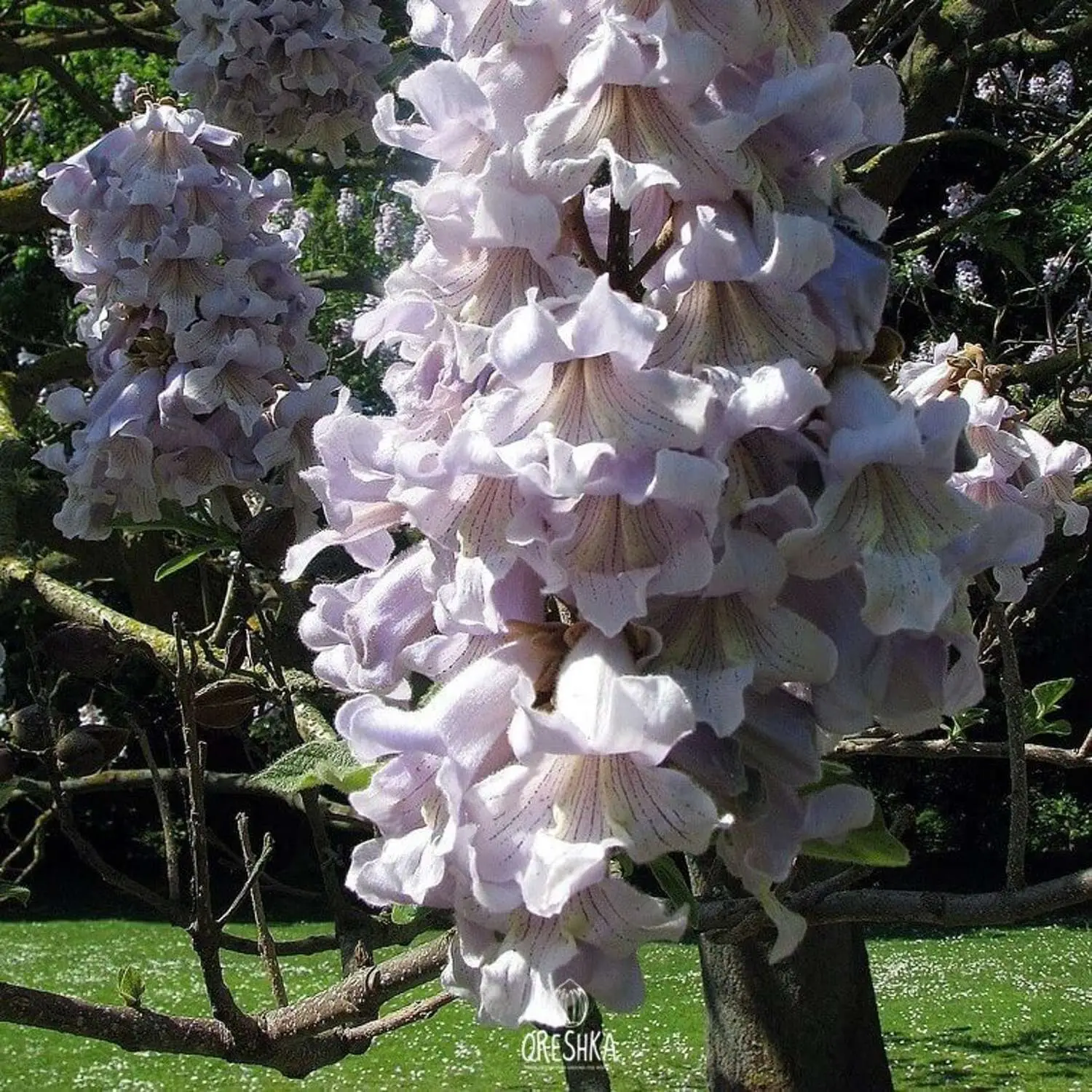
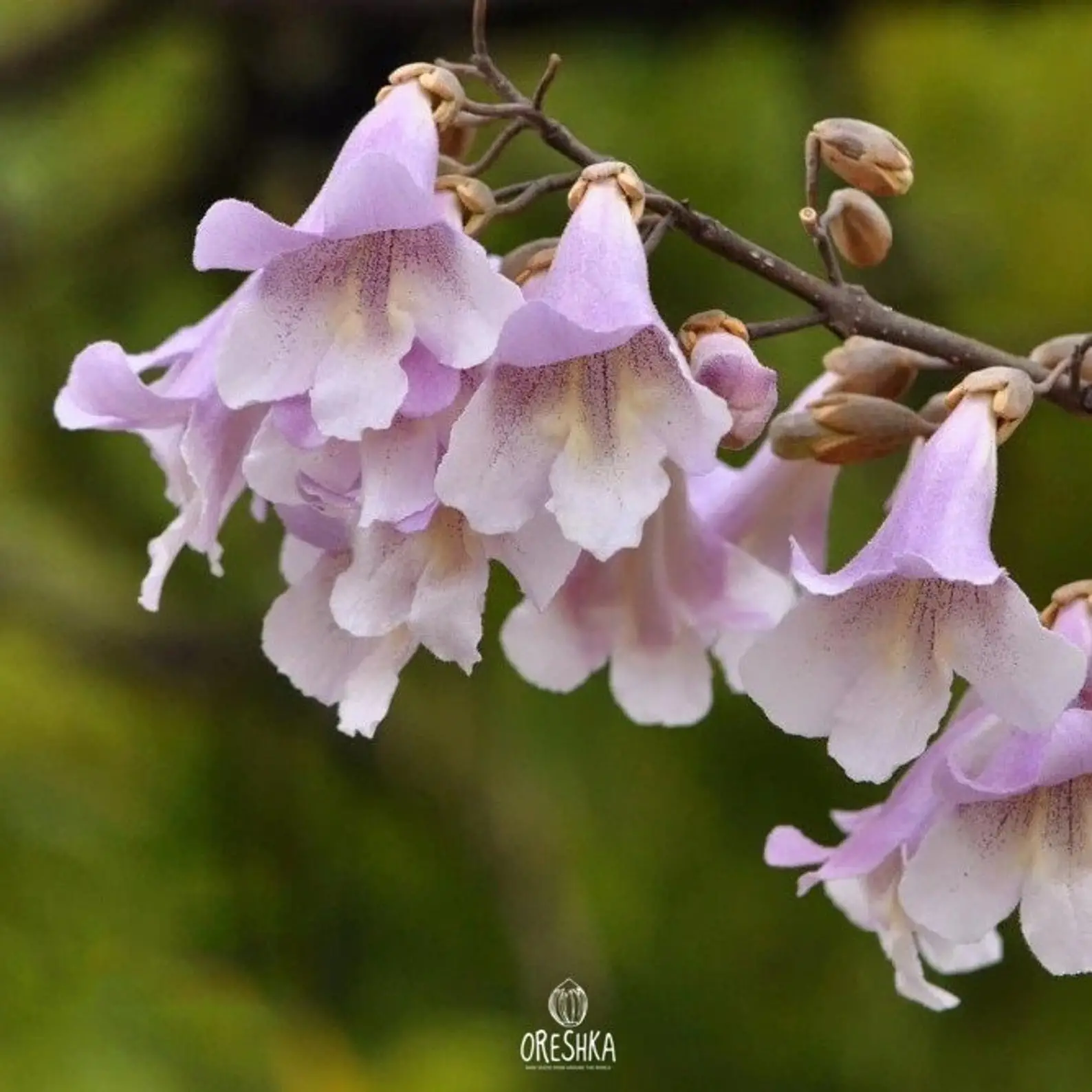
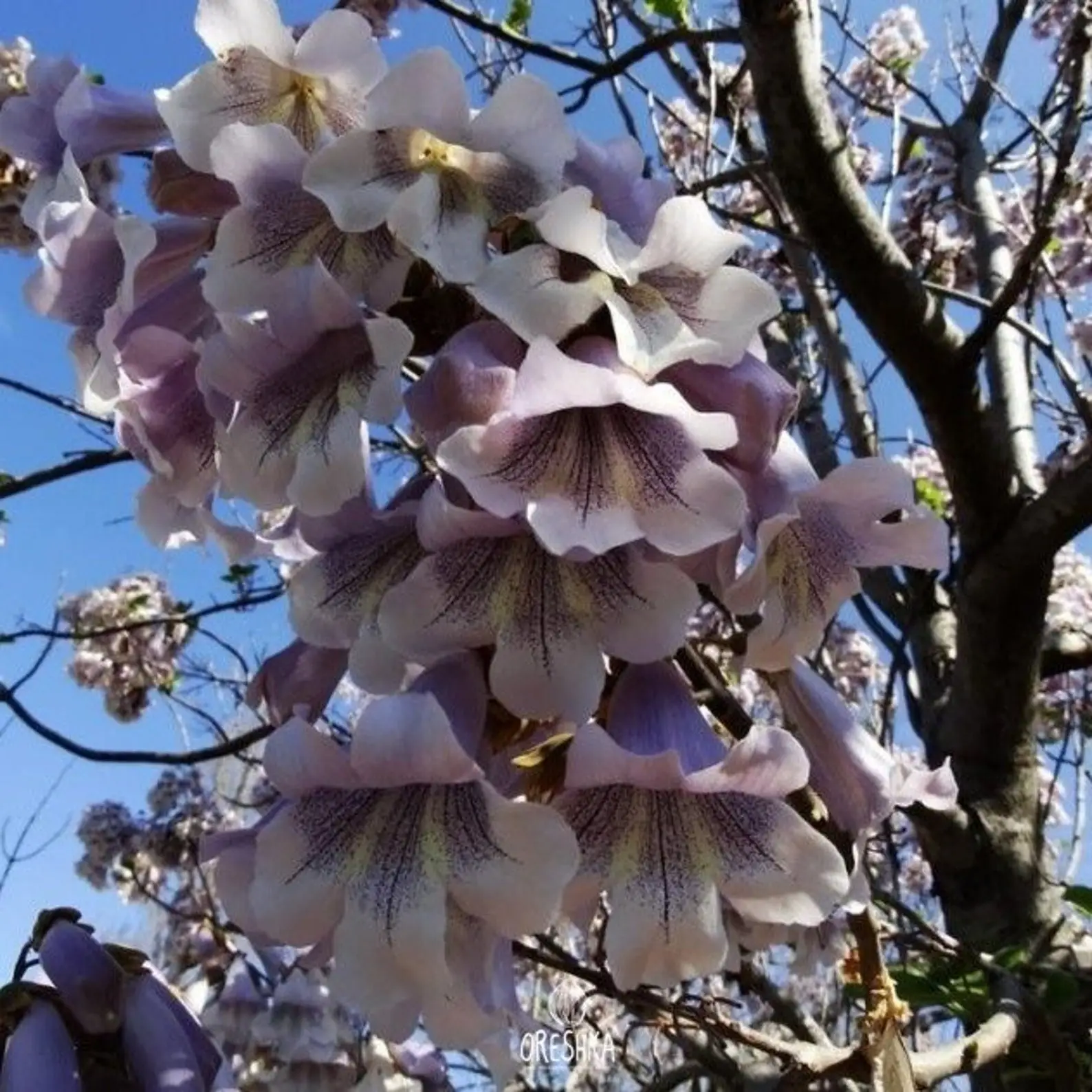
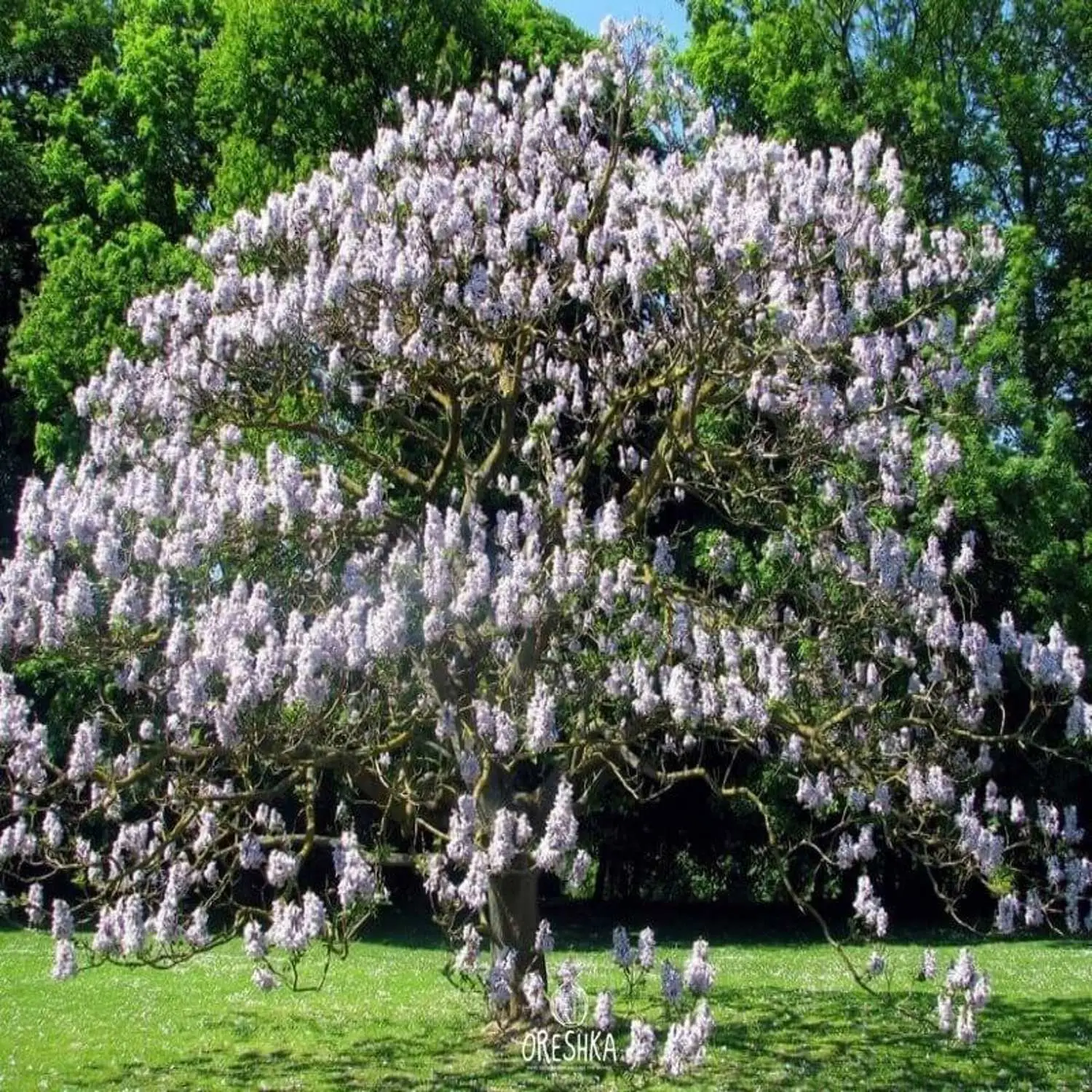
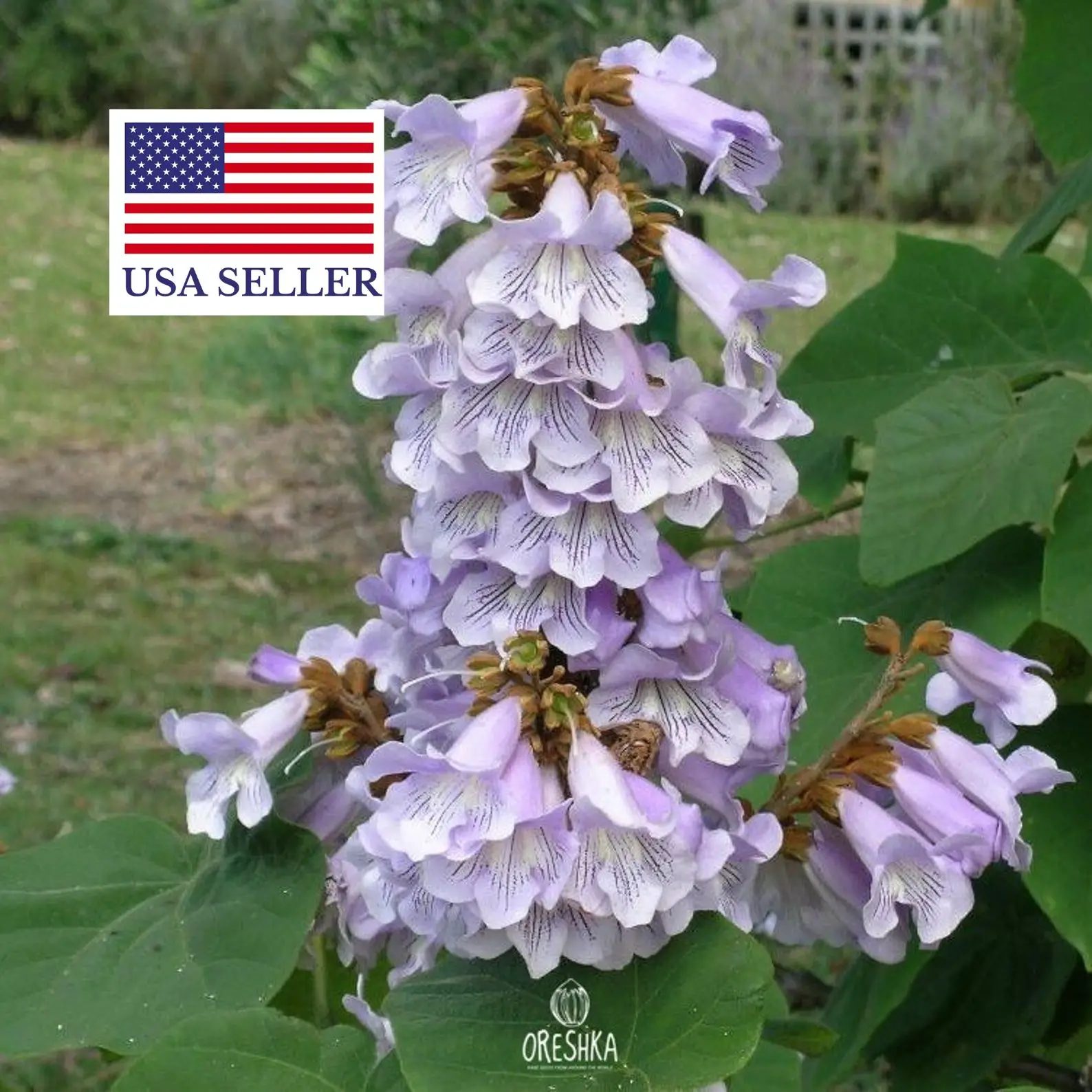
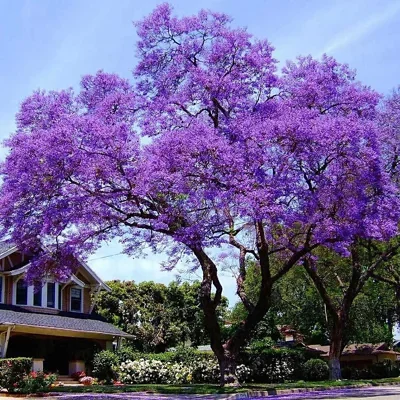
Own the dream: a living timber tree prized by luthiers and master craftsmen for centuries. Paulownia fortunei produces stunning spring blooms—cream-white flowers kissed with purple—while its extraordinary lightweight wood gains value as it matures. Fast, forgiving, and destined to reward your patience with timber that sings. Start from seed and watch your investment grow 20 feet per year.
€1.92
This refined Chinese species produces elegant panicles of fragrant white flowers with delicate purple markings in late spring, named for the pioneering plant collector Robert Fortune. Native to China and Taiwan, celebrated for its unmatched growth speed—up to 20 feet annually when young, maturing to an impressive 50-75 feet tall, it enchants in spring with clusters of large tubular flowers in shades of white, purple, or silvery mauve, blooming before its lush, green heart-shaped leaves emerge.
Native to East Asia, where it has been cultivated for centuries, it has gained global popularity thanks to its impressive growth rate, its light wood and the spectacular nature of its leaves and flowers. This refined Chinese species develops a more graceful form than its robust relatives, with smaller leaves and denser branching. Its cultivar Fast Blue=’Minfast’ has gained the Royal Horticultural Society’s Award of Garden Merit.
But here’s what sets Paulownia fortunei apart from mere ornament: Paulownia timber is a pale whitish-colored wood with a straight grain and is widely used due to its rot resistance and high ignition point, and the wood is also used in China, Korea, and Japan for making the soundboards of stringed musical instruments including guqin and pipa. Paulownia timber is extremely easy to work with and is reported to be resistant to decay, with good weathering characteristics, and trees can grow to maturity in under 10 years and produce strong, lightweight timber with an even higher strength to weight ratio than balsa wood. Imagine: your own trees, grown from seed, destined to resonate through generations. Harvest can begin when the trees are 8 to 10 years old; a 10 year old Paulownia tree can be expected to provide an average of 300 board-feet of timber, and 18 year old P. fortunei trees in China yield an average 6.5m3 with a diameter-at-breast-height of 1m. Beyond luthier’s dreams, the flowers of Paulownia fortunei are excellent honey bearers, and it is utilized in Asia for absorbing heavy metals and mitigating air pollution, while also playing a crucial role in reforestation—beauty, craft, and healing all in one tree.
Growing Paulownia fortunei is refreshingly straightforward. It is easy, extremely fast growing. Its adaptability to various well-drained soils and preference for full sun make it ideal for diverse landscapes. It is resistant to drought and low temperatures and is not very demanding on soil, but it does require plenty of sun and well-drained substrates. Sow in a well-draining seed mix, keep moist, and provide warmth (20–25°C) and light. Young plants establish quickly and reward dedication with year-on-year growth that is genuinely breathtaking to witness.
There’s something profoundly satisfying about planting a seed and knowing that within a few years, you’re nurturing wood destined to sing. Whether you’re a musician, a timber enthusiast, a beekeeper, or simply someone who believes in growing beautiful, purposeful things, Paulownia fortunei invites you into its world. Paulownia is also known for its resilience in ecologically stressed and degenerate lands and has been named the ‘Phoenix tree’ due to its ability to regenerate from its existing root system after harvesting. Sow these seeds and begin your own legacy: the phoenix that blooms, grows, and sings.
Only logged in customers who have purchased this product may leave a review.
Reviews
There are no reviews yet.