
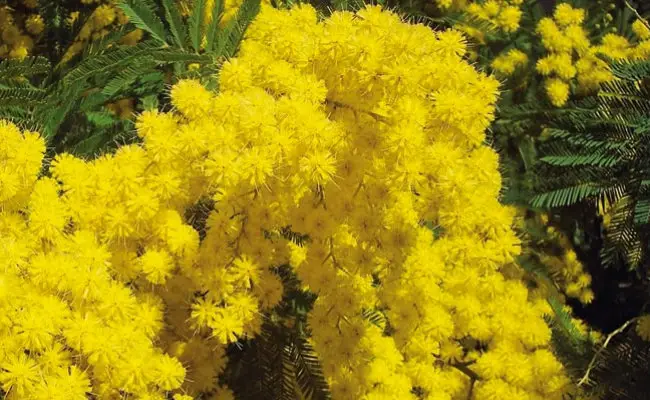
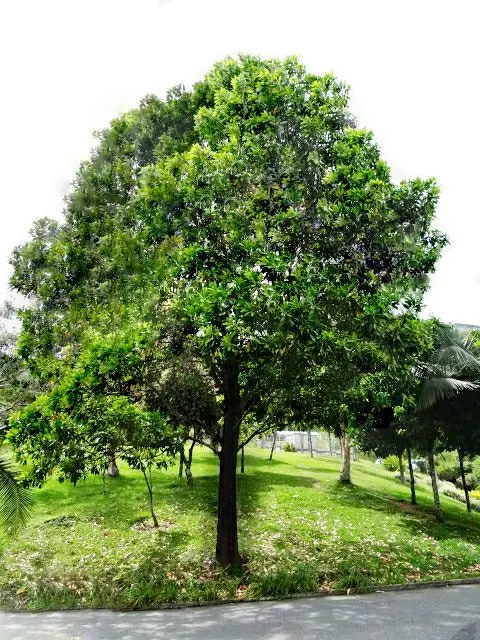
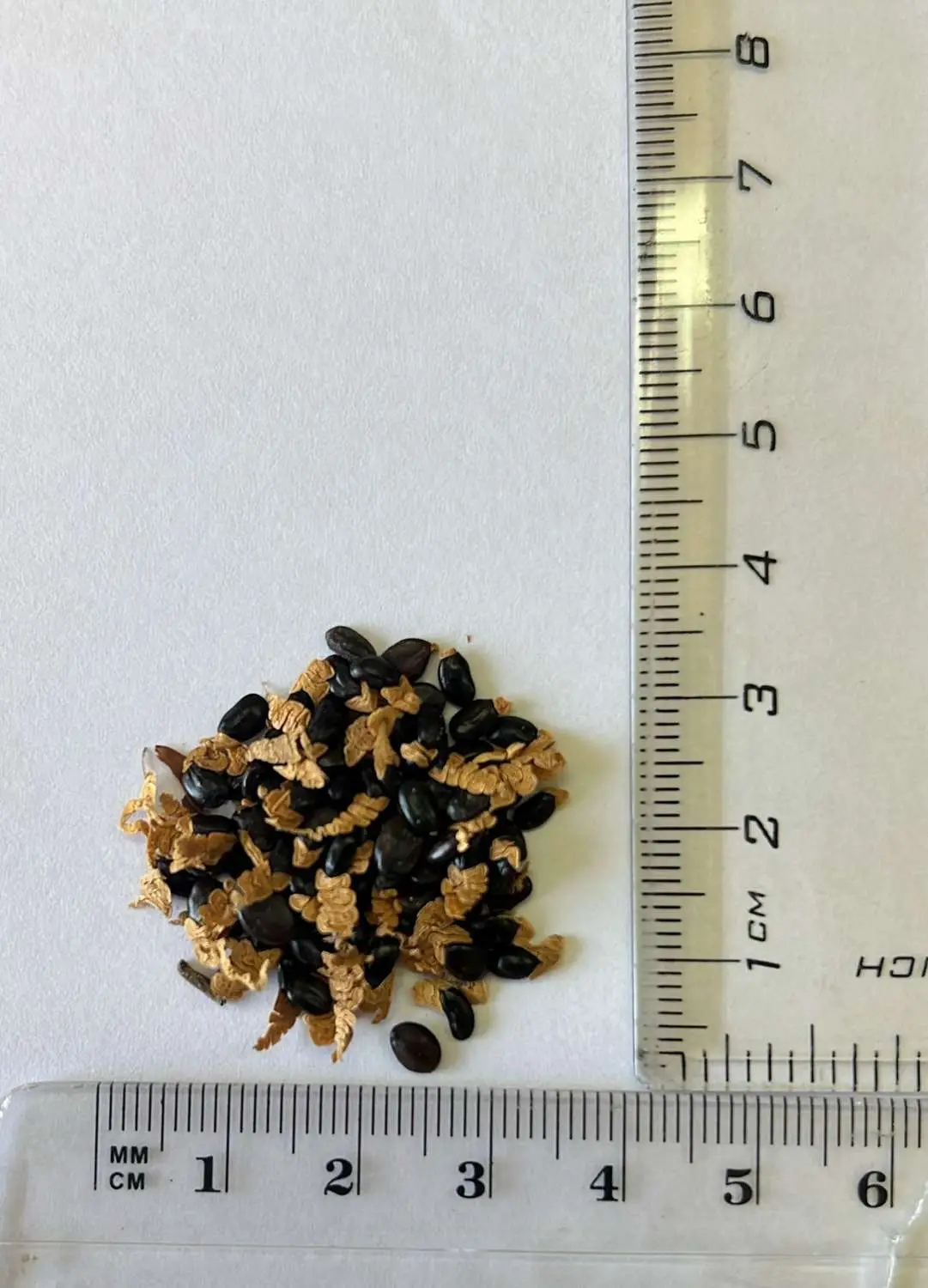
Plant the tree that bees adore. Acacia mangium produces year-round extrafloral nectar that attracts honeybees like nothing else—yielding up to 110kg of monofloral honey per hive annually. Beyond beekeeping, this nitrogen-fixing powerhouse regenerates degraded soils while producing premium hardwood. Fast-growing, drought-tolerant, and thrives on marginal land. Grow it from seed.
€1.92
This is the tree that rewrites what’s possible at the intersection of forestry, ecology, and pure abundance.
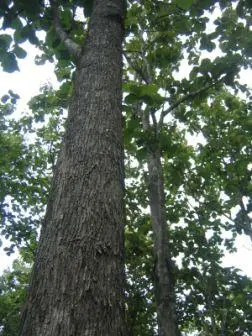
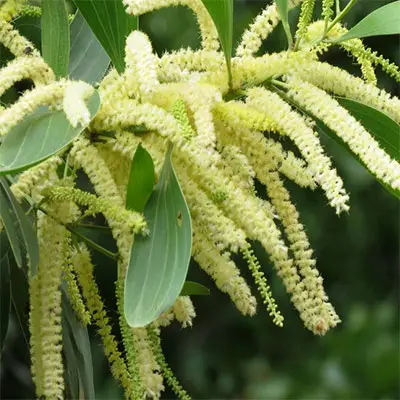
Acacia mangium is a tropical fast-growing evergreen native to northeastern Queensland, the Moluccan Islands, and Papua New Guinea—now a global champion for forest restoration. It grows 25–35 metres tall with a commanding straight trunk, dark fissured bark that deepens with age, and enormous feathery phyllodes (up to 25cm long) that create a cathedral of dense, year-round shade. But look closer, and you’ll see the real magic: conspicuous extrafloral nectaries—tiny glands at the base of each leaf—that weep nectar constantly, all year long.
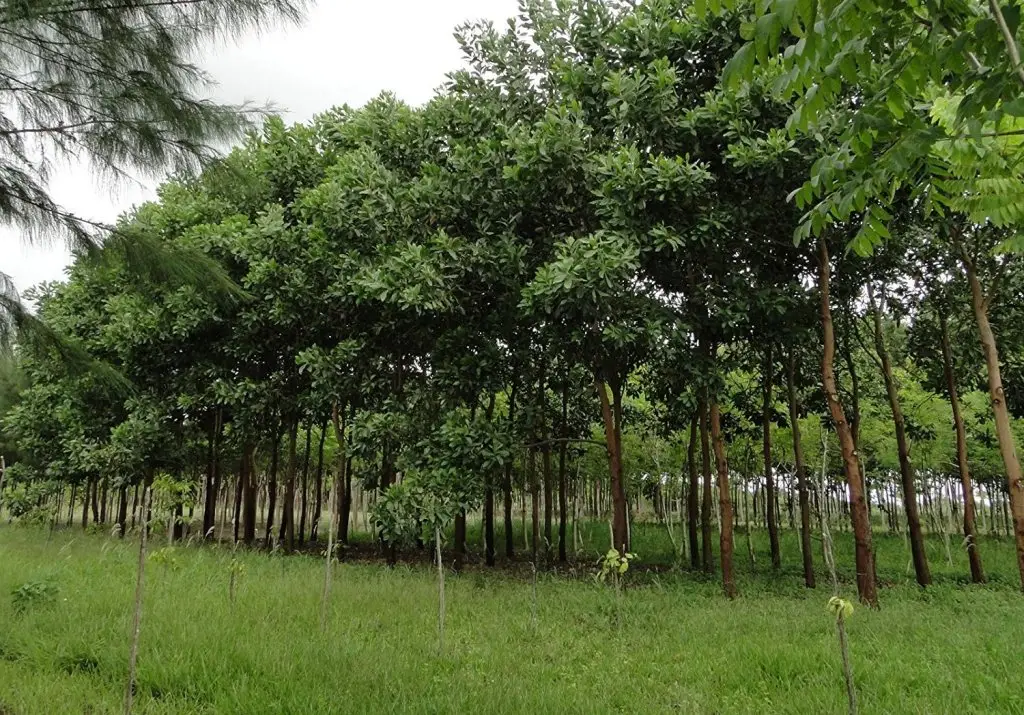
What makes this species extraordinary is its unmatched capacity for ecological transformation. Acacia mangium is a nitrogen-fixing legume that enters into a symbiosis with soil bacteria, actively enriching degraded, acidic, and marginal soils. A single hectare fixes an average of 128 kg of nitrogen annually in above-ground biomass, delivering a cumulative net balance of 151–562 kg of nitrogen per hectare over a rotation. It’s been deployed in mining rehabilitation across Goa and Colombia, reforestation projects across the humid tropics, and agroforestry systems where it revitalizes exhausted pastures and fallow fields. The wood itself is remarkably durable—brownish-yellow, dense (530–690 kg/m³), hard, and resistant to warping. It’s perfect for furniture, construction, veneer, and pulp, making rapid returns commercially viable within 6–8 years for pulpwood and 15–20 years for sawn timber.
But here’s where passion ignites: Acacia mangium is a beekeeping revelation. The tree produces extraordinary quantities of extrafloral nectar throughout the year, creating a perpetual food source that honeybees cannot resist. Plantations equipped with beehives yield up to 110 kg (242.5 lbs) of pure, monofloral acacia mangium honey per hive annually—honey of outstanding quality and purity. In Malaysian Borneo alone, 2 million acres of mangium support the world’s largest rainforest-based apiary network, stretching 37 kilometres through pristine jungle. Bees gather the nectar obsessively, ensuring a honey of singular character and reliability year after year. For smallholders and commercial growers alike, planting this tree means securing a sustainable honey income that transcends seasonal limitation. This is not a speculative crop—it’s horticultural certainty.
Growing Acacia mangium is refreshingly straightforward. It is a pioneer species demanding full light and thriving in warm temperatures (24–30°C). It prefers consistently moist, loamy soil that is well-draining and slightly acidic to neutral (pH 4.5–6.5), though it tolerates low-fertility soils far better than most tree species. It adapts to tropical lowlands and wet tropical climates with good drainage. Seeds require simple pre-treatment—scarification or a brief soak in boiling water—which triggers germination rates exceeding 75% in just 3–30 days. Seedlings are ready for transplanting at 25–40 cm (typically 9–16 weeks). Once established, the tree exhibits explosive growth: 3–4 metres of height annually near the equator. It is drought-tolerant once mature, fire-resistant at diameter thresholds, and regenerates rapidly from disturbance. Pruning between 6–12 months helps shape form, but the tree’s natural architecture is already elegant.
When you plant Acacia mangium from seed, you’re planting far more than timber. You’re establishing a living engine of soil recovery, a beacon for honeybees, a source of honey that tastes of pure tropical abundance, and a tree that grows so fast you’ll feel the urgency of the tropics in its trunk. This is the tree that turns marginal land into wealth—ecological and economic both. Grow it.
Only logged in customers who have purchased this product may leave a review.
Reviews
There are no reviews yet.