Description
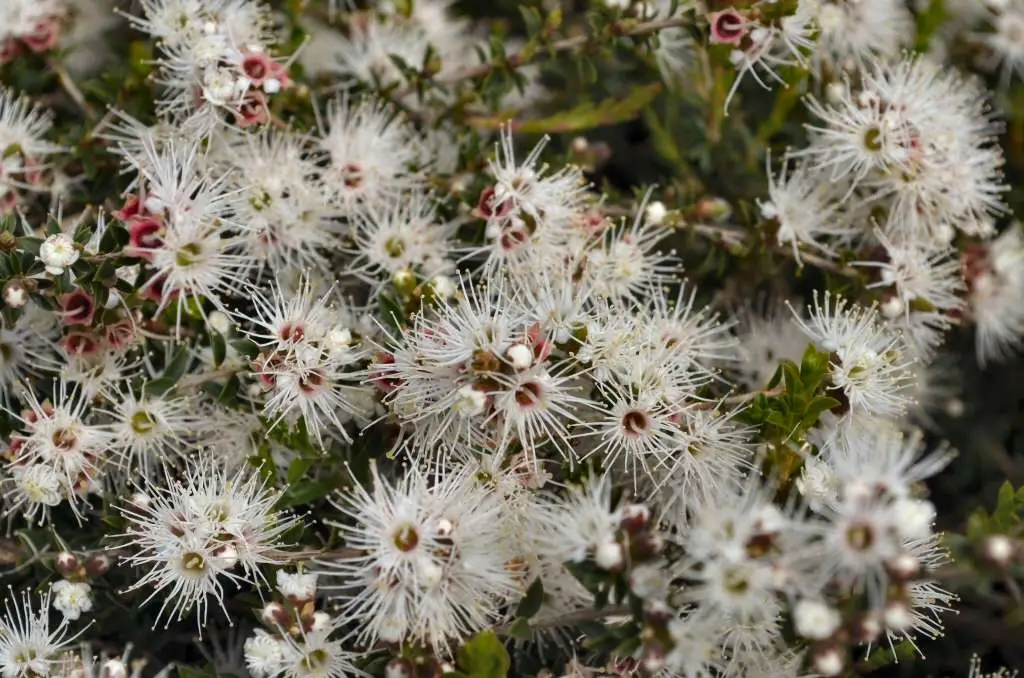
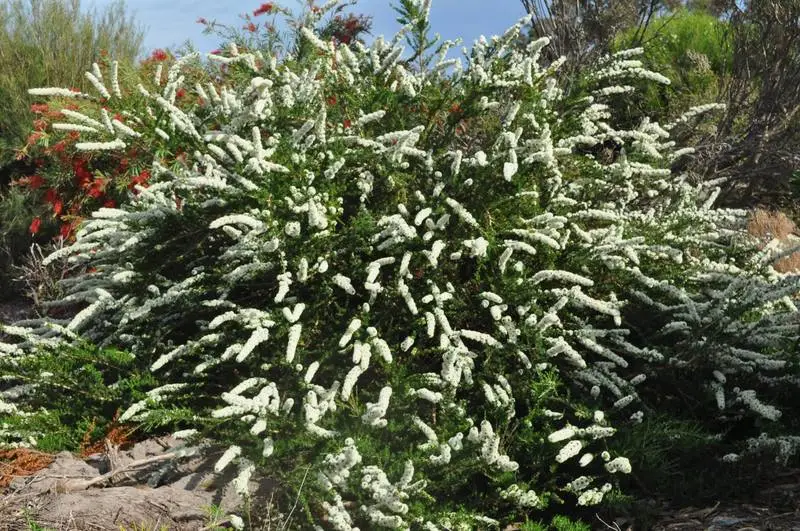
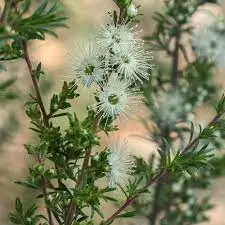
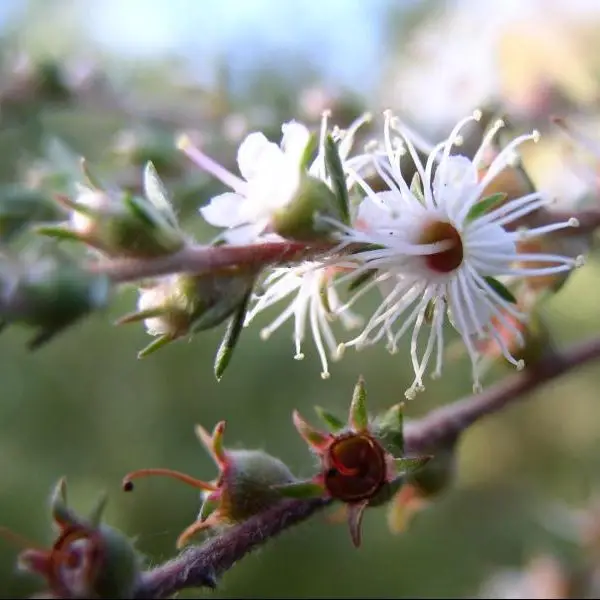
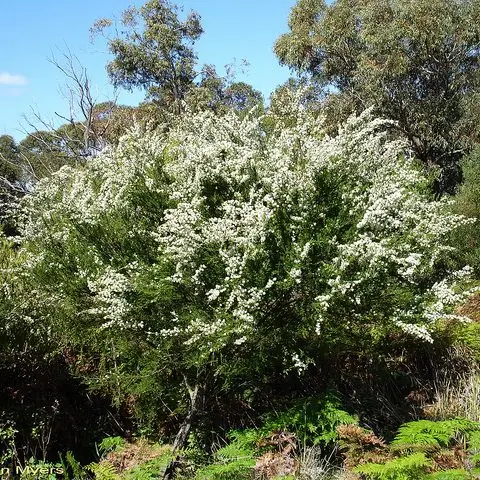
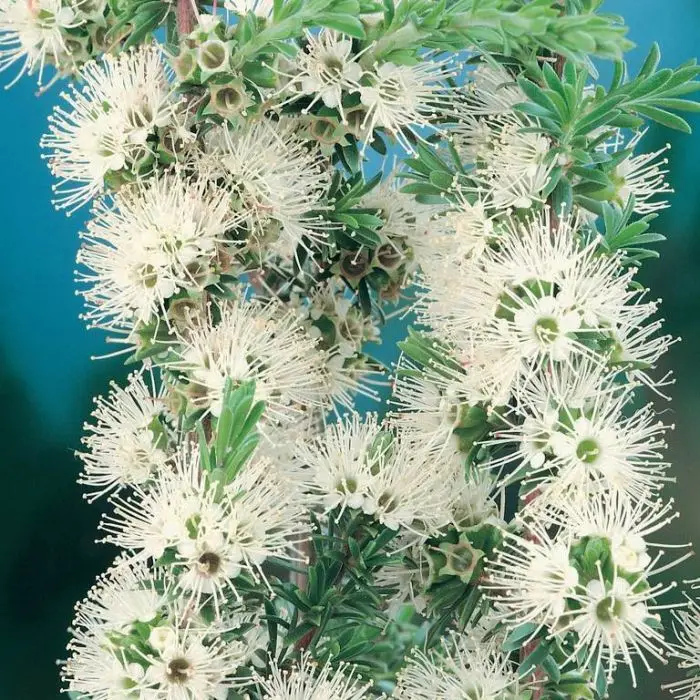
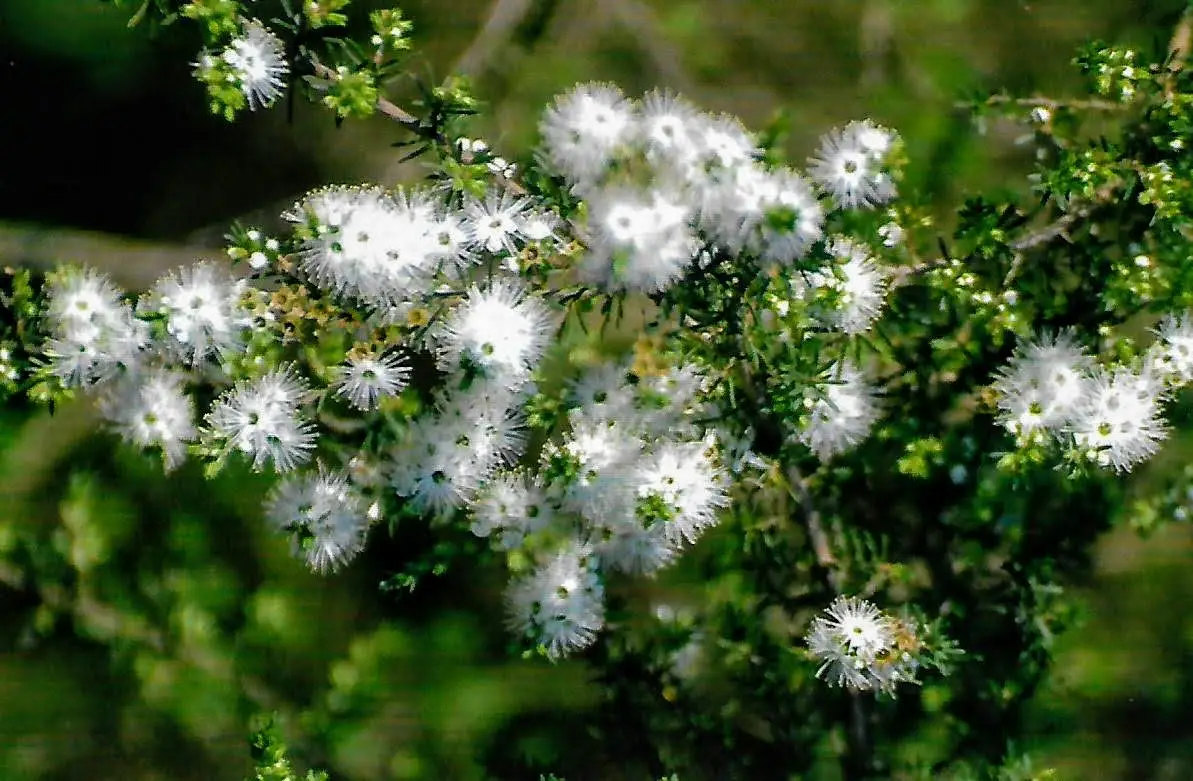
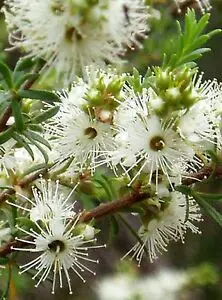
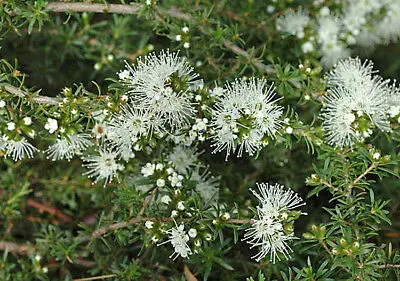
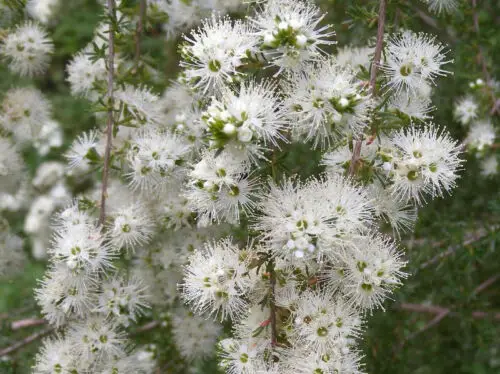
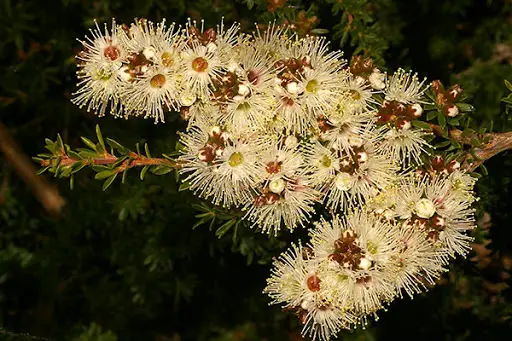
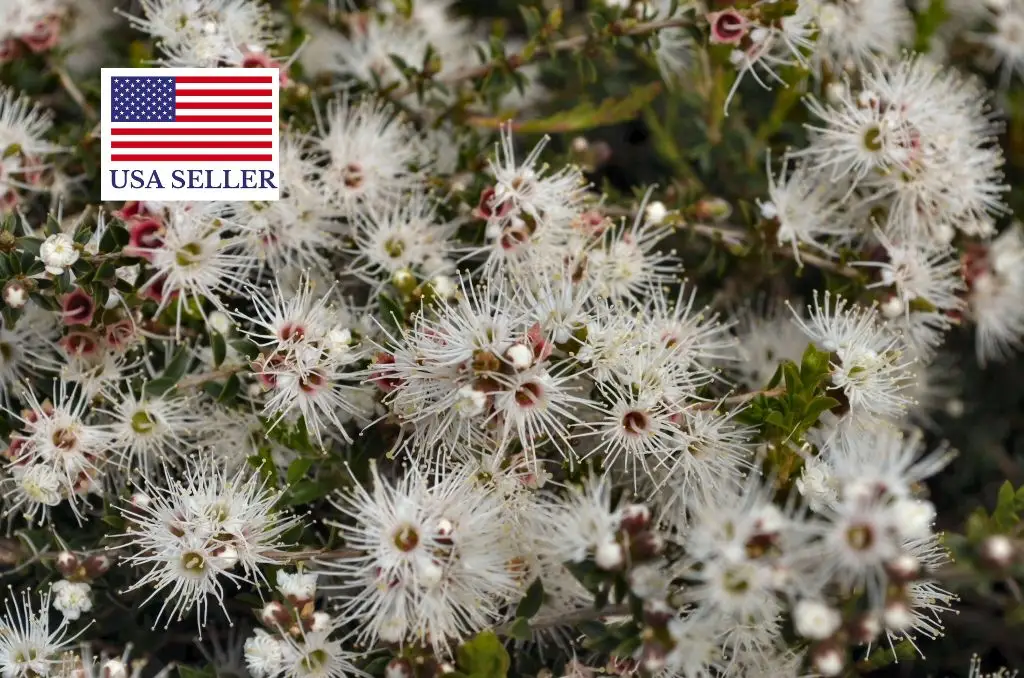
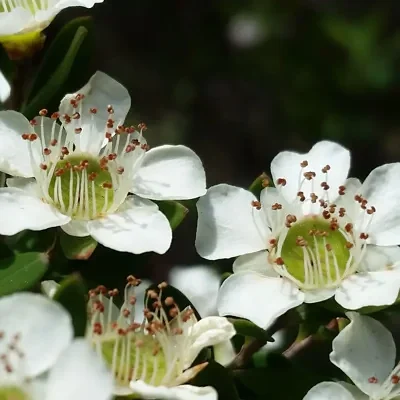
Creamy-white, honey-scented flowers with masses of spreading stamens give a fluffy appearance—and that’s just the opening act. Kunzea ambigua has small slender aromatic leaves and clusters of fringed white honey-scented flowers in spring, making it a visual treat from September through November.
Found commonly on the coastal strip and adjacent plateaus of eastern Australia (New South Wales, Victoria, Tasmania), often forming dense thickets, Kunzea ambigua has proven its resilience across harsh climates for centuries. The common name “tick bush” comes from people noticing that animals like to lay amongst them, theorising that the aromatic oil content of the foliage may deter ticks and mites. This native powerhouse is one of Australia’s best-kept botanical secrets—until now.
The real treasure lies in the leaves. The leaves are steam-distilled to produce a therapeutically active essential oil, and dense foliage contains strongly aromatic and volatile compounds, which are harvested and steam-distilled to produce a pale-yellow essential oil. Kunzea oil is particularly known for its powerful anti-inflammatory properties, making it useful in treating conditions such as arthritis, muscle pain, and joint discomfort. The oil can be applied topically (in diluted form) to affected areas to relieve pain and swelling. Beyond pain relief, it has been widely used by the Aboriginal community of Tasmania as an insect repellent and healing agent for a wide range of ailments. Commercial products with kunzea oil have many uses in cosmetics and personal care products such as oil balm, body spray and soap. The bonus? The leaves and flowers have a strong flavour with similar qualities to rosemary with aromatics of citrus, eucalypt and sweetness of honey, and can be used generously in game meats and roasts and sparingly with seafood and white meats.
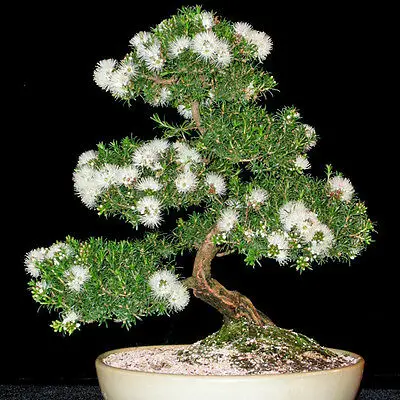
Growing Kunzea ambigua is wonderfully low-fuss. It grows in sandy soil in the wild and is happy in most free-draining soils in brightly lit or full sun locations. It is drought-tolerant once established but will benefit from regular watering during its first growing season. This species propagates readily from seed or semi-hardwood tip cuttings taken in late spring through to early autumn. Little maintenance is required other than an application of a complete fertilizer in early spring and light pruning and shaping to develop a compact, bushy shrub. Frost-hardy and adaptable to most well-drained soils, it thrives in coastal gardens and rewarding inland plantings alike. It is an excellent pollinator attractor, bringing jewel beetles, butterflies, and native bees to your garden while you grow nature’s medicine.
Imagine harvesting your own emerald-green foliage each season, watching it transform into liquid wellness through the ancient art of steam distillation. Start from seed and begin a love affair with one of Australia’s most therapeutic native shrubs—a plant that gives back generously in beauty, fragrance, and healing power.
Germination Guide
🌍 Eastern Australia (NSW, Victoria, Tasmania)
Moderate
Kunzea ambigua (tick bush) is an evergreen shrub native to coastal regions of eastern Australia. Seeds propagate readily but may remain dormant until conditions match natural requirements.
Germination
Germination time
Expect germination in
14 – 30 days
Temperature
Min 18°C
Ideal 20°C
Max 22°C
Substrate moisture
💧 Medium
Substrate & Container
Recommended substrate
porous seed-raising mix, well-draining mix of potting soil and sand
Growing Tips
Surface sow seeds with very light covering. Keep moist but not overwatered. Do not discard non-germinated seeds as they may be dormant. Germination may take several weeks to months.
Only logged in customers who have purchased this product may leave a review.

Reviews
There are no reviews yet.