
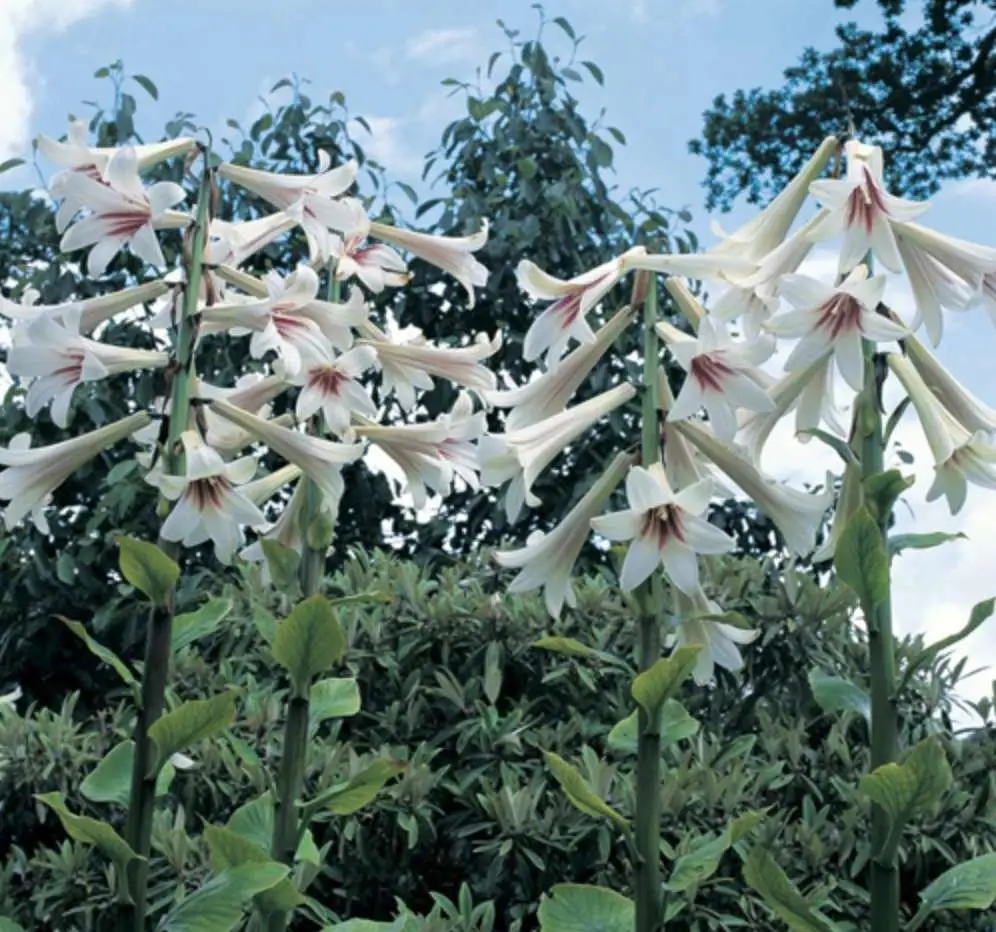
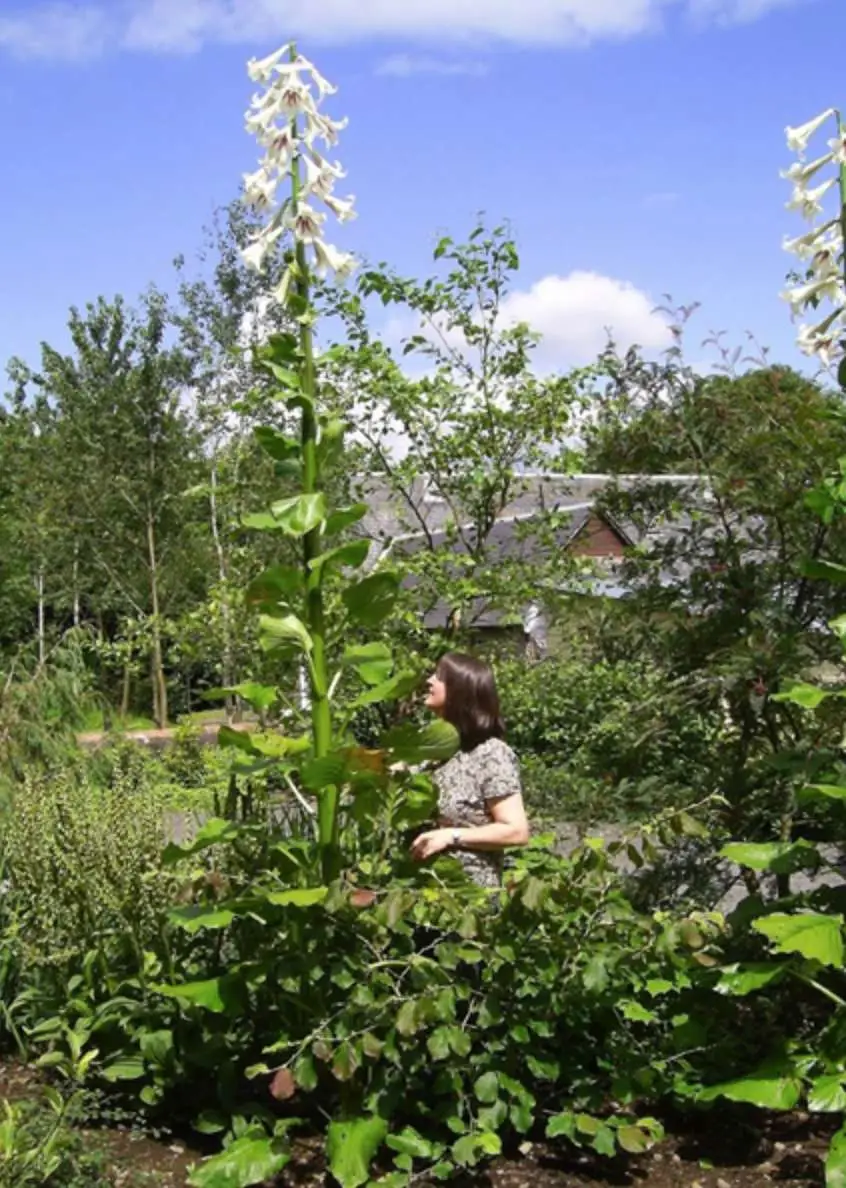
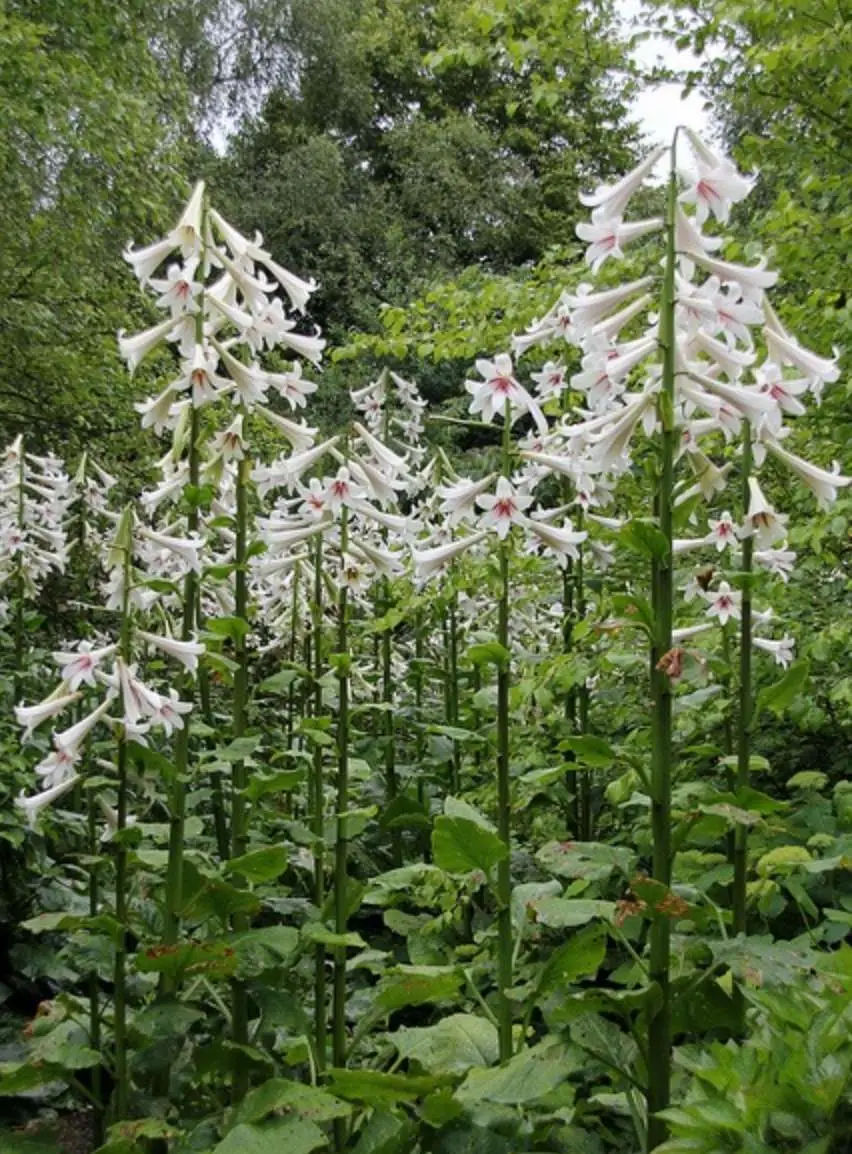
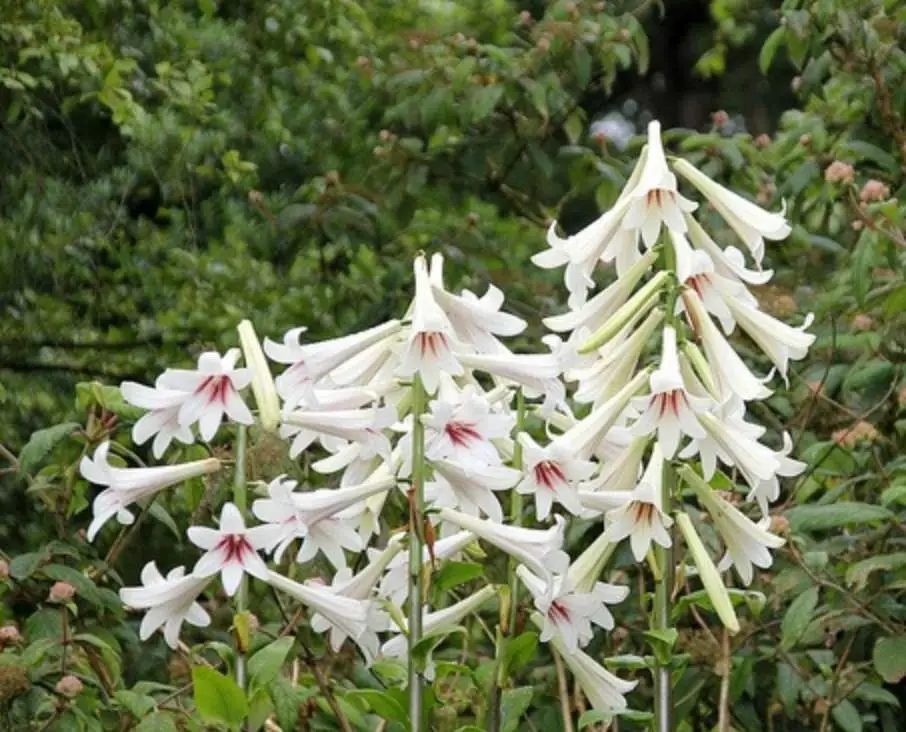
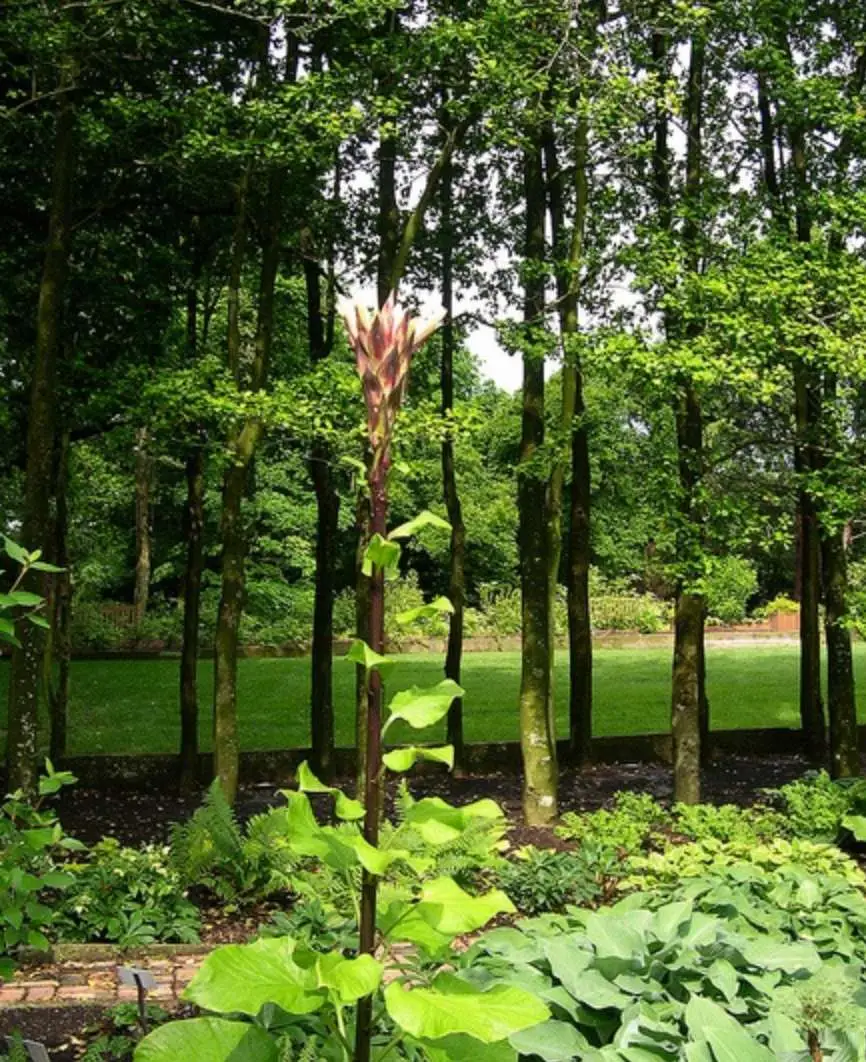
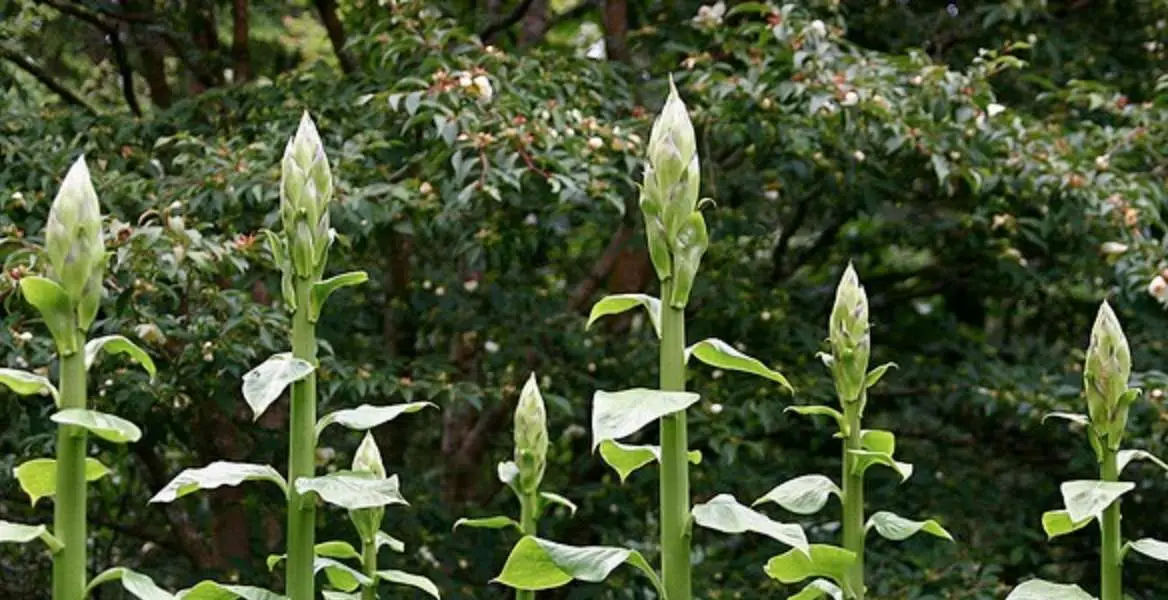
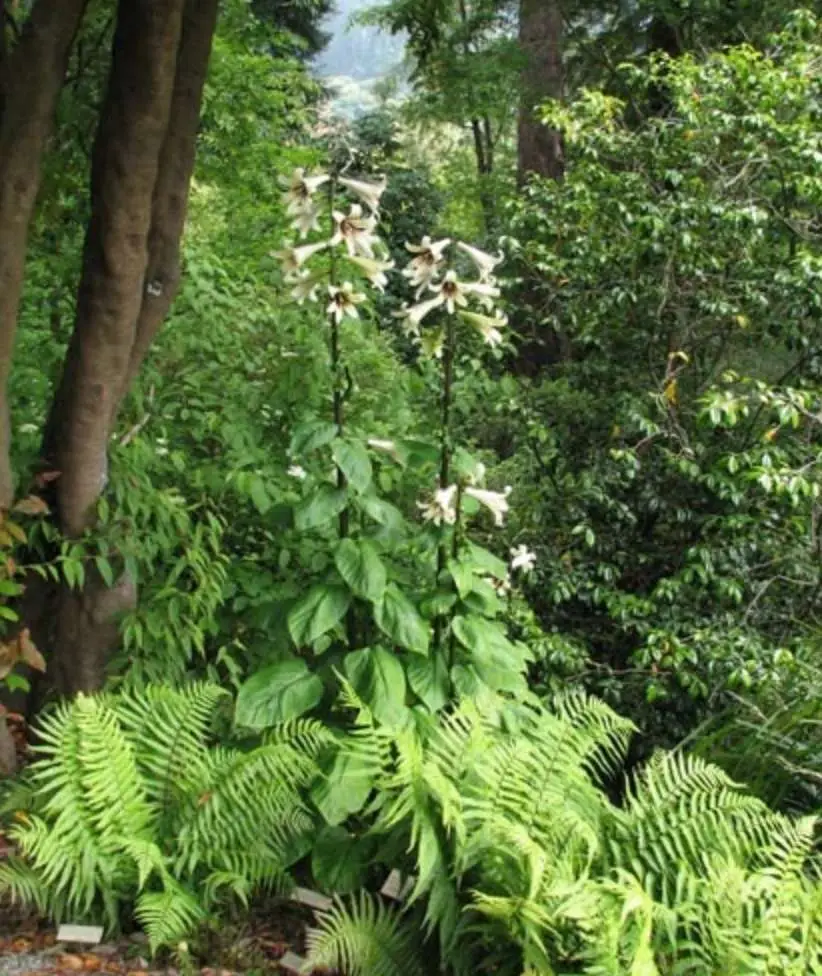
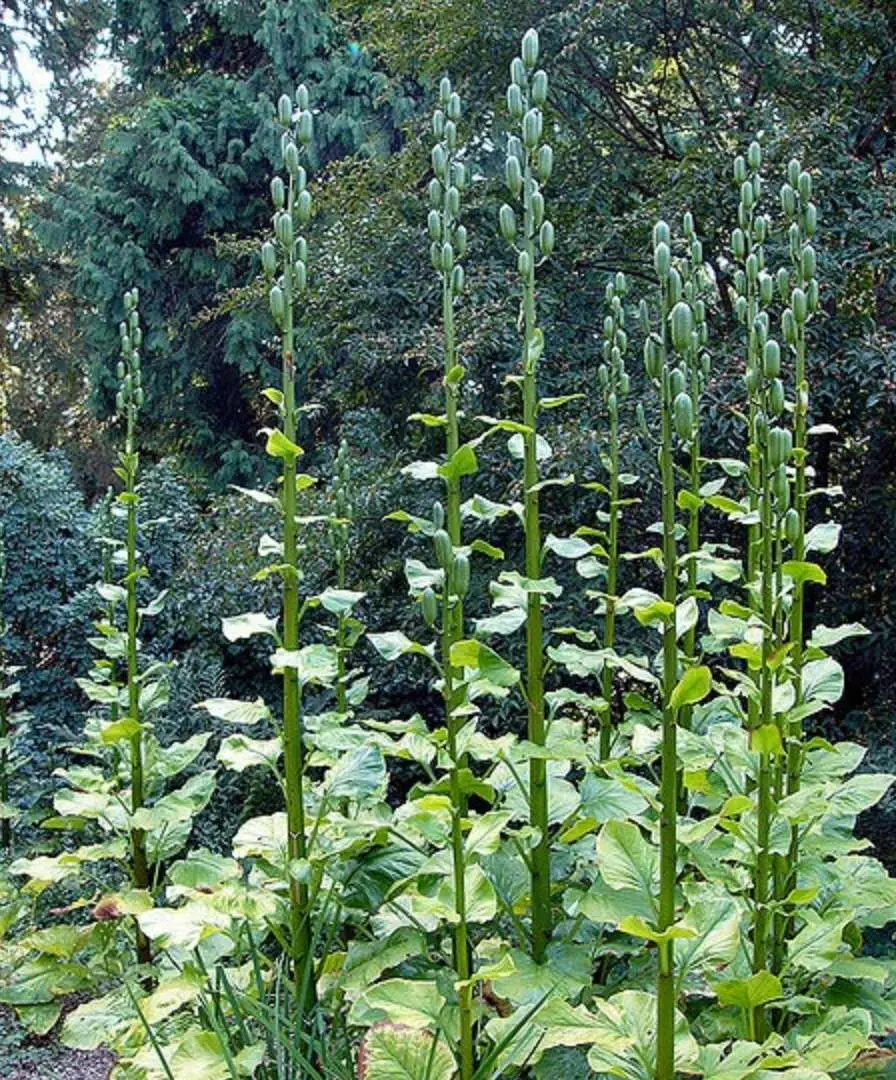
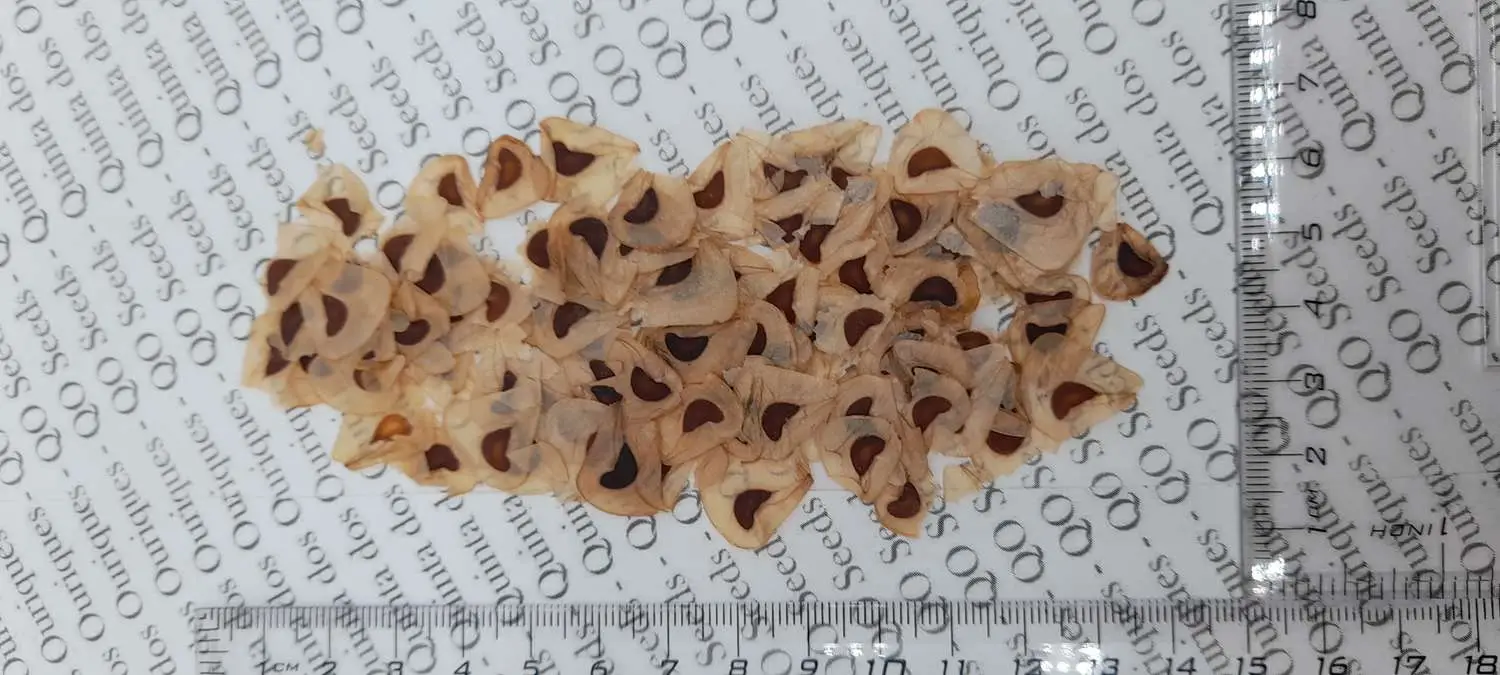
The world’s largest lily: a towering 10-14ft spike crowned with 20+ fragrant white trumpet flowers, burgundy-throated, rising from glossy heart-shaped leaves. Beyond breathtaking ornament, its seeds hold traditional remedies for cough and respiratory ease—medicinal treasure wrapped in architectural drama. Grow from seed for patient, rewarding majesty.
€1.92
Native to the Indian Himalayas, Tibet, Nepal, Bhutan, Pakistan, China and Myanmar (Burma), growing at elevations of up to 3600m, Cardiocrinum giganteum arrives in gardens as a living monument to Himalayan wilderness—and it commands absolute reverence.
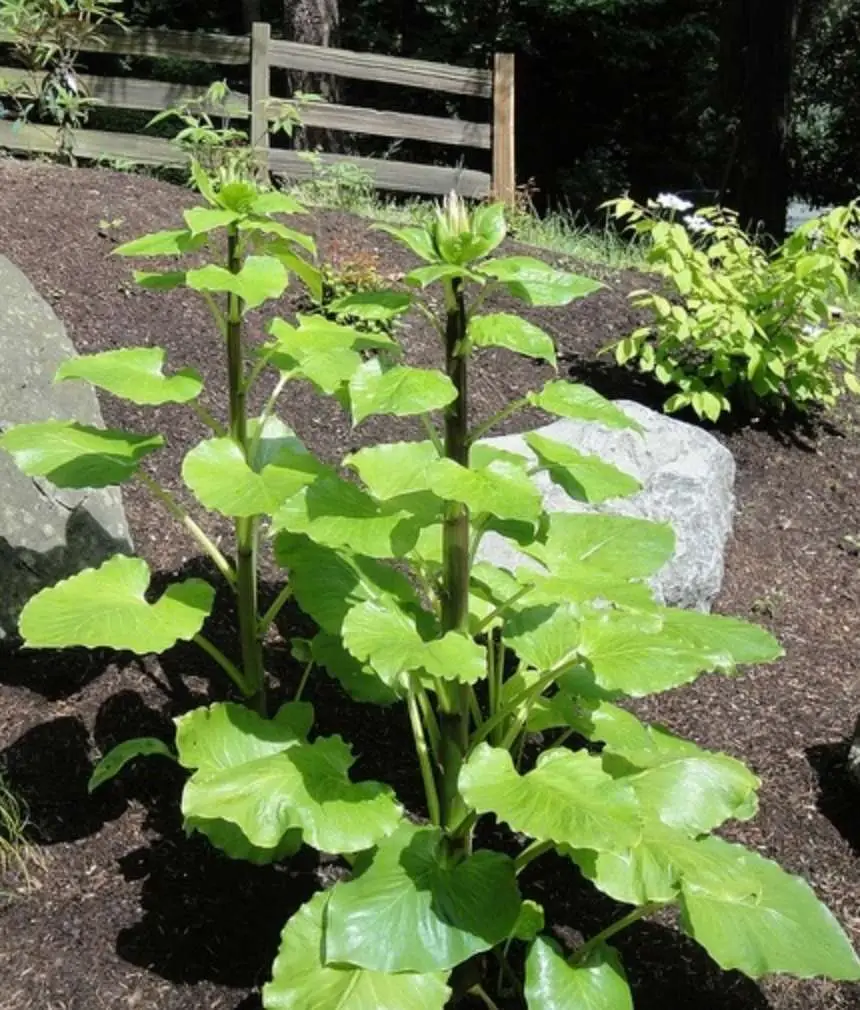
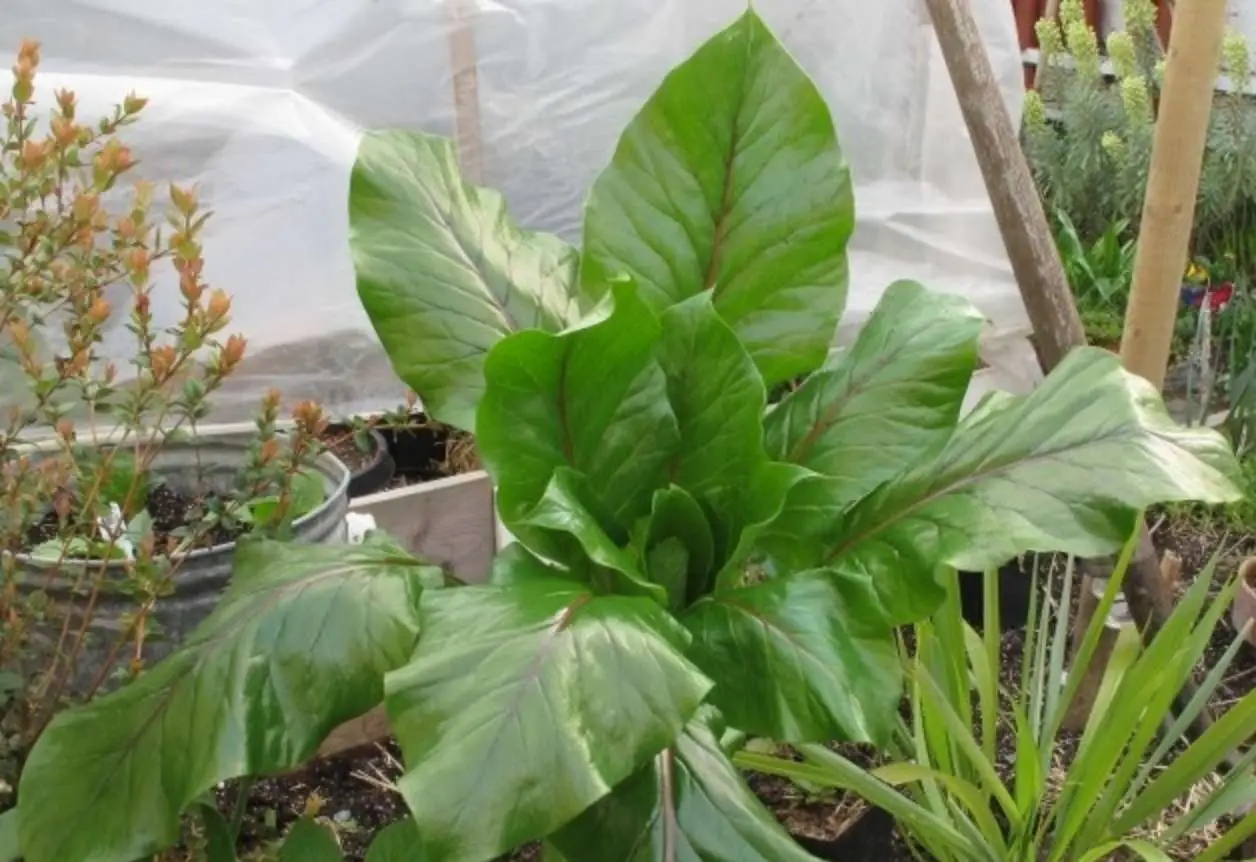
The giant Himalayan lily is the largest species of any of the lily plants, growing up to 3.5 metres high. For 5–9 years, it forms a huge basal rosette of large, heart-shaped, glossy, dark green dinner plate-sized leaves each 30cm (12in) in length, often bronze/purple tinged when young. Then, in one explosive summer, thick flower stems erupt reaching an impressive 1.5 to 4m (5–13ft) in height, each bearing racemes of 20 to 40 large white, powerfully fragrant trumpet-shaped flowers 15-20cm (6-8in) long, with maroon stripes inside. The fragrance—intoxicating, almost narcotic—fills entire gardens. This is theatre, pure and unapologetic.
**Medicinal Power Wrapped in Grandeur**
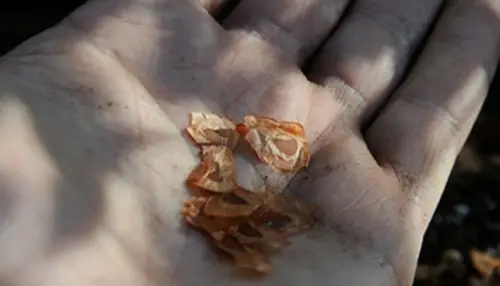
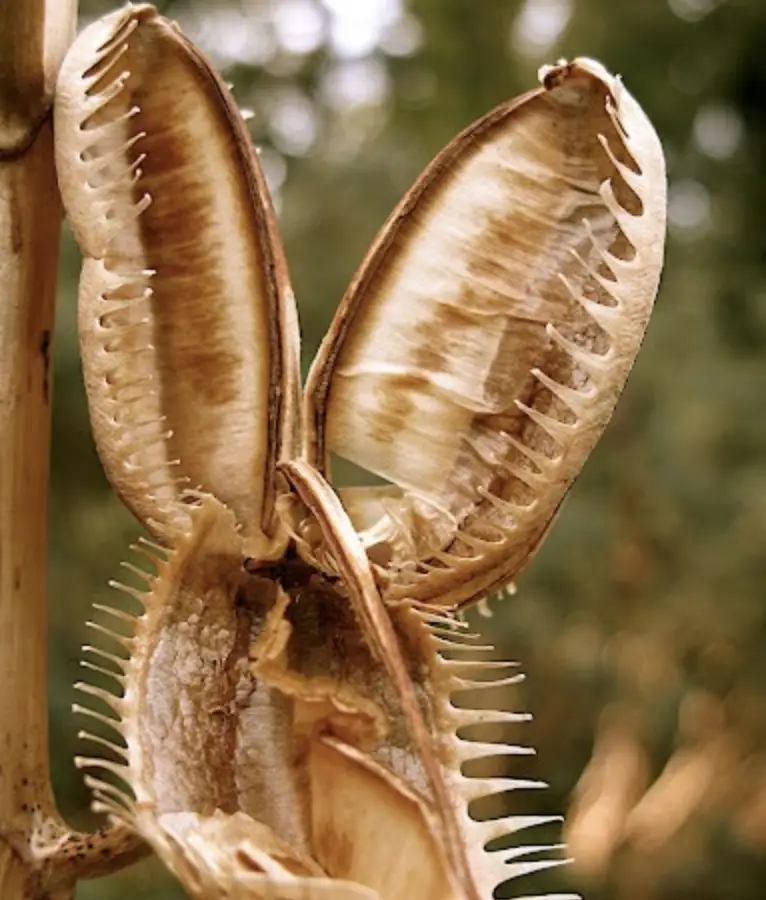
Cardiocrinum giganteum have medicinal value and are employed to treat ailments such as cough and asthma. Seeds showed good antitussive effects, making this giant lily a traditional respiratory ally in its native Himalayan cultures. Bulbs are the only edible part of C. giganteum, which are prepared by cooking, and peasants extract edible starch from the bulbs—a food source as ancient as the mountains themselves. Beyond medicine and sustenance, attractive oblong seedpods form in late September, making attractive decorations if kept and dried. This plant gifts you beauty, healing, and lasting botanical art.
**How to Grow Your Himalayan Giant**
Grow in moist but well-drained, deep, humus-rich, fertile soil, and require semi-shaded, moist woodland conditions. Intolerant of hot or dry sites, so choose a cool, sheltered spot with dappled shade. Propagate by seed, sowing in deep pans with bottom heat, or from offsets after flowering. May take up to 7 years to flower from seed. Yes, patience is demanded—but gardening’s greatest rewards always are. Cardiocrinum giganteum is a fantastic plant in all respects, but they are a long term project but need little effort and maintenance other than pricking out from germinating and potting on.
**Embark on a Seven-Year Love Story**
Growing Cardiocrinum giganteum from seed is not a sprint; it is a commitment—a sacred conversation between you and one of Earth’s most extraordinary plants. Watch it build, year after patient year, until that summer when the spike rises impossibly tall and opens its trumpet flowers to the sky. You will have grown something that stops strangers mid-walk. You will have cultivated medicine, beauty, and memory in a single, towering stem. Begin now. The wait makes the bloom transcendent.
Only logged in customers who have purchased this product may leave a review.
Reviews
There are no reviews yet.