
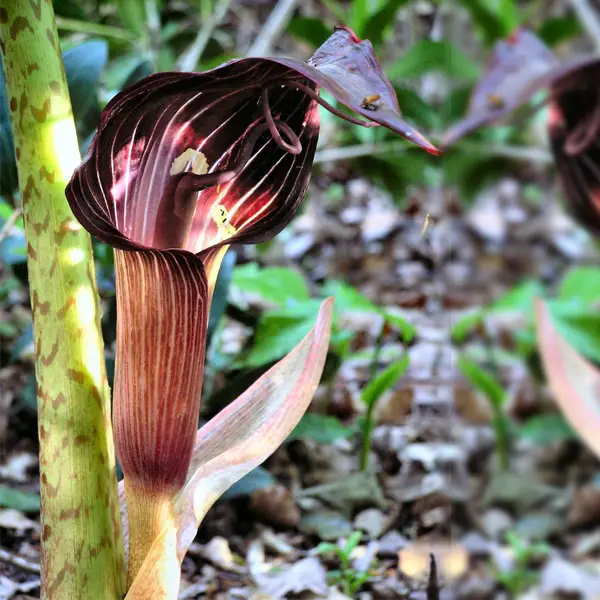
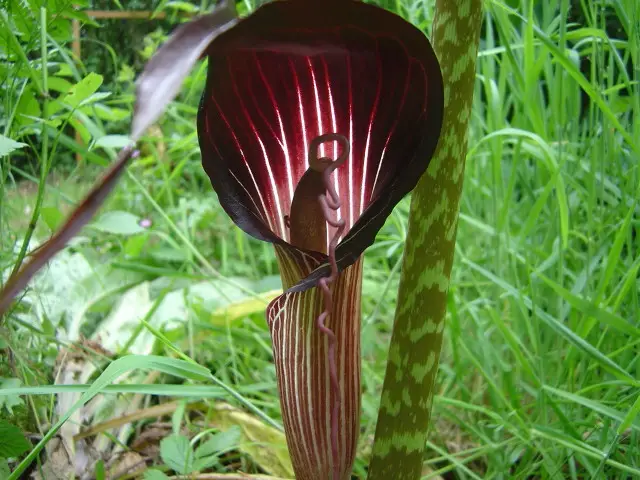
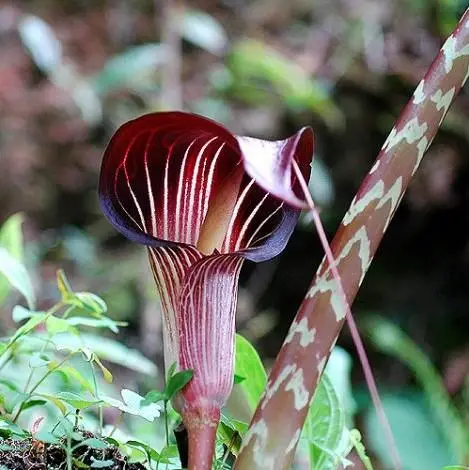
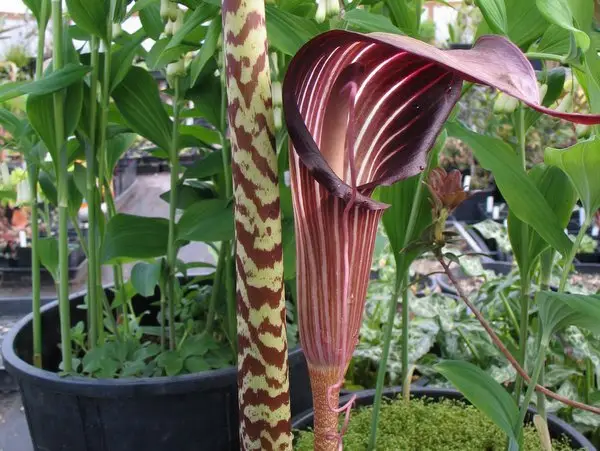
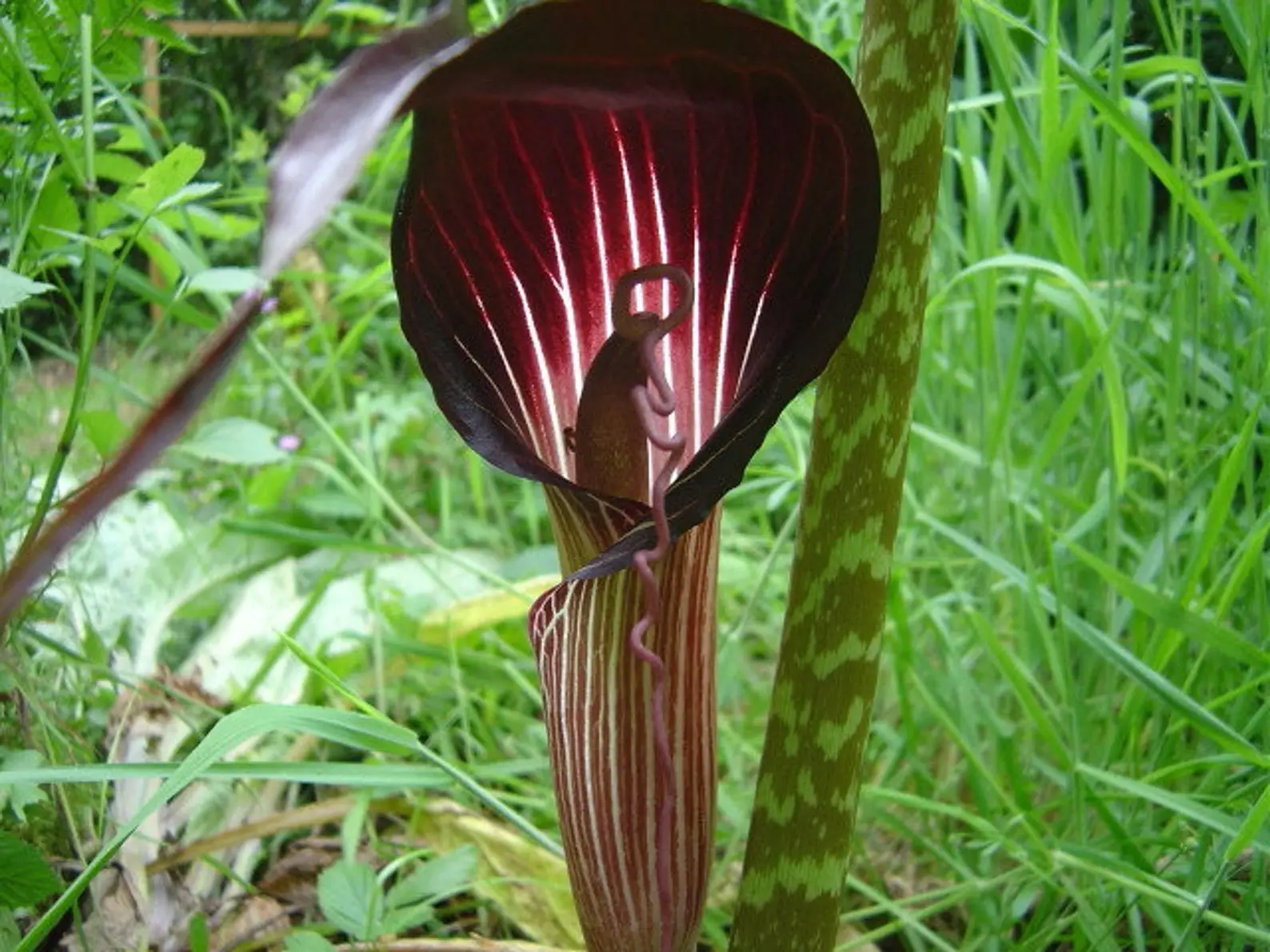
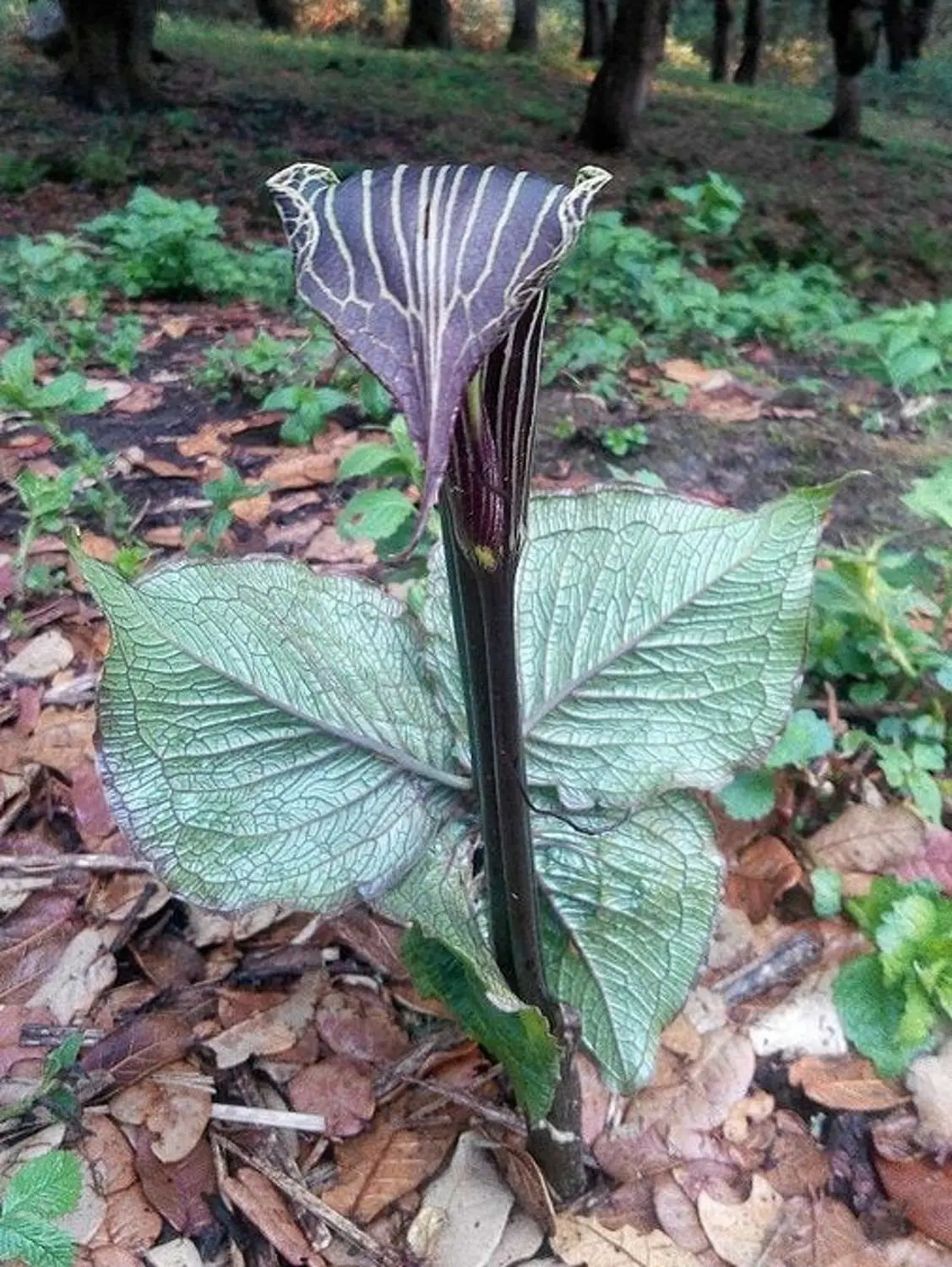
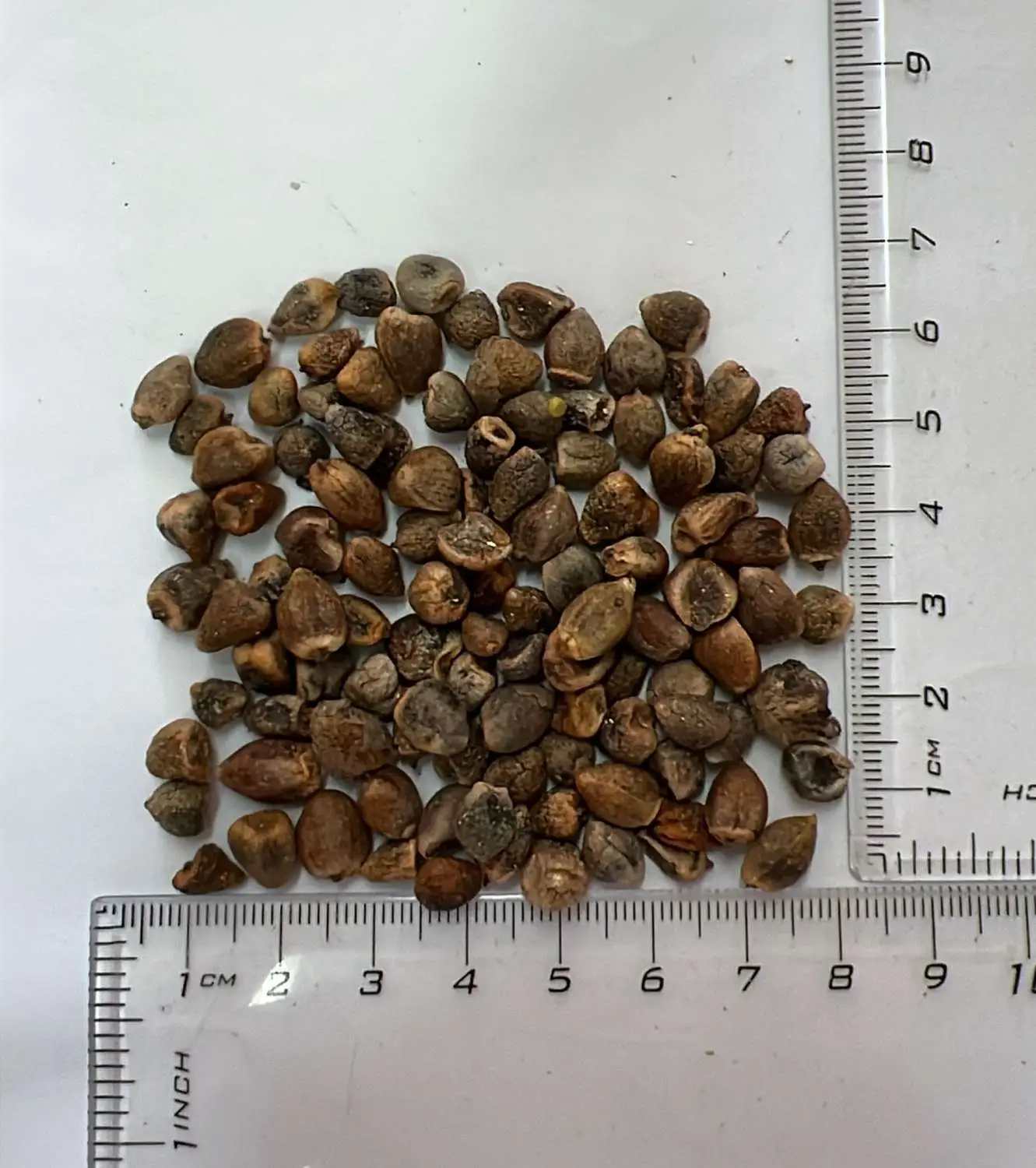
Picture this: a hooded flower with not one but two whip-like tentacles spiraling through your garden like living serpents. Arisaema speciosum—the Double-Whip Cobra Lily—is an alien aristocrat from the Himalayas with a flower so wildly architectural, so unforgettably strange, that every visitor will demand to know what it is. Oxblood-striped hood, jet-black mottled stems, tropical palmate leaves with crimson edges. Easy to grow from seed in cool shade. A li
€6.36
When you first see Arisaema speciosum unfurl, you’ll wonder if you’ve accidentally cultivated something from another planet.
This extraordinary perennial hails from the misty Himalayan forests of Nepal, northeastern India, and southwestern China—a region that births botanical oddities the way other places produce ordinary flowers. The Double-Whip Cobra Lily earned its name through sheer audacity: while other cobra lilies settle for a single tongue-like appendage, A. speciosum produces two. Count them. Two. The first emerges from the pointed apex of the hooded spathe, as expected. But then—in a move that defies horticultural convention—a second whip unfurls from the spadix’s head itself, a threadlike filament that coils along the stem or, more dramatically, gets picked up by the unfurling leaf and carried skyward, sometimes reaching nearly two feet, creating a vertical narrative that changes as the plant matures.
The flower itself is a masterpiece of botanical theater. Striped by bands of oxblood red interspersed with veins of pale green against a dark chocolate to deep purple hood, it resembles the inflated head of a cobra frozen mid-strike—hence the family name. The spathe is arranged in a vertical fan-shape that commands attention; open it and you’ll see the jack (spadix) in white at the base, purple at the tip, absolutely riveting in its alien geometry. Every element whispers: this is a plant that has spent millennia perfecting the art of spectacle.
But the flower is only half the story. The foliage is equally extraordinary. Large, trifoliate (three-lobed) leaves with reddish-brown margins and dark purple undersides unfold on thick, mottled stems that look as though they’ve been hand-painted by a mad botanist. The architecture alone—nearly 2 feet tall, with leaves sometimes reaching 18 inches across—creates a structural statement that would sell out at any contemporary art installation. In a shaded woodland or corner garden bed, it becomes your living sculpture, your conversation piece, your reason to invite people over.
Growing Arisaema speciosum is surprisingly forgiving—a genuine gift for a plant of such drama. It thrives in cool, partially shaded sites with moist but well-drained soil rich in humus. Zones 4–9 love it; in warmer climates, it appreciates afternoon shade and consistent moisture during the growing season. The tubers are robust, deer-resistant, and tolerant of shade that would exhaust lesser plants. From seed, sow shallowly in late autumn or early spring on moist, free-draining compost; light encourages germination. The plant emerges in spring, flowers mid-to-late spring, then enters dormancy by midsummer, leaving you space in your garden for other companions. Pot cultivation works beautifully in colder zones—just protect the dormant tuber from hard freezes with mulch.
This is the plant you grow not because it’s easy (though it is), but because you’re ready to experience gardening as a form of wonder. Every spring, when those mottled stems push through the soil and the impossible flower opens its two whips to the sky, you’ll remember why you fell in love with plants in the first place. Grow it from seed, and you’ll have invested in a living gateway to the Himalayan mysteries—a small miracle of your own making, blooming faithfully year after year, asking only for shade and patience.
Only logged in customers who have purchased this product may leave a review.

Reviews
There are no reviews yet.