
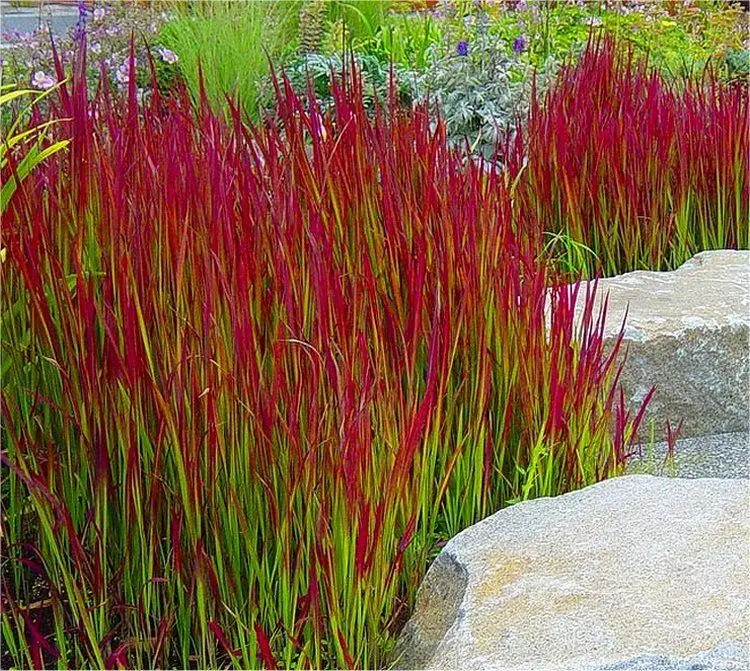
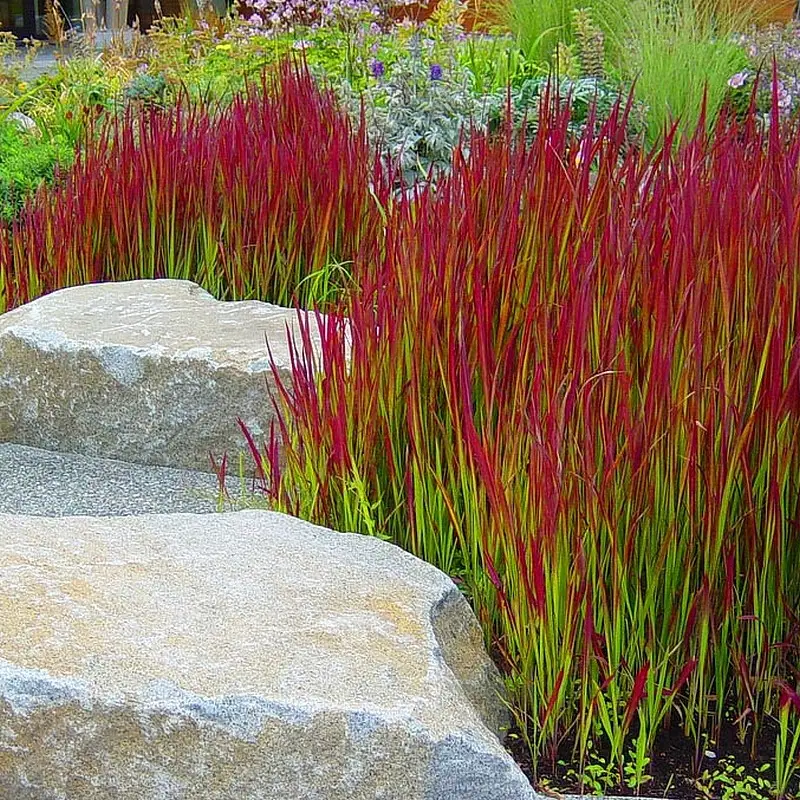
Watch green spring blades ignite into brilliant crimson, deepening to burgundy by fall—without a single flower. The ‘Red Baron’ is one of the world’s most stunning ornamental grasses, commanding attention all season long. Thrives in full sun, well-drained soil, and minimal care. Grow from seed and watch the drama unfold.
## The Moment You Plant It, Your Garden Changes.
Striking and eye-catching with its brilliant crimson leaves, Imperata cylindrica ‘Red Baron’ (Japanese Blood Grass) is a very distinctive ornamental grass. This is not a plant for the fence-sitter. This is pure, unapologetic botanical drama.
## Origin & Heritage
Native to Korea, Japan, China, India, and tropical eastern Africa, this cultivar has been refined into something garden-worthy: a compact, clump-forming marvel. Cultivars such as ‘Red Baron’ are used as garden ornamentals and are short, cold-tolerant forms (normally listed to zone 5) that won’t rampage through your garden. Unlike its aggressive green ancestor, Red Baron stays where you plant it—and that’s precisely why it deserves a place in every serious gardener’s landscape.
## The Color Transformation: Nature’s Most Dramatic Show
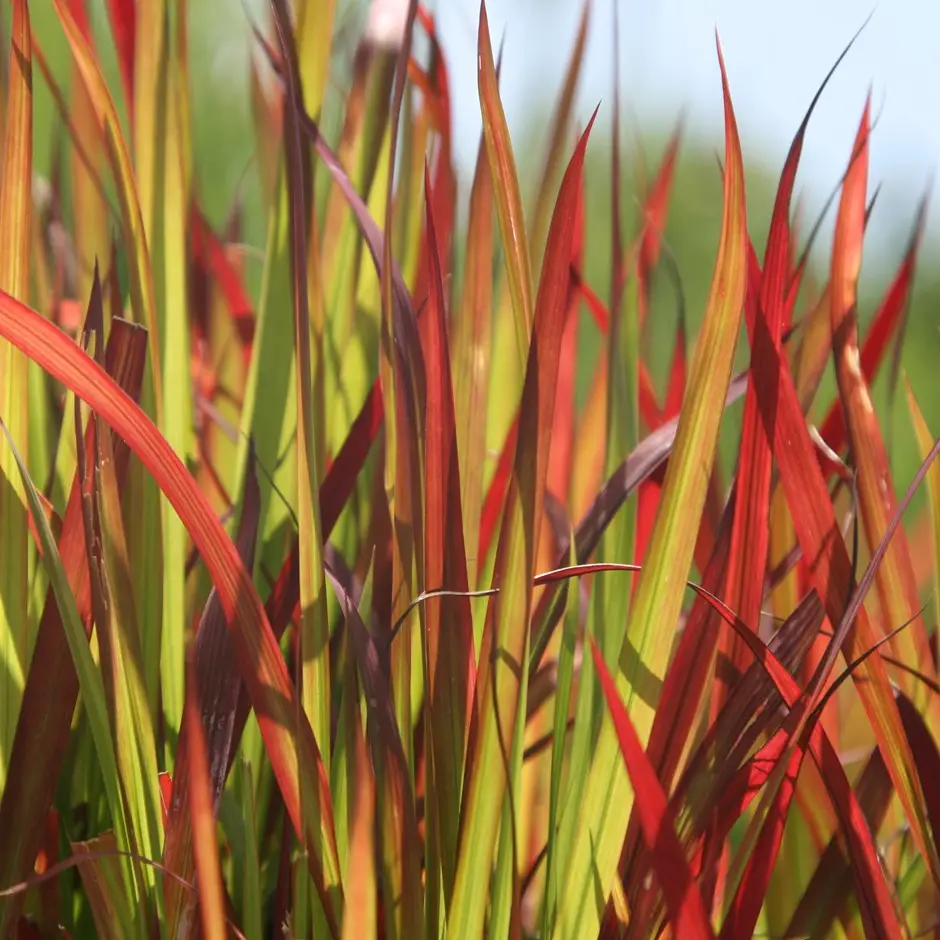
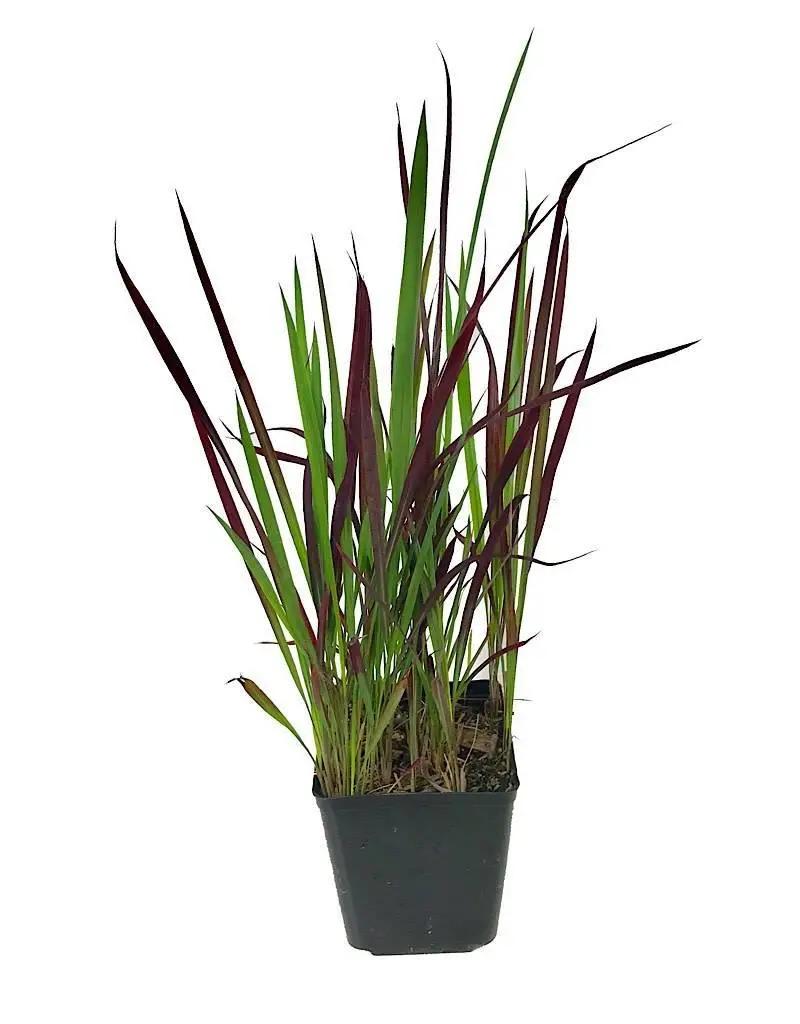
Forget waiting for flowers. It produces upright, bright green blades whose upper half turns cranberry-red in summer and deepens to burgundy until late fall before it goes dormant in winter. Better still, the leaves are somewhat translucent, and create a spectacular appearance when backlit, so it is most effective in the landscape where it can be viewed with the early morning or late afternoon sun lighting up the leaves from behind, creating a red and green stained-glass effect.
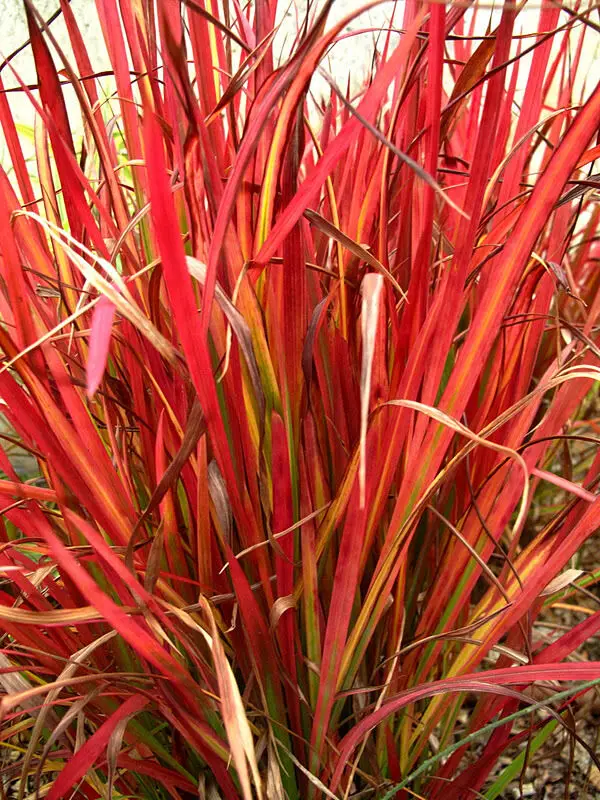
This isn’t gradual or subtle. Starting in early spring, the unique, blood-red color darkens the tips of the green leaves, then grows down each blade. The color intensifies as the season progresses. Get ready for questions as the grass looks like it’s been dip-dyed in bright red in summer. By autumn, the foliage becomes more and more red, glowing nearly all-red in the fall.
Use it as a focal point. Use it in borders. Mass it. Contain it in a striking pot. The color commands attention wherever it lives.
## Growing Red Baron: Surprisingly Easy
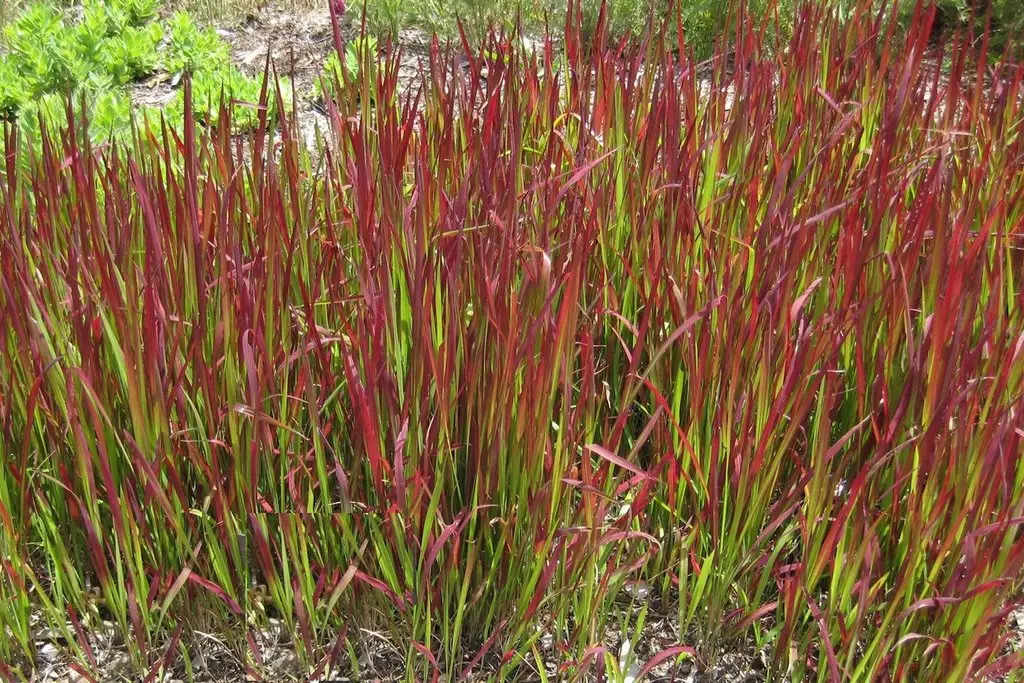
Growing easily in a dense clump about 12-18 in. tall (30-45 cm) and across, this perennial grass enjoys full sun or part shade and thrives in average, medium moisture, well-drained soils. The best foliage color is obtained in full sun.
The magic is in the light. Plant it where it gets 6+ hours of direct sun and watch the red intensify. This species tolerates a wide variety of soils – from wet to dry and from sand to clay, making it adaptable to nearly any garden condition. This hardy perennial is very easy to grow once established. Once you’ve given it good drainage and sun, it’s essentially self-sufficient.
For containers? Perfect. It is also good in containers as long as they get plenty of water. Spring through fall is ideal for planting; this is a warm season grass, and the leaves are killed by freezing temperatures. Winter mulching is recommended in zones 5 and 6 until well established. The plants remain dormant through the winter and are slow to emerge in spring.
One small detail: Take care to remove any foliage that reverts to solid green with no red pigment. Failing to do so will eventually result in the clump becoming solid green. A few seconds of attention ensures your Red Baron stays red.
## Grow It From Seed, Own It Forever
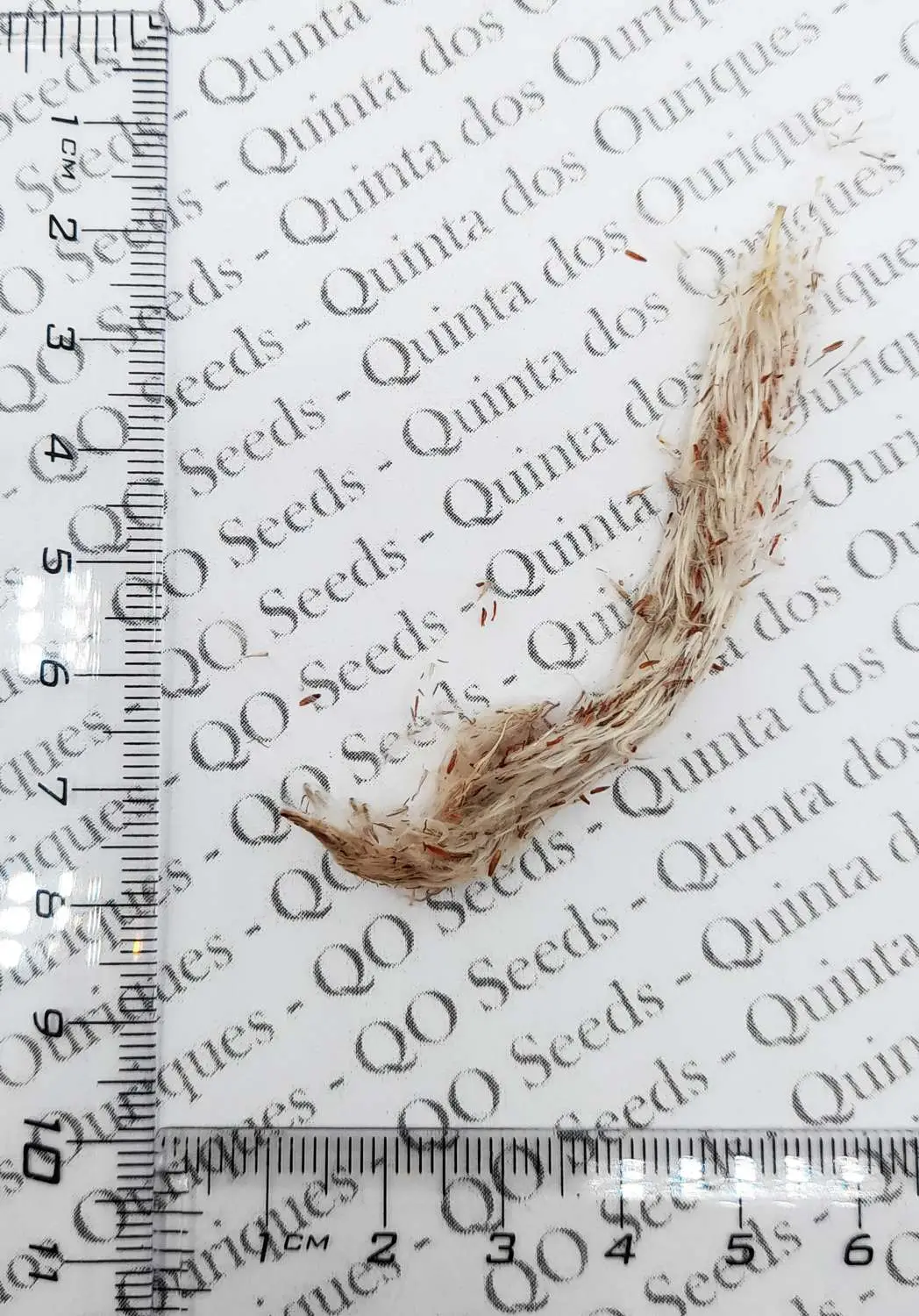
There’s magic in growing something from seed. You’ll watch these green spires emerge in spring, witness the first blush of red appear at the tips in summer, and stand back in awe as your garden becomes a landscape of living fire. By autumn, neighbors will ask what you planted. By next spring, they’ll want to know where to buy it.
This is the grass that makes gardeners look brilliant. Plant it, and never look back.
Only logged in customers who have purchased this product may leave a review.

Reviews
There are no reviews yet.