
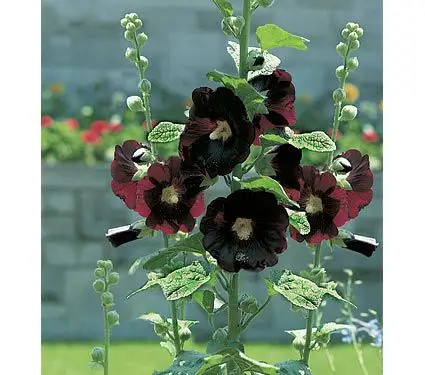
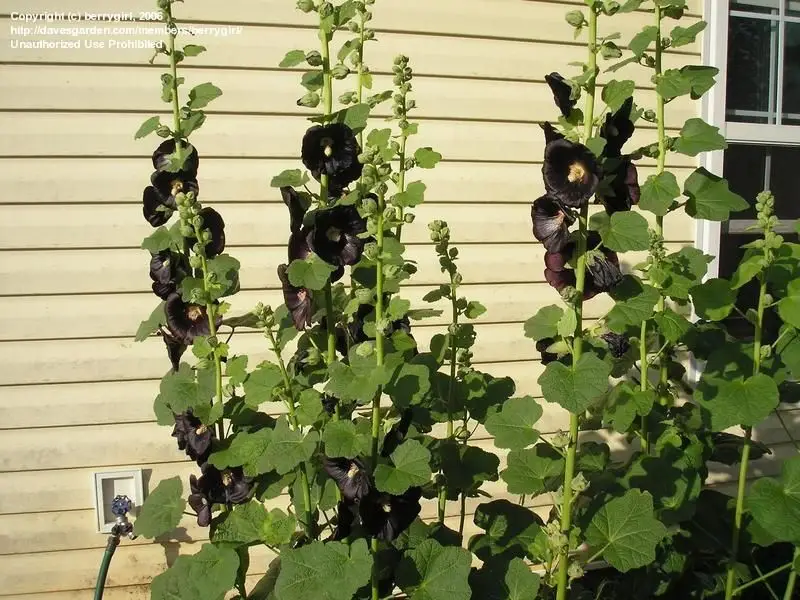
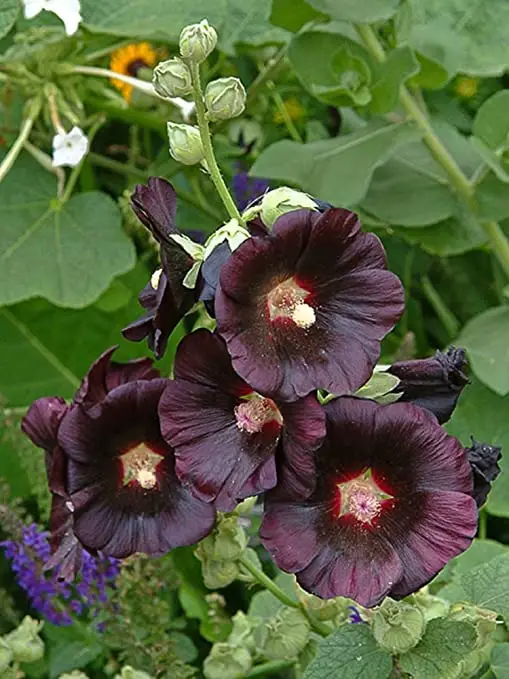
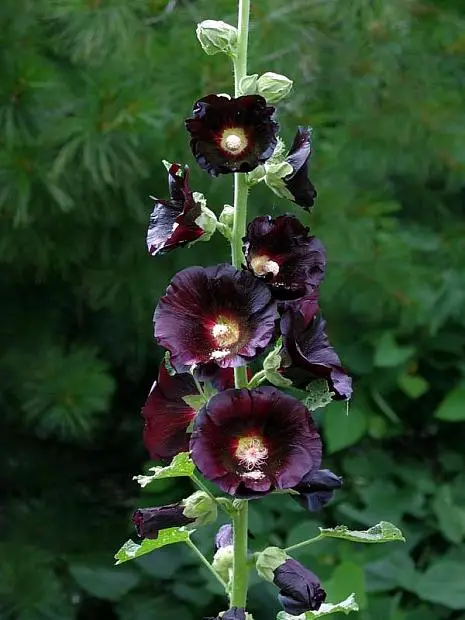
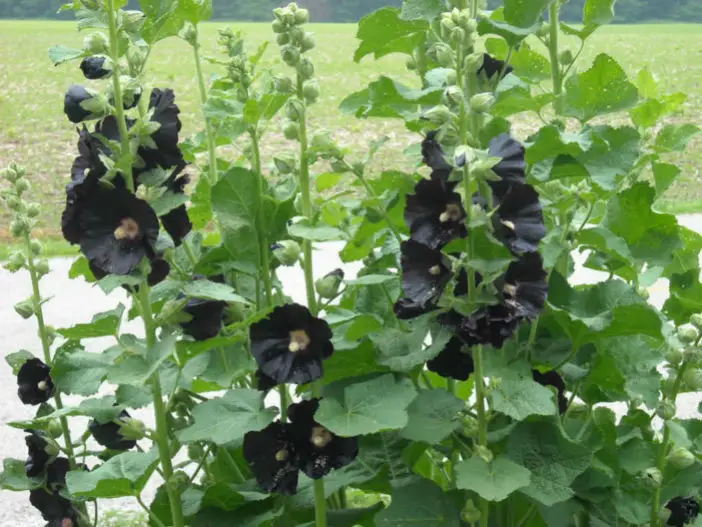
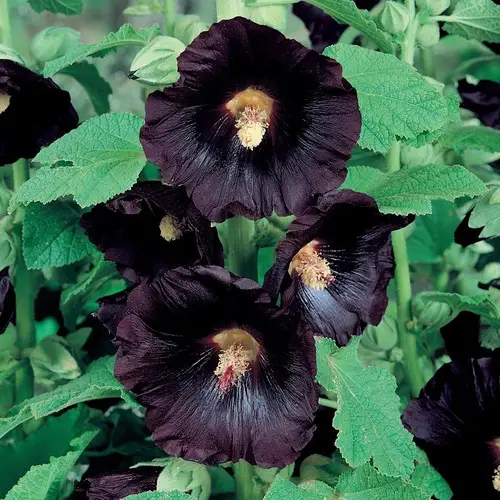
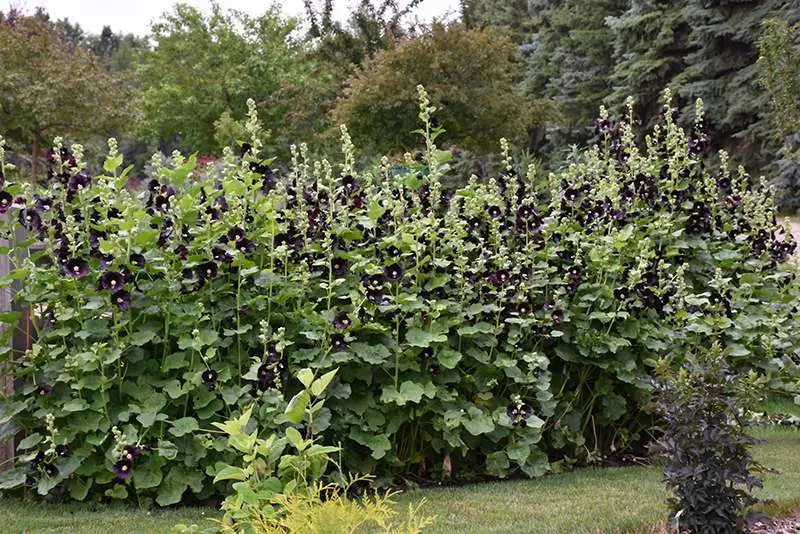
Grow the hollyhock the herbalists chose: deep obsidian blooms that heal. Unlike other varieties, black hollyhock flowers have been used for centuries in teas and remedies for chest complaints, circulation, and more. At 5-8 feet tall with a buttery-yellow throat, this stately biennial transforms any garden into a working medicinal space—and bees adore it. Surprisingly tough: thrives in poor soil and loves full sun. Grow from seed and harvest history.
€5.17
Imagine standing before a hollyhock so dark it looks almost black, backlit by summer sun into deepest maroon—a flower that doesn’t just beautify your garden, it heals from it.
Alcea rosea ‘Nigra’ carries centuries of botanical wisdom. Originating from Central and Southwest Asia, this variety has been cultivated since at least the 17th century in European cottage gardens as both ornament and medicine. The ‘Nigra’ selection is no accident: unlike lighter hollyhock varieties, the black flowers hold properties that herbalists have cherished for generations. It’s the dark one that matters.
Here’s what makes this variety irreplaceable in a working garden: black hollyhock flowers are used fresh or dried to make soothing teas that address chest complaints, improve blood circulation, support digestive comfort, and more. The flowers, leaves, and roots are all edible—young leaves brighten salads, flower buds add elegance to plates, and the blooms themselves become medicine, dye, and garnish. You’re not just growing an ornamental; you’re cultivating a pharmacy that attracts every pollinator in your neighborhood. Bees, butterflies, and hummingbirds cannot resist the nectar-rich blooms, making this plant a cornerstone of any bee-friendly or pollinator garden.
Growing ‘Nigra’ rewards both the ambitious and the practical gardener. This biennial produces a rosette of large, heart-shaped leaves in its first year, then rewards patience with towering spikes of single, funnel-shaped flowers reaching 5–8 feet tall. Each flower opens along the spike from bottom to top, blooming mid to late summer in an extended show. The blooms are deep chocolate-maroon to near-black, with striking buttery-yellow throats that glow in afternoon light. Cultivation is refreshingly forgiving: this plant actually prefers poor, well-drained soil and tolerates a range of soil types from sandy to slightly alkaline. It thrives in full sun (at least 6 hours daily) and is remarkably drought-tolerant once established. Start seeds in early spring, sow directly or in pots, space 12 inches apart, and provide minimal fussing—these plants self-seed readily, ensuring future generations. Wind can bend tall stems, so situate against a fence or wall for support, or stake as needed.
This is the hollyhock your grandmother grew—the one that whispered of simpler remedies and cottage wisdom. Now you can grow it from seed, watch it tower above your borders, harvest its flowers for tea and tincture, and know you’re maintaining a living link to herbalism’s golden thread. Black hollyhock doesn’t ask for much. It asks only to be planted, watered moderately, and allowed to bloom. In return, it fills your garden with drama, medicine, and the grateful hum of pollinators.
Only logged in customers who have purchased this product may leave a review.
Reviews
There are no reviews yet.