
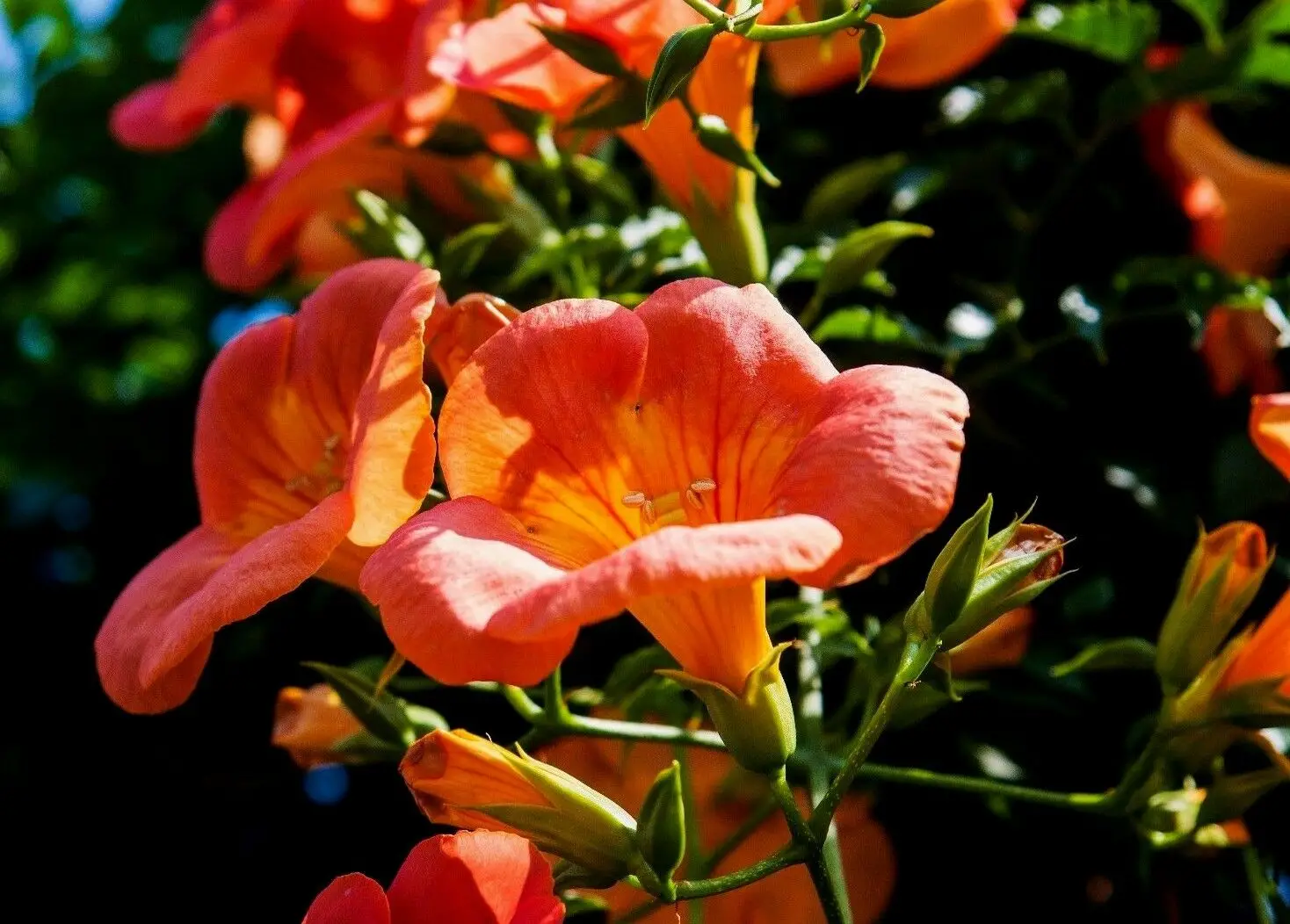
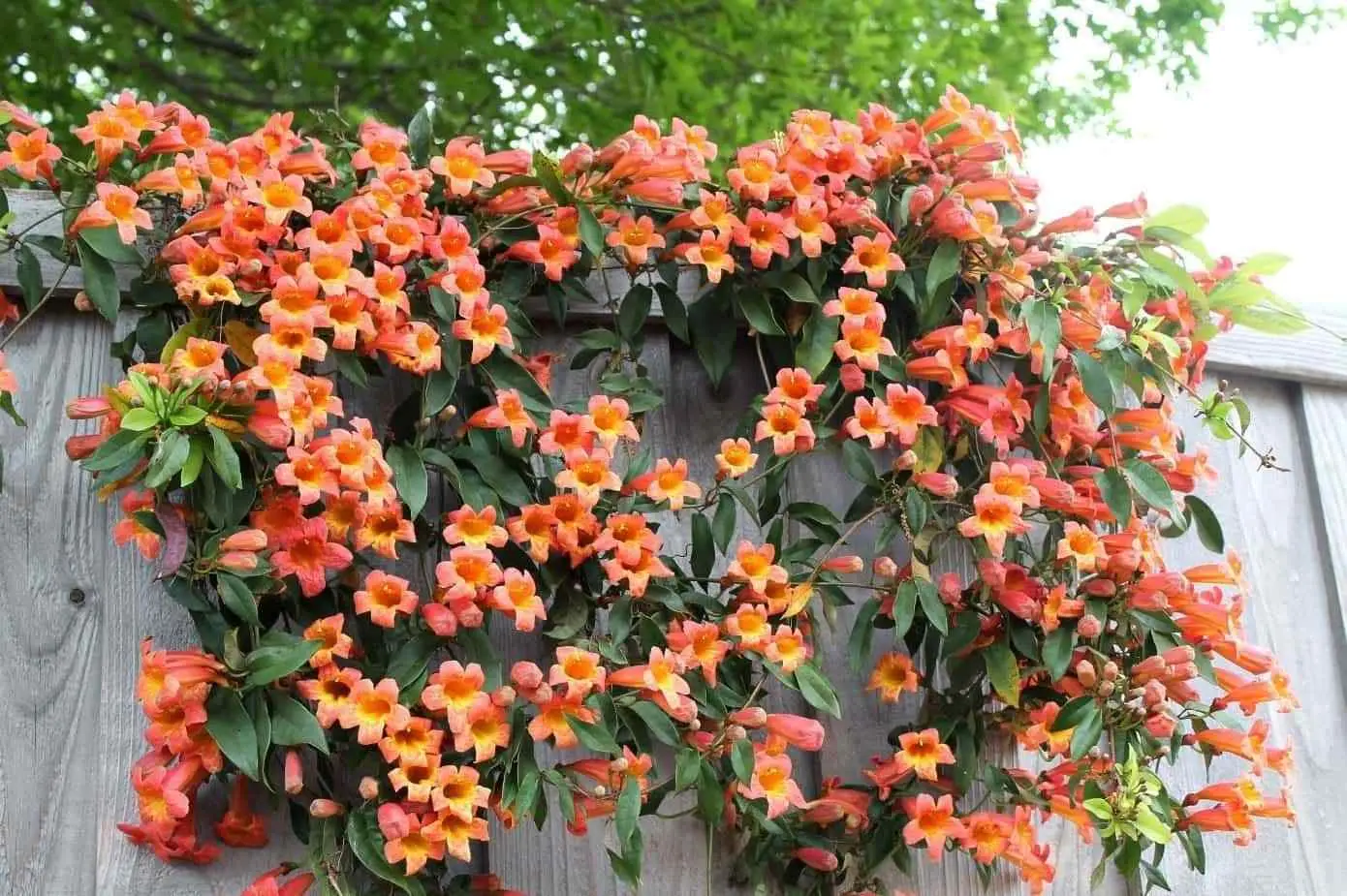
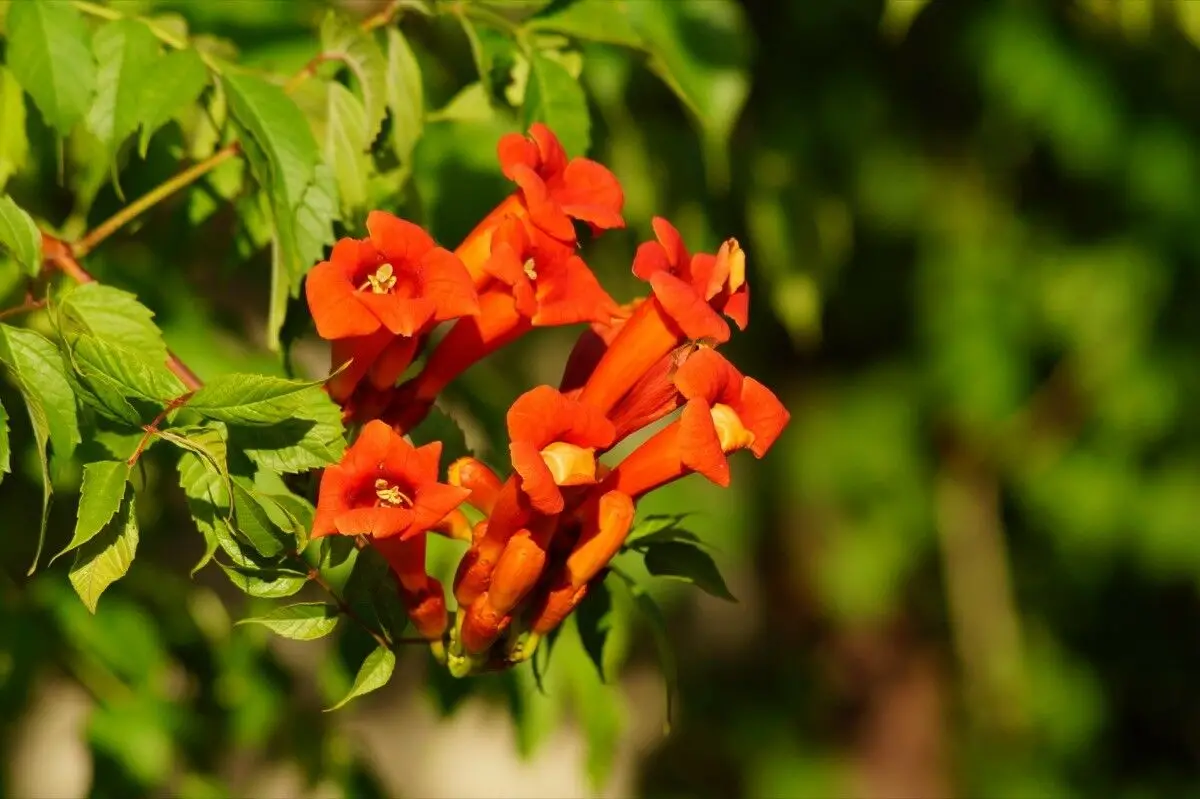
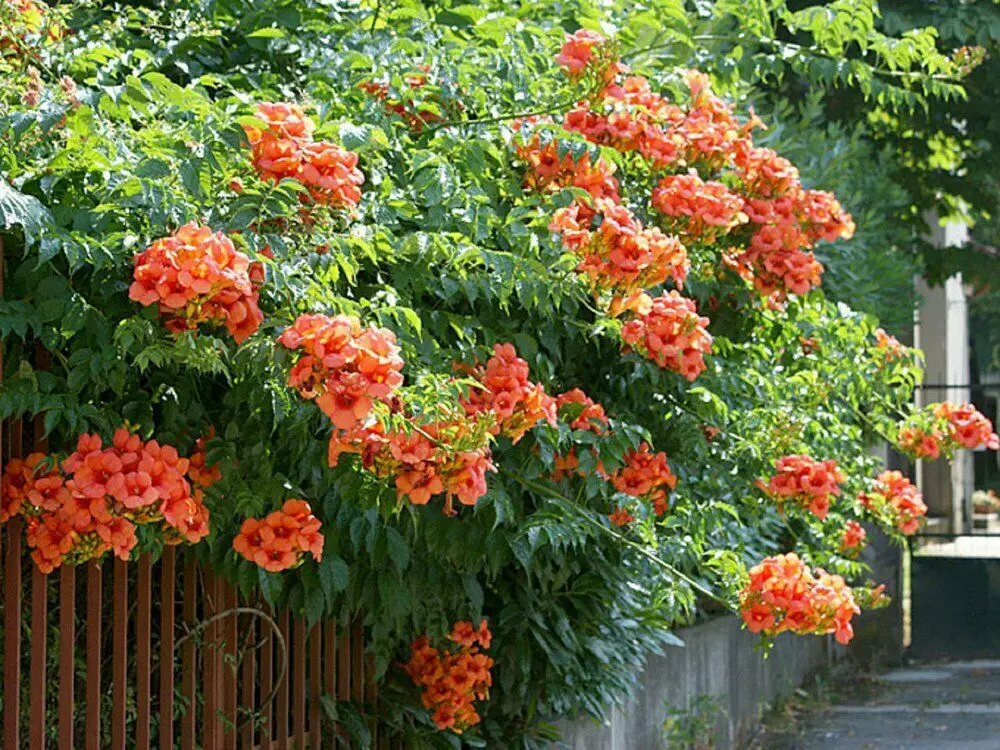
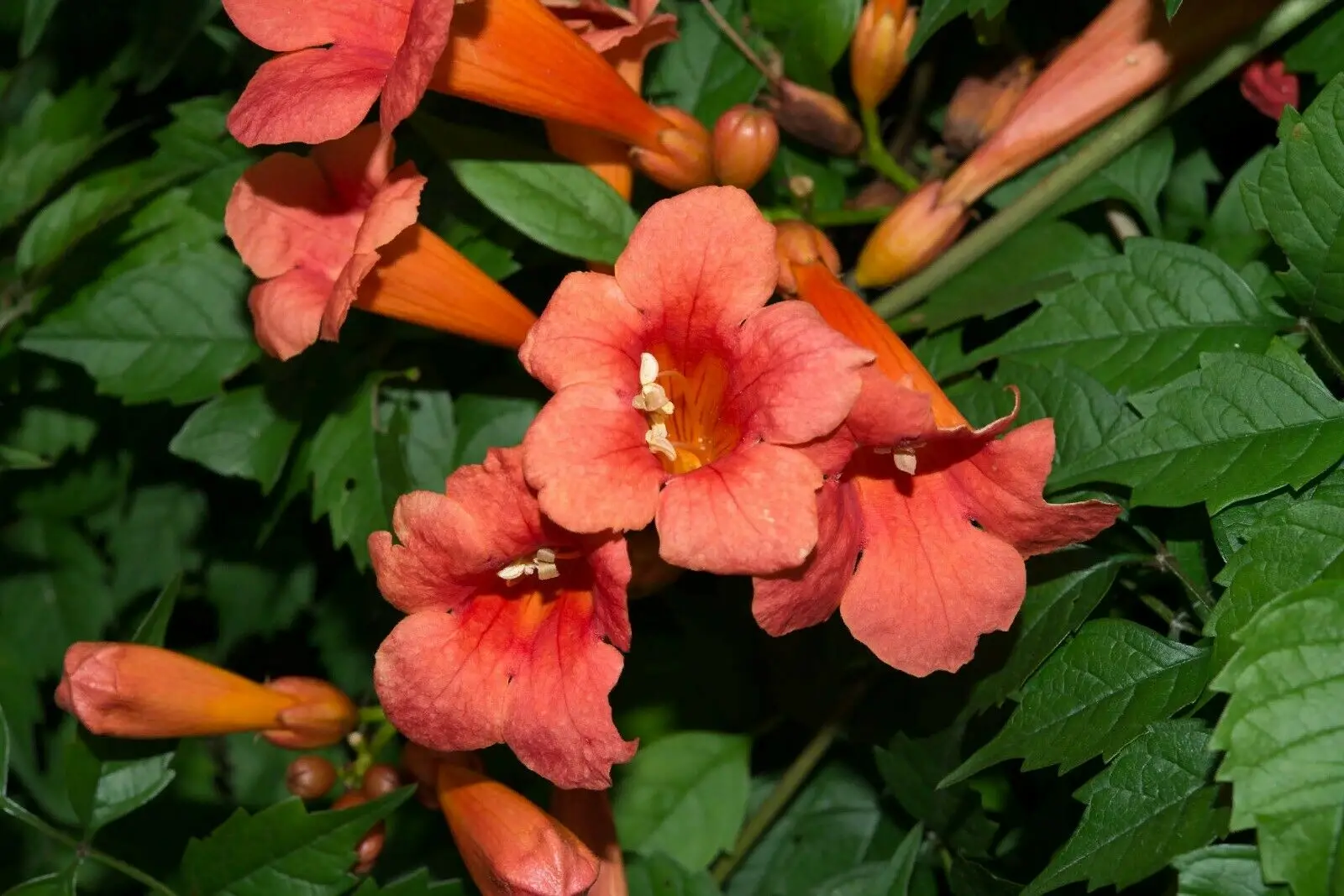
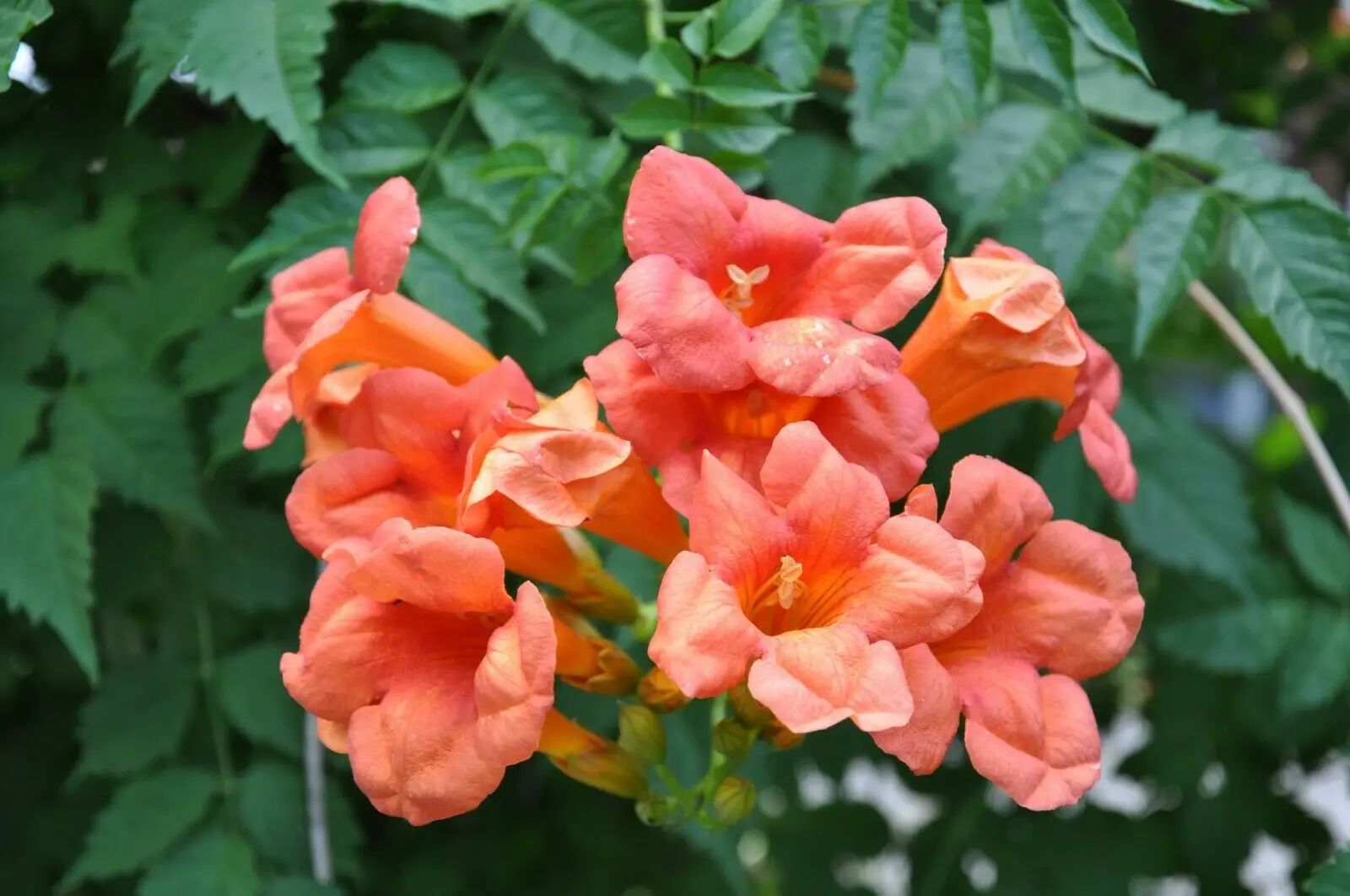
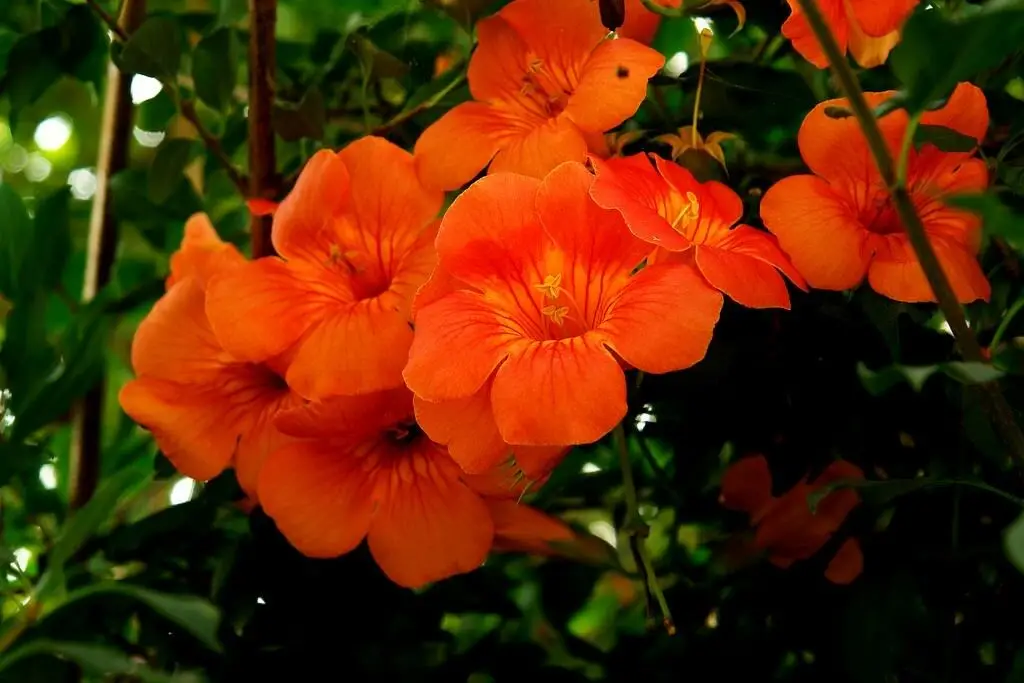
The hummingbird magnet. Trumpet vine can offer hummingbirds up to 10 times more nectar than most plants. Brilliant orange flowers are borne in summer and are often visited by hummingbirds. It grows quickly, often putting on several feet of growth in a single season once established. Once established, this vine is highly drought-tolerant, thriving even in dr
€1.92
This robust, woody deciduous vine produces an extraordinary summer-long display of large, vivid orange to red trumpet-shaped flowers that are absolutely irresistible to Ruby-throated Hummingbirds — earning it the nickname “hummingbird vine” in many parts of its range.
If you want a vine that brings dramatic color, wildlife excitement, and true summer spectacle, Campsis radicans is a standout choice. This vigorous North American native is famous for its huge, trumpet-shaped flowers in glowing shades of orange, red, and deep coral. Blooming through summer and often into fall, it creates an unforgettable display that hummingbirds simply cannot resist. Trumpet creeper has been admired by horticulturists since the Colonial era for its showy flowers and was among the first ornamental plants from North America introduced to Europe, with records of its cultivation in England dating to 1640.
But here’s what makes trumpet vine truly extraordinary: Trumpet vine can offer hummingbirds up to 10 times more nectar than most plants. The flowers are among the most important nectar sources for migrating Ruby-throated Hummingbirds, who build fat reserves for their trans-Gulf migration to Central America in late summer. The flowers are designed for hummingbird pollination: deep, narrow tubes that exclude most insects while perfectly accommodating the hovering, long-billed hummingbird. The shape of the blooms accommodates the birds’ long tongues, and reddish lines along the inner surface function as nectar guides. While primarily hummingbird-pollinated, Trumpet Creeper flowers are also visited by large carpenter bees that are strong enough to enter the flower tubes and Hummingbird Clearwing Moths also visit the flowers. Grow trumpet vine, and hummingbirds will return daily, sometimes by the dozen.
Cultivating trumpet vine is remarkably straightforward. The trumpet vine thrives in full sun and various soil types. This plant is drought tolerant and blooms best in full sunlight. Trumpet vine is easily grown in a wide variety of soils. It is best planted in lean-to-average soils with regular moisture in full sun to partial shade. Foliage grows well in shade, but plants need good sun for best flowering. Once established, this vine is highly drought-tolerant, thriving even in dry, sandy, or lean soils. It prefers deep, intermittent watering rather than constant moisture. It grows quickly, often putting on several feet of growth in a single season once established. It can also be used in a container where it will cascade over the side. Because it thrives on neglect and rewards minimal care with maximum flowers, trumpet vine is ideal for gardeners of all experience levels.
Start trumpet vine from seed, and within one season you’ll have vigorous growth reaching toward the sky. Within two, you’ll see your first glorious blooms. Trumpet vine is easy to establish and can be used to decorate landscapes beautifully if managed properly. Imagine planting these seeds now—by midsummer, hummingbirds will be visiting your garden daily, hovering before those fiery tubular flowers, their long beaks disappearing into the nectar-rich blooms while you watch in wonder. This is the plant that transforms a garden into a living jewel box, the one that makes people stop and ask, “What *is* that?” Plant trumpet vine from seed and create a hummingbird sanctuary that will thrill you for decades.
Only logged in customers who have purchased this product may leave a review.
Reviews
There are no reviews yet.