
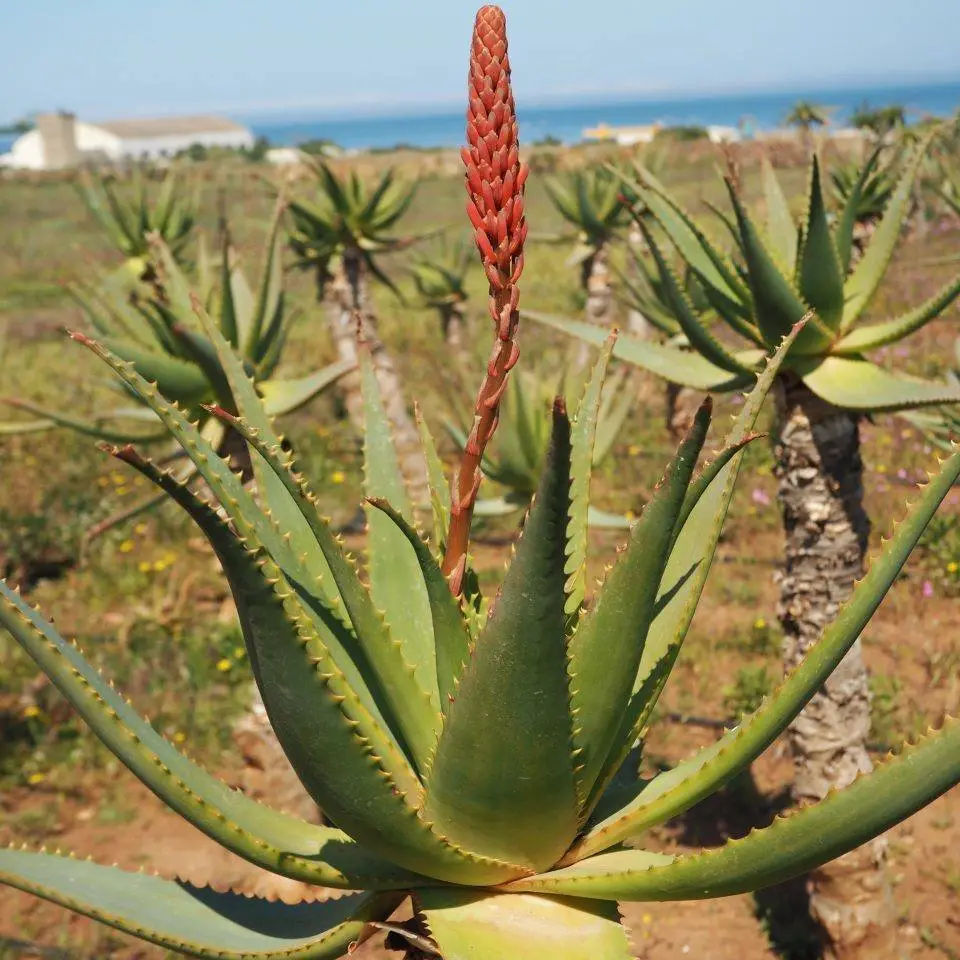
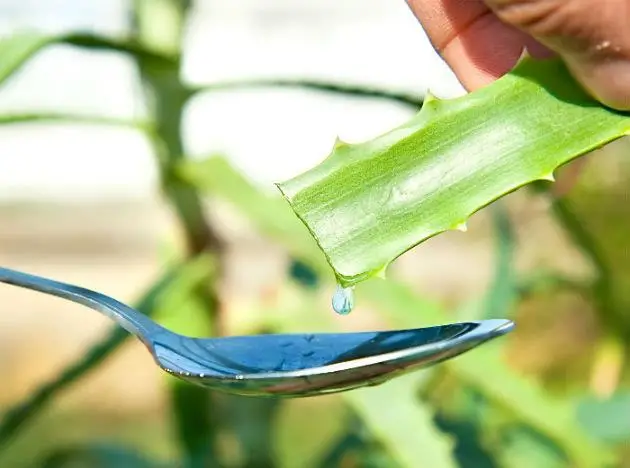
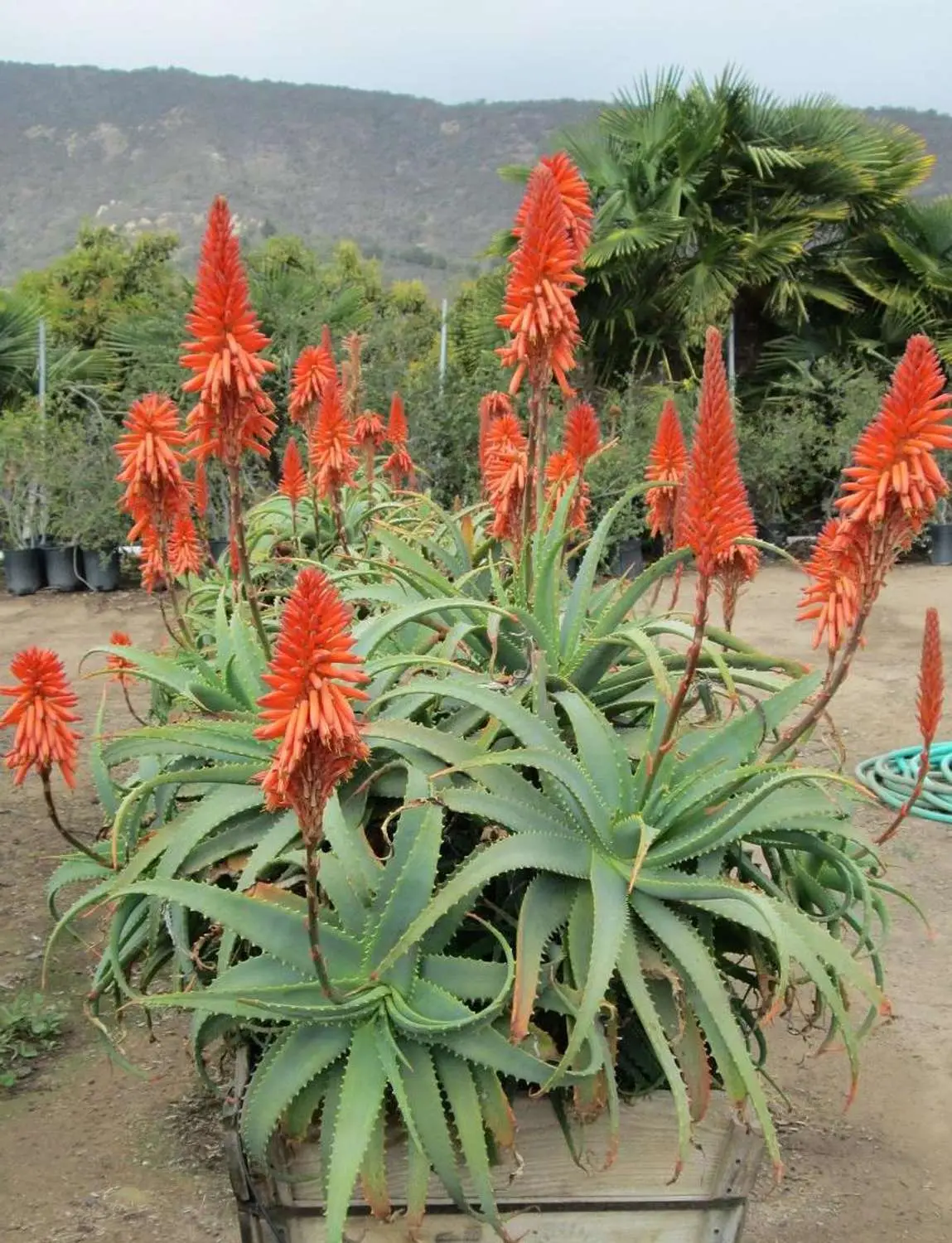
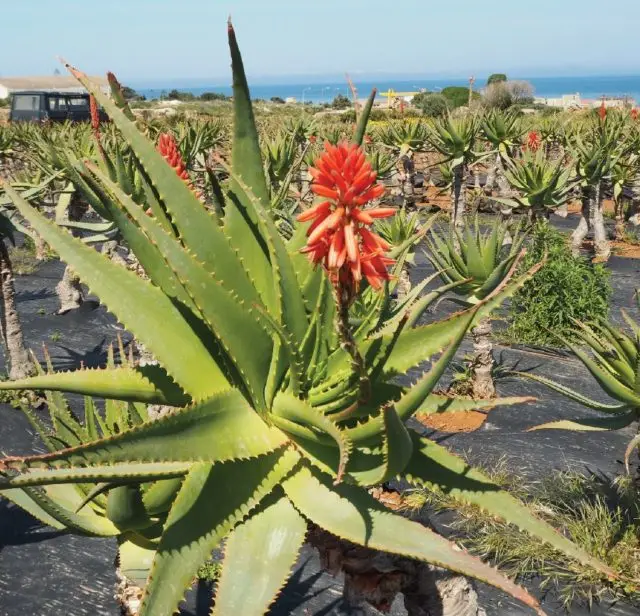
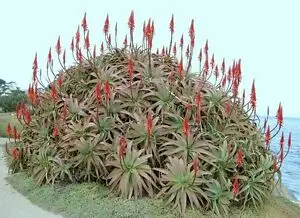
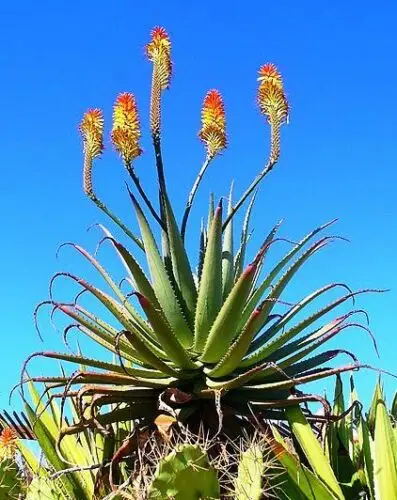
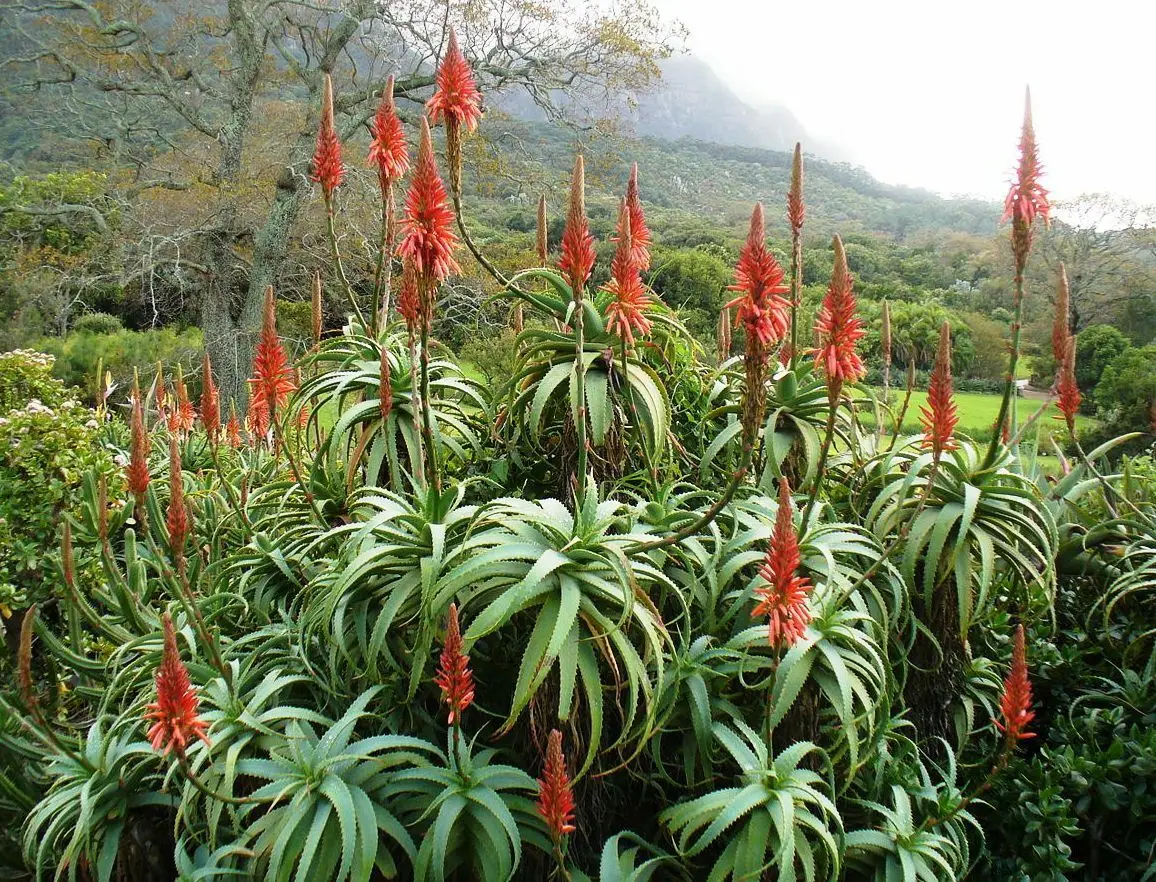
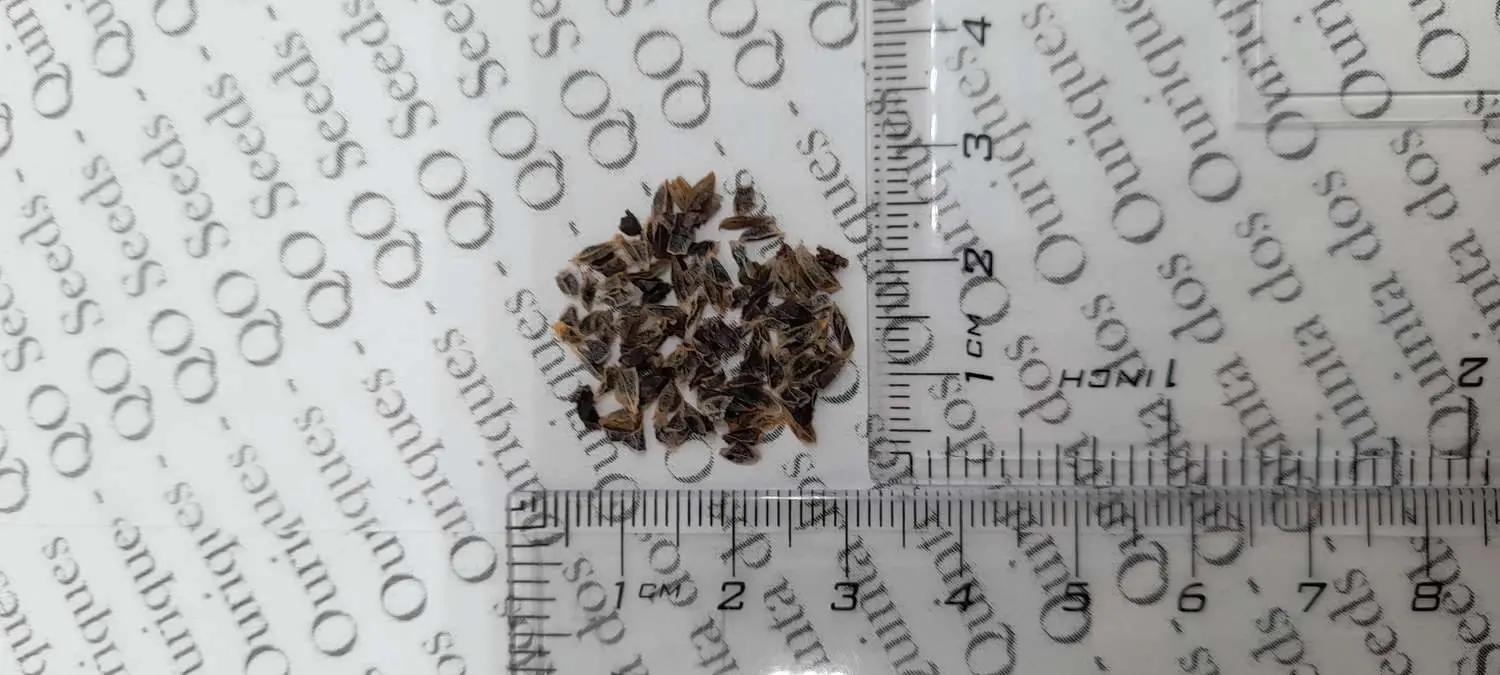
Forget Aloe vera—this African legend packs THREE TIMES the healing compounds, yet remains beautifully obscure. Grow your own medicinal fortress from seed: striking gray-green rosettes erupt into fiery red-orange spikes every winter, while the leaves deliver potent gel for burns, wounds, and skin. Easy, drought-proof, and transforms any garden into a living pharmacy. Your secret weapon starts here.
€2.12
Aloe arborescens is the medicinal aloe the world forgot—and it’s time to grow it yourself from seed.
Native to the rocky cliffs and mountain slopes of southern Africa, this sculptural succulent earned its Afrikaans name, Krantz Aloe, from the word for cliff—a plant that clings to stone and thrives where others perish. Unlike its famous cousin Aloe vera, which dominates the commercial market through sheer marketing muscle, Krantz Aloe harbors a secret: research confirms it contains dramatically higher concentrations of the active medicinal compounds that make aloe so transformative. This is the aloe that heals faster, deeper, more effectively—yet remains a quiet legend known mainly to herbalists and traditional healers across South Africa, Asia, Russia, Italy, and Japan.
Here’s where Krantz Aloe becomes irresistible: the medicinal magic. Slice a leaf and clear gel pours out, rich in polysaccharides, anthraquinones, and compounds with proven anti-inflammatory, antimicrobial, and wound-healing power. This is the plant that treated WWII burn victims before modern medicine had answers. The gel treats burns, bites, scratches, and chronic skin conditions with remarkable speed. The latex has been used traditionally for constipation and digestive support. Modern research validates what traditional cultures always knew: this plant’s active constituents show antibacterial, anti-inflammatory, anti-diabetic, and even anti-carcinogenic activity. Grow Krantz Aloe and you’re cultivating a living medicine cabinet—one that costs nothing to maintain and rewards you year after year. Whether you’re building a medicinal herb garden, creating a natural first-aid station, or simply want the most potent aloe on Earth, this species belongs in your hands.
Growing Krantz Aloe from seed is refreshingly easy—one of the great gifts of this plant. It thrives in full sun to partial shade, demands well-drained sandy or rocky soil (it laughs at poor soil), and once established becomes profoundly drought-tolerant. Water sparingly; let the soil dry between waterings. It grows moderately fast and branching naturally, eventually forming a multi-headed shrub 2-3 meters tall, though you can keep it compact in pots indefinitely. Hardy to USDA zones 9-11, it tolerates moderate frost and coastal salt spray. The plant asks for almost nothing and gives everything back—minimal fertilizer, no fussing, no pest problems. This is a succulent for beginners and veterans alike, one that repays neglect with vigor.
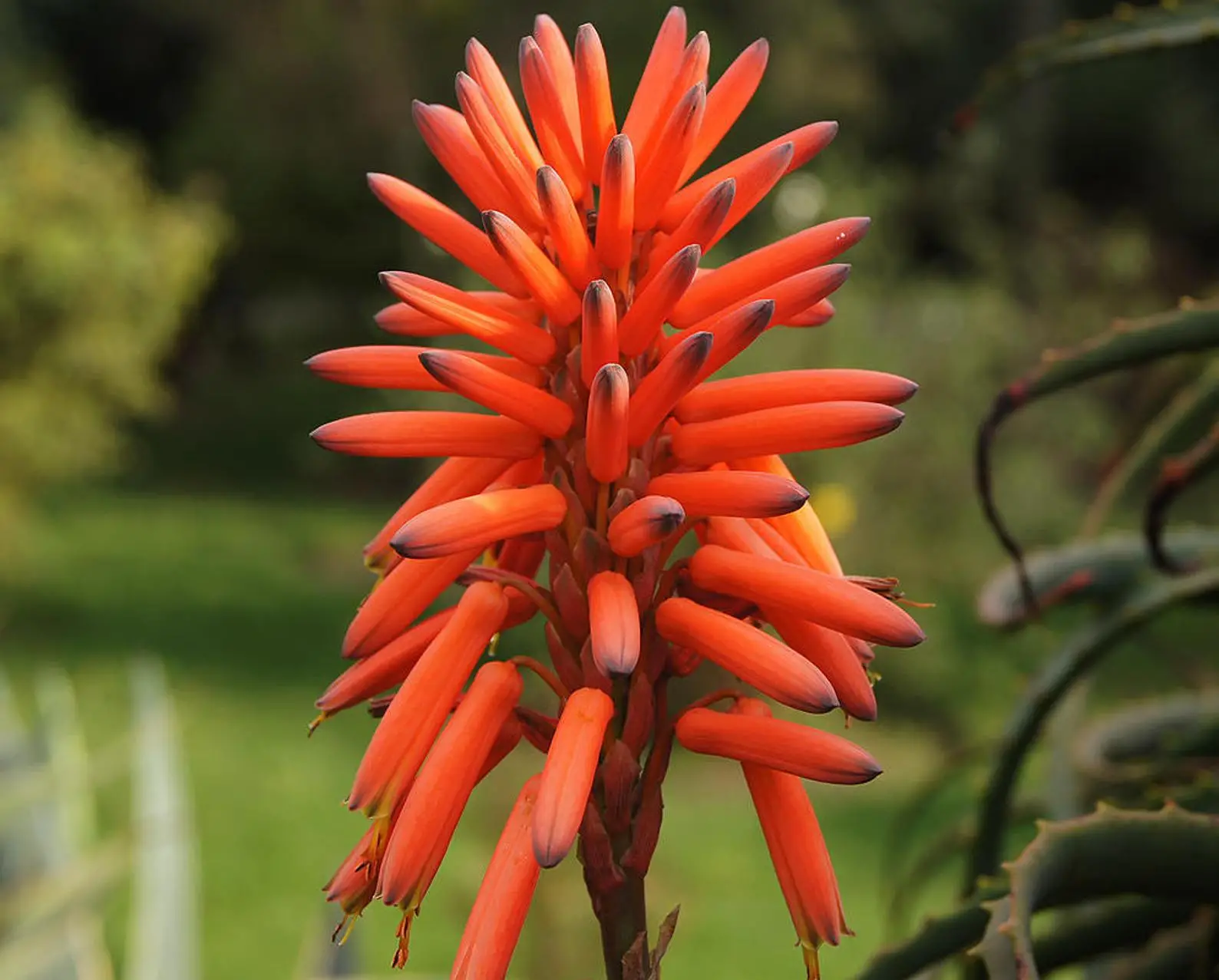
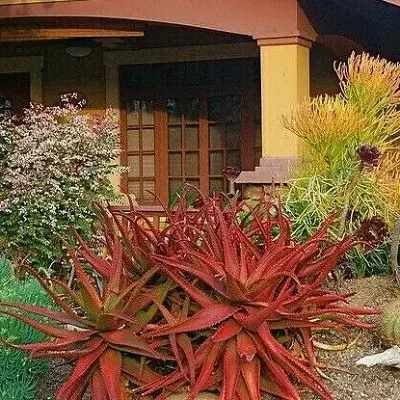
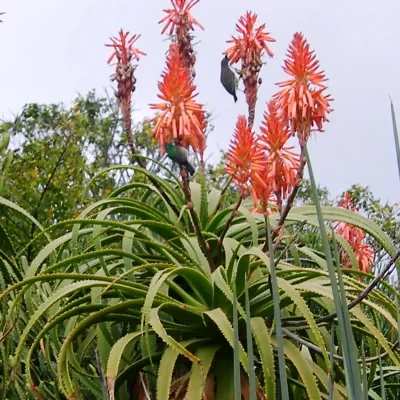
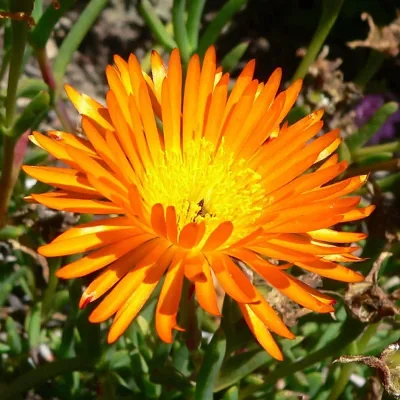
But there’s another reward waiting: beauty. In winter, when most gardens sleep, tall spikes of tubular flowers erupt from the rosettes—blazing red-orange (sometimes yellow or bi-colored)—packed with nectar that summons hummingbirds, sunbirds, and honeybees. The plant itself is architectural: gray-green, sword-shaped leaves with pale teeth arranged in elegant rosettes, branching into dense sculptural forms. Plant it as a focal point, as a hedge (it makes an impenetrable living fence that marks old homesteads for centuries), or as a container specimen on your patio. It’s ornament and medicine fused into one drought-proof, low-maintenance, high-reward plant. Grow Krantz Aloe from seed and you’re not just starting a plant—you’re beginning a lineage of healing that connects you to African herbalists, Italian nonna, and Japanese healers across centuries. Let this superior aloe take root in your garden, your medicine cabinet, and your story.
Only logged in customers who have purchased this product may leave a review.
Reviews
There are no reviews yet.