
Botanical Nomenclature: Ochroma pyramidale
Common Name: Ferry Tree
Family: Malvaceae
Origin: South America
€1.92
The main use is wood, widely used in the construction of boats and rafts, in the manufacture of lifebuoys, toys, thermal insulators, ceiling linings, light boxes and also in the manufacture of pulp. Wood can replace cork in its multiple applications. The seed wrap is used to fill mattresses and pillows. Due to its high growth rates and resistance to direct light, the species is recommended for the recovery of degraded areas and soil improvements. It is also used in pastoral systems, as it is planted in pastures to provide shade to cattle, however, it is not a recommended practice, if there is also the intention to exploit the wood, because the animals cause various damage to the stem. The species is also used as ornamental, for beauty and fast growing.
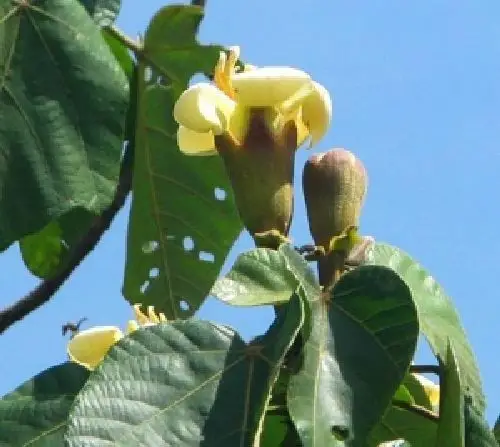
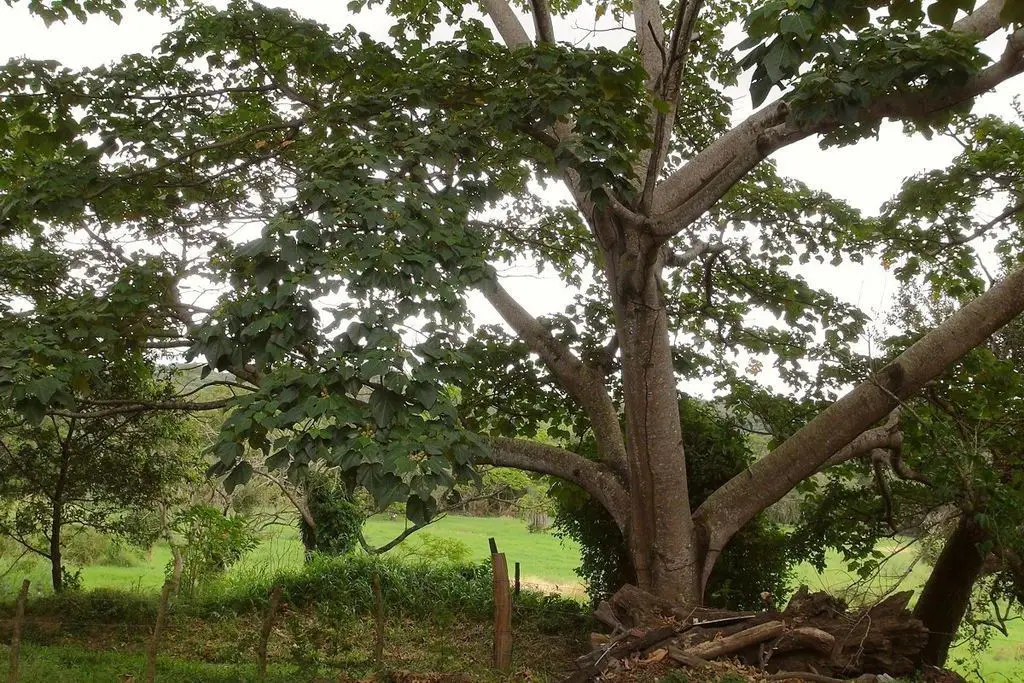
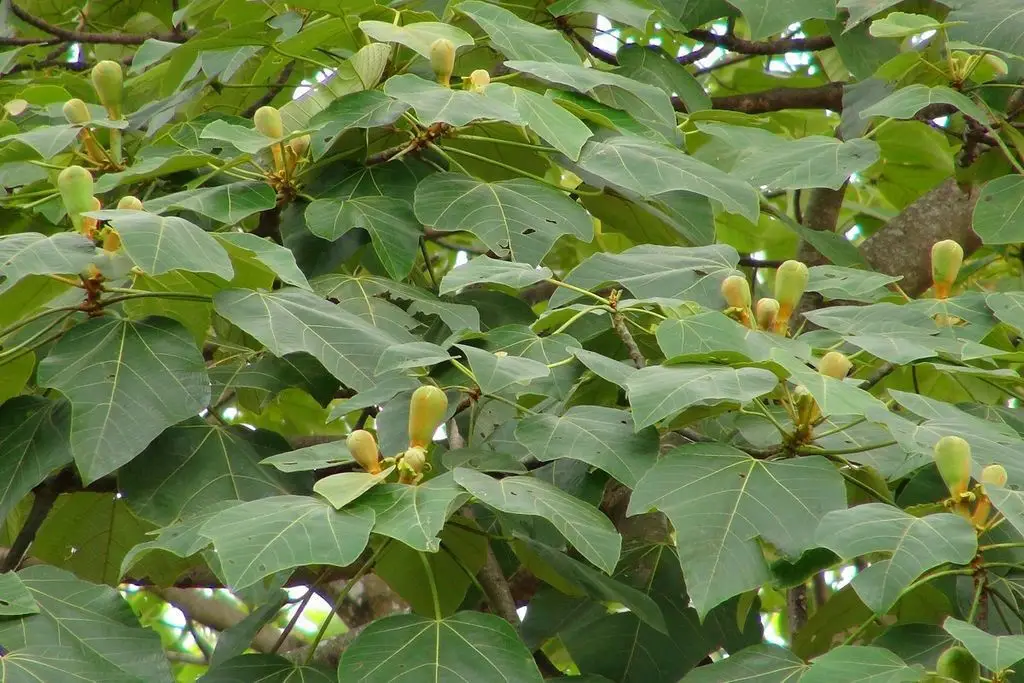
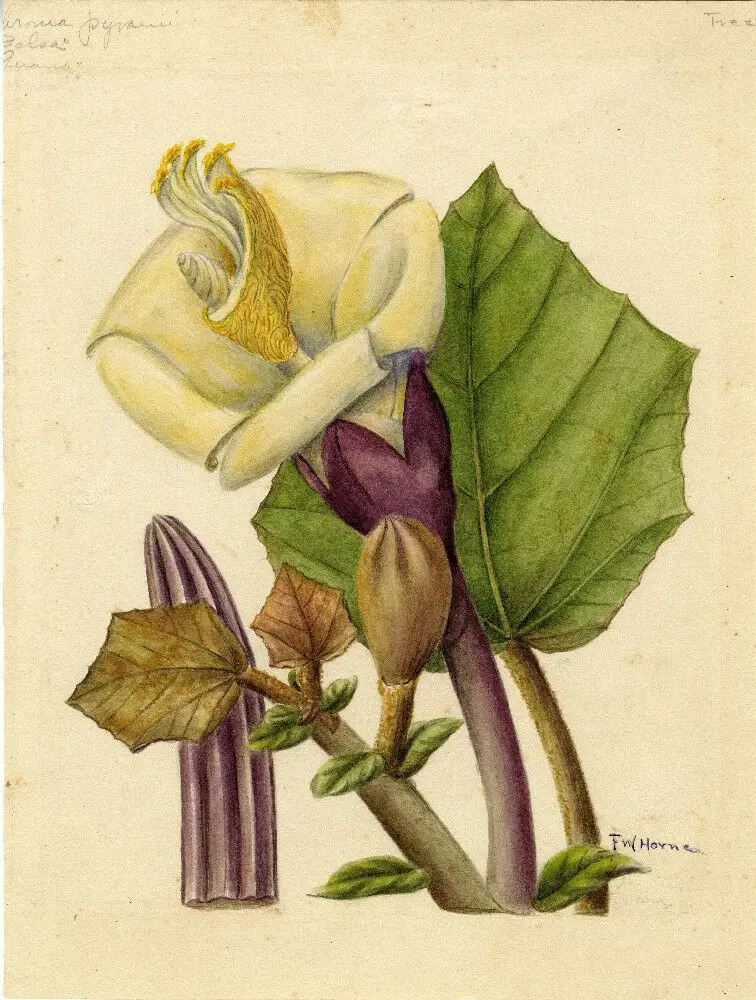
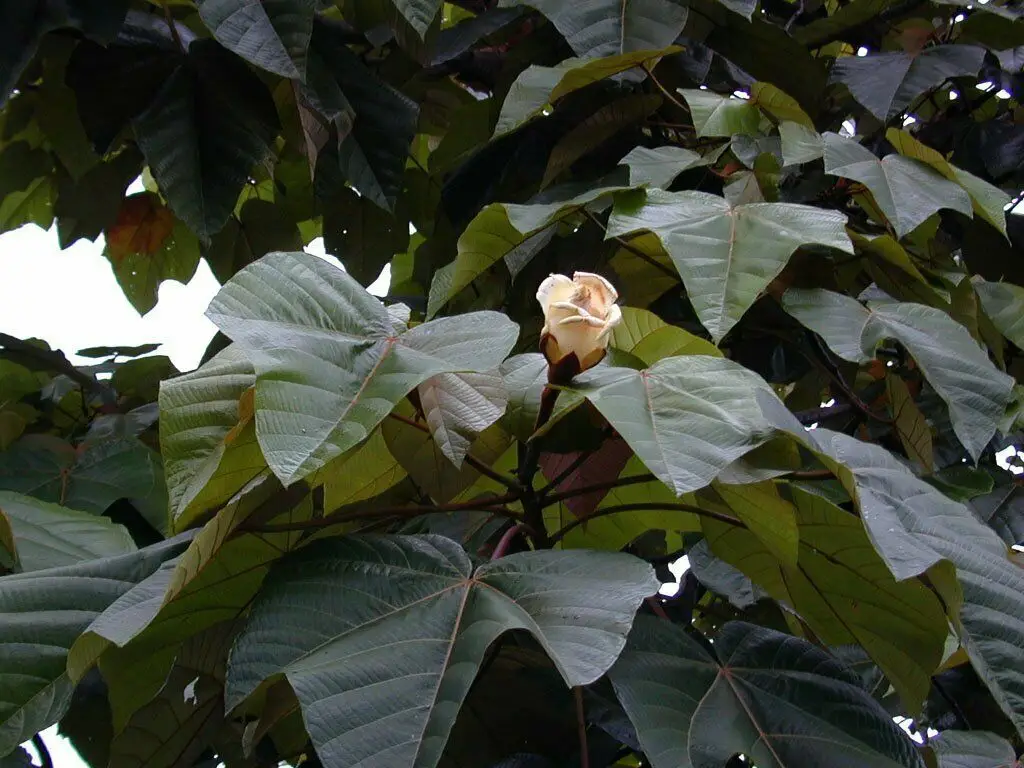
The tree is short-lived, grows fast and can reach the forest canopy, 20 to 25 m high and up to 1.2 m in diameter. The bark is smooth, but lenticelated and with linear streaks, light in color, sometimes brown or grayish-gray and with whitish spots and up to 1 cm thick. The canopy is open and wide and can reach up to 18 m in diameter. The leaves are simple, alternate and arranged in a spiral, have a long petiole and 5 to 7 main ribs. The apex of the leaf is rounded or subacute and the cordiform base. The flowers are solitary, showy, aromatic, 10-15 cm wide and 7-9 cm in diameter and supported by broad and thick peduncles. The fruit is an almost cylindrical, woody loculicidal capsule, 10 to 25 cm in length and 2 to 3 cm, exceptionally 5 cm in diameter, reddish brown to rusty and pubescent in color. Locular dehiscence occurs through five longitudinal valves. The fruits have a high
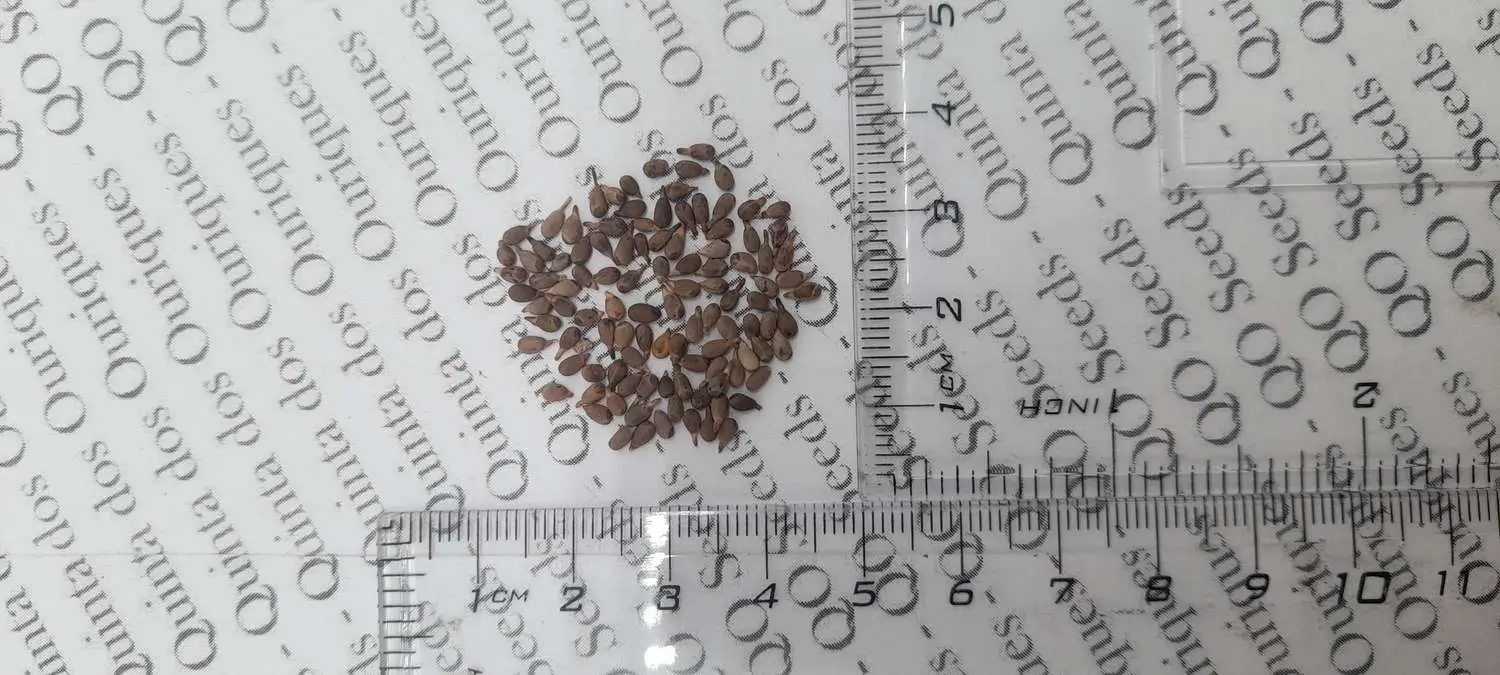
number of seeds surrounded by a light brown or yellowish silky patch. The seeds are ovoid, but with an acuminate end, dark brown in color, 2 to 5 mm long and 1.5 mm in diameter; strongly adhered to the pot, which aids in seed dispersal. The endosperm is abundant and the embryo is straight.
Balsam is widely distributed in the neotropical zone, including the Antilles, and occurs from southern Mexico to Bolivia and the Brazilian Amazon; preferably in lowlands and in mountain valleys, but can also be found up to 2000 m in altitude. It grows relatively well in sandy soil with a thin organic layer, such as in flooded banks of rivers and streams, but prefers fertile, moist, well-drained, clayey, neutral or alkaline soils. Does not tolerate high salinity soils. The flowers are pollinated by nocturnal insects and the seeds are scattered by the wind. The seeds can remain dormant for a long time, making up the forest seed bank. They germinate abundantly when light, temperature and humidity conditions are favorable. In forest clearings, abandoned fields or recent alluvial soils, good natural regeneration occurs and often the species is classified as invasive or associated with secondary forests.
Only logged in customers who have purchased this product may leave a review.


Reviews
There are no reviews yet.