

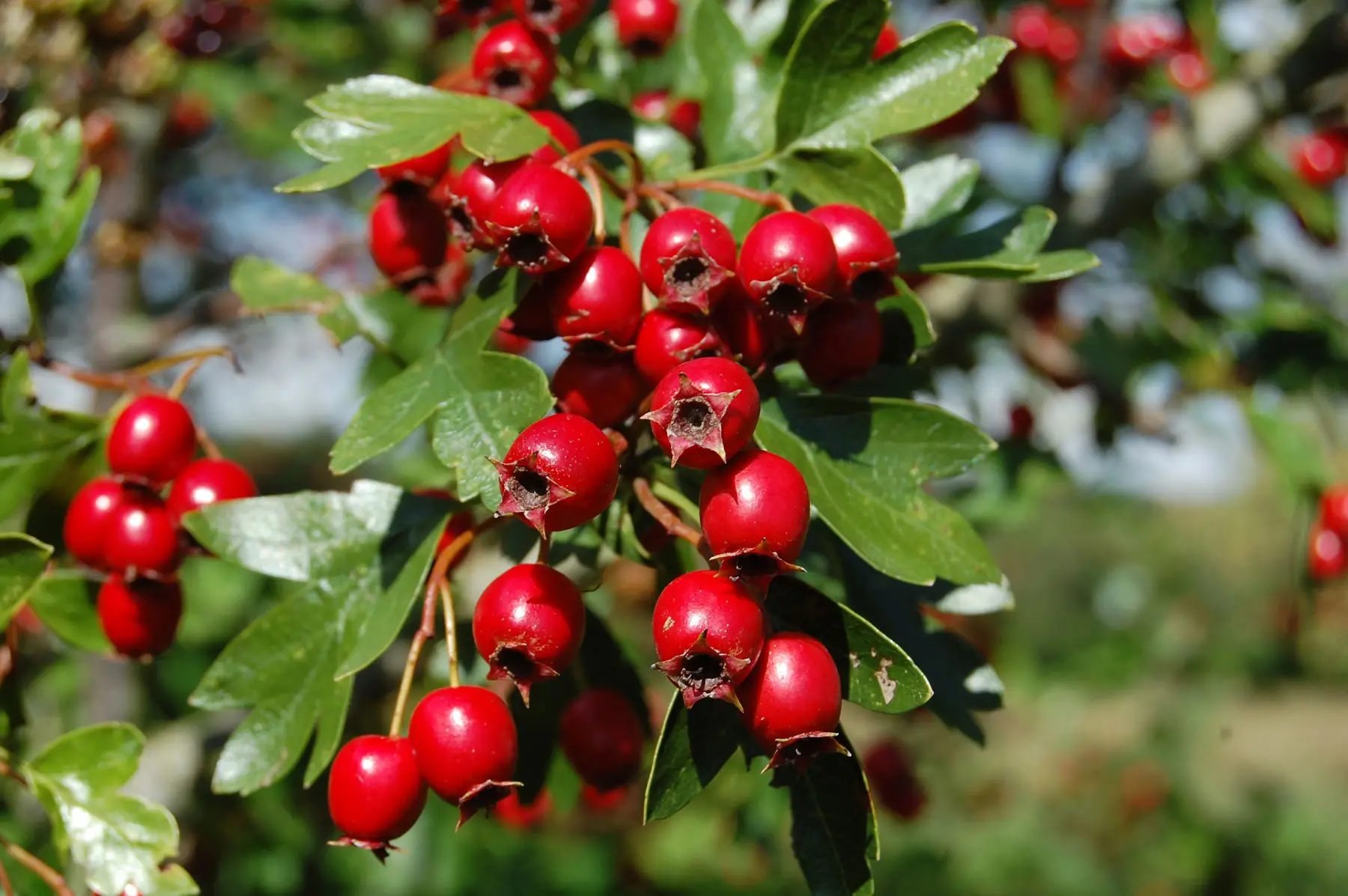
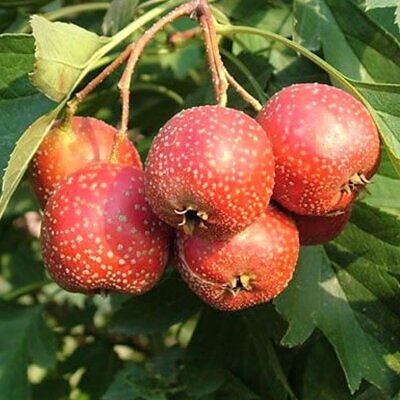
Hawthorn’s leaves and crimson berries have been used for centuries to support the cardiovascular system. As herbalists recognize, hawthorn is a cardiotonic ideal for those wishing to give their heart extra love. Beyond medicine, the sweet and tart berries make traditional jams and jellies. Early spring blossoms attract bees and butterflies—and you c
The species name Crataegus comes from the Greek word krátaios, meaning hard, strong, and has always been there. You’re not just planting a tree—you’re planting something ancient, something that has outlasted empires.
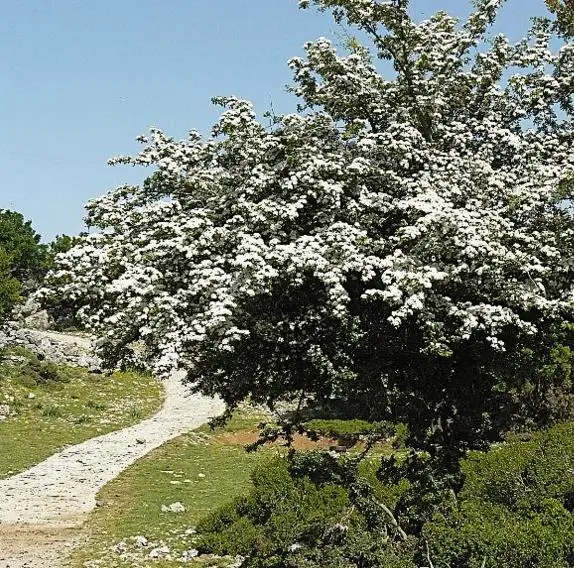
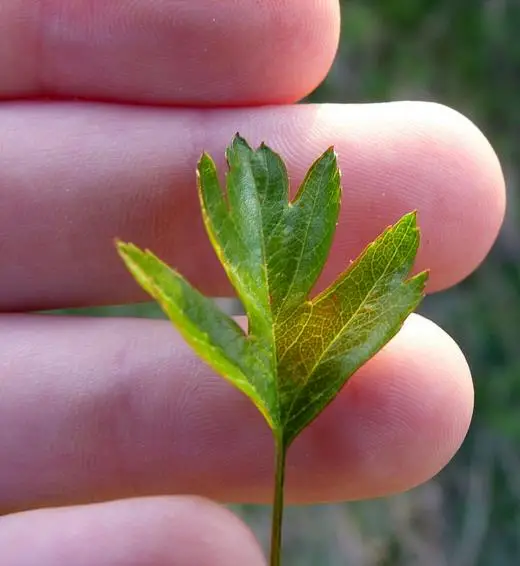
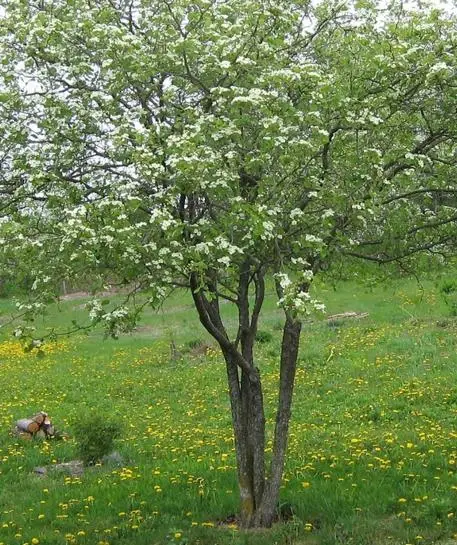
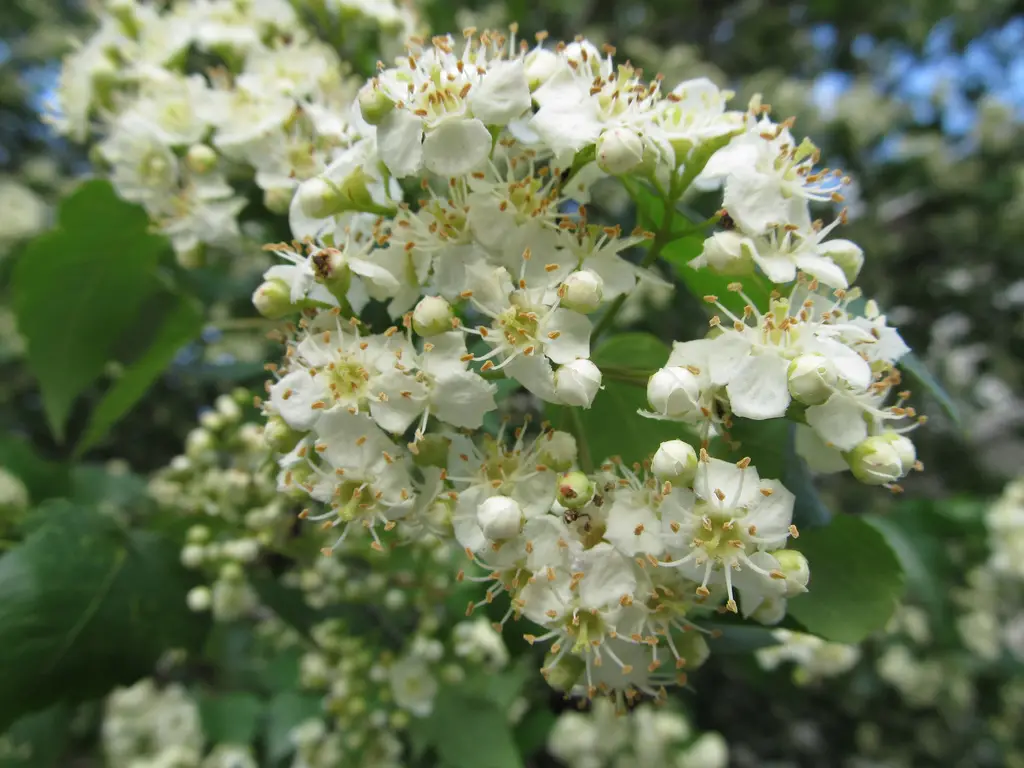
Native to Europe, Asia, and North Africa, hawthorn often gathers into thick hedgerows, used as living fences for strength to enclose pastures and meadows. Hawthorns are renowned for their seasonal beauty, featuring a spectacular display of white or pink flowers in spring, lush green foliage in summer, bright berries in autumn, and a structural form in winter. Reminiscent of apple blossoms, the five-petalled hawthorn flowers are borne in clusters, with dark green leaves having serrated and sometimes lobed margins. When autumn arrives, bright red berries called “haws”—small, apple-like fruits—become a vital food source for birds such as robins and waxwings during fall and winter.
But hawthorn’s true magic lives in its heart. For centuries, hawthorn’s leaves and crimson berries have been used across Europe to support the cardiovascular system and is one of the most popular remedies for heart health. Its medicinal properties were first documented by Dioscorides in the 1st century A.D., with Greek doctors Pliny and Galen also recording its benefits. Herbalists use hawthorn leaves and flowers in formulas to support heart health and overall circulation—a true cardiotonic ideal for those with active lifestyles wishing to give their heart a little extra love. Hawthorn notably contains both flavonoids and quercetin, compounds that modern science now confirms support cardiovascular function. The whole plant is used in herbal medicine—leaves, flowers, and berries—often combined in teas to access the benefits of the complete plant.
Beyond medicine, hawthorn feeds the table. Hawthorn berries are sweet and tart with a rich, slightly astringent flavor, suitable for traditional jams, jellies, syrups, and wines, and are sometimes added to pies and tarts for a unique, tangy twist. In some regions, the young leaves and flowers of hawthorn are used in salads. Hawthorn powder from the berries is added to flour in Northwestern Africa and is high in selenium and chromium; the berries are also used to make jelly and are high in pectin, requiring only half the generally recommended pectin to achieve jelly consistency. The early blossoms are a valuable nectar source for bees, butterflies, and other pollinators emerging in spring.
Growing hawthorn from seed is an act of faith rewarded. Hawthorn seeds require cold stratification—a weeks-long cold period to break seed dormancy—and if sown in the garden in November or December, they have a good chance of germinating next spring. Yes, seeds will germinate in around 18 months, but this is no burden—it’s an apprenticeship. Use 50% leafmould or peat-free compost and 50% horticultural sand for your seed mix. Choose a site with full sun to partial shade and well-drained soil. The deep root system and tough foliage allow hawthorns to thrive in hot, dry and arid conditions, and hawthorn plants are generally extremely adaptable and undemanding. Hawthorn is relatively pest and disease resistant once established, with minimal pruning required, mostly to shape trees when young.
Grow hawthorn from seed and you’re not simply raising a tree—you’re becoming part of a lineage stretching back millennia. You’re cultivating medicine, beauty, wildlife san
Only logged in customers who have purchased this product may leave a review.
Reviews
There are no reviews yet.