
Grow your own medicinal tea from the desert’s most iconic shrub. Nevada ephedra’s green jointed stems have been brewed for centuries by indigenous peoples and Mormon pioneers as a soothing, non-stimulating respiratory tonic. Easy to grow in full sun with minimal water—once established, it thrives on neglect. Start from seed and harvest fresh within two years.
€3.87
Imagine stepping into history with a cup of tea that indigenous southwestern peoples and Mormon settlers have treasured for generations.
Ephedra nevadensis—known as Nevada Mormon Tea, Desert Tea, or the poetic Gray Jointfir—is a living connection to the American Southwest’s most resilient dryland ecosystems. Native to the Great Basin, Mojave Desert, and Colorado Plateau, this remarkable gymnosperm has witnessed millennia of desert life, from wild mule deer browsing its stems to Native American healers harvesting it for profound medicinal purposes. Its range spans from California and Oregon east to Colorado and Texas, embracing some of North America’s most unforgiving terrain—and thriving.
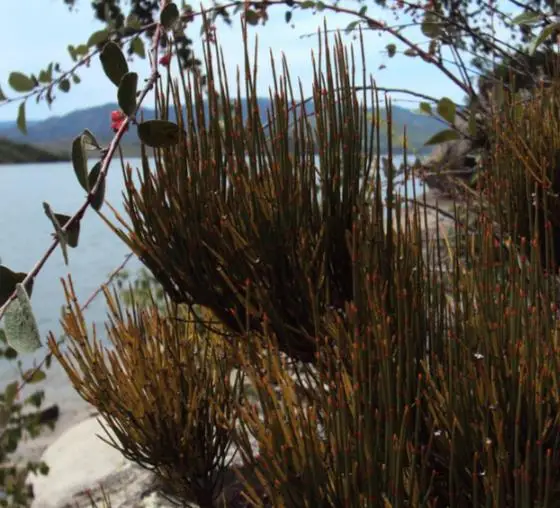
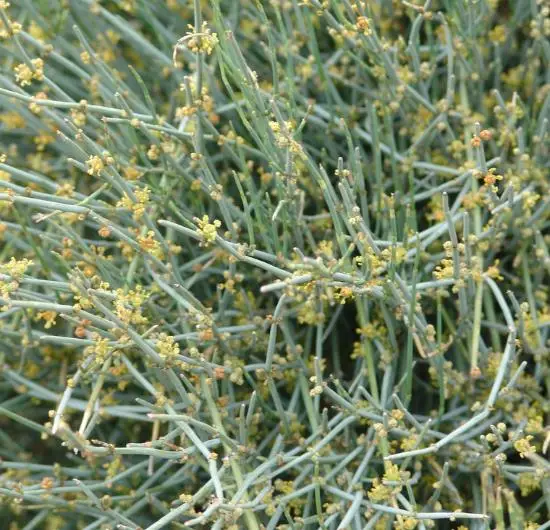
The magic lies in the stems. Unlike most plants, Ephedra nevadensis performs photosynthesis through its distinctive green, jointed, wiry stems rather than leaves—an exquisite adaptation to desert aridity. What you harvest are these pale-green-to-gray-green branches, which can be used fresh or dried to create a gentle, warming beverage. For centuries, the Kawaiisu, Zuni, and Shoshone peoples brewed this tea to support respiratory health, purify the blood, and address various ailments. Mormon pioneers adopted the tradition, calling it Mormon Tea or Brigham Tea, and it became a beloved substitute for coffee and black tea throughout the arid West. Young stems are best eaten raw; older stems make the most flavorful tea. Simply harvest anytime during the year, dry, and steep—a beverage that tastes of desert wisdom and carries the weight of cultural continuity. Unlike its stimulating Chinese cousin Ma Huang, Ephedra nevadensis offers a non-stimulating bronchial support, making it ideal for those seeking gentle respiratory comfort or simply a mindful daily ritual connected to the land.
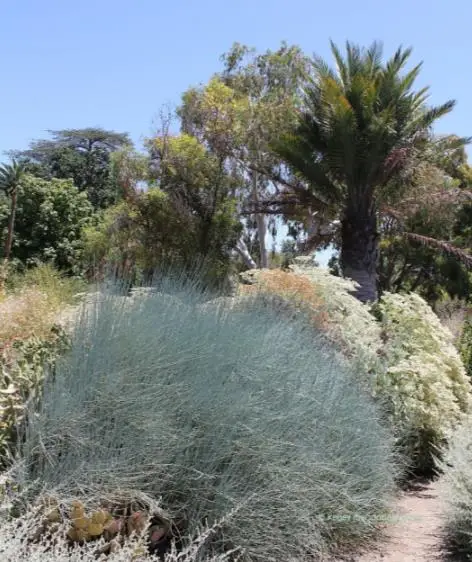
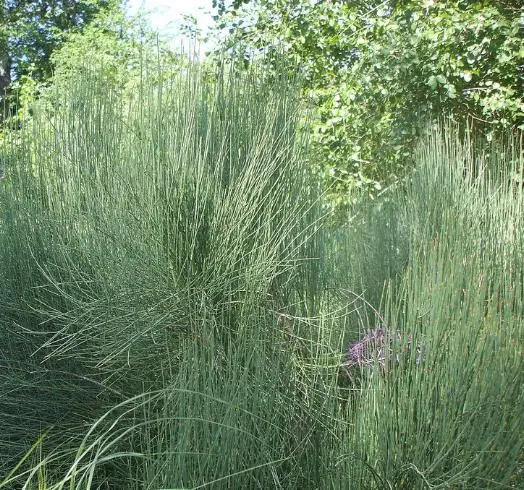
Growing Ephedra nevadensis rewards both the patient botanist and the water-conscious gardener. This evergreen shrub reaches 2–4 feet in height and spreads its architectural branches in full sun only—shade will starve it. Give it sharply drained, sandy, or rocky soil; it tolerates poor, alkaline, and limestone-rich substrates with remarkable grace. Once established, it is profoundly drought-resistant and requires virtually no supplemental water, making it an exemplary choice for xeriscaping and water-wise landscaping in arid and semi-arid regions. Seeds germinate readily with light scarification and benefit from alternating warm and cool temperatures, mimicking the desert’s thermal rhythm. Plant in fast-draining seed mix about one inch deep, maintain moderate moisture during germination (2–4 weeks), and then pot on as the seedlings grow. Most growers keep young plants in containers for 1–2 years before transplanting to the landscape, allowing them to establish strong root systems. Avoid overwatering—this is the plant’s only real enemy. Hardy to USDA zone 6 and beyond, it will reward you with minimal fussing once settled into its final home.
Grow Ephedra nevadensis from seed and become a steward of botanical heritage. You’re not simply starting a shrub; you’re cultivating a living thread that connects you to ancient desert wisdom, to the pioneering spirit of the American West, and to the patient, resilient intelligence of a plant shaped by millennia of aridity. Each cup of tea you brew will taste of sun-baked stone, of survival, of beauty refined by scarcity. This is the plant for the gardener who understands that the most profound beauty often wears the quietest face—and that true luxury is a garden that thrives on almost nothing but time and sunlight.
Only logged in customers who have purchased this product may leave a review.

Reviews
There are no reviews yet.