
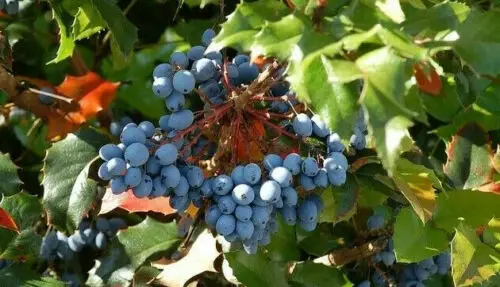

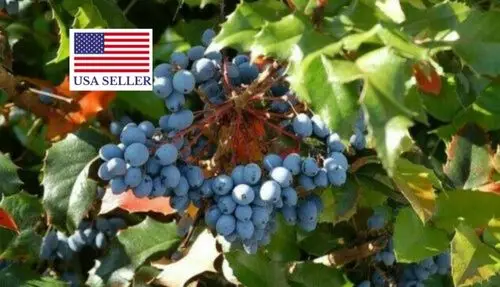
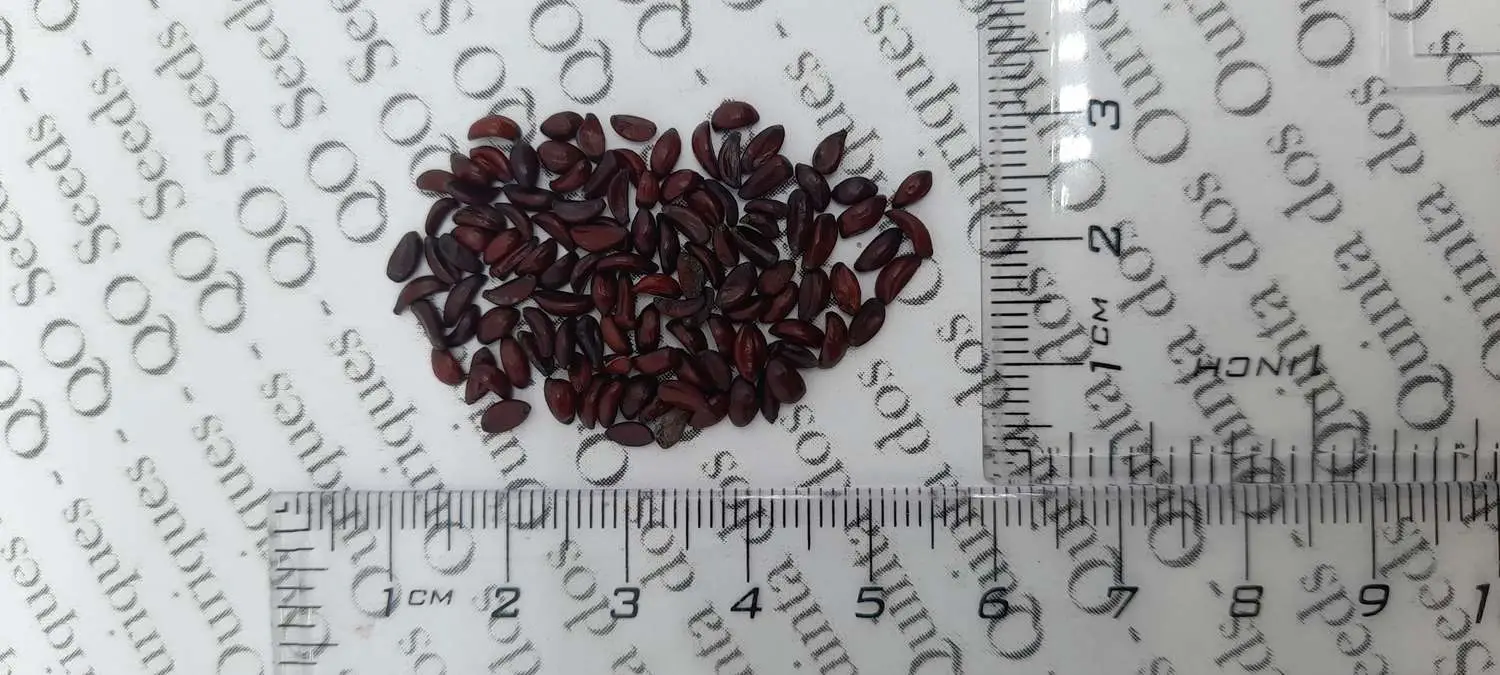
Grow your own skin-healing powerhouse. Mahonia aquifolium contains berberine, a potent alkaloid studied for treating psoriasis, eczema, and inflammatory skin conditions—with clinical results showing 81% improvement in symptoms. This beautiful evergreen produces fragrant golden-yellow spring flowers and dusty blue berries. Hardy, shade-tolerant, and remarkably easy to grow from seed. Cultivate medicine and beauty in one plant.
€1.92
Here’s a shrub that heals as beautifully as it grows: Mahonia aquifolium, the Oregon grape, is a botanical remedy with centuries of proven power and modern science backing every dose.
Native to the Pacific Northwest of North America—from British Columbia down through California—Oregon grape has thrived in shadowy conifer forests for millennia. The Berberidaceae family claims this evergreen as one of its most studied members. What makes it extraordinary isn’t just its lineage; it’s the extraordinary alkaloid berberine locked within its roots and bark, waiting to be extracted and used by herbalists and skin healers worldwide.
But here’s where Mahonia aquifolium truly shines: as a medicinal powerhouse for skin. For centuries, Native American tribes recognized what modern science has now validated—that this plant’s root and bark contain potent antimicrobial and anti-inflammatory compounds. Today, clinical research has proven remarkable results. In one landmark study of 375 people with psoriasis using topical Mahonia aquifolium extract, over 81% saw their symptoms improve or disappear within 12 weeks. Severe cases dropped from 30% at the start to just 5.6% by the end. The plant’s main active ingredient, berberine, works by inhibiting inflammatory pathways and suppressing the excessive skin cell growth characteristic of psoriasis and eczema. Herbalists also use the root internally for digestive support, blood purification, and immune stimulation—making this a whole-plant apothecary in shrub form. Whether you’re crafting tinctures, infusions, skin washes, or herbal preparations, Oregon grape offers professional-grade therapeutic potential from your own garden.
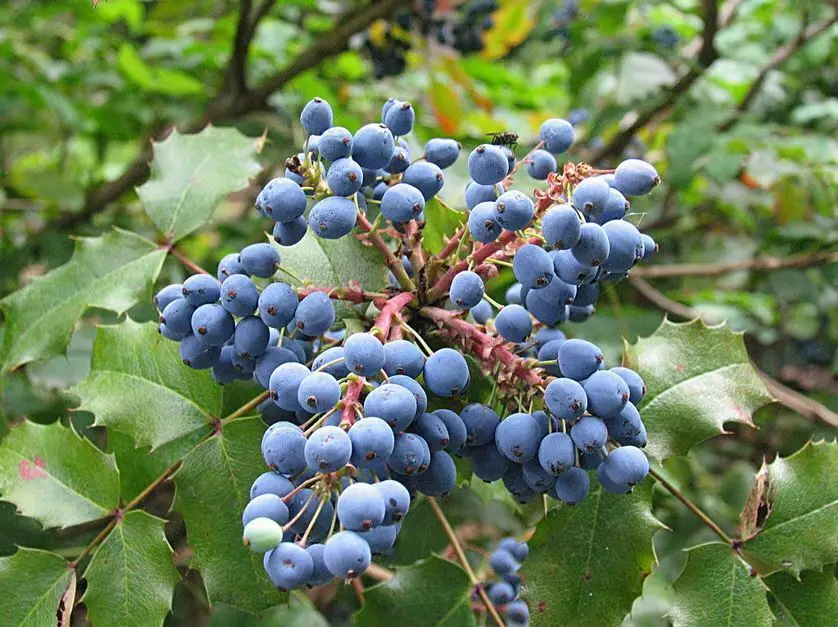
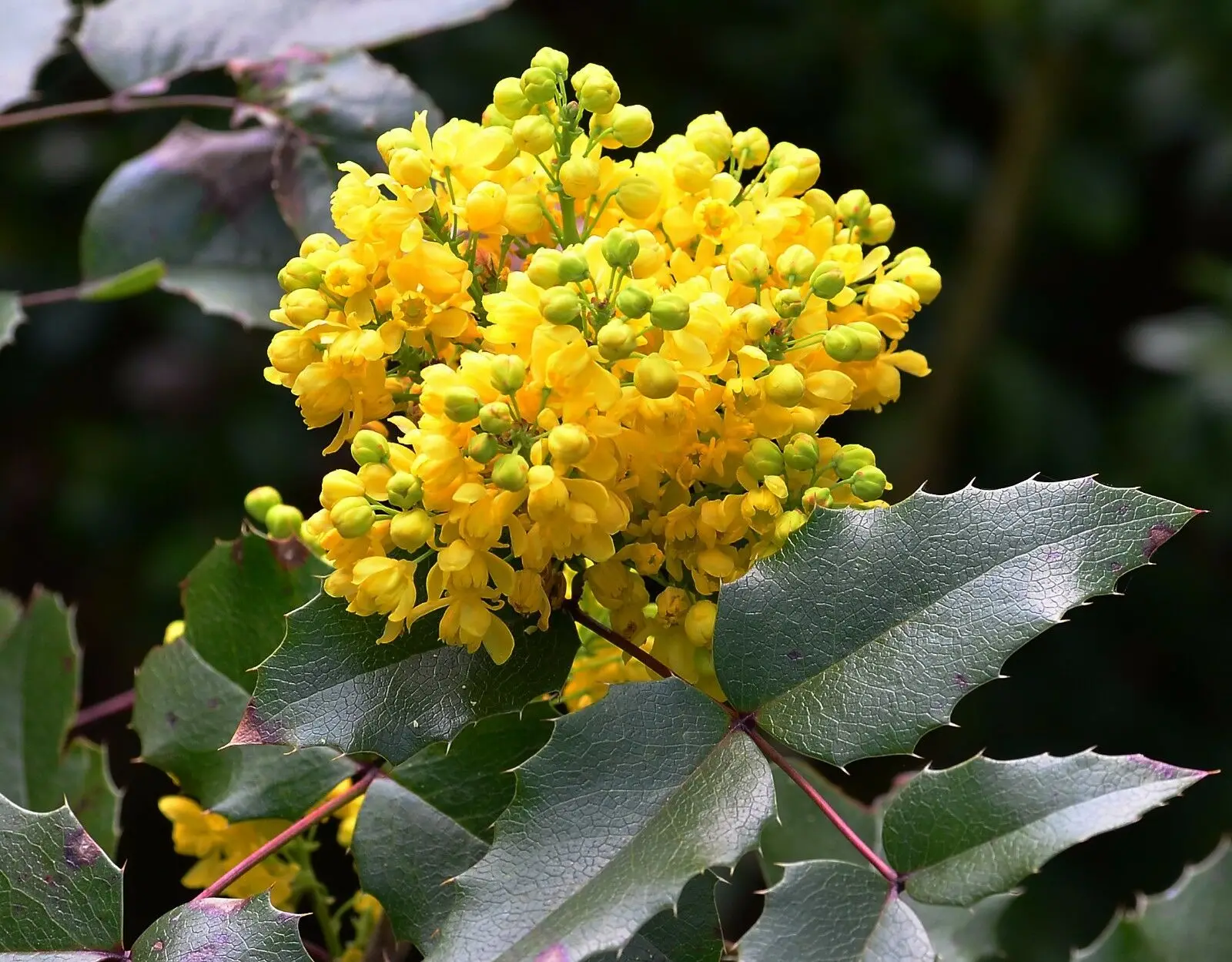
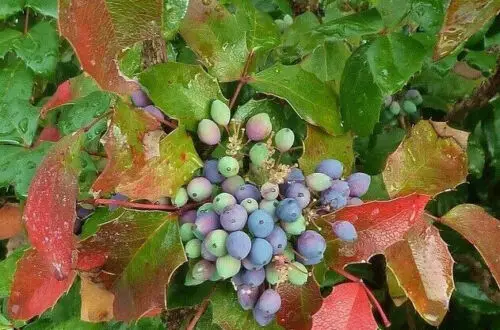
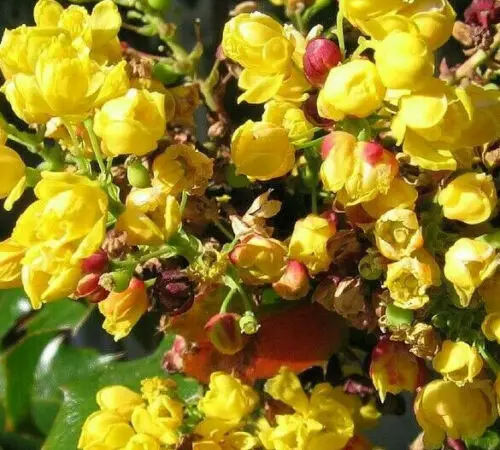
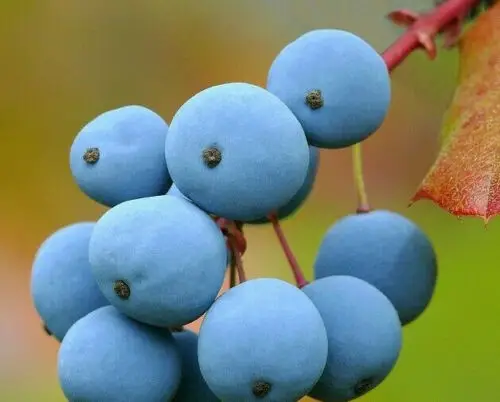
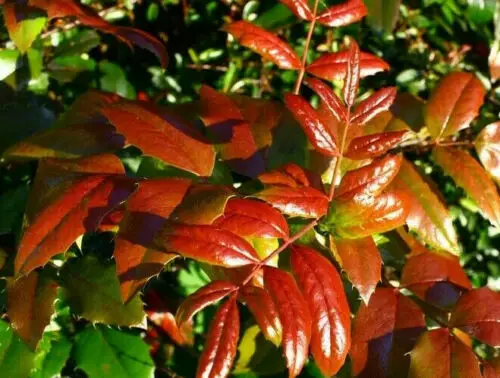
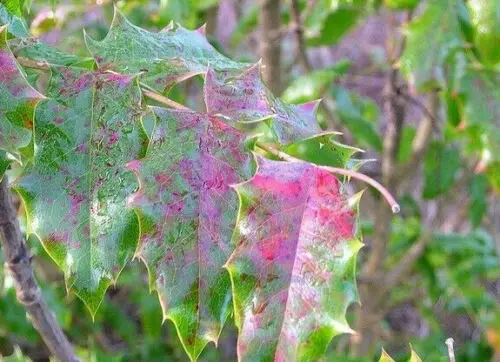
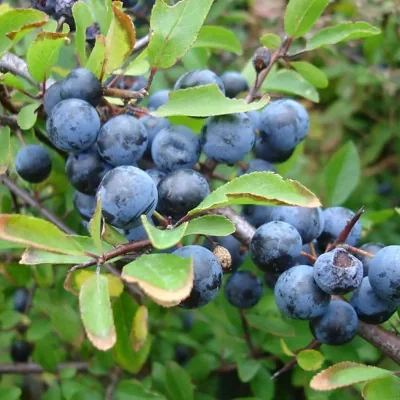
Yet beyond the medicine cabinet, Mahonia aquifolium is a garden jewel. In late winter to early spring, the shrub erupts in dense clusters of intensely fragrant, golden-yellow flowers that light up shade where few plants dare bloom—and these blooms attract early pollinators (bees, butterflies) when they need nectar most. By late summer, those flowers transform into striking dusty blue-purple berries with a waxy bloom, creating year-round visual interest. The foliage itself is architectural: compound, pinnate, spiny-leafed (hence the name ‘aquifolium’—holly-leaved), shifting from glossy dark green in summer through burgundy-bronze tones in winter. This evergreen structure means your garden never goes bare.
Growing Mahonia aquifolium is refreshingly straightforward—a major selling point for anyone seeking both healing and ease. It thrives in partial shade (mimicking its native woodland understory) but tolerates full sun with adequate water. The plant is adaptable to various soil types, even heavy clay, as long as drainage is present. Hardy in USDA zones 5–9, it handles both cold winters and warm summers. Water consistently but moderately; once established, it tolerates summer drought. The shrub rarely suffers from serious pests and diseases. Grow it as a specimen, hedge, ground cover, or woodland edge planting. It reaches 3–6 feet tall naturally but can grow taller in rich conditions. Remarkably low-maintenance, it asks little and gives much. Propagating from seed is feasible; seeds stratify naturally over winter and germinate in spring, though cuttings root readily too.
Imagine standing in your own garden, harvesting bark and roots from a plant you grew from seed—creating your own herbal preparations, tinctures, and skin remedies while surrounded by golden spring blooms and blue berries. This is Oregon grape: beauty, medicine, and resilience in one magnificent evergreen. Grow it.
Only logged in customers who have purchased this product may leave a review.
Reviews
There are no reviews yet.