Description
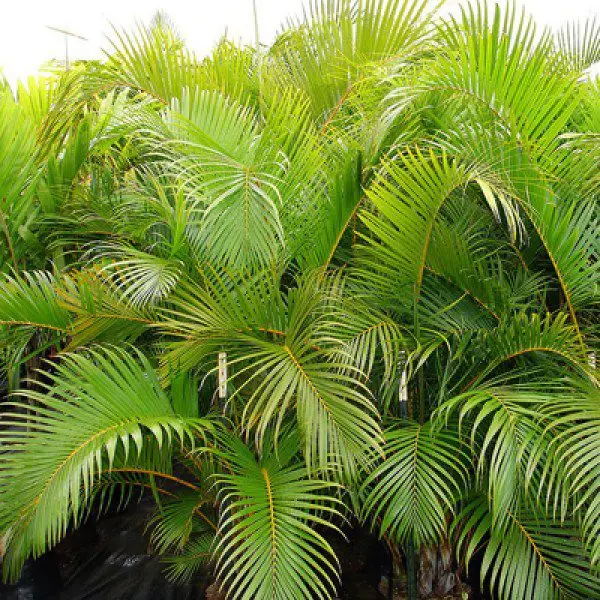
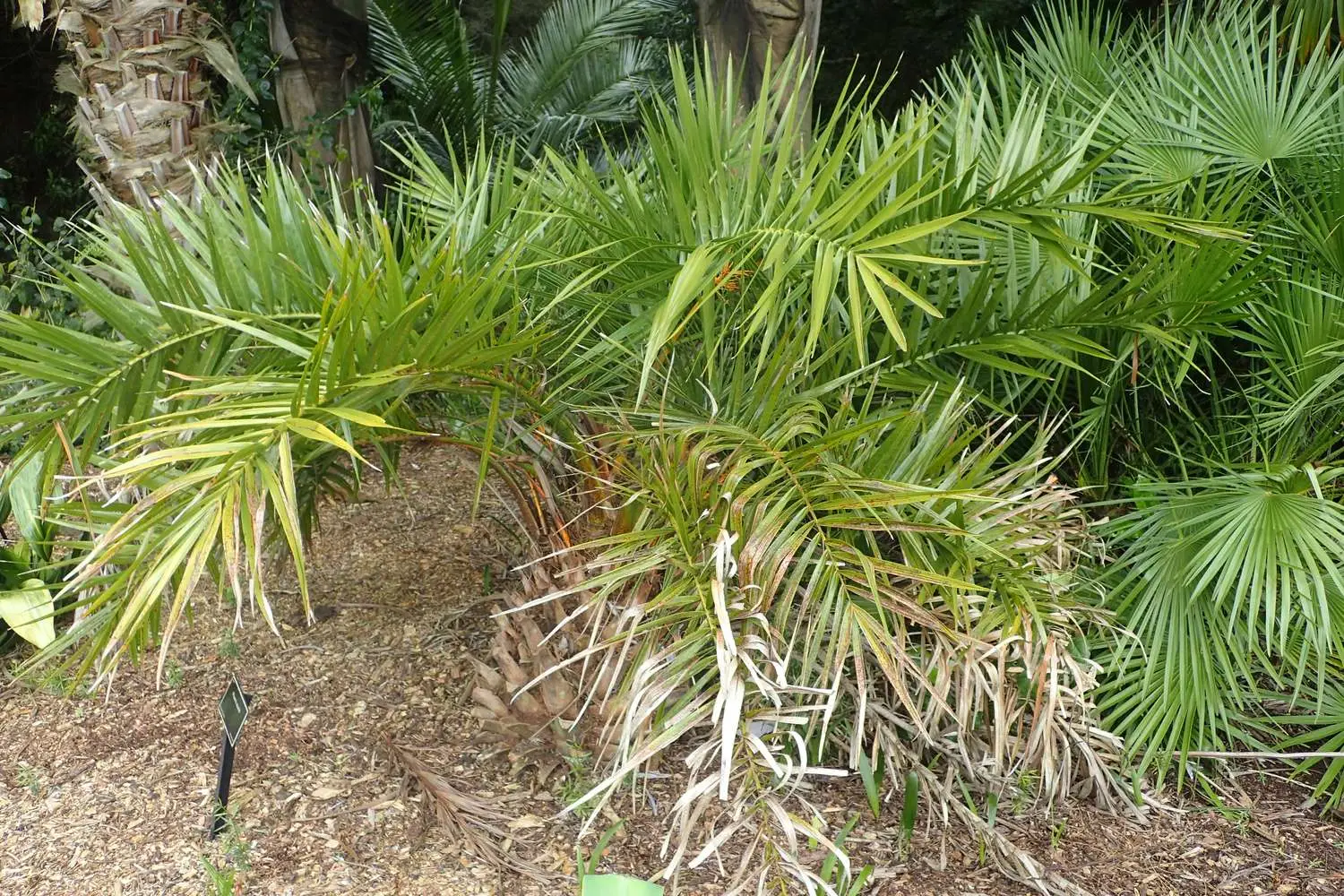
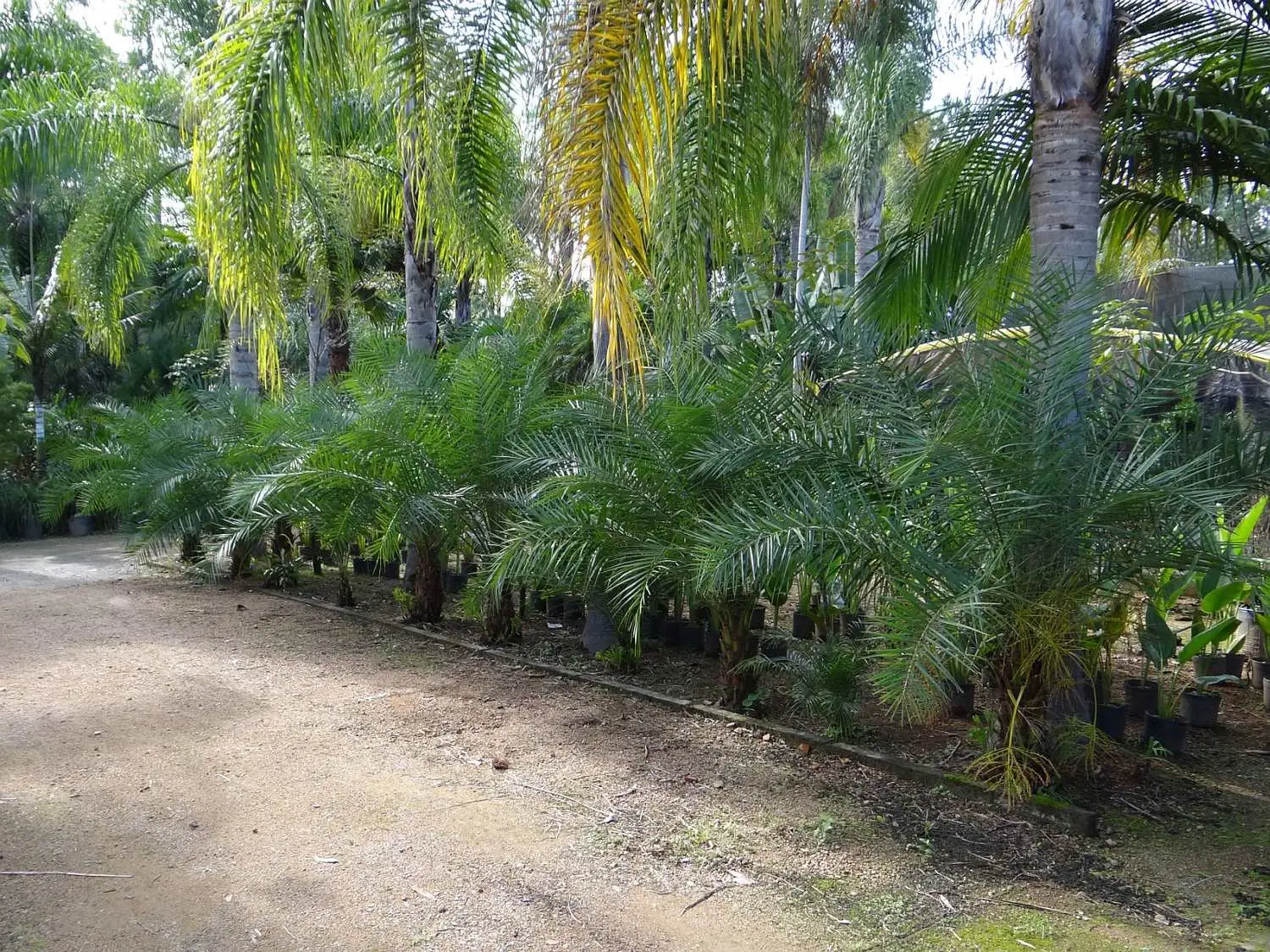
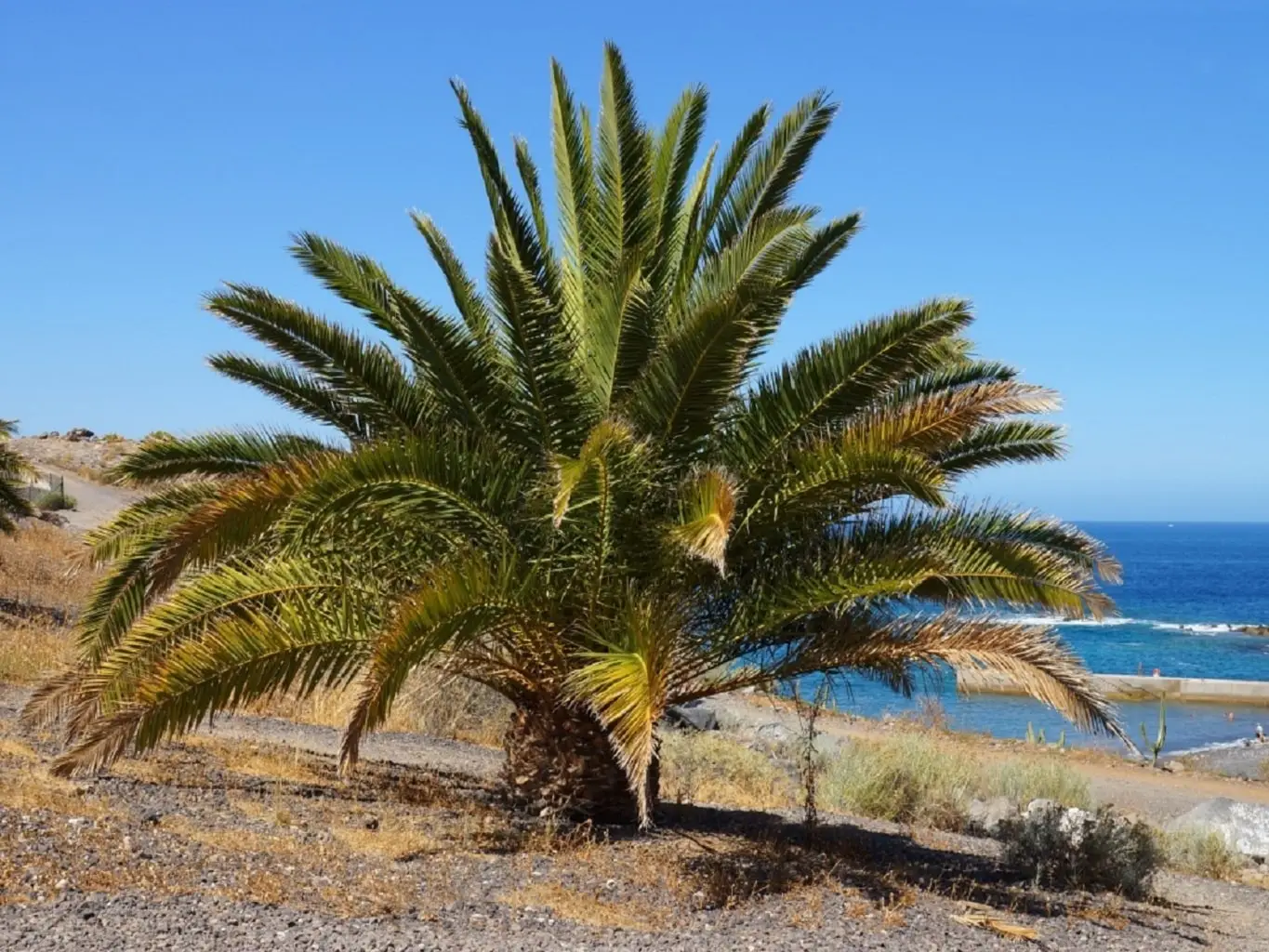
Phoenix acaulis, also known as dwarf date palm or stemless date palm, is a species of palm native to the Himalayan foothills of northern India, Bhutan, and Nepal. This palm is unique because it has a very short, bulbous stem that is usually located underground or barely above the surface, giving it a “stemless” appearance.
A slow-growing palm, P. acaulis grows as a cluster of stiff, gray-green leaves that can reach 1.5 meters in length. The leaves are pinnate, meaning they are feather-like, and have sharp spines at their base. The plant is dioecious, meaning male and female flowers grow on separate plants. The inconspicuous flowers are creamy white and emerge on short inflorescences at the base of the plant.
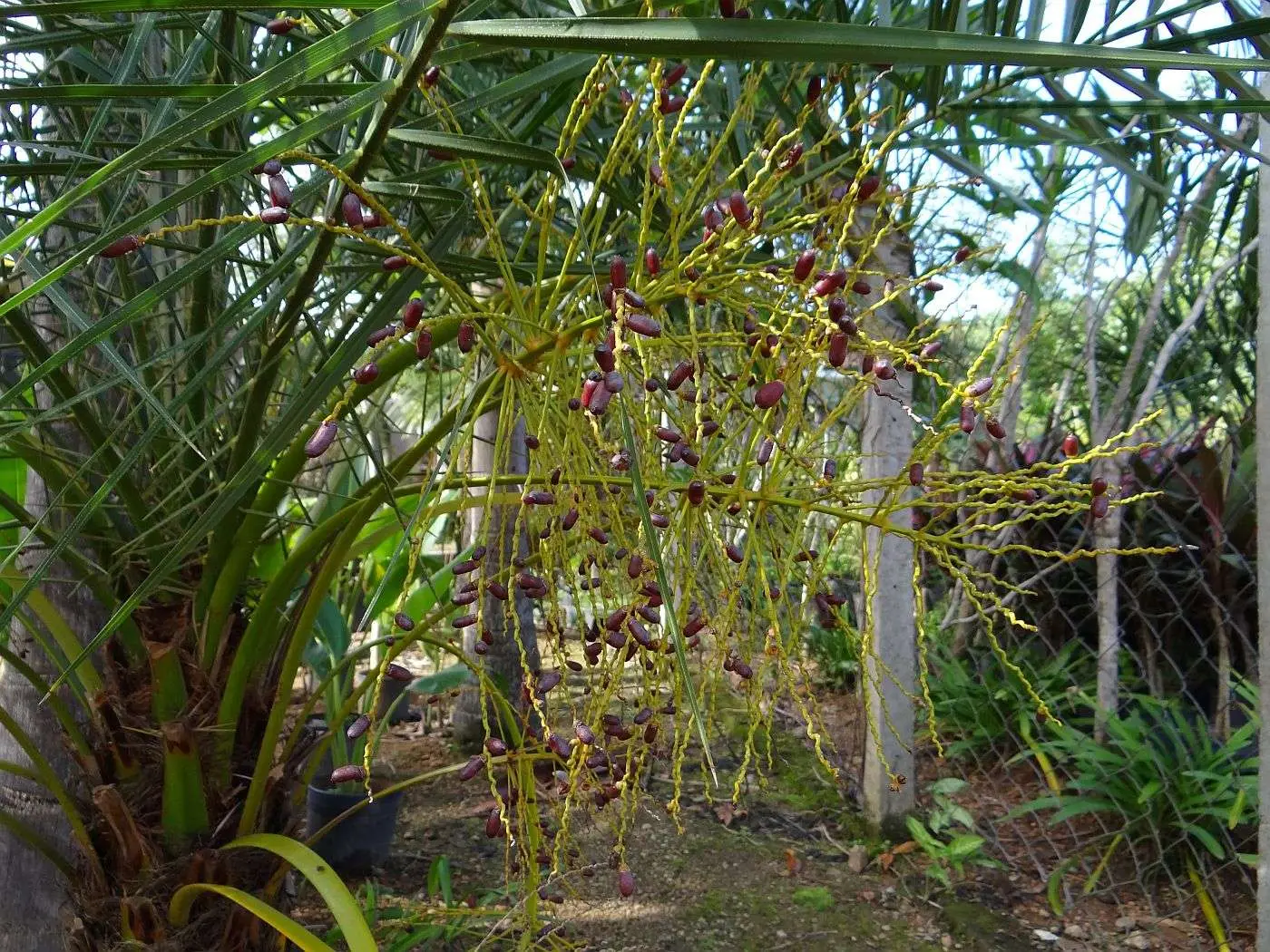
The fruit of the dwarf date palm is a small, obovoid drupe that is about 12-18 mm long. It ripens from green to a blue-black color. The fruit has a thin layer of flesh with a sweet flavor, but it is not very fleshy, more commonly consumed by animals. Inside, each fruit contains a single, large seed.
Germination Guide
🌍 Northern and central India, Nepal, Bhutan, Bangladesh
Easy
Phoenix acaulis is a stemless date palm native to the sub-Himalayan regions with excellent germination rates and rapid establishment when proper pre-treatment is applied.
Germination
Germination time
Expect germination in
14 – 28 days
Temperature
Min 21°C
Ideal 27°C
Max 27°C
Substrate moisture
💧 Medium
Sowing depth
Lightly covered
Seed Pre-treatment
-
💧
Soaking — 120 hours
Soaking seeds in water for 5 days or warm stratification at 27-40°C
-
🔨
Mechanical scarification
Scarification required to overcome seed coat dormancy
-
❄️
Warm stratification — 5 days at 32°C
-
📋
Additional notes
Warm stratification at 27-40°C or water soaking for 5 days achieves up to 100% germination rates
Substrate & Container
Recommended substrate
well-draining media
Growing Tips
Seeds have a hard endocarp requiring scarification. Maintain consistent moisture and warm temperatures around 27°C. Lag period about 24 days to first emergence and 24-37 days to reach 50% germination.
Only logged in customers who have purchased this product may leave a review.


Reviews
There are no reviews yet.