

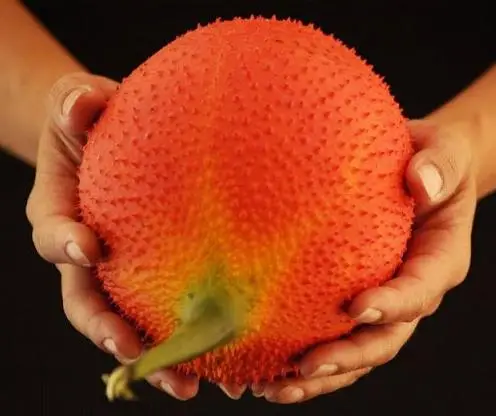
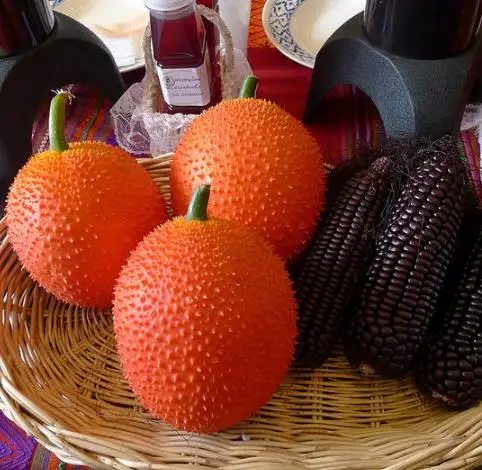
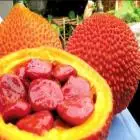
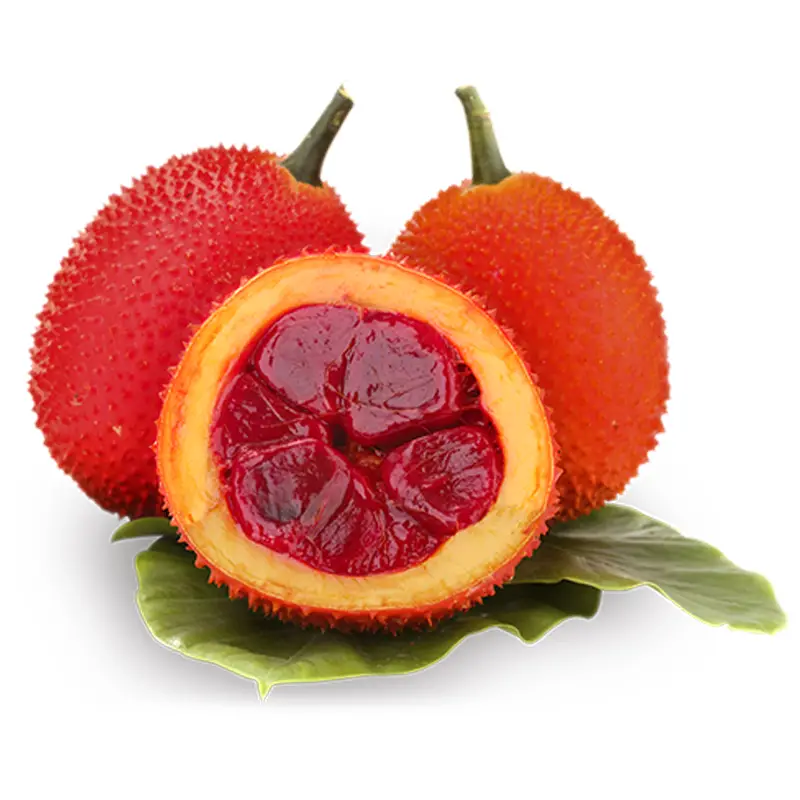
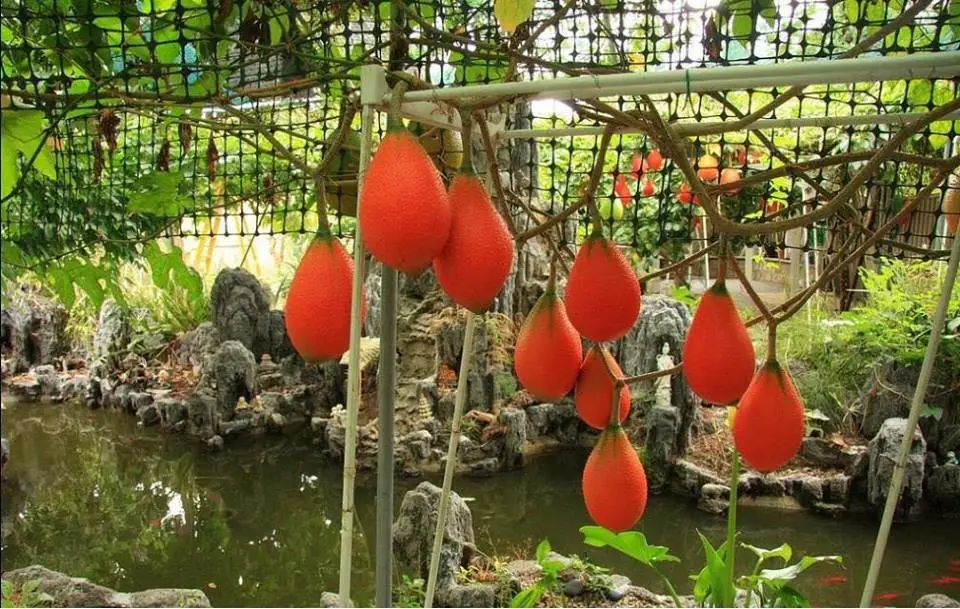
Botanical nomenclature: Momordica cochinchinensis
Common name: gak, mini jackfruit, baby jackfruit
Origin: Southeast Asia
Family: cucurbitaceae
€11.53
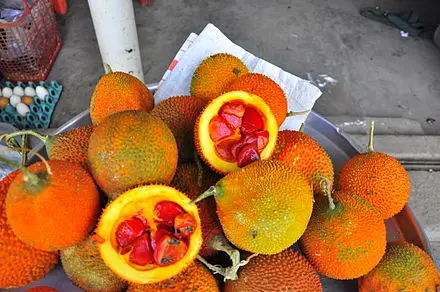
An extremely rare species in cultivation, gac is normally served only on ceremonial and festive occasions in Vietnam, such as tet (Vietnamese New Year) and weddings; in the preparation of a dish called “xoi gac” in which its pulp and seeds are cooked together with rice, providing it with color and flavor.
Recently, the West has given relative importance and interest because chemical analysis of the fruit suggests that it has concentrations of several important phytonutrients.
The fruit contains by far the highest beta-carotene (vitamin a) content of any other known fruit or vegetable.
Arguably, gak offers a source of antioxidant agents that has good bioavailability, and due to its high vitamin A and lycopene content, gak is often sold as a food supplement in capsules.
Comparatively, it contains up to 70 times the amount of lycopene found in tomatoes and about 10 times the amount of beta-carotene found in carrots or sweet potatoes.
There has also been recent research that suggests that gak contains a protein that can inhibit the proliferation of cancer cells.
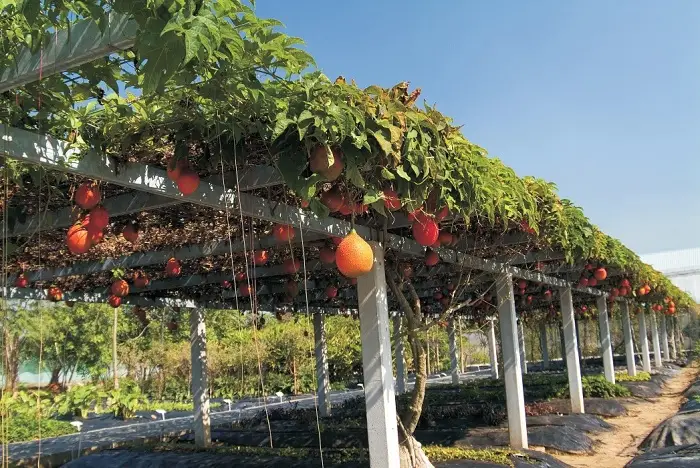
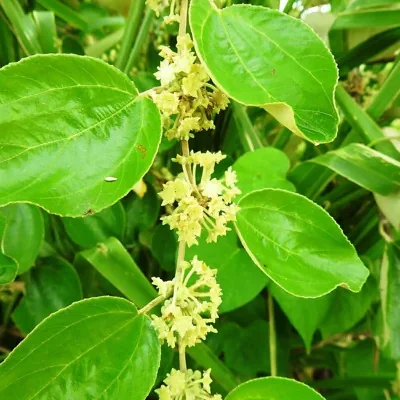
The species grows as a vine and is found at entrances to rural sites or in gardens, it bears fruit only once a year.
Traditionally it has been used in cooking and medicine in the regions where it is grown and more recently the fruit began to be marketed outside Asia.
A rare delicacy, source of health, of excellent and exotic flavor, promise of exceptional commercial value and that has been attracting enormous interest within the pharmaceutical industry and the extraordinary contribution that science has been making makes it even more attractive.
Female and male flowers are found on different plants, but we can also find both sexes on just one plant; it is also possible to artificially induce the production of parthenocarpic fruits (the ovary grows in them without the development of an embryo) through the application of plant hormones.
Harvesting the fruits usually starts 8 months after planting.
Only logged in customers who have purchased this product may leave a review.
Reviews
There are no reviews yet.