

Purple-blue tubular bells draped in silvery bracts that hum with bumblebees all summer long. One of the most reliable pollinator plants you can grow from seed, producing honey-flavored nectar that bees crave. Easy, rewarding, and self-sowing. Sow now; watch your garden transform into a living apiaries.
€3.13
Here’s the truth: if you want to fall in love with a plant that falls in love with bumblebees, Cerinthe major ‘Purpurascens’ is it.
This Mediterranean native—a showstopper from the open meadows of southern Italy and Greece—brings something rare to gardens: genuine ecological magic wrapped in ornamental beauty. The plant earned its ancient Greek name, Cerinthe, from *keros* (wax) and *anthos* (flower), because centuries ago gardeners believed bees harvested wax from its blooms. They were wrong about the wax, but not about the bees’ devotion.
**The Pollinator’s Paradise—Why You Really Grow This**
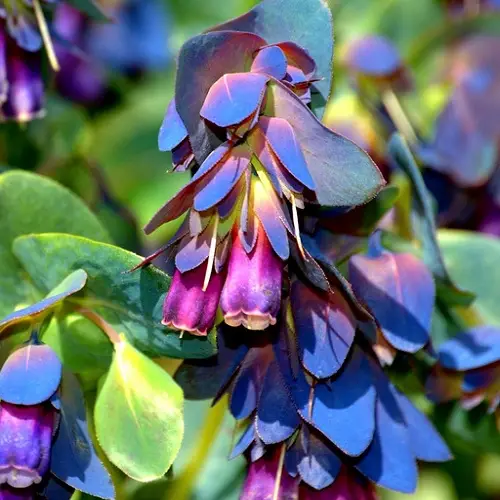
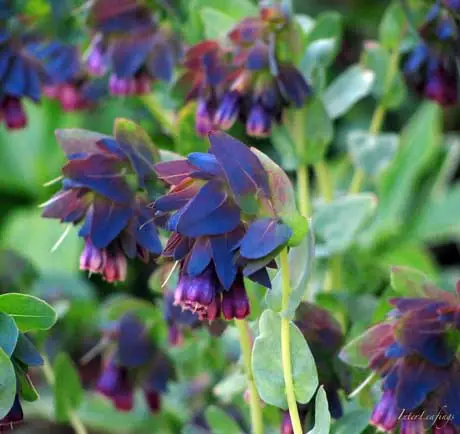
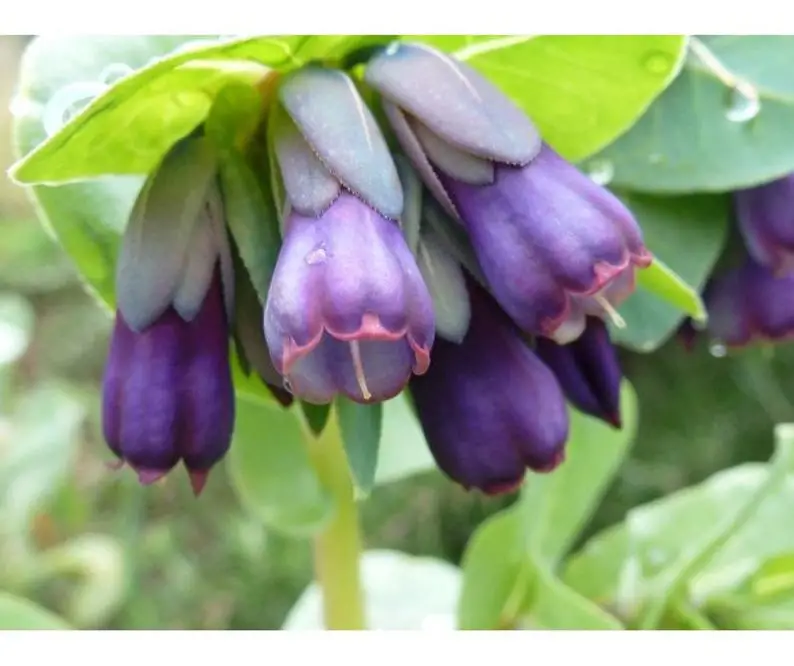
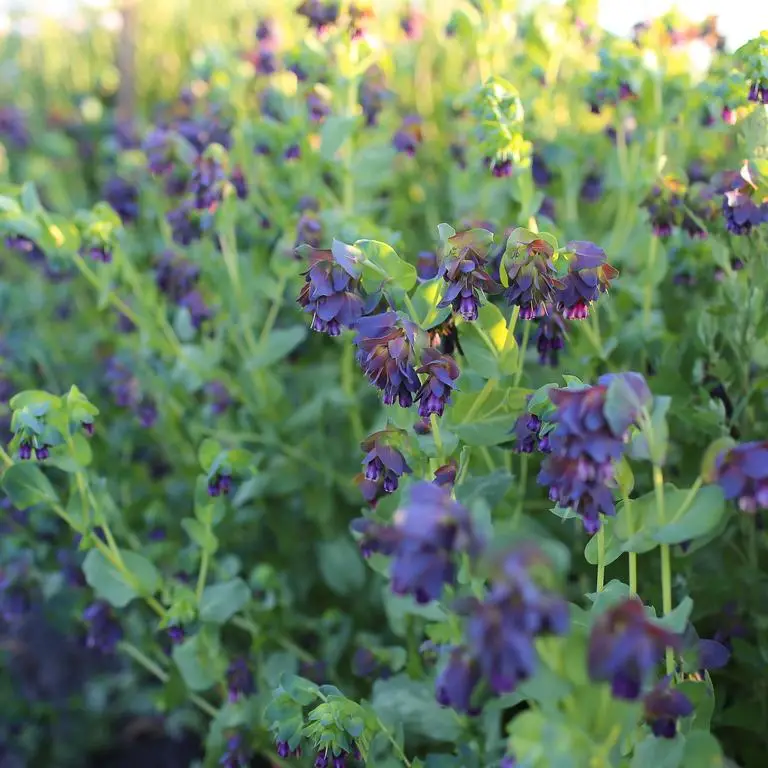
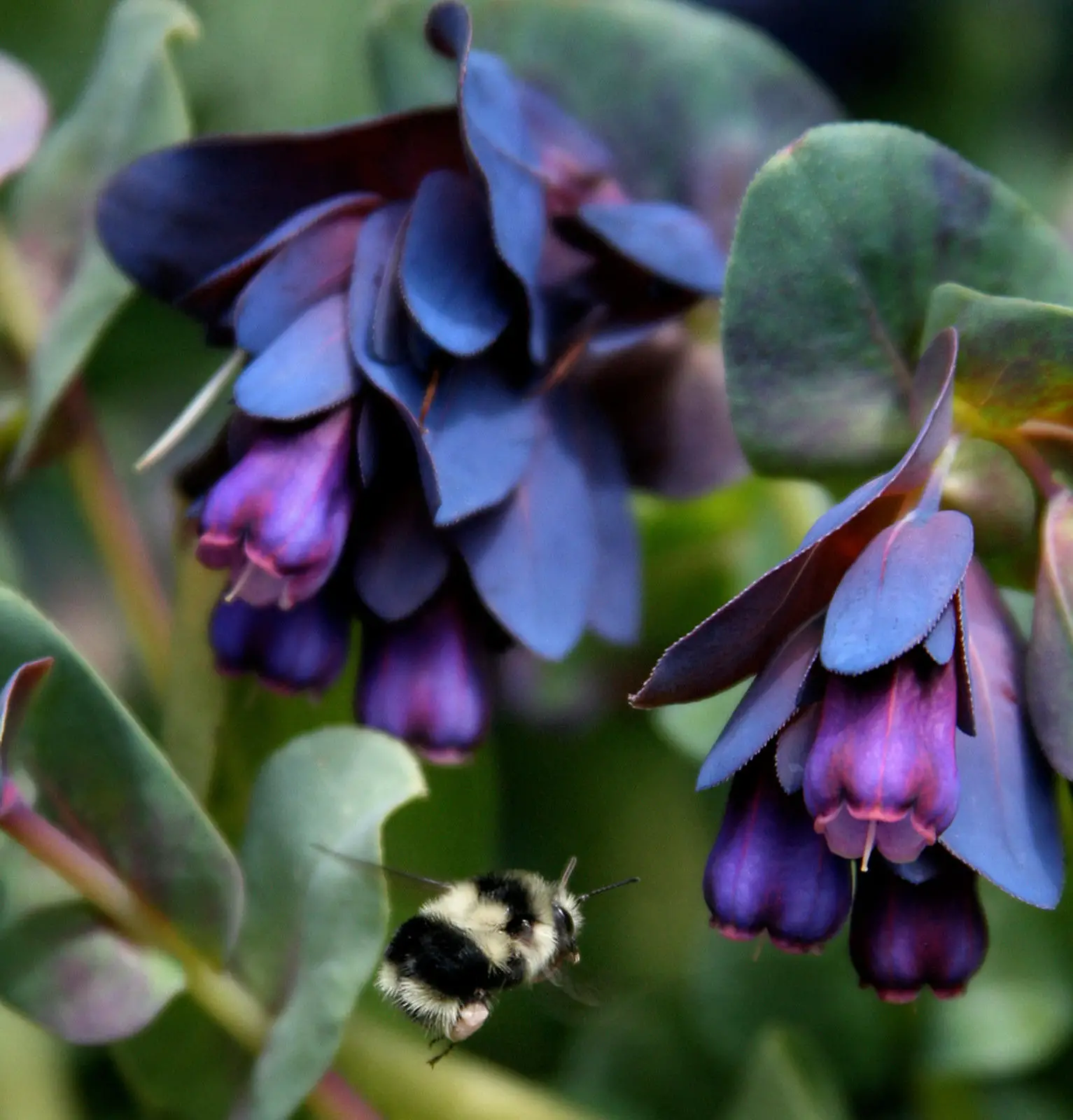
Forget ornamental annuals that look pretty but do nothing. Cerinthe major ‘Purpurascens’ is a nectar factory—one of the most reliable bee plants you can grow from seed. Watch a single flowering plant hum audibly with bumblebee activity throughout summer. The flowers produce honey-flavored nectar so abundant that bees return obsessively; it’s pure food-chain magic. The tubular purple-blue bells, clustered in groups of two or three and cradled by luminous sea-blue bracts, become hummingbird and butterfly magnets too. You’re not just growing flowers; you’re building a sanctuary. This is why RHS (Royal Horticultural Society) recognized it as Plants for Pollinators—because it actually works.
**What You’re Growing**
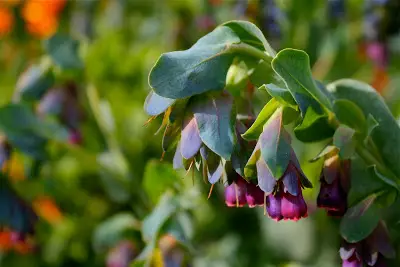
Cerinthe major ‘Purpurascens’ reaches 45–60 cm with thick, almost-succulent stems lined in blue-green foliage that deepens to violet-purple as temperatures drop—so the leaves themselves become ornamental. The flower clusters are dramatic: drooping tubular bells in rich purple-blue, partially hidden beneath leaf-like bracts of the same mesmerizing shade. Backlit by morning or evening sun, the bracts shift from cloudy purple to tawny copper and ruddy brown, a living color-changer that justifies container planting alone. The flowers bloom from spring through fall, and if you let them set seed, they’ll explode them across your garden next year (self-seeding, self-perpetuating, self-rewarding).
**How to Grow It (It’s Easier Than You Think)**
This is where Cerinthe major earns its reputation as a genuine beginner’s plant masquerading as something exotic. It thrives in full sun (at least six hours daily) and will tolerate light shade, though shade dulls the colors. Give it well-drained, moderate soil—poor to average is actually ideal, because rich soil encourages foliage at the expense of flowers. Water regularly once established, but avoid waterlogged soil; it despises soggy roots. Once settled in, it’s drought-tolerant, though consistent moisture yields fuller plants and more abundant blooms. It performs beautifully in containers, where the arching stems drape gracefully over the sides—in fact, this is one of its finest uses.
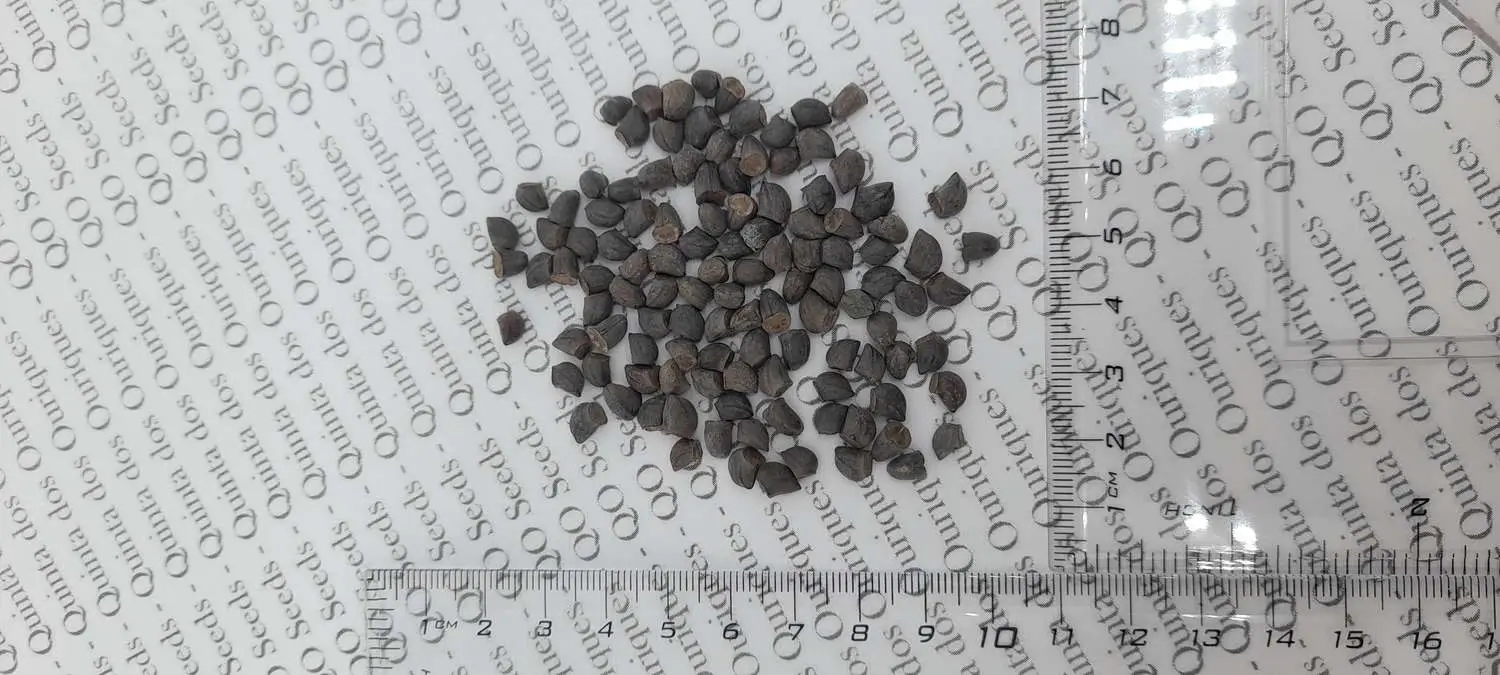
From seed, it’s refreshingly straightforward. Sow indoors 4–6 weeks before your last frost date in bright light and 18–20°C (65–70°F). The seeds are large and simple to handle; soaking them overnight speeds germination. Direct sow outdoors after frost danger passes. Space plants 30–45 cm apart. Deadhead spent flowers to encourage continuous bloom, or leave them to set seed for spontaneous returns. The plant is virtually pest and disease-free—a genuine low-input wonder.
**Your Invitation**
Grow Cerinthe major ‘Purpurascens’ from seed and you’ll understand why medieval gardeners planted it in pleasure gardens and why modern gardeners—especially those who believe gardens should feed wildlife—return to it year after year. It’s not just beautiful; it’s purposeful. It’s not just easy; it’s deeply rewarding. Start the seeds this spring. By summer, your garden will hum with grateful bumblebees, and you’ll have grown something that matters.
Only logged in customers who have purchased this product may leave a review.

Reviews
There are no reviews yet.