
Botanical Name: Acca sellowiana
Common Names: feijoa, pineapple guava, guavasteen, Goyavier du Brésil, Brasilianische Guave, Ananas-Guave, guayabo, guayabo del país, guayaba, guayabo del Brasil, goiaba serrana, goiaba ananás, Orthostemon sellowianus
Family: Myrtaceae
Genus: Feijoa sellowiana or Acca sellowiana
Species: F. sellowiana
Origin: highlands of southern Brazil, eastern Paraguay, Uruguay, northern Argentina and Colombia
Sun: Sun to Partial Shade
€1.92
The feijoa is a slow-growing, multistemmed evergreen shrub. It can be trained to a small tree with a single trunk, espaliered, or pruned to form a dense hedge or screen. Without any pruning, the shrub may reach 4.6 m (15 ft) high and 4.6 m (15 ft) across.
Mature Height: 2.4 to 3 m (8 – 10 ft)
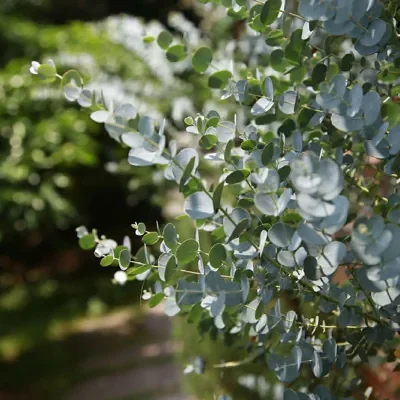
Foliage: The egg-shaped leaves are 2-3 in (5-7.6 cm) long and silvery underneath. Evergreen, with Blue-Green colour
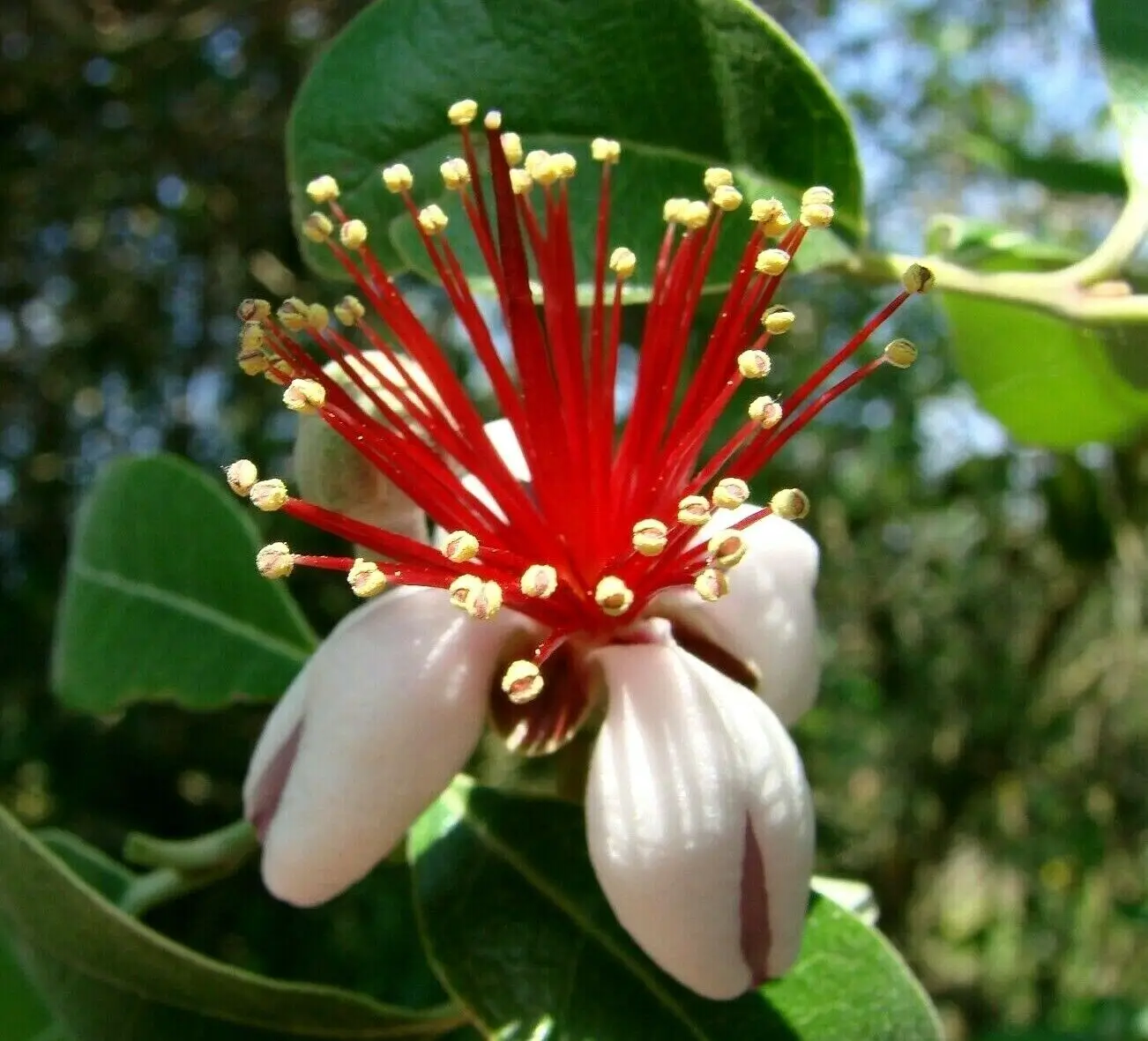
Flowers: The unusual flowers are edible and very attractive and are sometimes seen gracing salads in fancy restaurants. They are about 1 in (2.5 cm) across with fleshy white petals, showy scarlet stamens and borne on the current year’s growth.
Bloom Time: Late Spring/Early Summer
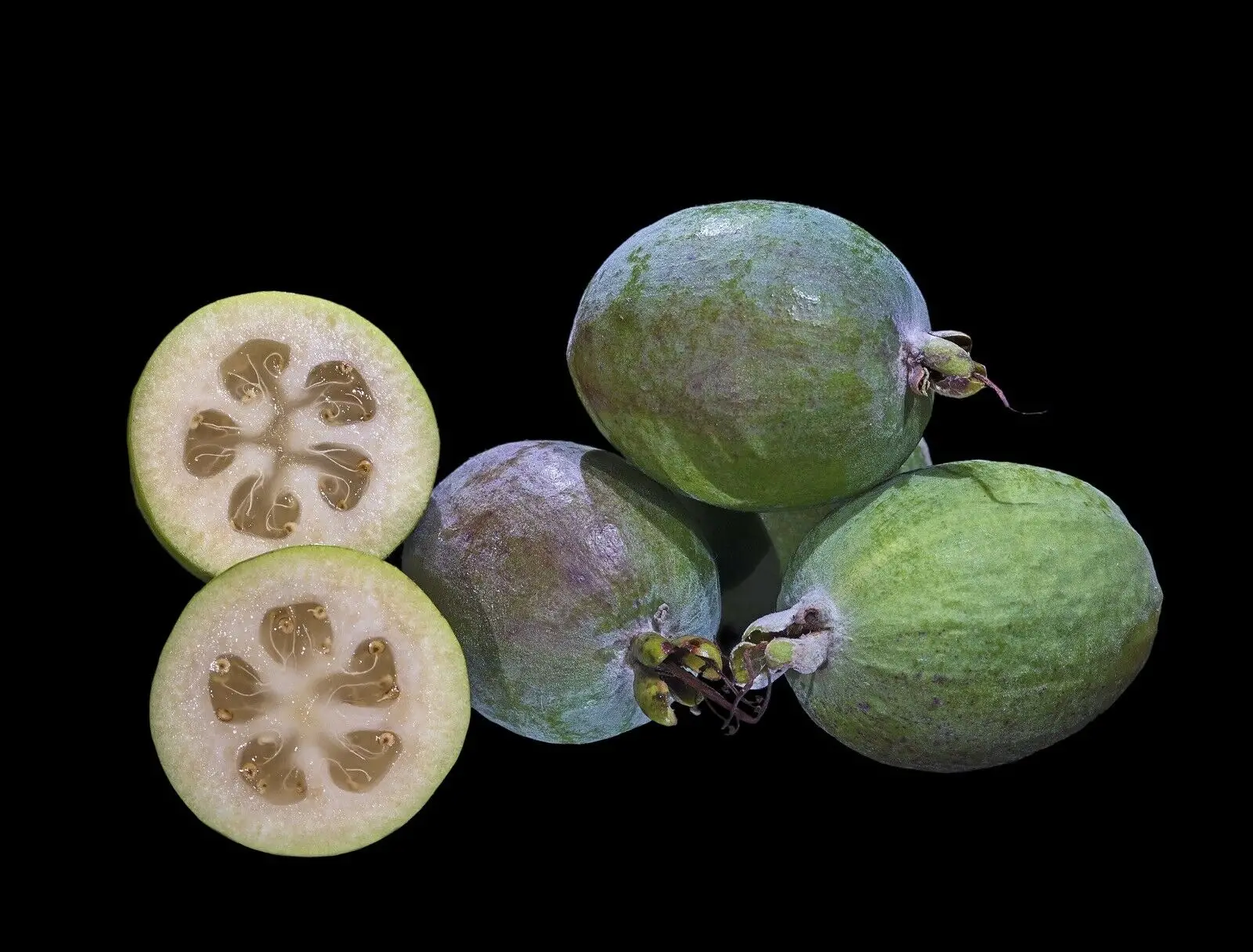
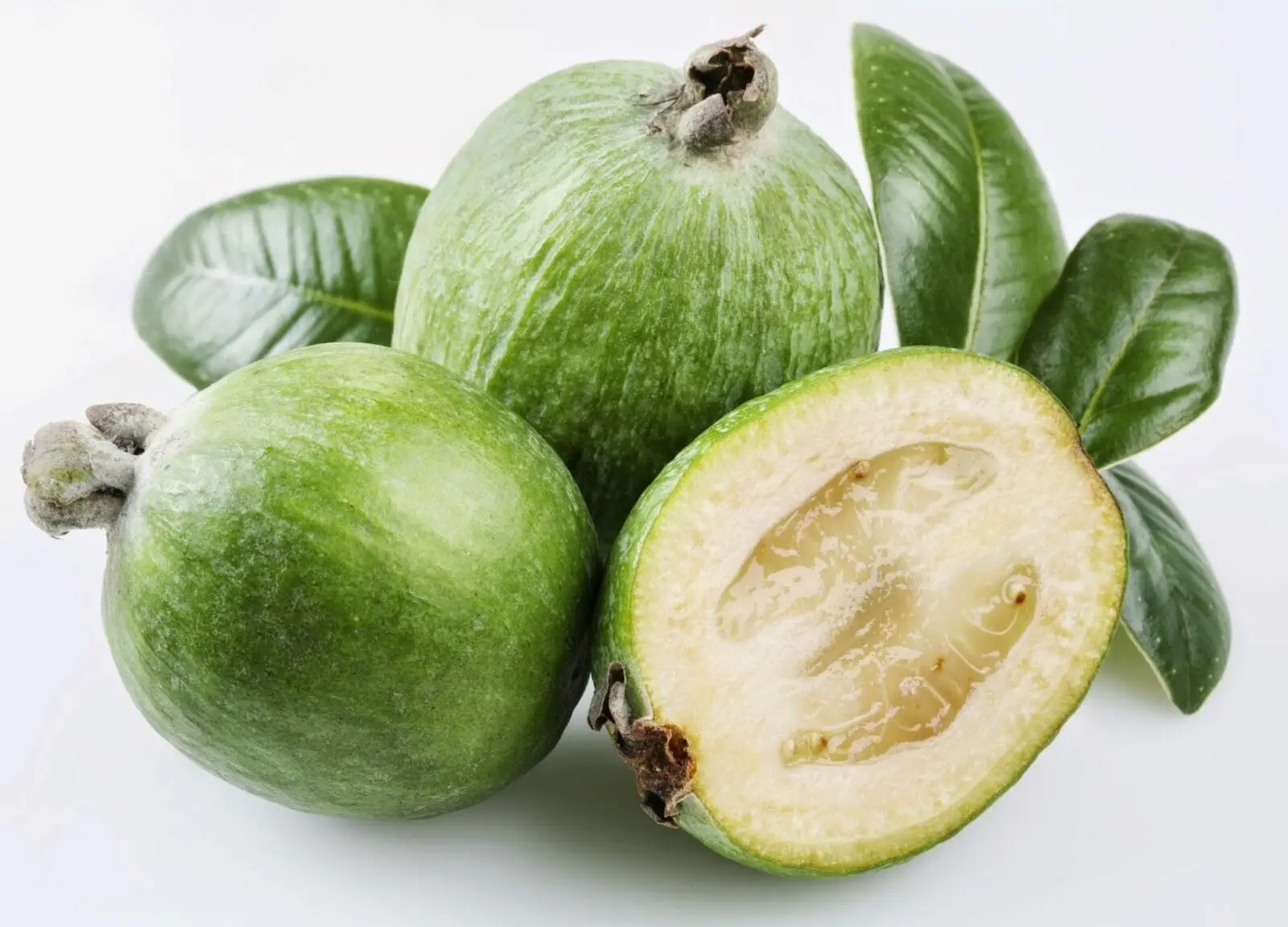
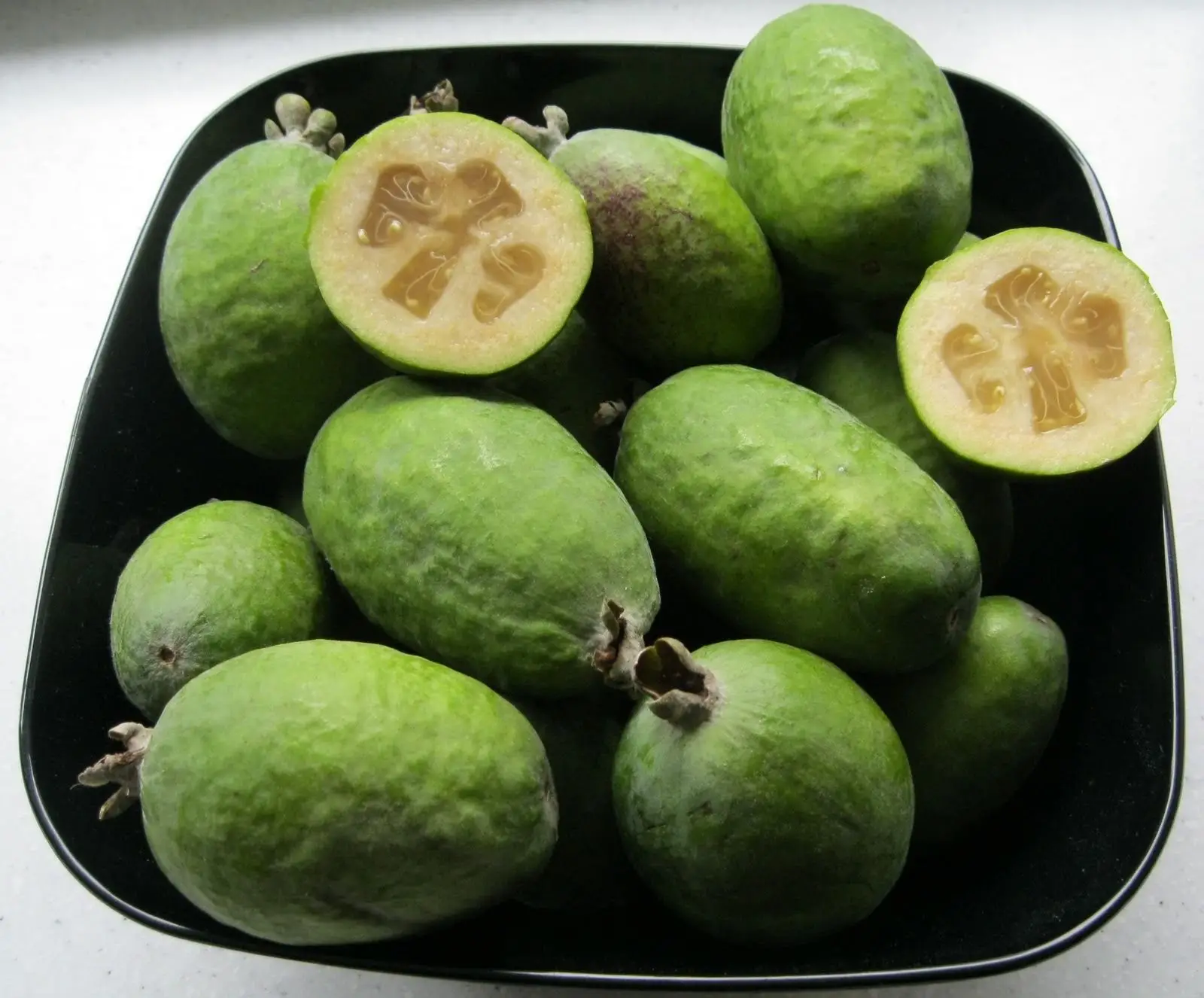
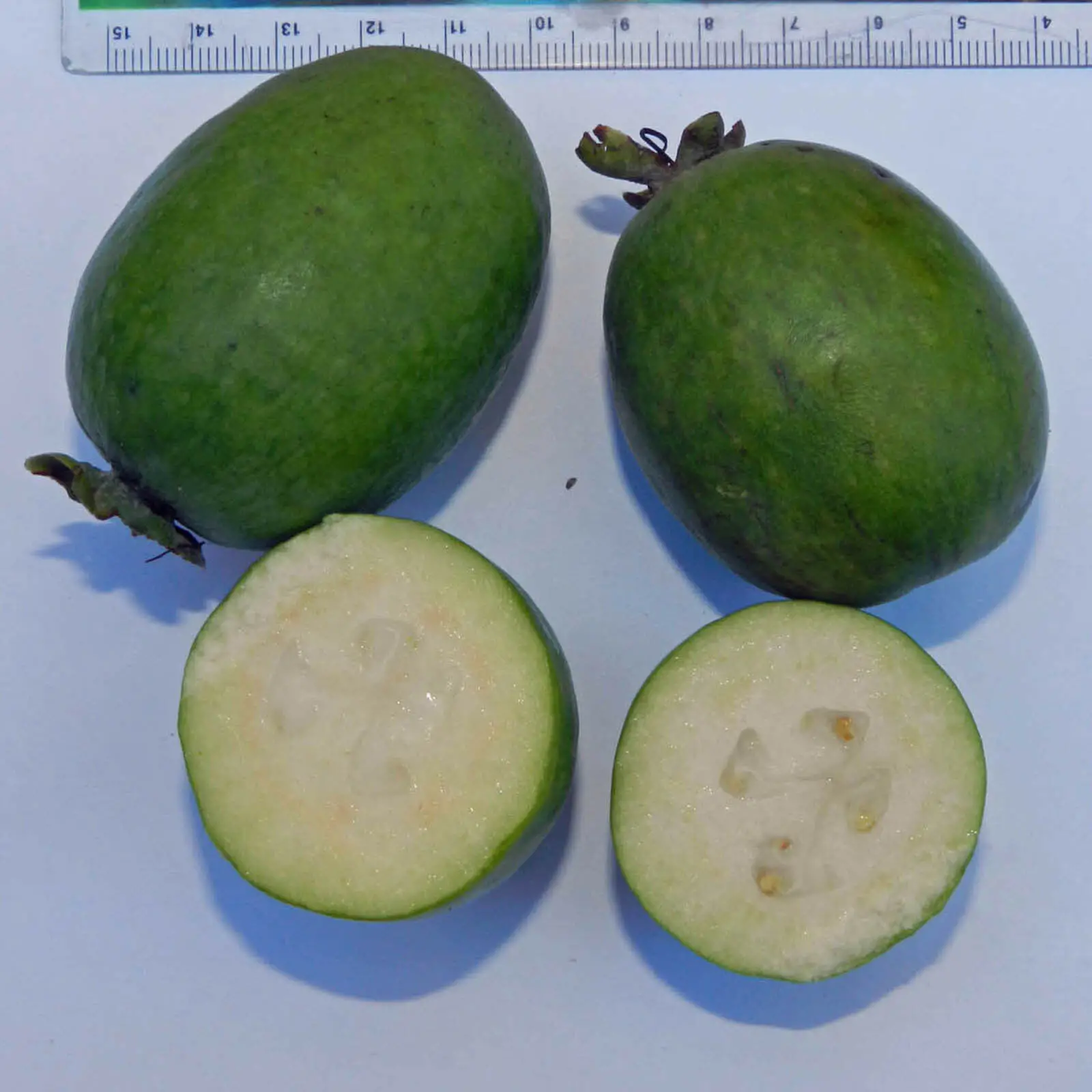
Fruit Description: The fruit, maturing in autumn, is green, ellipsoid, and about the size of a chicken egg, up to 8 cm (3 in) long. It has a sweet, aromatic flavor. The flesh is juicy and is divided into a clear gelatinous seed pulp and a firmer, slightly granular, opaque flesh nearer the skin. The fruit falls to the ground when ripe and at its fullest flavor, but it may be picked from the tree prior to falling to prevent bruising. It requires at least 50 hours of winter chilling to fruit, is frost-tolerant. The fruit usually is eaten by cutting it in half, then scooping out the pulp with a spoon..
Usage: Widely cultivated as a garden plant and fruiting tree. The feijoa pulp is used in some natural cosmetic products as an exfoliant. Feijoa fruit has a distinctive, potent smell that resembles fine perfume. A feijoa may be used as an interesting addition to a fruit smoothie, and may be used to make wine or cider and feijoa-infused vodka. The flavour is aromatic, very strong and complex, inviting comparison with guava, strawberry, pineapple, and often containing a faint wintergreen-like aftertaste. It also may be cooked and used in dishes where one would use stewed fruit. It is a popular ingredient in chutney. The very strong, complex flavour can make using feijoas, in combination with other fruits or vegetables, a creative and complex undertaking.
Aditional information: This plant is attractive to bees, butterflies and/or birds. Feijoas are somewhat tolerant of drought and salt in soils, though fruit production can be adversely affected.
Only logged in customers who have purchased this product may leave a review.

Reviews
There are no reviews yet.