


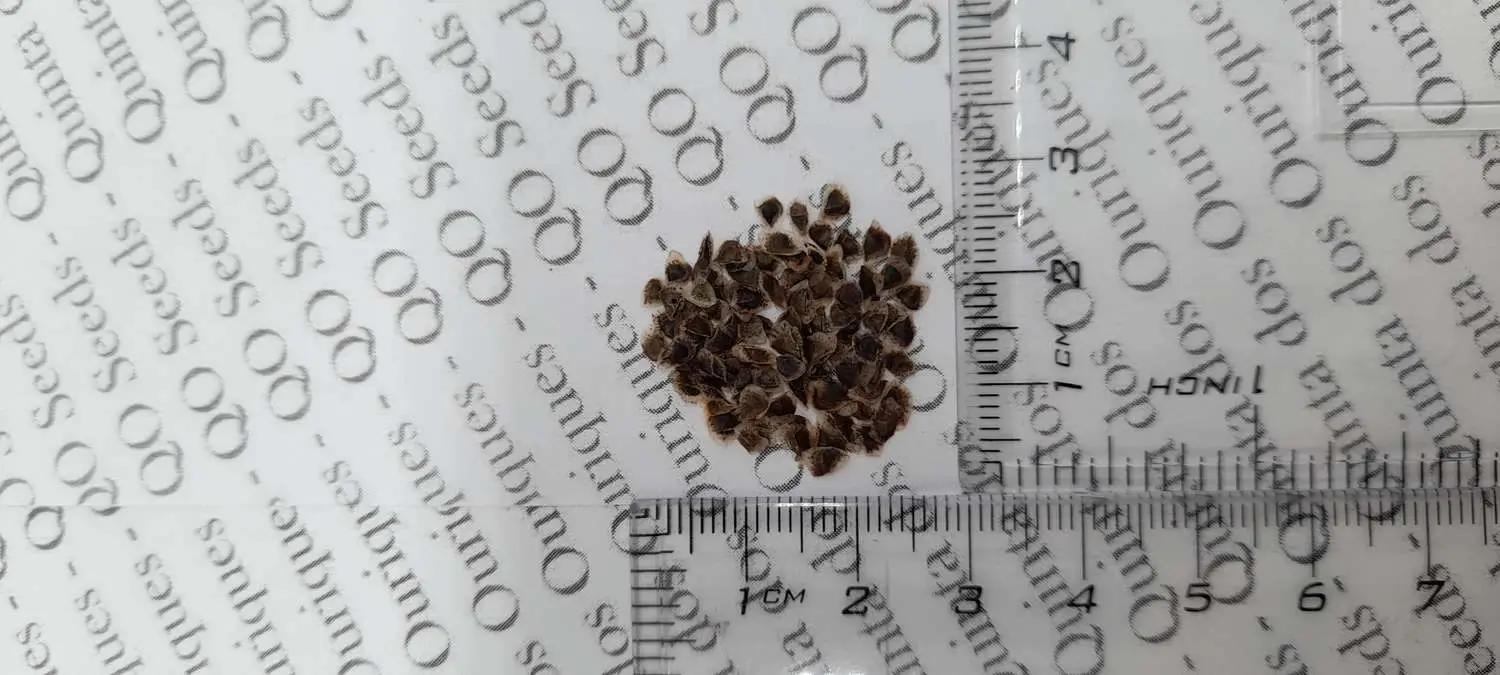
Witness the raw sculptural beauty of Africa’s most dramatic aloe. Striped pale-green leaves flame to deep copper-red under stress, crowned by vivid yellow flowers. This desert survivor thrives in pots with minimal water—the ultimate tough, show-stopping succulent. Grow from seed and nurse your own piece of the Orange River’s legacy.
€2.33
This is not just another succulent. Aloe gariepensis is a living artwork born from one of Earth’s harshest wildernesses, a plant that transforms before your eyes and demands respectful attention from those who cultivate it.
Native to the arid regions of South Africa and Namibia, restricted to the lower reaches of the Gariep River (also known as the Orange River), this aloe carves out its existence on steep rocky slopes and crevices, sometimes in desolate and barren conditions void of other perennials. The specific name gariepensis refers to the natural home of the species, the Gariep River Valley—a name that whispers of ancient resistance and botanical tenacity.
The visual spectacle is what sets Aloe gariepensis apart. The leaves are characteristically striped due to numerous longitudinal lines, usually with copious spots on young plants and some spots remaining on the upper surface in mature plants. But here’s the magic: in stressed times (cold, drought), the plant can become a fire red in colouration. Watch your pale green rosette ignite into deep crimson and copper as seasons shift—a living thermometer of your plant’s survival art. The margins bristle with reddish-brown triangular teeth, lending an almost predatory elegance. The flowers are usually yellow, 16-27 mm long, blooming in mid-winter to early spring, with striking yellow flowers considered a symbol of resilience and hope in the harsh desert landscape.
Aloe gariepensis carries deep cultural and medicinal significance. While not as widely recognized for medicinal properties as Aloe vera, it holds a place in the ethnobotanical traditions of communities living along the Orange River in Namibia and South Africa. The fleshy leaves are sometimes used topically to soothe minor burns and skin irritations, and the leaf sap, though somewhat bitter, is occasionally consumed as a traditional remedy for digestive ailments. As with other aloes, the yellow bitter sap in the leaves can be used as a laxative and to heal wounds. Growing this plant connects you to centuries of traditional knowledge and a lineage of desert healers.
Cultivation requires honesty: Aloe gariepensis struggles away from its natural home and needs hot weather to be grown successfully. But here’s the key—far better success is reached when plants are grown in pots, allowing more control over the conditions. The key to success lies in providing well-draining soil, ample sunlight, and infrequent watering—a mixture of coarse sand, perlite, and loam creates an ideal growing medium, ensuring excess water doesn’t accumulate around the roots. For optimal flowering, plant in full sun; raised rock gardens that allow good drainage are the best situations. These succulents need regular watering but are very tolerant of drought; water deeply, but only when the soil is dry. Growing from seed is best achieved through slow integration into the garden or containers, with seeds sown as fresh as possible. This is not a casual houseplant for forgetful waterers—it’s a commitment plant, a meditation in discipline, a reward for those who understand desert logic.
Start from seed and witness the entire journey: from germination through the years of sculptural refinement, the colour-shifts, the ultimate flowering. You’re not just growing a succulent—you’re nurturing a piece of the Orange River’s story, a plant that survived millennia of droughts to reach your garden. This is botanical theatre. This is earned beauty.
Only logged in customers who have purchased this product may leave a review.

Reviews
There are no reviews yet.