
The sacred ‘Wood of the Gods’ yields precious essential oil valued for centuries in aromatherapy and wellness. Distill your own aromatic treasure from heartwood rich in therapeutic properties—anti-inflammatory, antimicrobial, deeply calming. A majestic ornamental too, with graceful weeping branches and silvery-blue needles. Moderate to fast growth. Grow from seed and claim this living pharmacy.
Imagine tending a tree revered since ancient times as the ‘Wood of the Gods’—because that’s exactly what Cedrus deodara is.
Native to the high-altitude peaks of the Western Himalayas—from Kashmir through Afghanistan and into the sacred mountains of Tibet and Nepal—the deodar cedar carries millennia of reverence. Throughout history, the cedrus deodara has been revered in its region of origin for its majestic bearing, being associated with longevity, strength and spirituality. Its very name comes from Sanskrit: deva (god) + daru (wood). Grow this legend in your own garden.
What makes Cedrus deodara irresistible is its essential oil—liquid gold harvested from the fragrant heartwood. The trees are known for the fragrant essential oil they produce (distilled from wood chips and sawdust), which is used throughout Northeast Asia to protect livestock from mosquitos, gnats and other airborne pests and it also has anti-fungal properties. But wellness goes far deeper. Deodar Cedar’s essential oil is traditionally used to support respiratory health, relieve muscle tension, and promote relaxation. The oil contains anti-fungal, anti-inflammatory, astringent, diaphoretic, diuretic, sedative and expectorant properties. This is not just a tree—it’s a living source of therapeutic richness. In Ayurvedic medicine for millennia, heartwood, bark, and essential oil have been extensively used in Ayurvedic formulations for managing inflammation, pain, infections, and metabolic imbalances. Modern research backs these traditions: scientific studies highlight Devdaru’s anti-inflammatory, antimicrobial, analgesic, antioxidant, and immunomodulatory activities. The wood’s warm, woody fragrance is beloved in aromatherapy and premium cosmetics, soaps, and perfumery.
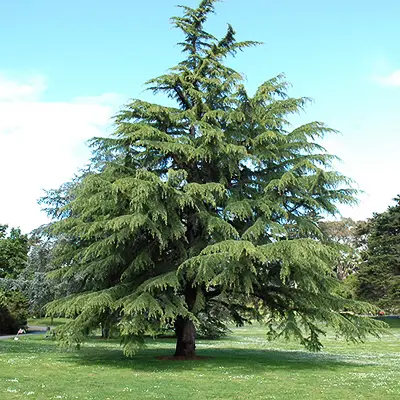
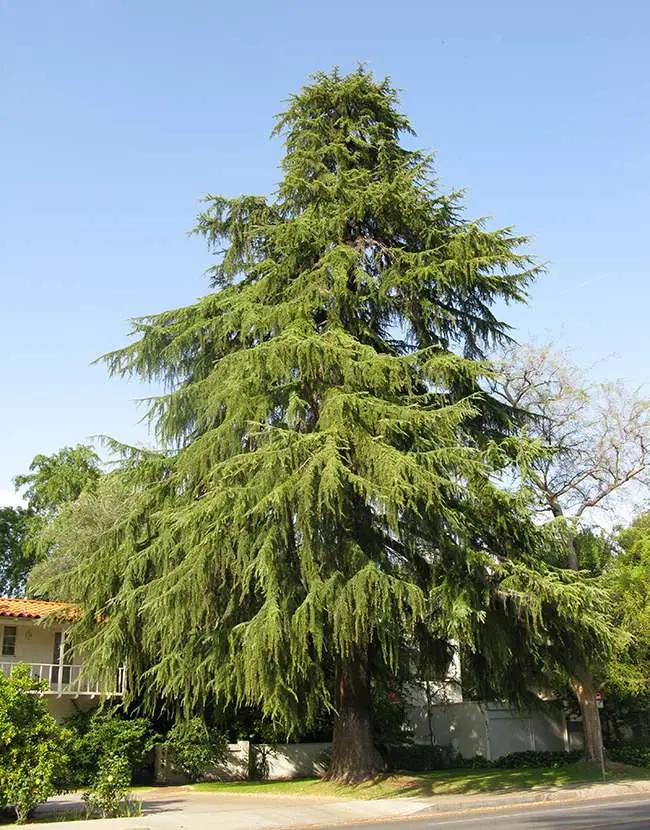
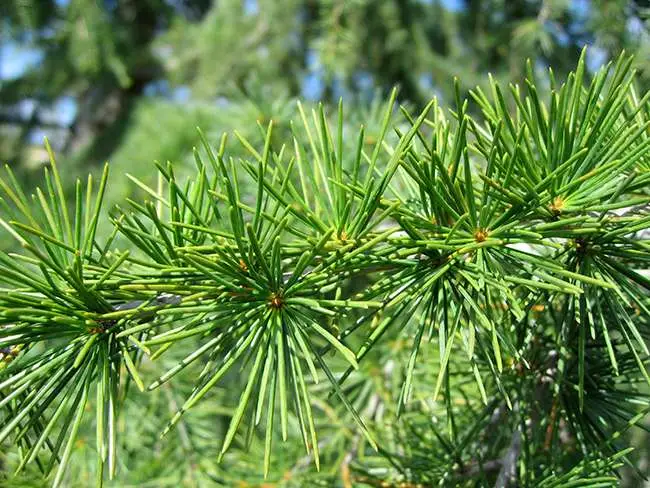
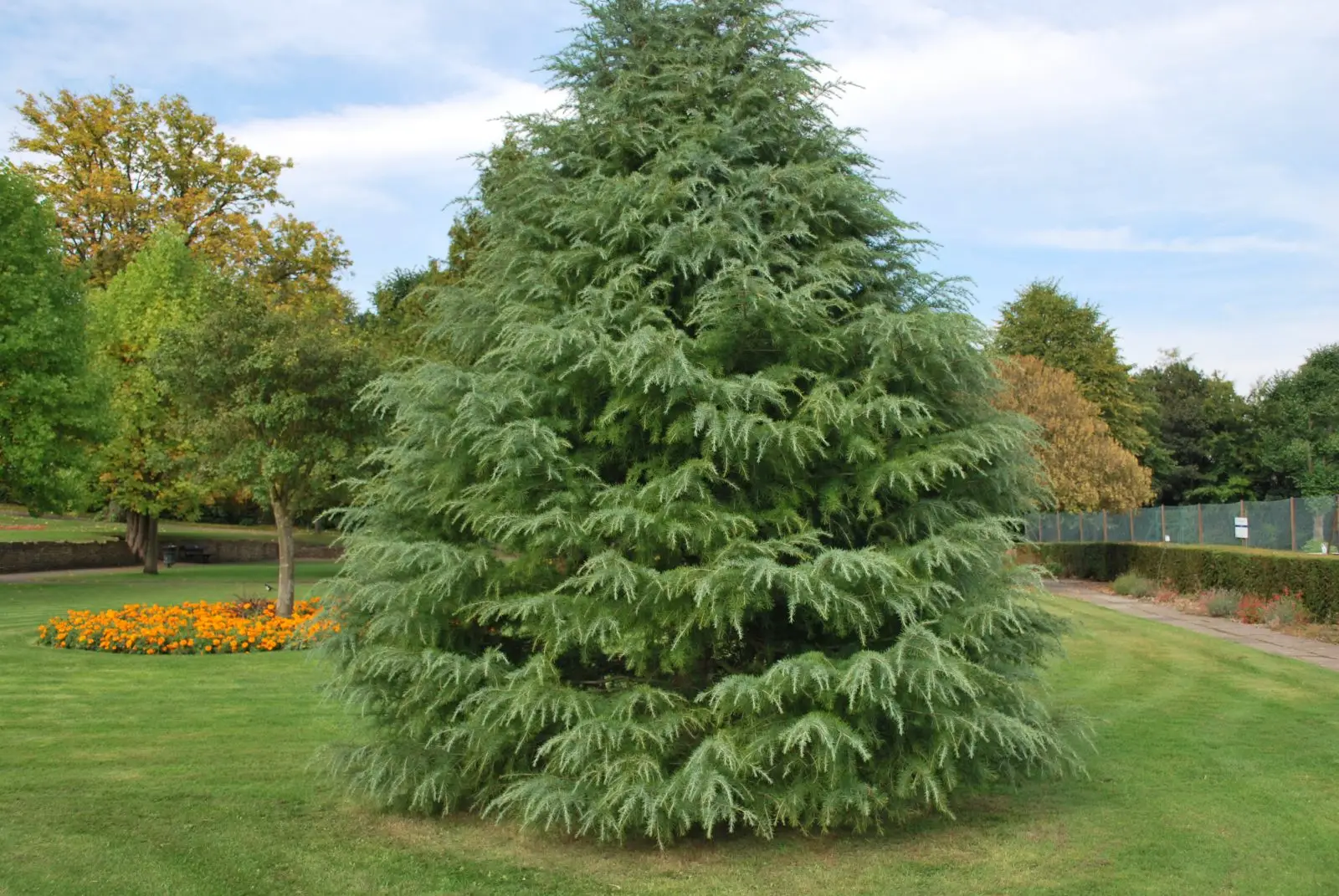
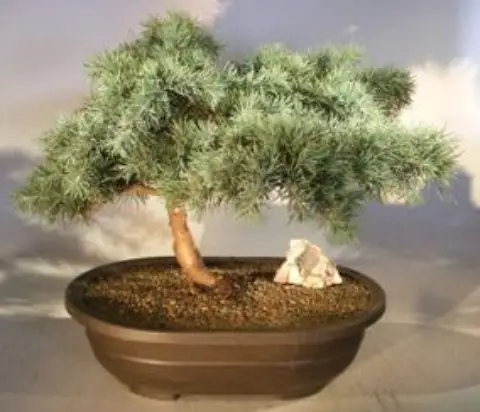
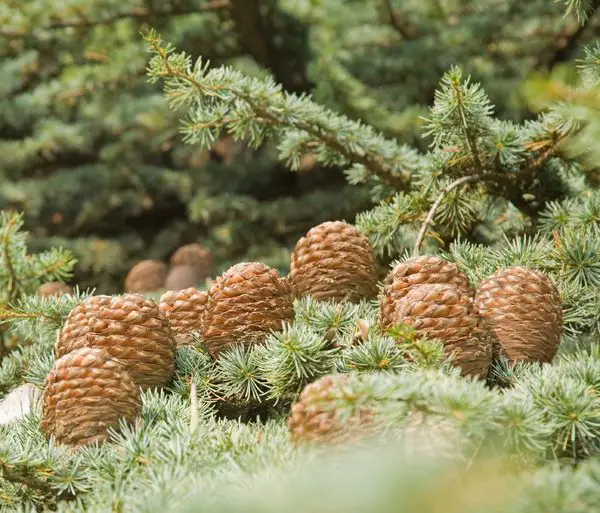
Growing Cedrus deodara rewards your patience with a moderate to fast-growing evergreen of breathtaking beauty. The tree develops a decorative crown shape that is at first broad and pyramidal; needles are slightly curved, dark blue-green and longer than other Cedar species. Branches are pendulous, giving the tree a slightly weeping appearance. Growing at a moderate rate of 13 inches to 24 inches per year, this tree typically reaches heights of 50 feet—though in its native Himalayas it reaches giants of 200 feet. Plant it in a rich, well-drained and somewhat dry, sunny location with protection from winds. It is intolerant of poorly drained wet soils and can be easily damaged by frost. Young saplings need shelter and sun; once established, the tree is drought tolerant, but young trees should be protected from prolonged drought, extreme heat, and poorly drained wet soils. Cedrus deodara does not thrive well in high-pH soils—give it acidic to neutral earth. This is a tree that demands respect for its needs but repays you with centuries of majesty and medicinal bounty.
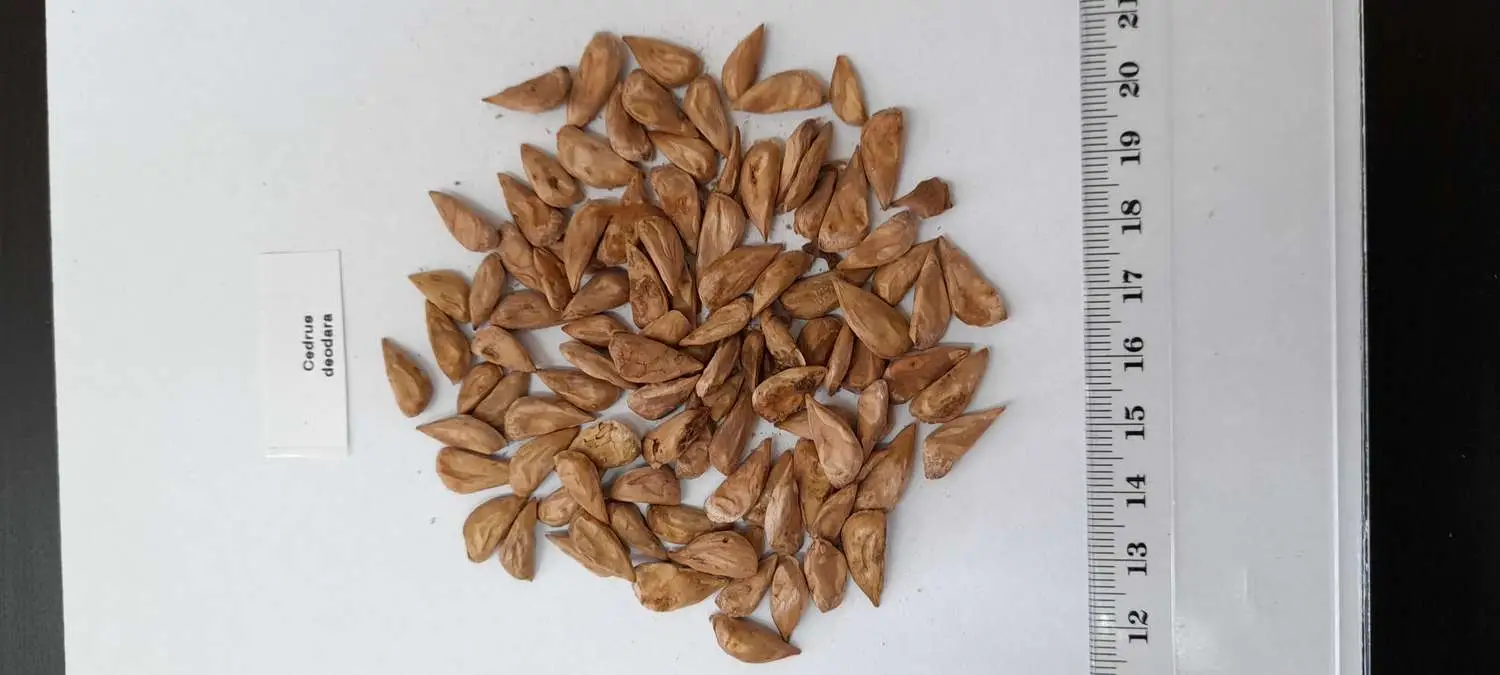
Start from seed and experience the miracle of growing your own source of liquid medicine. In ten to fifteen years, you’ll have a specimen majestic enough to anchor your landscape—and fragrant enough to transform it into a sanctuary of calm and healing. This is not merely gardening; it’s cultivating legacy. The ‘Wood of the Gods’ awaits.
Only logged in customers who have purchased this product may leave a review.


Reviews
There are no reviews yet.