
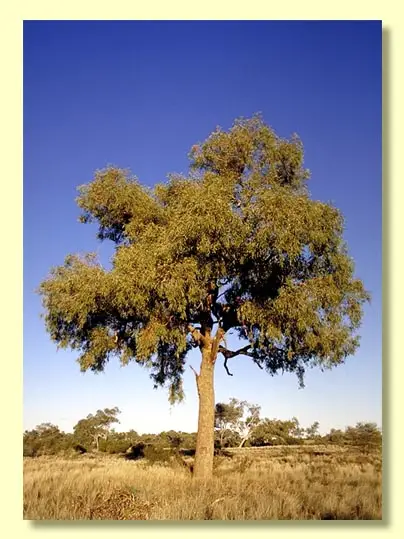
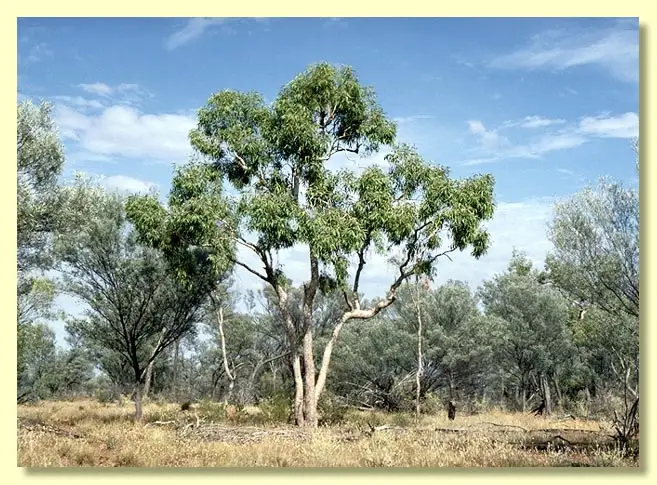
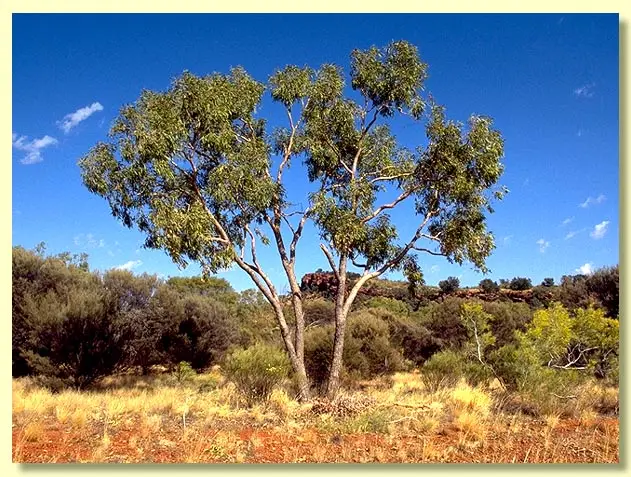
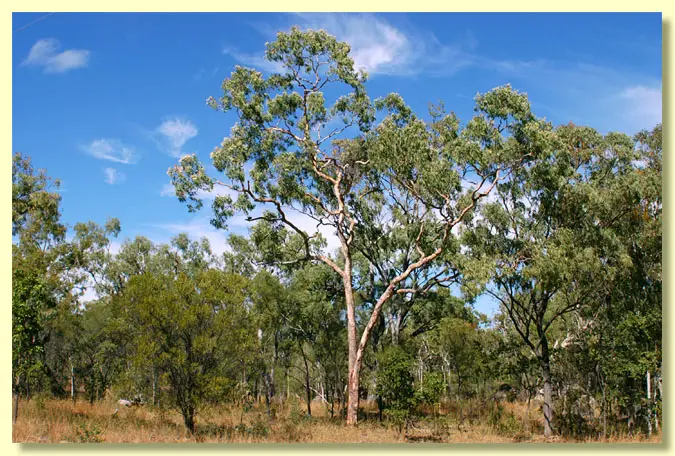
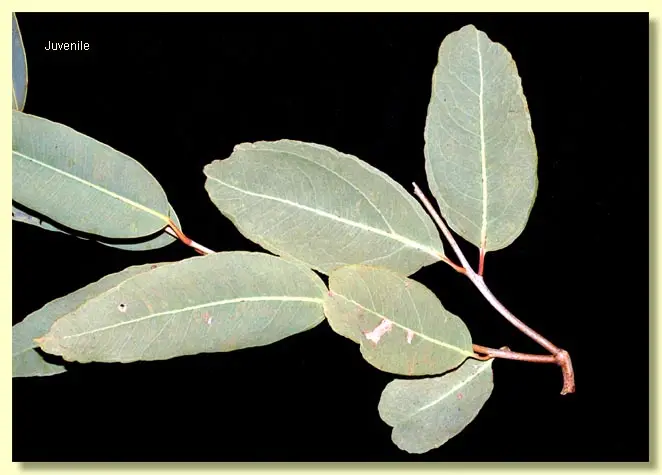
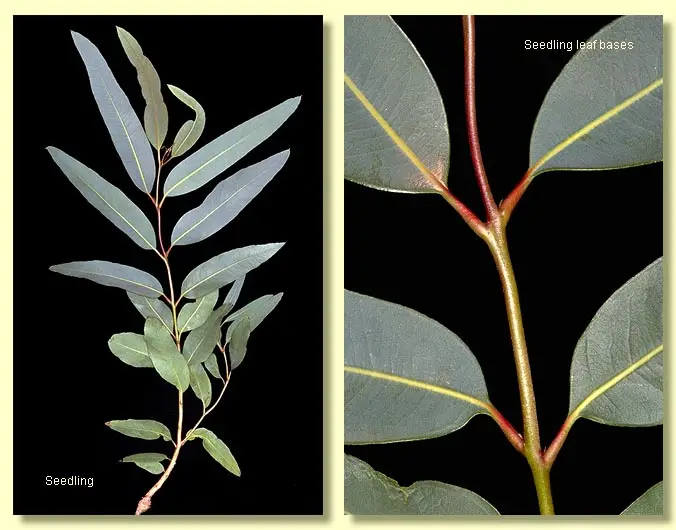
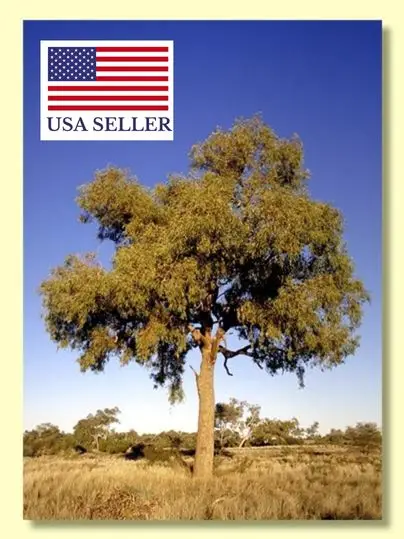
Grow the legendary Desert Bloodwood—an Australian native that bleeds brilliant red healing sap. Tessellated bark flakes to reveal orange and pink undertones; profuse white flowers nourish honeybees and native birds all year. The traditional medicine of Aboriginal peoples now in your hands. Hardy, drought-tolerant, stunning from seed.
€2.78
Imagine a tree that produces its own vivid red medicine—this is Corymbia terminalis, nature’s own apothecary. A small to medium-sized evergreen native to the arid heart of Australia, bloodwood is a living bridge between ancient tradition and botanical wonder, ready to transform your garden into a healing sanctuary.
Corymbia terminalis, formerly known as Eucalyptus terminalis, ranges across arid central and seasonally dry regions of northern Australia—from remote stretches of the Northern Territory to inland Queensland, New South Wales, and South Australia. For thousands of years, Aboriginal peoples have treasured this tree. In 1856, botanist Ferdinand von Mueller first collected specimens from Arnhem Land, formally describing it in 1859. The name itself whispers of tradition: Tjuta, Joolta, and Bloodwood—each a testament to its cultural significance. The tree forms a protective lignotuber, a subterranean survival strategy enabling rapid regeneration in harsh, arid climates.
This is where Corymbia terminalis becomes extraordinary. When the tree sheds bark or sustains damage, a blood-red resin called kino oozes from the wound—thick, sticky, and rich with tannins. Indigenous Australians have used this precious substance for millennia as antiseptic medicine. Fresh kino applied directly to cuts and sores acts as a powerful antimicrobial agent, cleansing wounds and halting infection. Dried kino can be crushed to powder and boiled into an astringent wash for deeper healing—used for diarrhea, indigestion, and chest pain. The resin is so potent it was traditionally employed to waterproof and tan kangaroo-skin waterbags. Beyond medicine, the kino’s tannins make it valuable for leather tanning, natural dye-work, and fiber preservation. Growing this tree means cultivating a living dispensary of ancestral wisdom—you’re not just growing a plant, you’re stewarding a botanical legacy of healing. For the herbalist, the ethnobotanist, or anyone drawn to plants with purpose, bloodwood is essential.
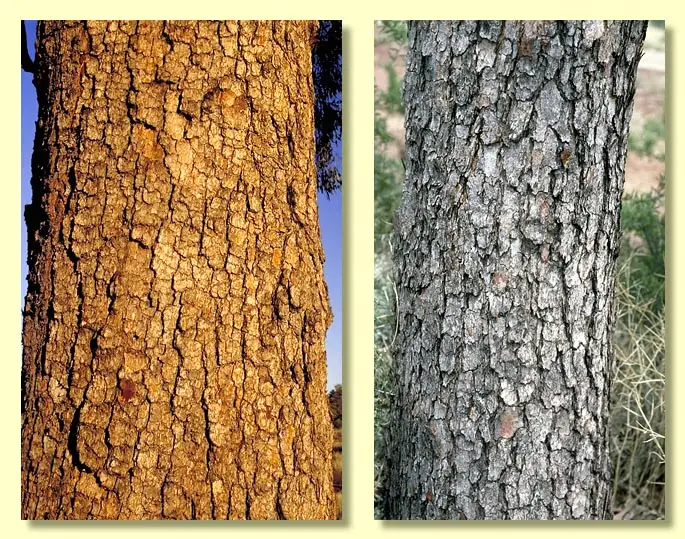
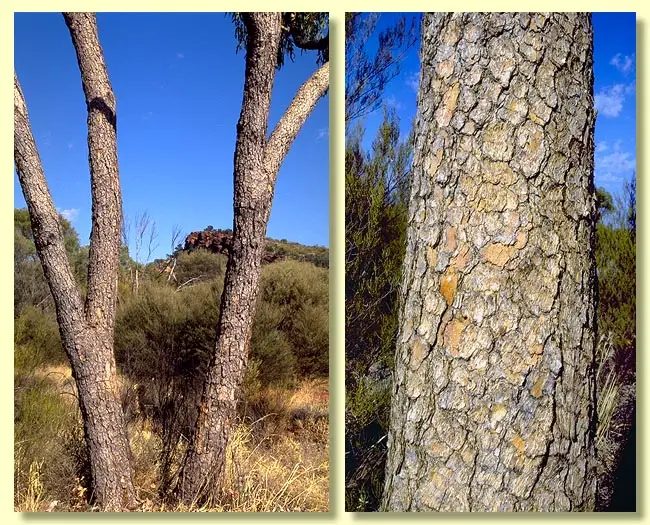
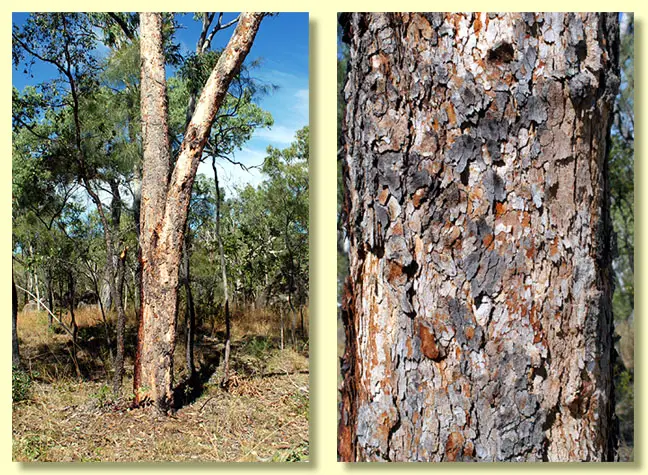
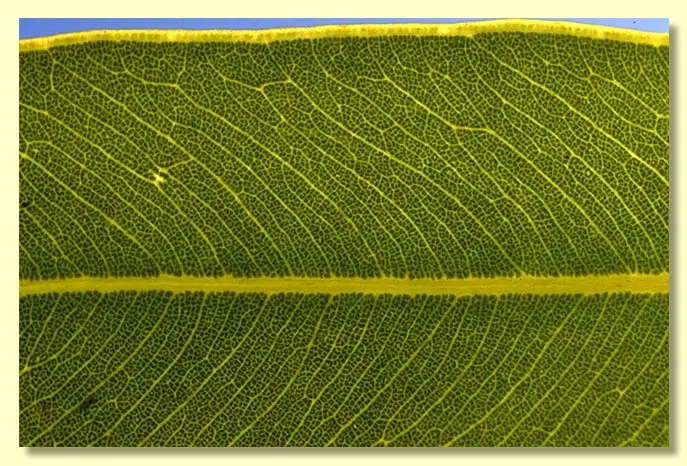
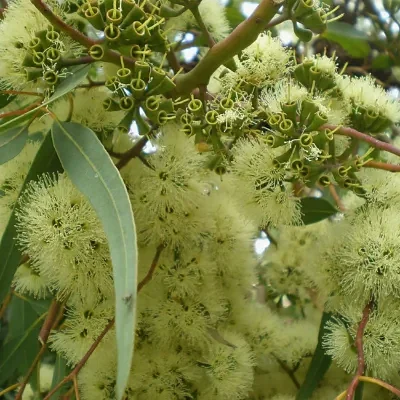
Beyond medicine, bloodwood is a visual and ecological treasure. The tessellated bark—cracked like ancient pottery—ranges from light brown to grey, flaking away dramatically to expose reddish, pink, and orange underbark: a living artwork that intensifies with age. Lance-shaped adult leaves mature to a pale, glossy yellowish-green, creating soft movement in desert winds. Year-round (or primarily in white-flowering seasons), delicate white flowers—occasionally pink—emerge in perfect clusters of seven, producing abundant nectar that honeyeaters, insects, and native possums adore. These flowers are a critical food source in arid zones where nutrition is scarce. If you garden for pollinators, native bees, or wildlife, bloodwood is a gift that keeps giving.
Corymbia terminalis is surprisingly forgiving for a desert native—an asset for growers of any level. Sow seeds in well-draining, sandy to loamy soil; they germinate readily when kept consistently moist until sprouted. Once established, the tree is drought-tolerant and hardy, preferring full sun (at least 6 hours daily) and excellent drainage. It thrives in poor, nutrient-sparse soils where many plants falter, making it ideal for difficult corners of your garden. Water moderately during the establishment phase; mature trees laugh at dry spells. Hardy from cool-temperate to tropical zones, bloodwood adapts to a range of climates, though it abhors wet monsoonal conditions. Patience is rewarded: in 5–10 years, you’ll have a stunning specimen tree producing kino and nectar. It grows to approximately 18 metres in ideal conditions, but is easily maintained as a smaller ornamental through light pruning. Bloodwood also forms an impressive bonsai specimen, rewarding the patient cultivator with miniaturized bark drama and delicate flowers.
To grow Corym
Only logged in customers who have purchased this product may leave a review.
Reviews
There are no reviews yet.