
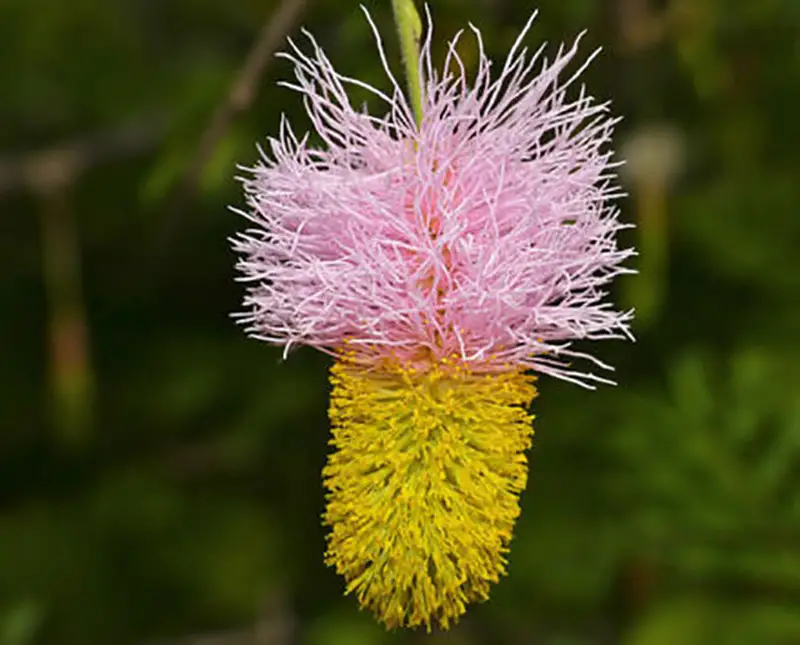
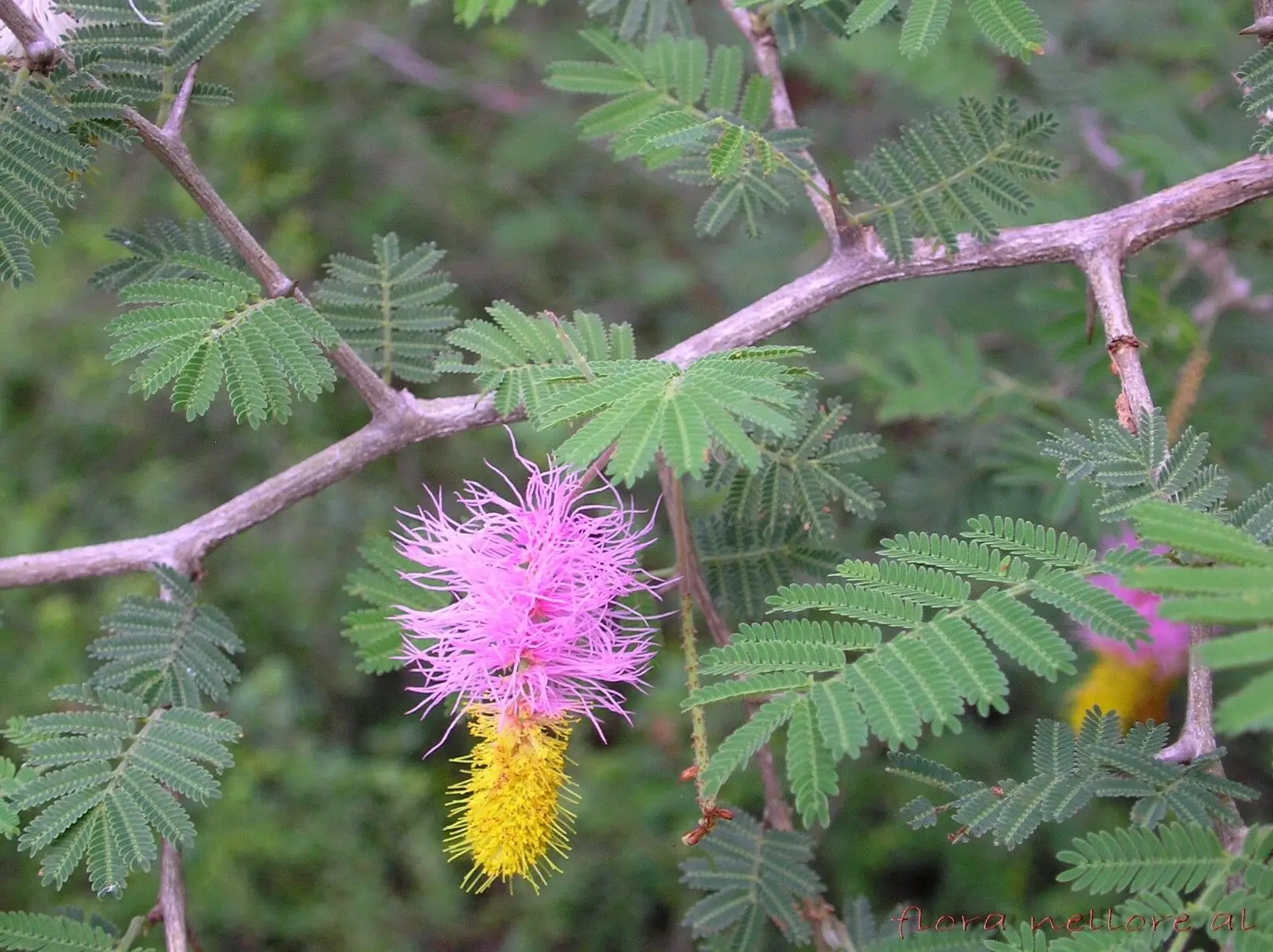
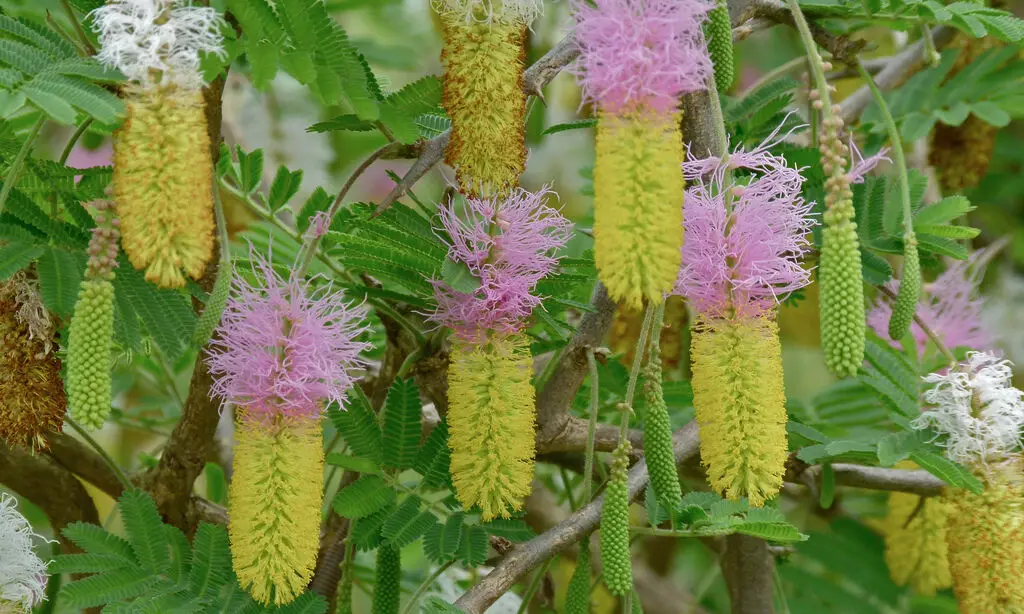
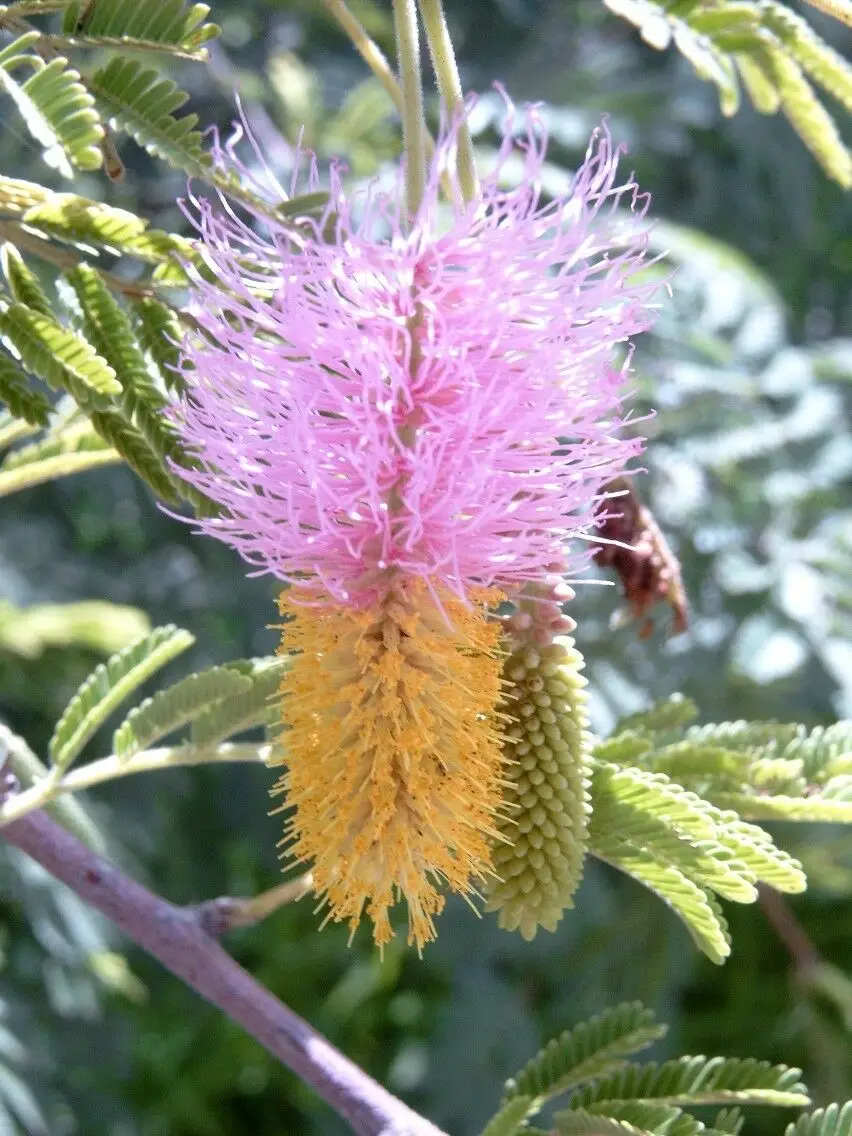
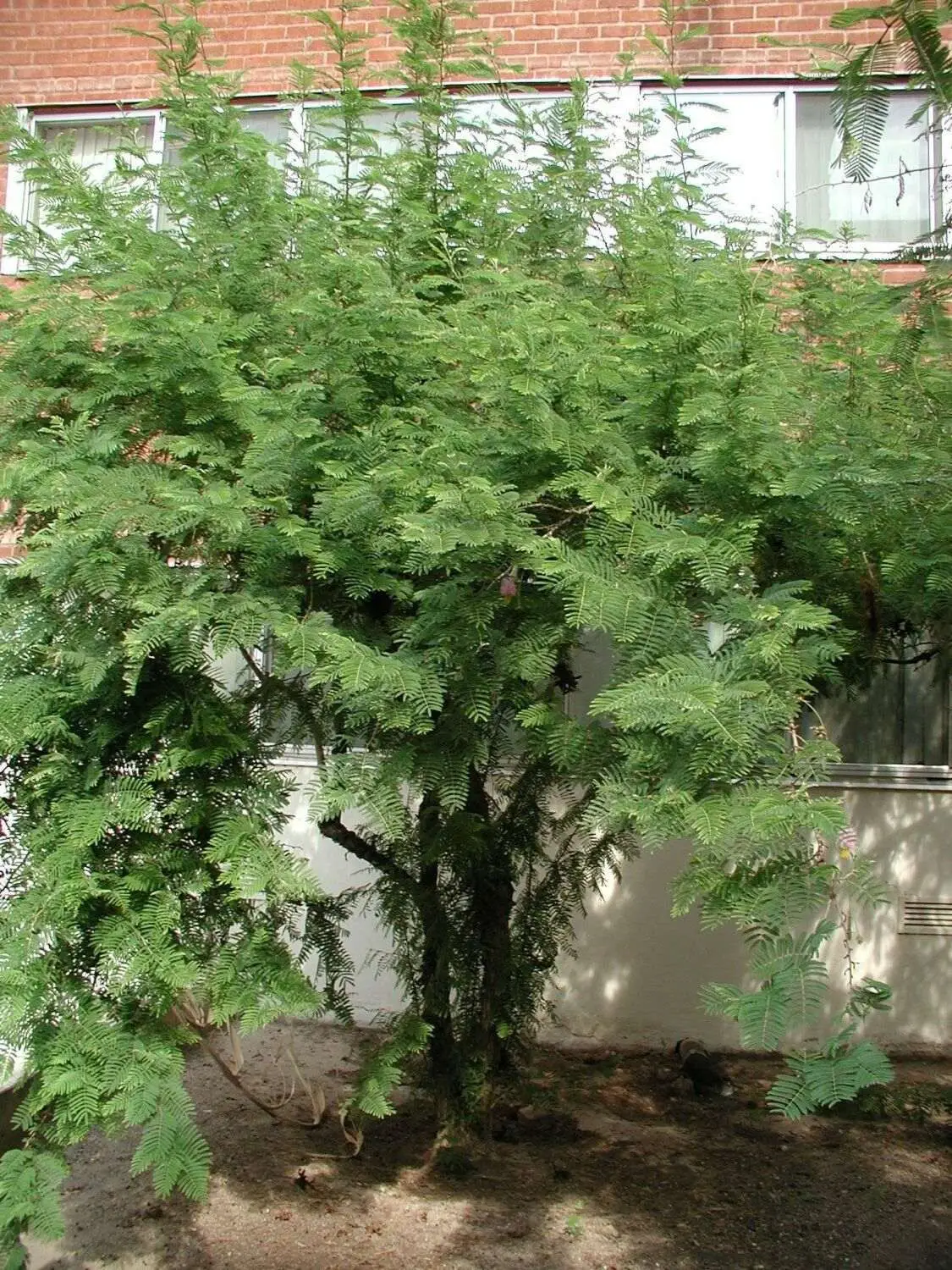
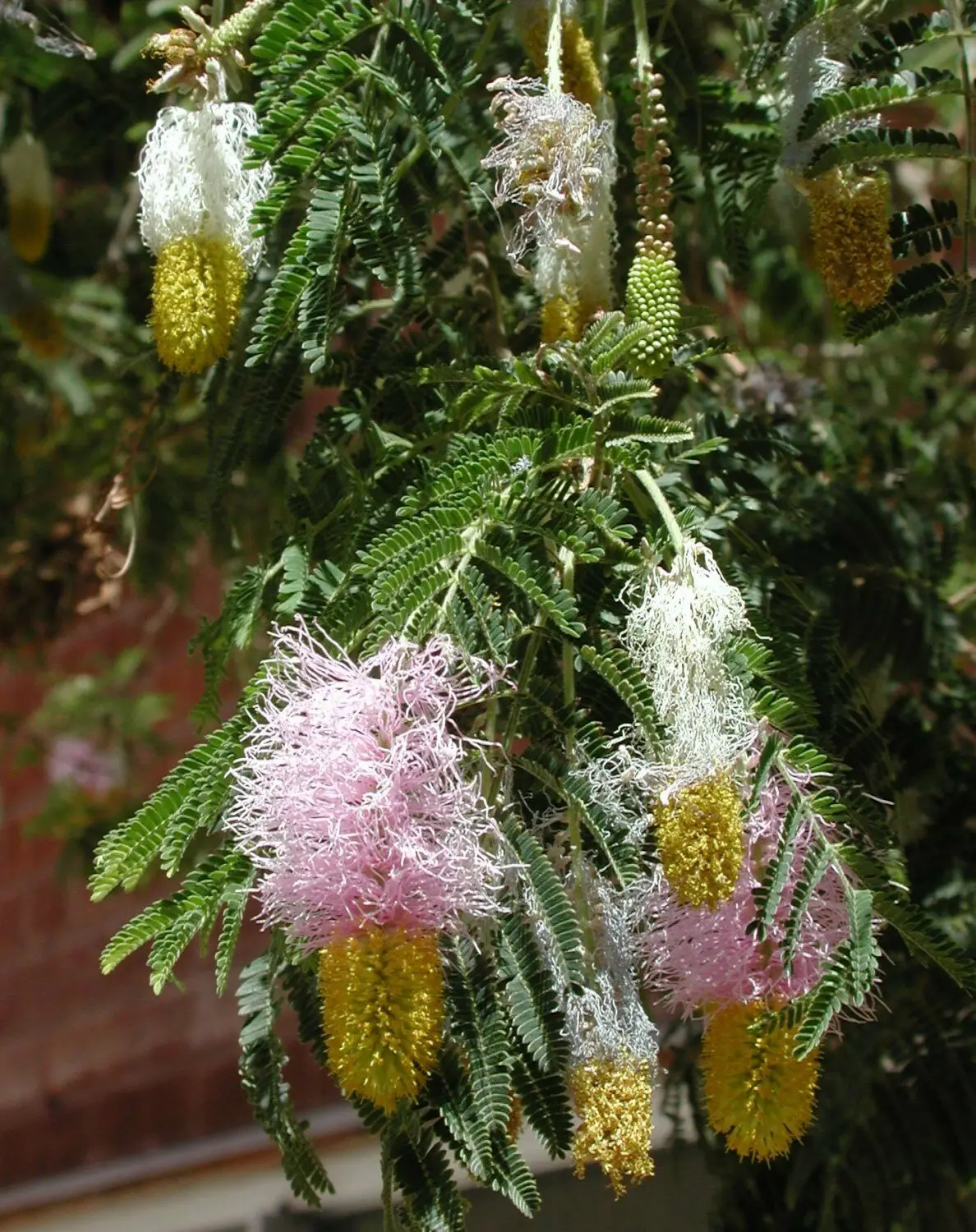
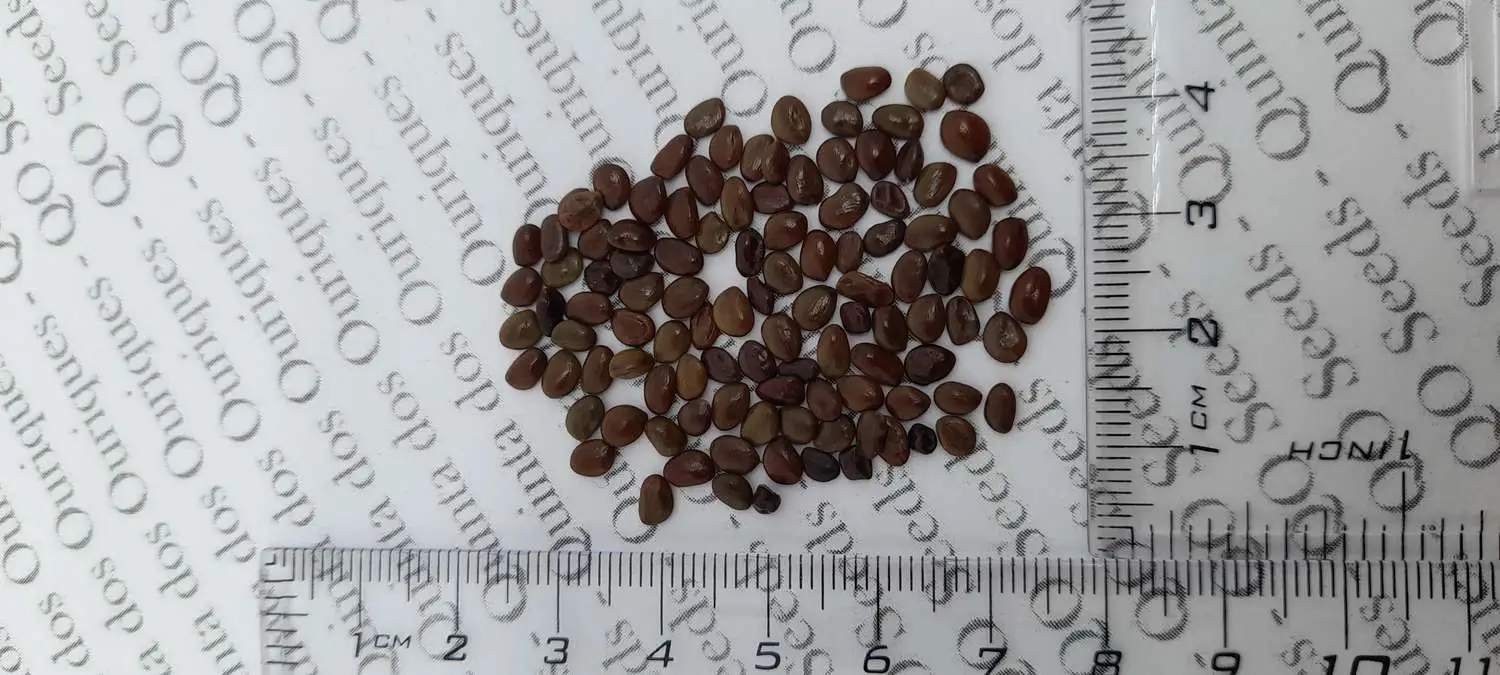
Spectacular bi-colored flowers (lilac-pink topped with golden yellow) explode with nectar spring through winter—a beekeeper’s dream tree. High nectar-producing flowers attract honey bees as first-stop foragers. Drought-tolerant and excellent as a bonsai subject. Thrives in full sun, well-drained soil. Rare trophy for growers: long yellow brushes topped with shaggy pink hair. Grow yours from seed.
€1.92
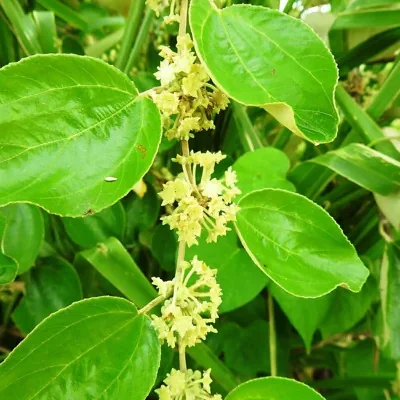
Its flowers are particularly noteworthy, with long yellow brushes topped with shaggy pink hair, and this shrub is spectacular when in bloom due to the multitude of extravagant flowers it can carry.
Native to South Africa and the African savannas, Dichrostachys cinerea carries a botanical name that tells its story—Dichrostachys means ‘two-colored spike’, referring to its two-colored inflorescence. Native to Africa, the Indian subcontinent and North Australia, it was introduced to the Caribbean in the 19th century. Known by dozens of poetic names across continents—Kalahari Christmas Tree, Chinese Lantern Tree, Bell Mimosa, Sickle Bush—each one captures a facet of its magic. The Shona name, Mapangara, means ‘the tree that provides tassels for the chief’s hat’, a nod to those extraordinary hanging flower spikes that truly resemble ceremonial ornaments.
**THE BEEKEEPER’S TREASURE—NECTAR ON DEMAND**
Here’s where Dichrostachys cinerea becomes irresistible: flowers are characteristically arranged in bicoloured cylindrical spikes that resemble Chinese lanterns, 6 to 8 centimetres long and fragrant, with upper flowers of a hanging spike sterile and lilac or pale purple colour while the bottom half displays yellow flowers. The flowers are high nectar producing and are a first stop for honey bees and other nectar feeders. Imagine your garden becoming a magnet for honeybees throughout the year—in southern Africa, the sickle bush flowers from October to February, which translates to an extended nectar season in most climates. This is not ornamental window dressing; this is food production at its most beautiful. For beekeepers, permaculturists, and anyone committed to pollinator health, Dichrostachys cinerea is non-negotiable.
Beyond honey, the tree offers a treasure trove of traditional uses. Tender shoots are used to treat inflammatory conditions, diarrhea, arthritis and relieve pain. Dichrostachys cinerea leaves have been found to be very nutritious and constitute the major edible portion of the plant, rich in protein (11–15%) and minerals. Fruit and seeds that grow on Dichrostachys cinerea are edible. The bark, roots, and leaves have centuries of ethnobotanical use in Africa and India—the tree protects liver and kidney from toxins with antioxidant activity. Cultivators report it makes a stunning bonsai: it dwarfs well, is fast growing and the small leaf size allows it to dwarf very well.
**GROWING THIS MARVEL IS REFRESHINGLY EASY**
In cultivation, it requires full sun, well-drained soils, and can tolerate drought once established. Suitable for light (sandy), medium (loamy) and heavy (clay) soils, prefers well-drained soil and can grow in nutritionally poor soil; suitable pH includes mildly acid, neutral and basic soils; can grow in semi-shade (light woodland) or no shade; prefers moist soil and can tolerate drought. This is a tree built for neglect—perfect for the real-world gardener. It can fix Nitrogen. It grows to 8 m by 8 m at a medium rate. In containers, it stays compact and manageable. Direct seeds need no special treatment; under optimal environmental conditions it is considered to be a fast growing species suitable for cultivation.
**GROW THE DREAM FROM SEED**
There’s something profoundly satisfying about starting a Dichrostachys cinerea from seed—watching that feathery bipinnate foliage unfurl, waiting for the first bicolor flower spikes to hang like lanterns in your garden or greenhouse. Every flower that opens is a promise: more nectar, more bees, more life. Every leaf is medicine. Every pod is edible abundance. This is a tree that gives back continuously. Start yours now and join generations of gardeners across Africa, India, the Caribbean, and beyond who have recognized this tree as both treasure and teacher. Your bees will thank you. Your garden will transform.
Only logged in customers who have purchased this product may leave a review.

Reviews
There are no reviews yet.