
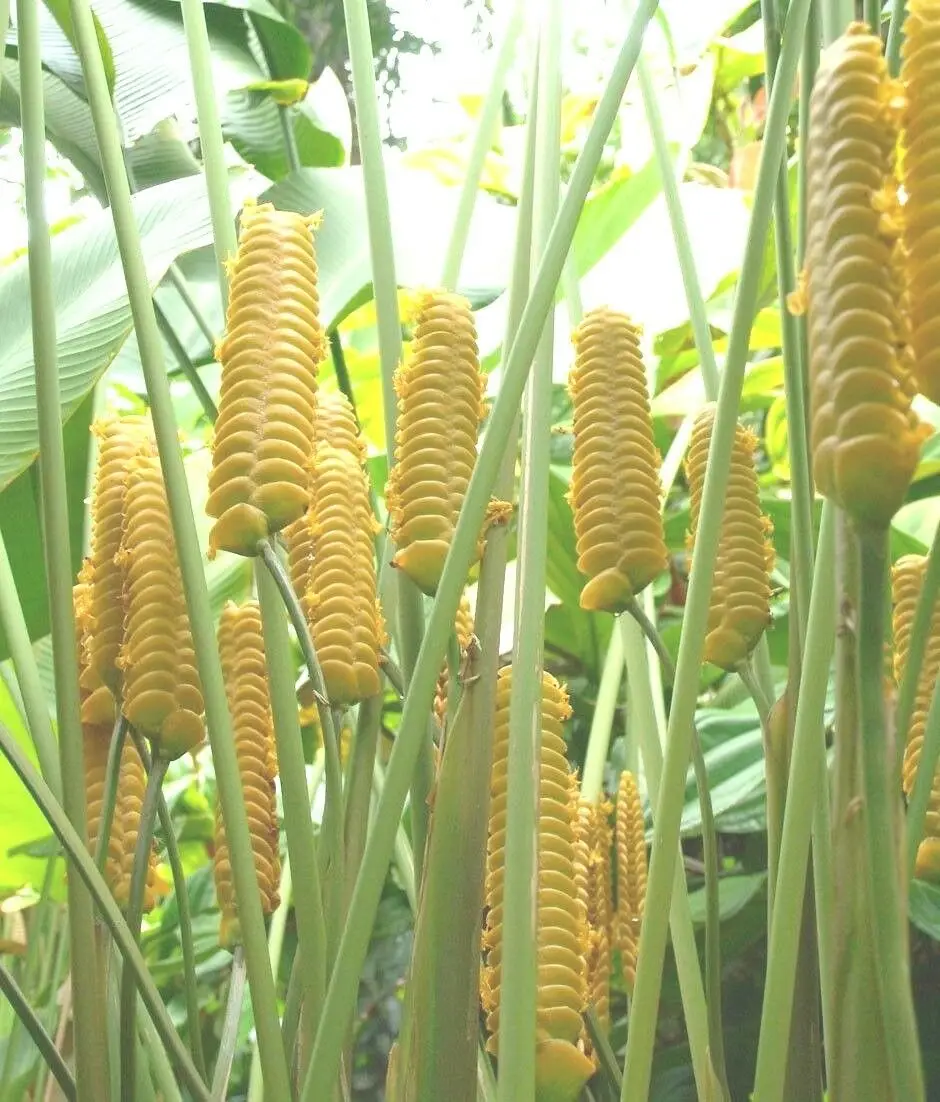
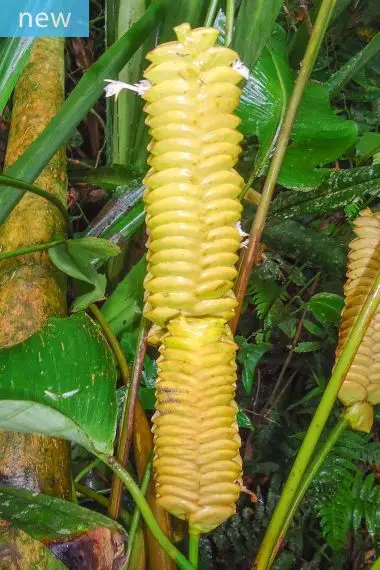
Imagine upright, golden-yellow inflorescences shaped like a baby rattlesnake’s tail—that’s the Yellow Rattleshaker. This architectural stunner produces dramatic flowers up to 10 inches tall, stacked with leathery bracts and tiny yellow blooms peeking out like jewels. Pair that with large, graceful foliage in glossy dark green, and you have an instant tropical centerpiece. Moderate care required; grows vigorously from seed in warm, humid conditions. A lands
The unusual inflorescences are upright, shaped like a rattlesnake’s rattle, up to 10 inches (25 cm) long, and consist of stacked leathery floral bracts with small, yellow or yellow-orange flowers peeking out at the edges. This is where Calathea crotalifera’s true magic lives—in that unmistakable architectural statement that commands attention in any garden or indoor space. If you dream of growing something that stops people mid-conversation, this is it.
This attractive plant in the Marantaceae family is a popular ornamental and commonly confused with Heliconia, which the broad, thin-stalked leaves to 2.5 m tall and especially the showy inflorescences resemble. The latter are made up of numerous, closely spaced, yellow bracts that somewhat remind of a rattlesnakes tail. Calathea crotalifera is widely distributed from southern Mexico throughout tropical South America. Born in the rainforests and humid understories from Mexico to South America, this species thrives where water flows freely and light filters through the canopy. It’s a plant built for the tropics—or the gardener willing to recreate them.
The Yellow Rattleshaker belongs to an elite club: plants with a primary ornamental feature so striking it defines the entire species. This rhizomatic species can produce a very attractive inflorescence and have been widely used in the horticulture field including landscape and cut flower industry. The unusual conspicuous inflorescence resembles rattlesnake’s tail has a long shelf life that making this species suitable for cut flower industry besides as screening plant. Whether you’re designing a tropical garden, creating a lush privacy screen, or growing for the vase trade, those flowers deliver impact season after season. The blooms last remarkably well—they age beautifully rather than declining quickly. And that’s not all: Calathea crotalifera has large, oval-shaped leaves with long petioles that keep it erect. The topsides of the leaves are dark green, while a mix of gray and green covers the undersides. You get architectural foliage even when the flowers rest, ensuring year-round visual presence.
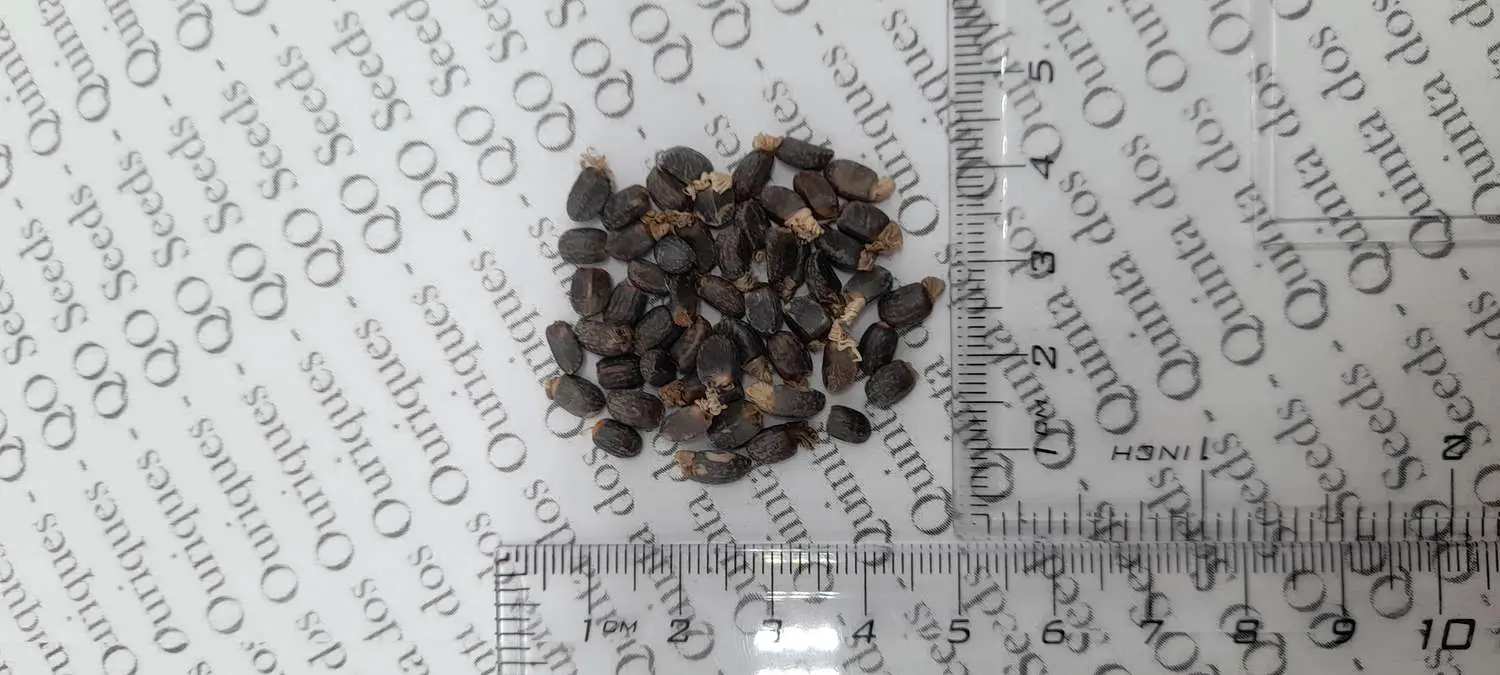
Growth from seed is rewarding. Easy to grow from seeds. Start your seedlings in warm, humid conditions—think tropical greenhouse warmth, around 70-85°F. They don’t really differ in care from smaller Calatheas – as always with this genus, spend extra time up front on potting mix and exact plant position, and save headaches later. It seems not to be quite as sun-tolerant as the even larger “Calathea Lutea” (known as the Cigar Calathea or Havana Cigar), but bright indirect light (as per smaller Calatheas) seems to suit it fine. Once established, A really great plant overall, very little care needed if it’s in the right place and the mix and watering are right. Use rich, organic soil that drains beautifully—this plant demands air at the roots. It requires a soil rich of organic substance, draining, maintained constantly humid. Water consistently but never waterlogged. Mature plants thrive in part shade to filtered sun, reaching 2–3 meters tall in tropical climates, making them perfect for tall containers, dramatic understory plantings, or hedging. non-toxic for horses#non-toxic for dogs#non-toxic for cats—safe for any household.
Start your seeds today and you’re beginning a love affair with one of the tropics’ most theatrical plants. In three to four seasons, you’ll have a performer that transforms any space into a living jungle—one unforgettable yellow rattle at a time.
Only logged in customers who have purchased this product may leave a review.
Reviews
There are no reviews yet.