
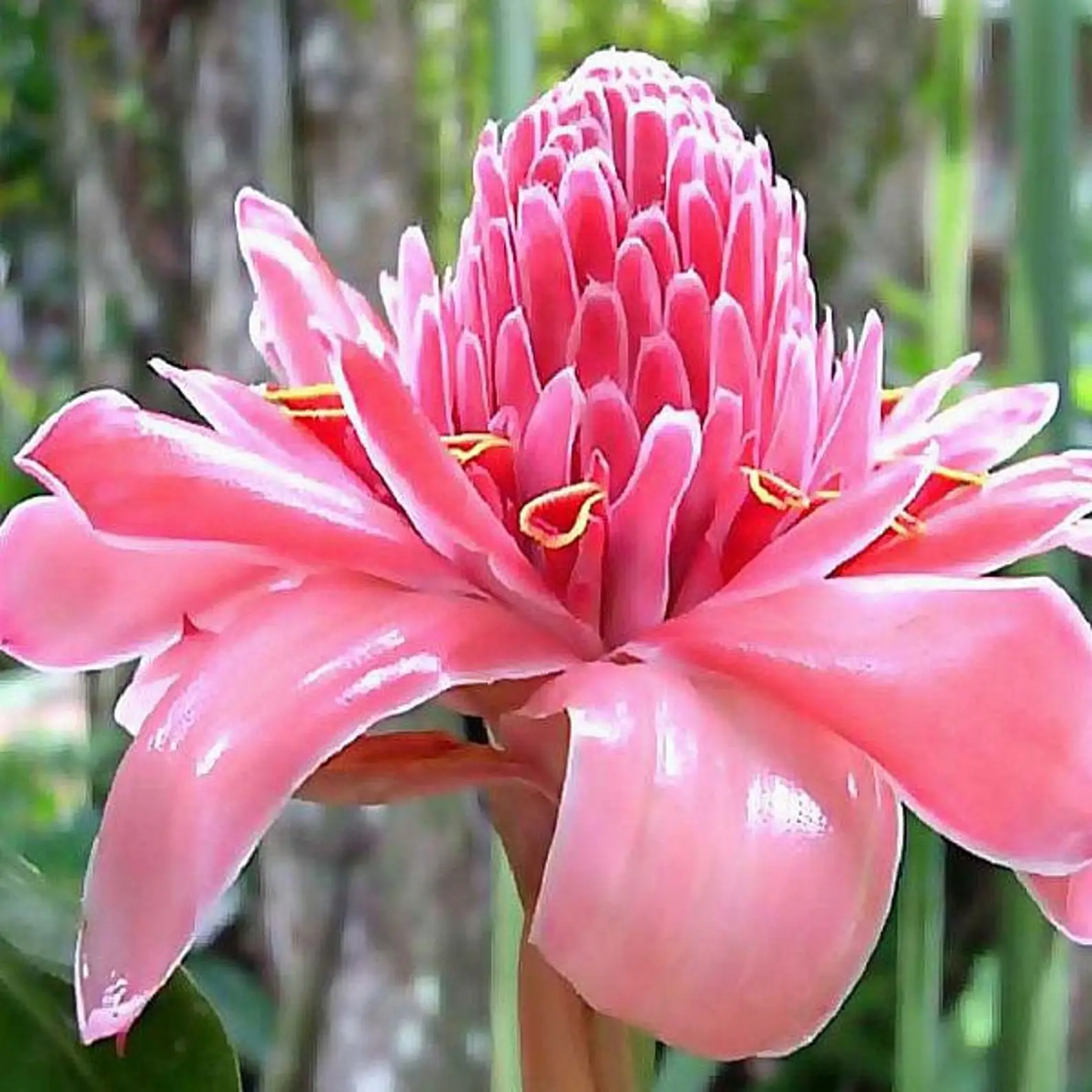
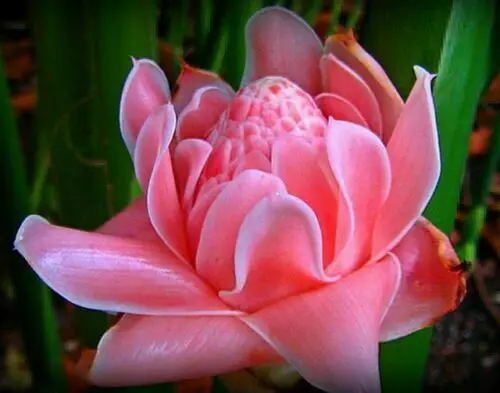
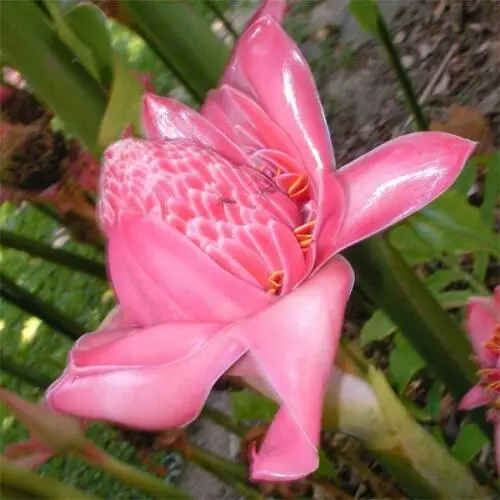
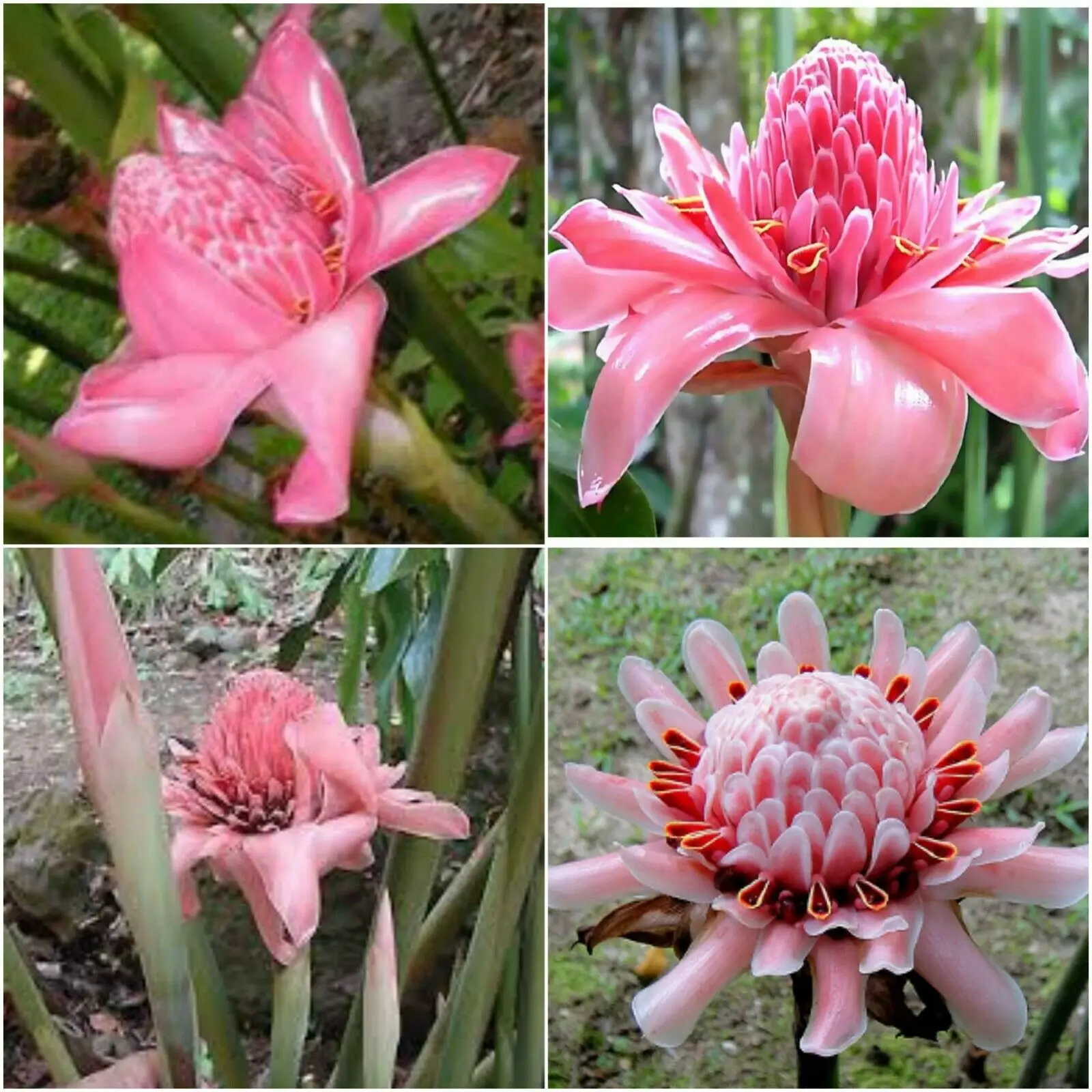
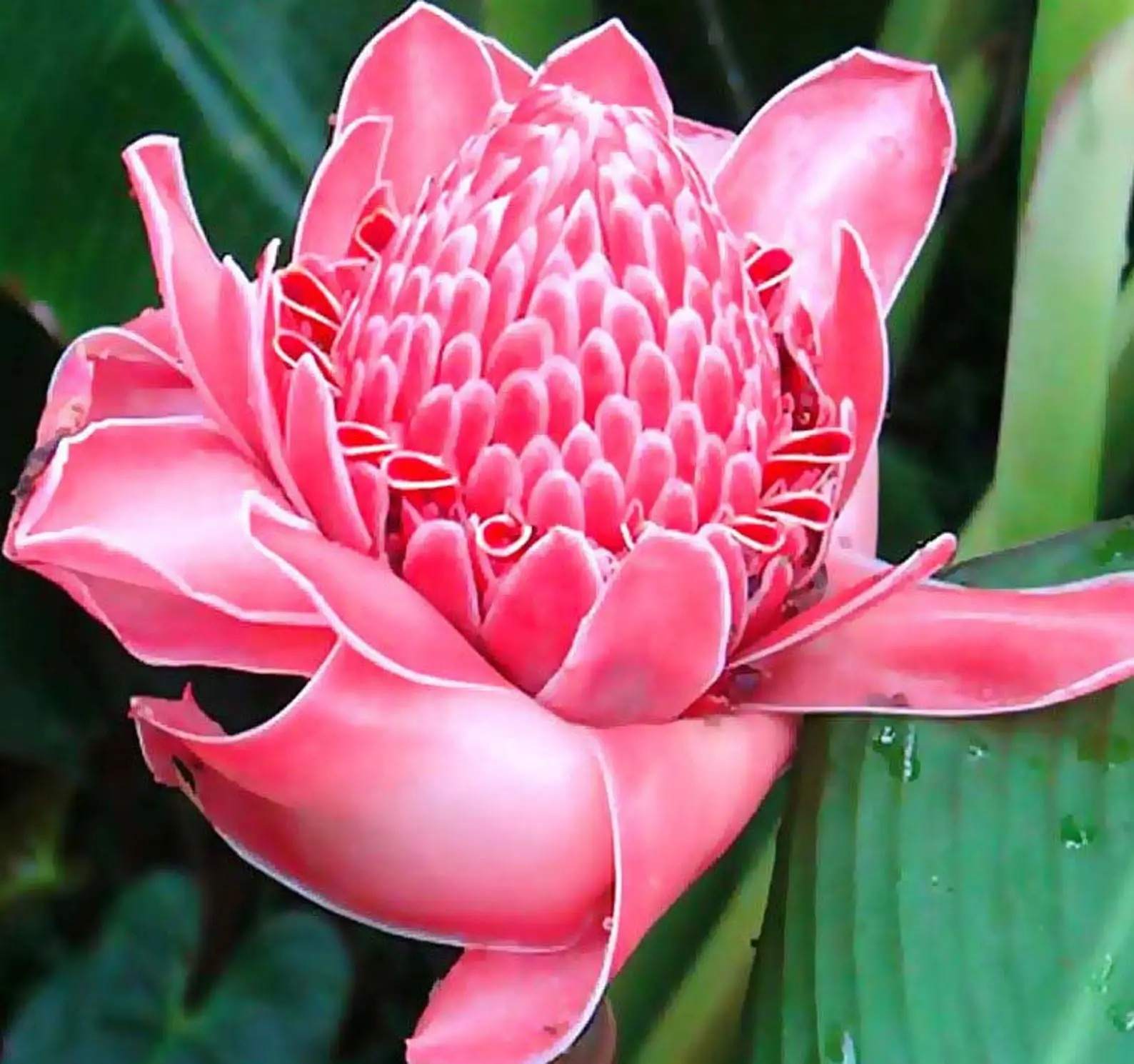
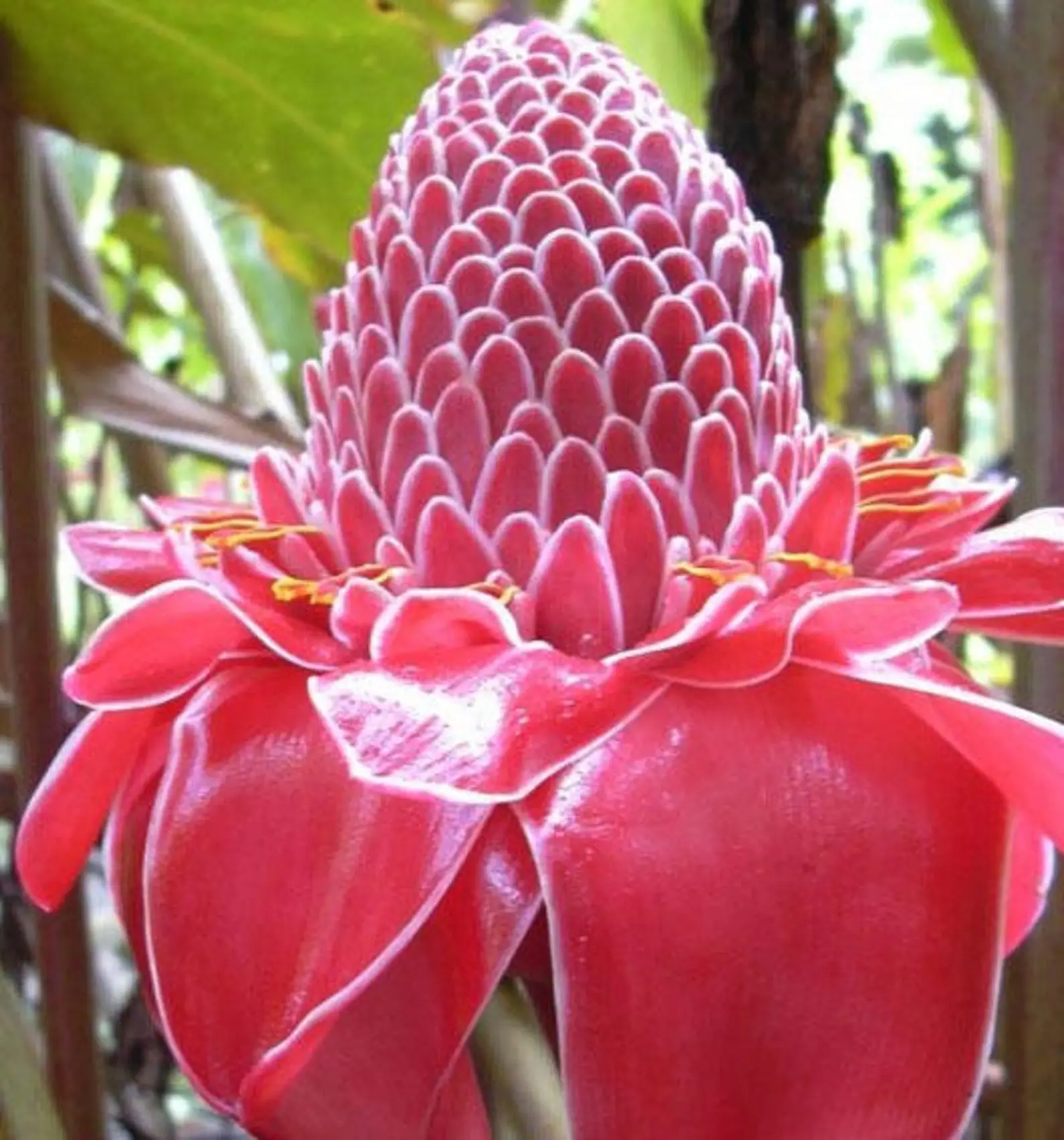
Grow the flower that fires up Southeast Asian kitchens. Torch ginger’s edible buds burst with tangy, floral complexity—prized in laksa, kerabu, and Nyonya cuisine for their crisp texture and irreplaceable zest. Plus, stunning 2-meter torch-red inflorescences that anchor any tropical garden. Direct from seed; flowers by year two with proper care.
€1.92
Imagine a 6-meter pillar of architectural drama crowned with flame-red torch-shaped flowers that make every sunset theatrical—that’s Etlingera elatior, one of the ginger family’s most striking and useful species.
Native to the rainforests of Malaysia, Indonesia, and New Guinea, torch ginger has been treasured for centuries across Southeast Asia. The Malays call it bunga kantan; in Java it’s kecombrang. It isn’t merely a pretty face—this plant is a culinary cornerstone. Every region has claimed it, woven it into its soul.
Here’s what sets torch ginger apart in the kitchen: the edible flower buds and tender inner bracts deliver a flavor profile found nowhere else on Earth. Tangy, floral, slightly citrusy—with aromatic notes that evoke ginger and lemongrass married together. This isn’t heat like regular ginger; it’s brightness, complexity, elegance. In Malaysia’s legendary asam laksa, a spicy fish-noodle soup ranked by CNN as one of Asia’s best street foods, torch ginger buds are essential, adding their signature floral crunch and masking strong fishy tastes with grace. In Indonesia, the flower buds star in sambal kecicang (a chili paste) and arsik ikan mas (spiced carp stew). In Thailand, they’re raw in salads. Singapore celebrates them in rojak, the famous fruit-and-vegetable salad. From pickled dishes (Nyonya acar) to fresh curries and seafood stews, the entire edible plant—buds, tender stems, even ripe seed pods—is harvested and celebrated. If you cook Southeast Asian food or dream of authentic regional flavors, torch ginger isn’t optional; it’s an imperative. Grown at home, you’ll have fresh buds on demand, crisp and aromatic, far superior to anything dried or frozen.
Beyond the kitchen, torch ginger is a medicinal treasure. Traditional healers across Malaysia use it for ear infections, sore throats, indigestion, and wound care. Modern science confirms what folklore always knew: the flowers and leaves are rich in antimicrobial, antioxidant, and anti-inflammatory compounds—flavonoids and phenolic substances with real therapeutic potential. Many prepare it as a herbal bath, as its fragrance alone is restorative.
Growing torch ginger from seed is gratifying and medium-paced. The plant loves tropical and subtropical warmth (50°F minimum night temperature; 65–85°F ideal), high humidity, and consistent moisture in rich, well-draining soil. It thrives in full sun to light shade, and container growing is entirely possible if you use large pots and move them indoors during cold months. Expect the first leaves within 18–22 days; by 12–18 months, the real magic begins—tall, leafy pseudostems (false stems formed of overlapping leaf sheaths) rise, and at month two of flowering onset, those unforgettable torch-shaped inflorescences emerge from the base, swelling and blushing pink before opening into a candle-like tower of 20–25 layers of floral bracts and up to 120 tiny true flowers. Once established, the plant self-propagates through spreading rhizomes, making it increasingly generous with each passing year.
This is not a plant you grow and forget. This is a plant you grow and celebrate. Plant torch ginger from seed now, and in two years you’ll be harvesting the buds that have lured spice traders across oceans, that have anchored cuisines for centuries, that will transform your cooking and garden alike. You’re not just growing a specimen; you’re joining a tradition that stretches from Malaya to the Philippines, one flame-colored flower at a time.
Only logged in customers who have purchased this product may leave a review.
Reviews
There are no reviews yet.