Description
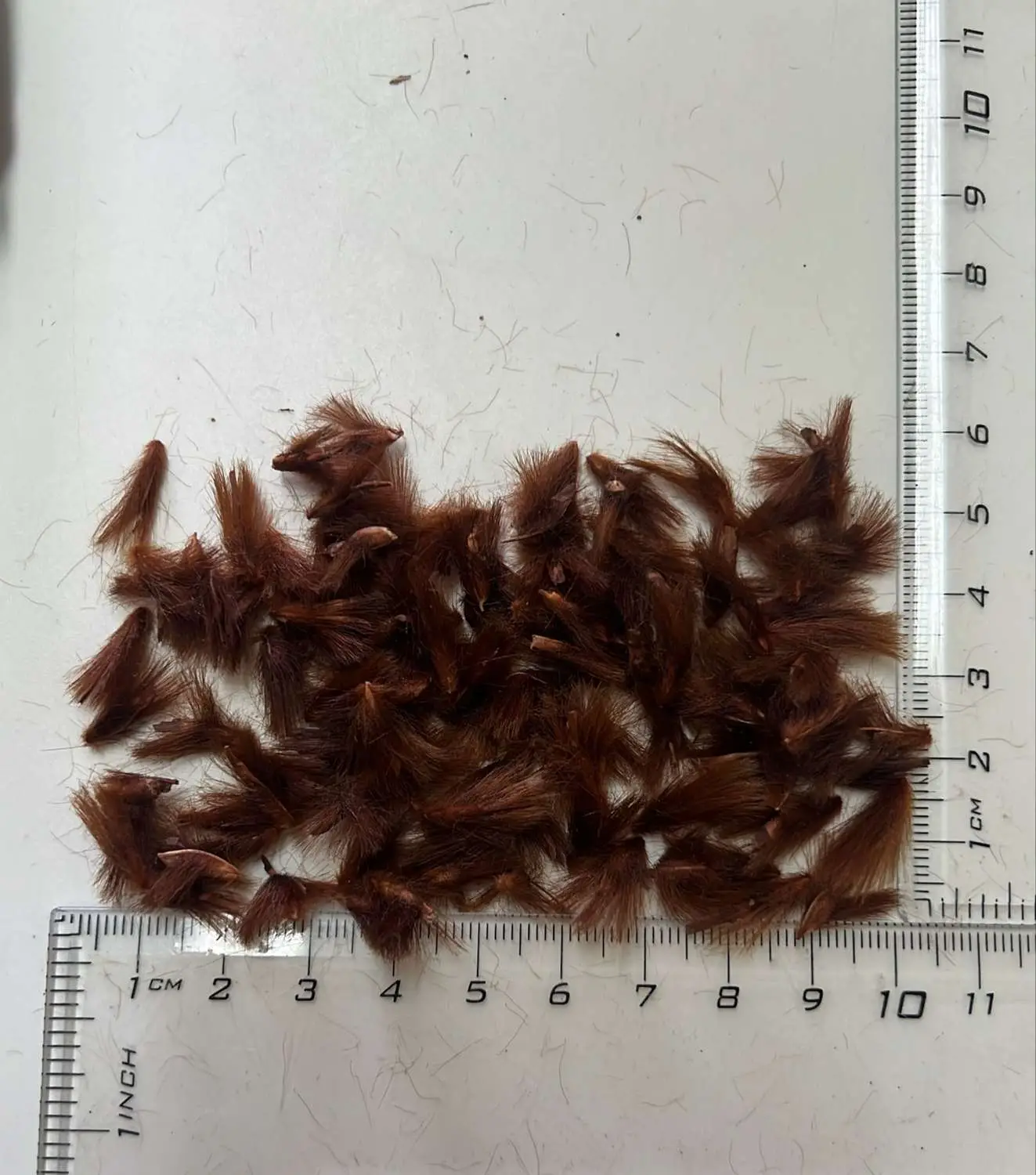
Protea neriifolia seeds can benefit from Seed Smoke Primer, which is also available in our shop. Make sure to take a look!
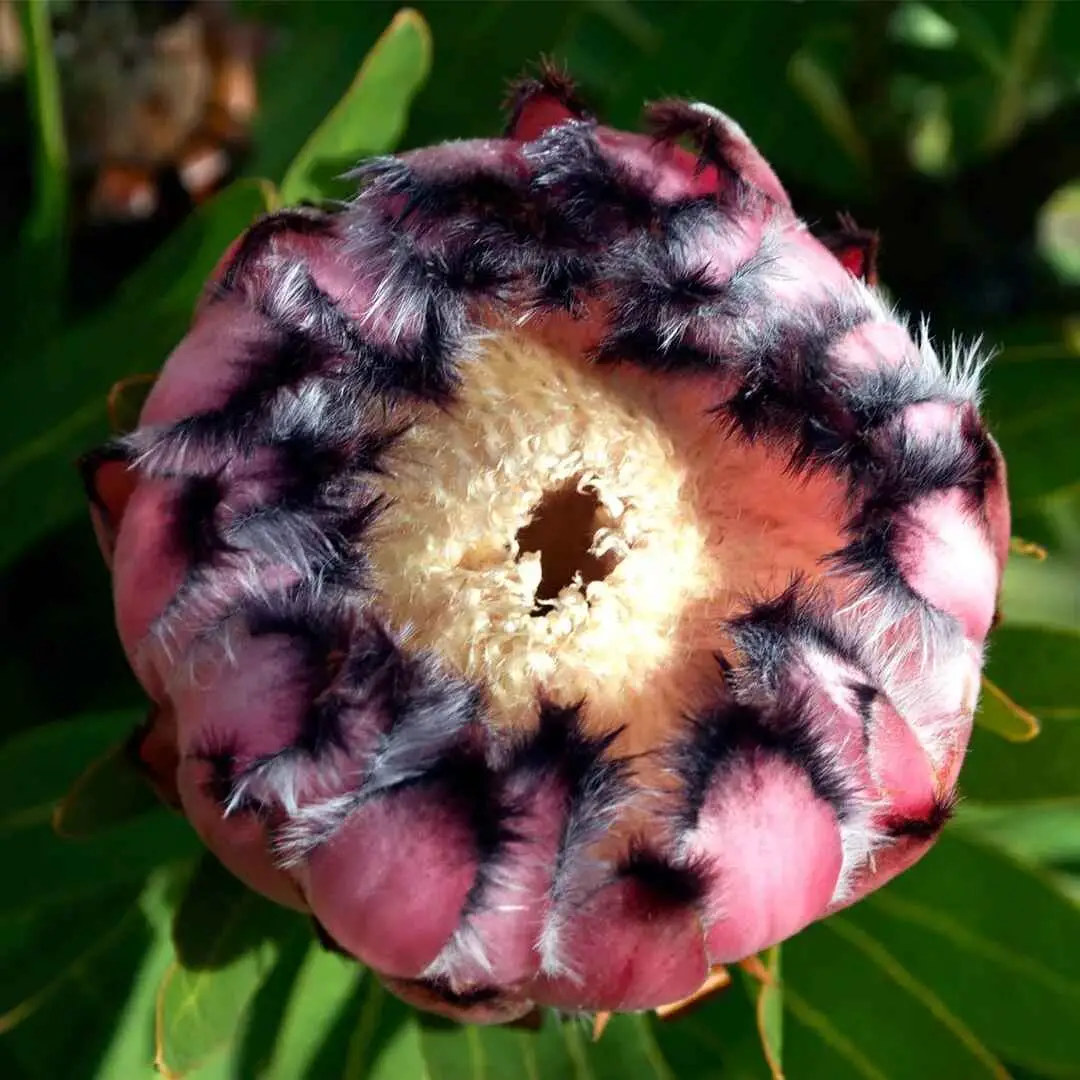
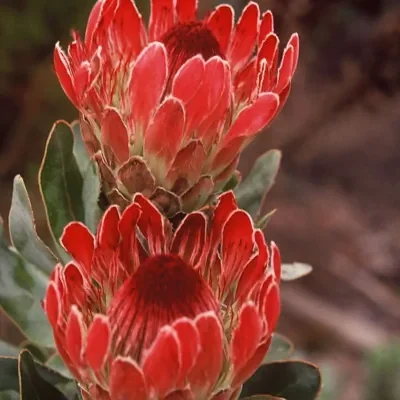
Protea neriifolia, commonly known as the oleanderleaf protea or narrow-leaf protea, is a magnificent flowering shrub and one of the most widely cultivated protea species. Endemic to the coastal mountain ranges of the Western and Eastern Cape provinces of South Africa, it is a key component of the fynbos biome. Its name, neriifolia, is a combination of the Greek words nerion (oleander) and folium (leaf), referring to its long, narrow, bluish-green leaves that resemble those of an oleander. Like many other proteas, Protea neriifolia is adapted to its fire-prone habitat.
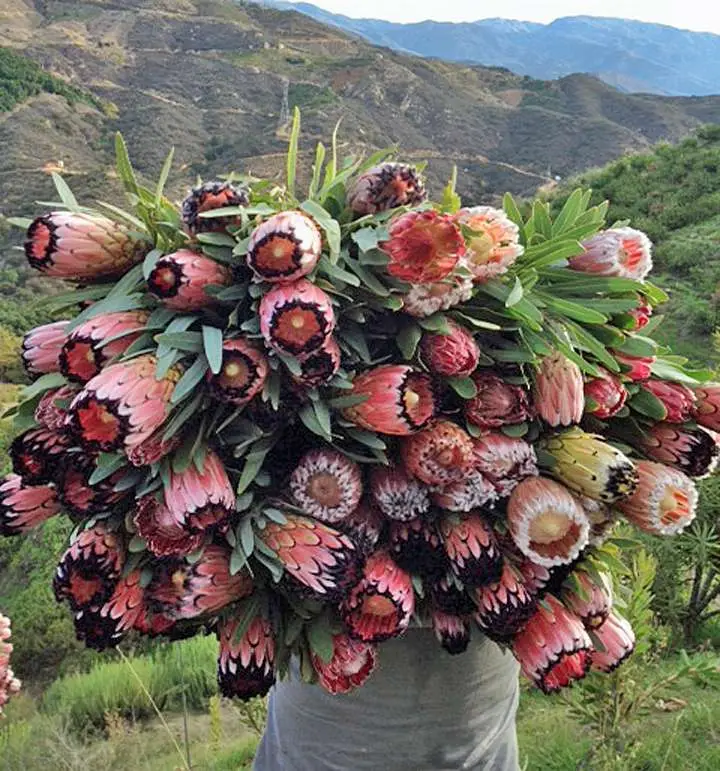
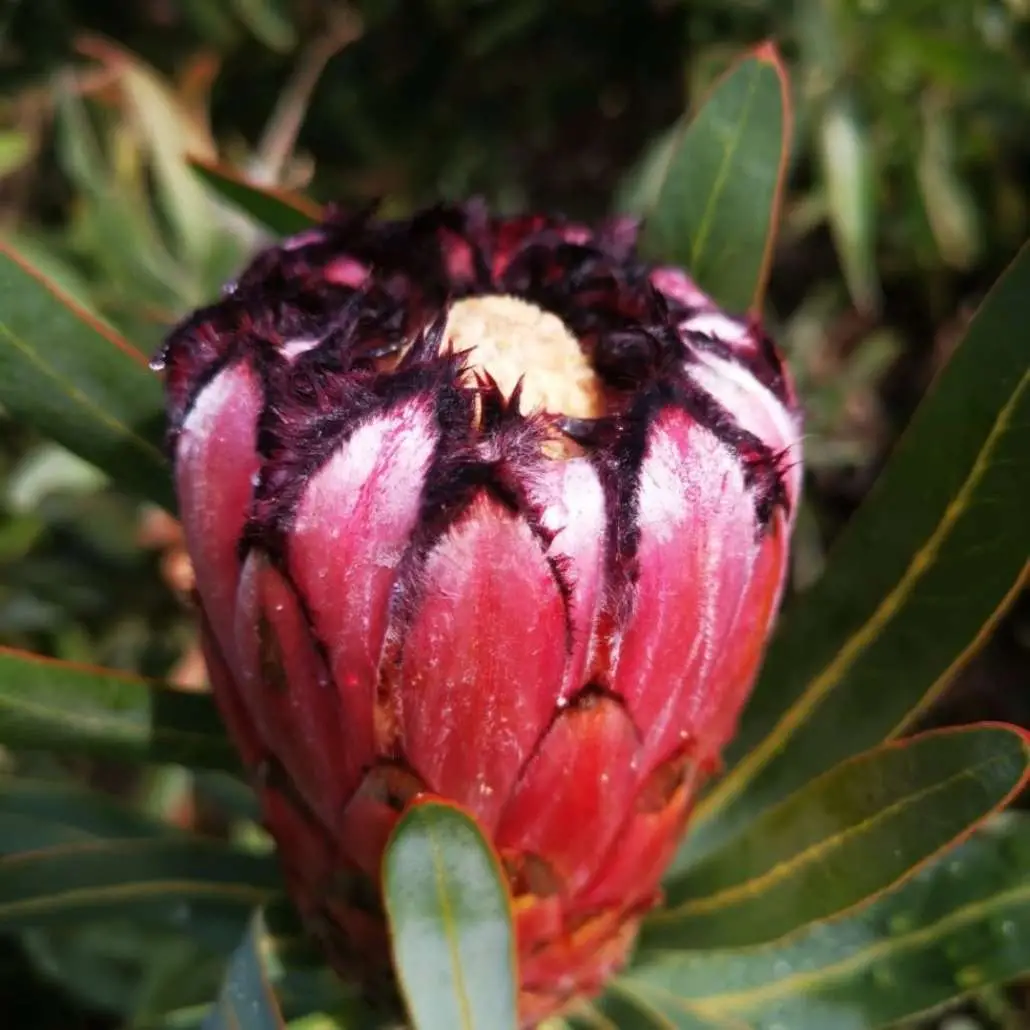
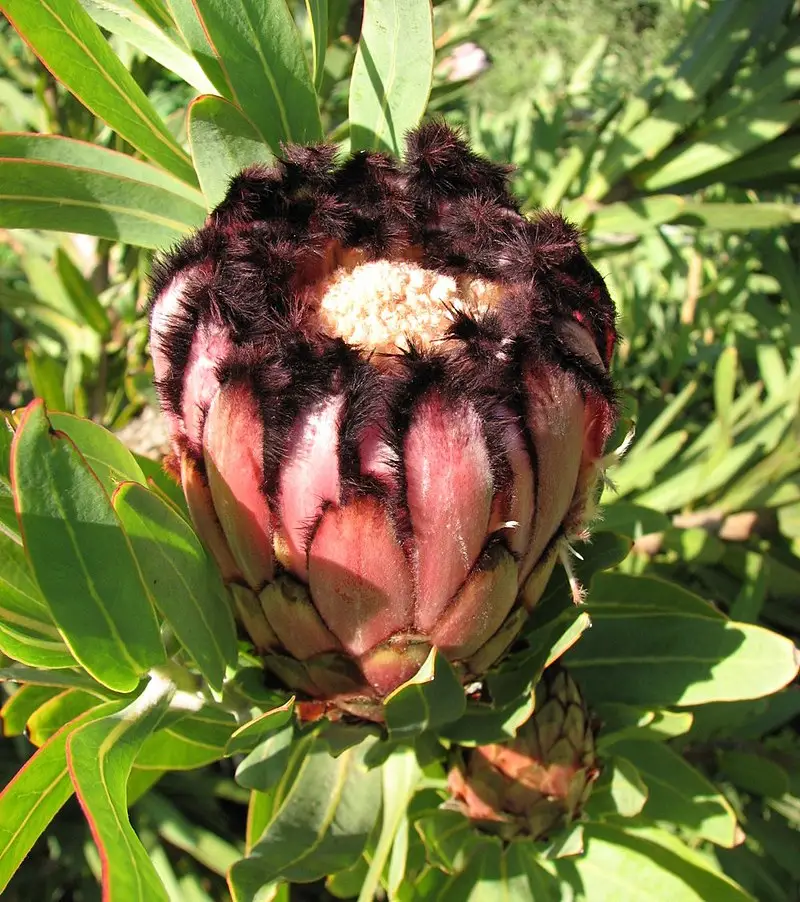
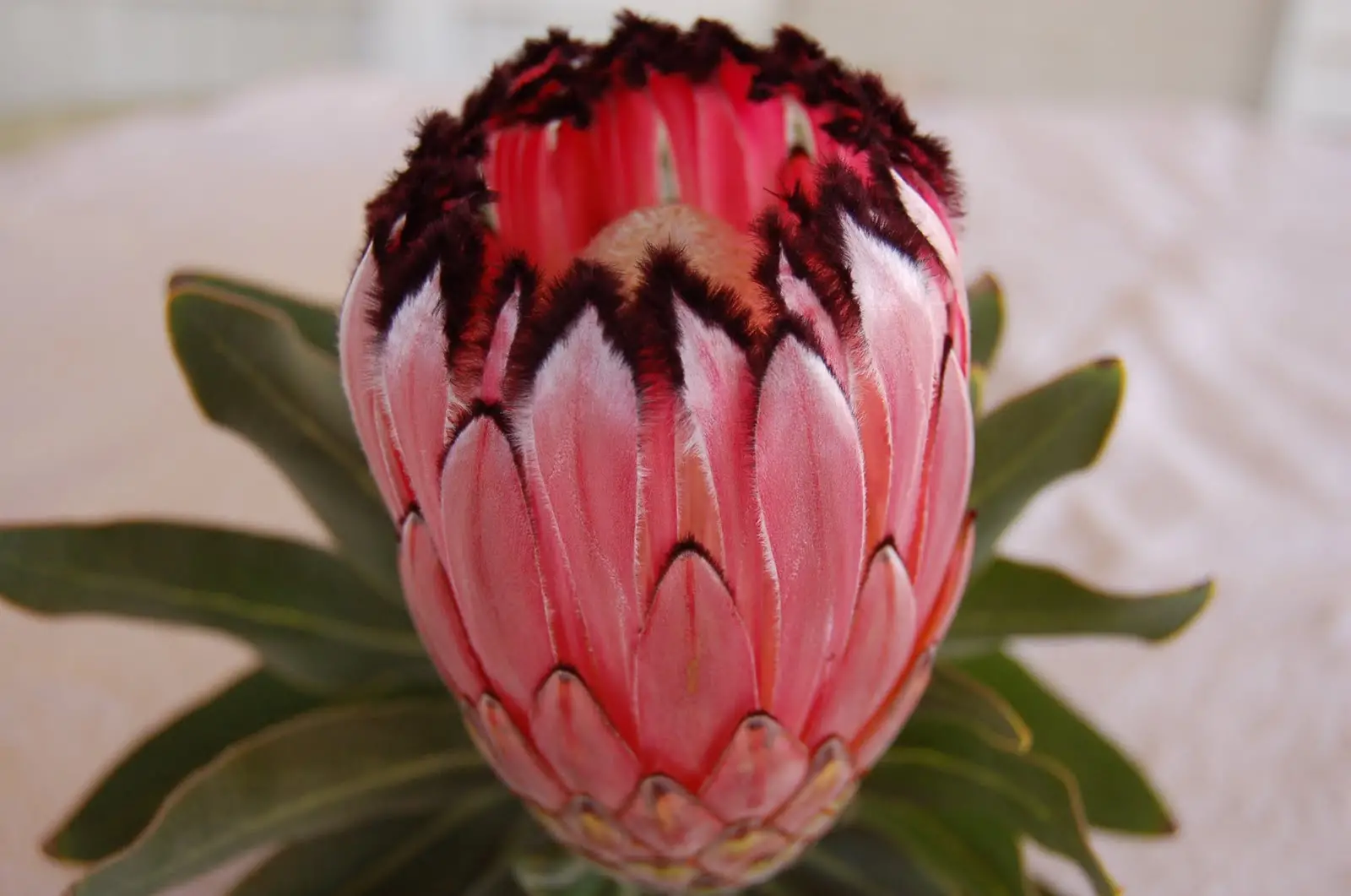
This species is notable for its beautiful and varied floral display. The flower heads are large, cone-shaped, and can range in color from silvery-pink to deep crimson, with the inner bracts tipped with striking black, hairy margins that give it a “black-bearded” appearance. The flowers are rich in nectar and attract a wide range of pollinators, including birds, insects, and small mammals.
Germination Guide
🌍 South Africa - Cape Floral Region (Western and Eastern Cape provinces, sea level to 1,300 meters)
Moderate
Protea neriifolia, commonly called narrow-leaf sugarbush or oleander-leaf protea, is endemic to South Africa and among the most adaptable and widely cultivated Protea species. The seeds are adapted to post-fire germination and require smoke treatment combined with temperature fluctuation between day and night for successful germination. This species is highly sensitive to fungal infections, making fungicide treatment and proper moisture management essential during seed germination.
Germination
Germination time
Expect germination in
21 – 90 days
Temperature
Min 22°C
Ideal 25°C
Max 29°C
🌡️ Temperature alternation recommended
— Temperature alternation of 10-12°C between day and night is critical for germination; best sown in autumn or spring; do not use constant temperature propagators
Substrate moisture
💧💧 High
Sowing depth
Lightly covered
Seed Pre-treatment
-
💧
Soaking — 24 hours
Warm water cooling to room temperature or smoke solution (Smoke Primer disk) for 18-24 hours in rainwater
-
🔥
Smoke/Fire treatment
Smoke seed treatment (Smoke Primer disk in water) strongly recommended for 24 hours; improves germination percentage significantly
-
📋
Additional notes
Seeds benefit from smoke treatment and fungicide soaking; hydrogen peroxide (1-2% solution) optional but recommended; fungicide dusting essential to prevent damping off
Substrate & Container
Recommended substrate
Peat (2 parts) with coarse river sand (2 parts) and perlite (1 part), pH 5.5 or 2 parts decomposed pine needles with 2 parts river sand and 1 part perlite
Recommended container
Transparent plastic container or seed tray with drainage holes; keep under transparent cover or in sealed plastic bag
Growing Tips
Always use rainwater or distilled water, avoiding alkaline tap water. Check moisture every 2-3 days; maintain consistently moist substrate without waterlogging. Keep in semi-shade away from direct sunlight and protect with 30% shade cloth. Do NOT use heated propagators or bottom heat. Sow in autumn (preferred) or spring when day-night temperature fluctuation is 10-12°C. Transplant seedlings to individual pots as soon as first true leaves appear. Handle roots carefully during transplanting to avoid damage. Never use phosphorus-rich fertilizers; use fish emulsion or seaweed-based organic fertilizers only. Sterilize substrate with boiling water before sowing to eliminate fungal pathogens. Allow 4-5 years before first flowering.
Only logged in customers who have purchased this product may leave a review.

Reviews
There are no reviews yet.