
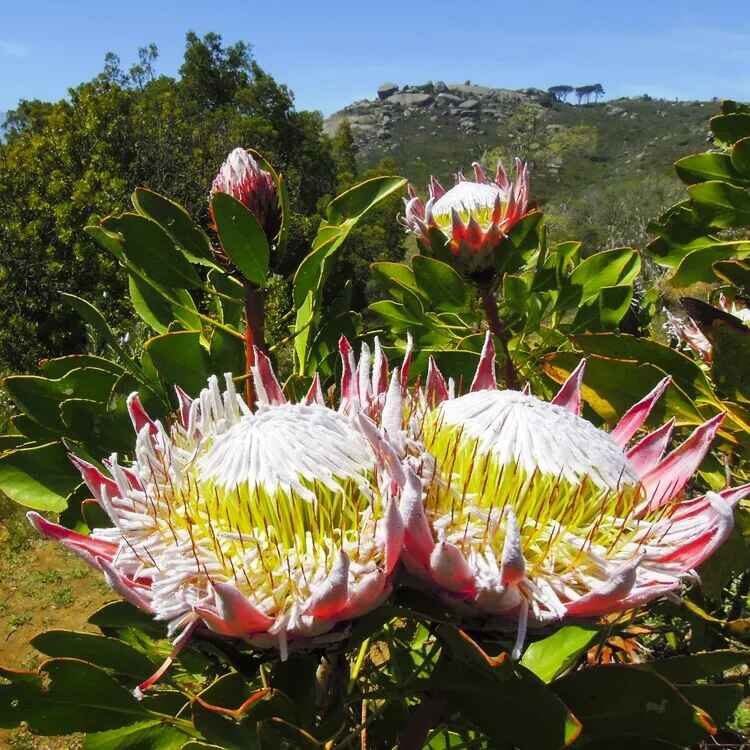
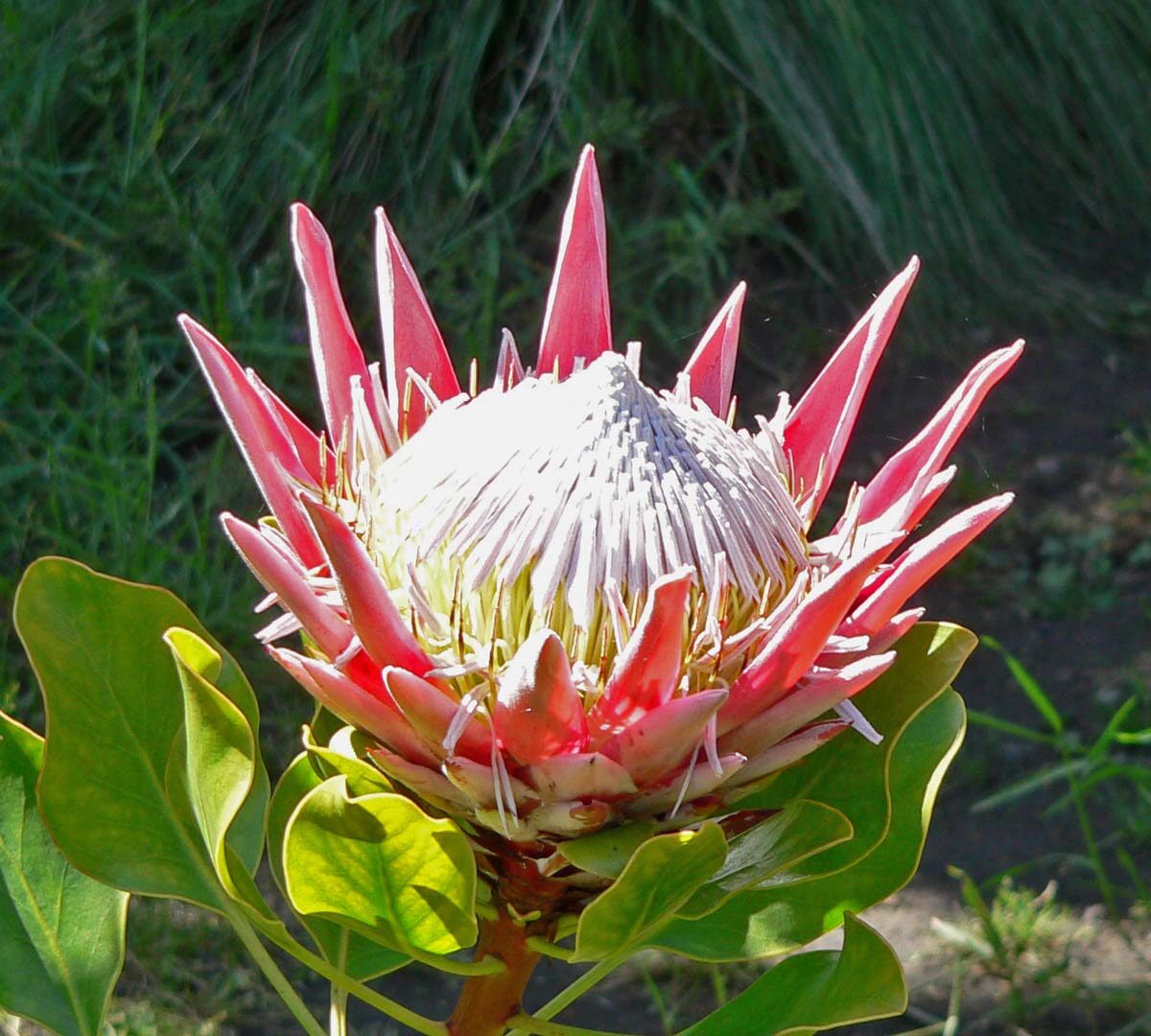
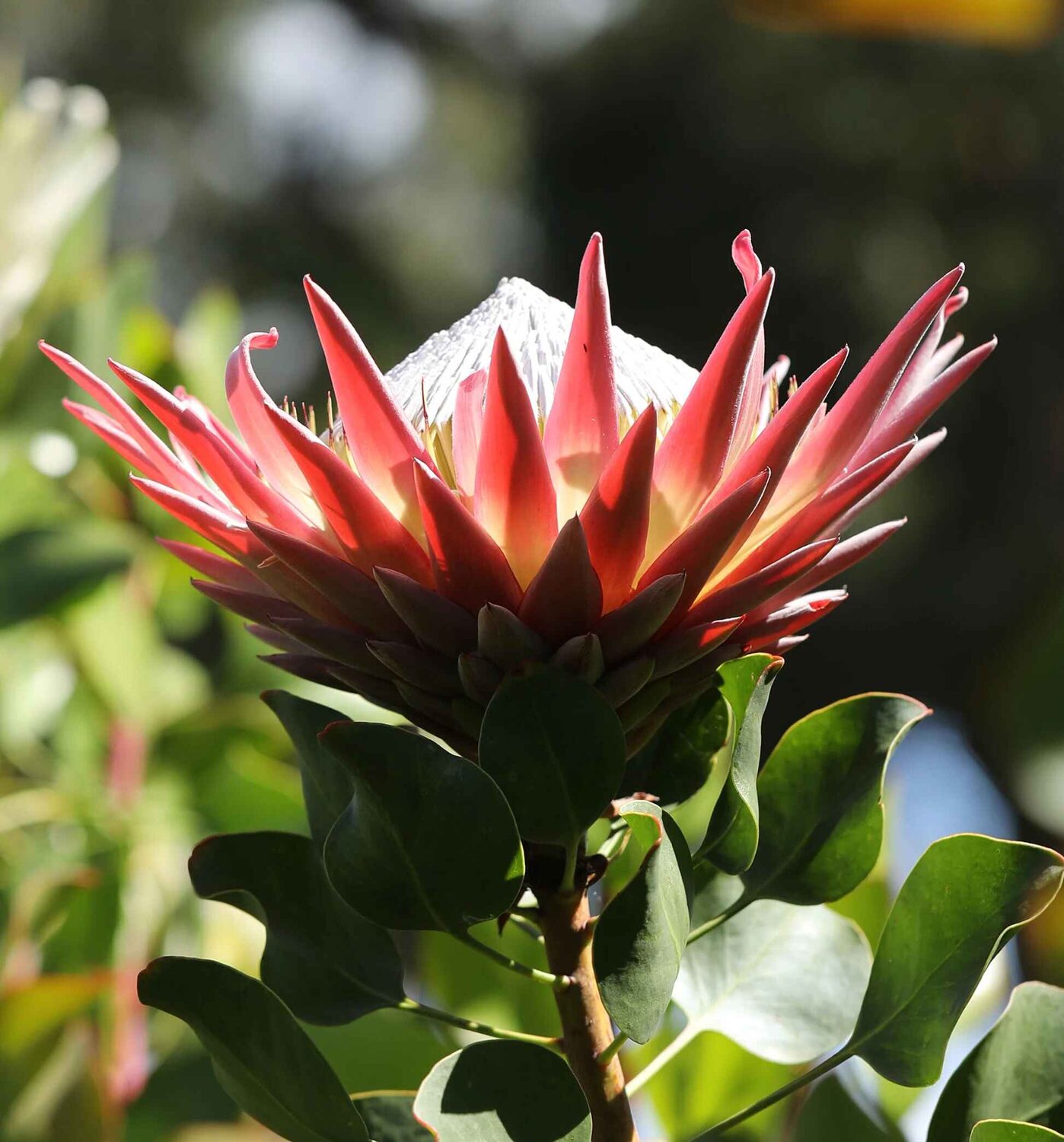
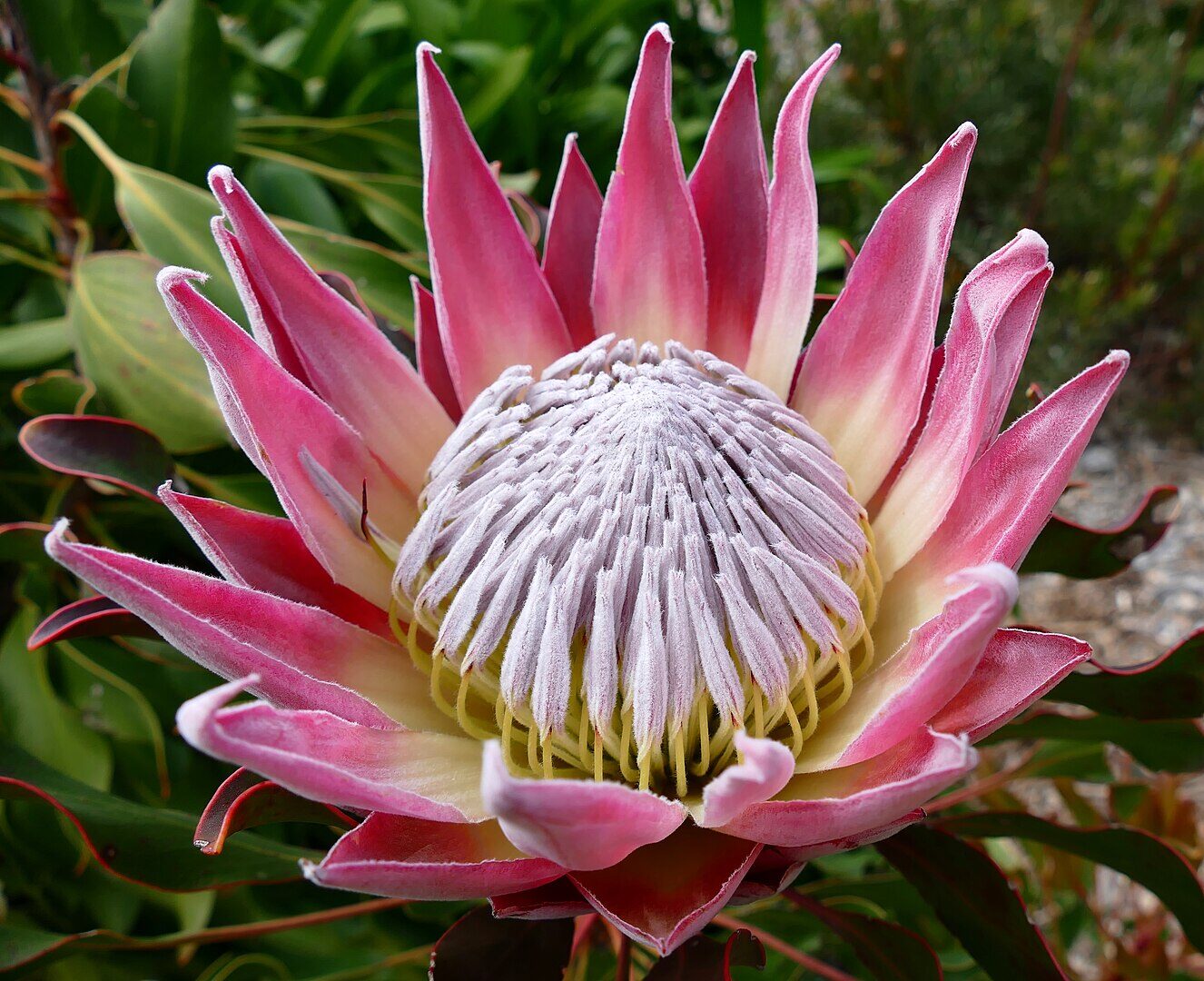
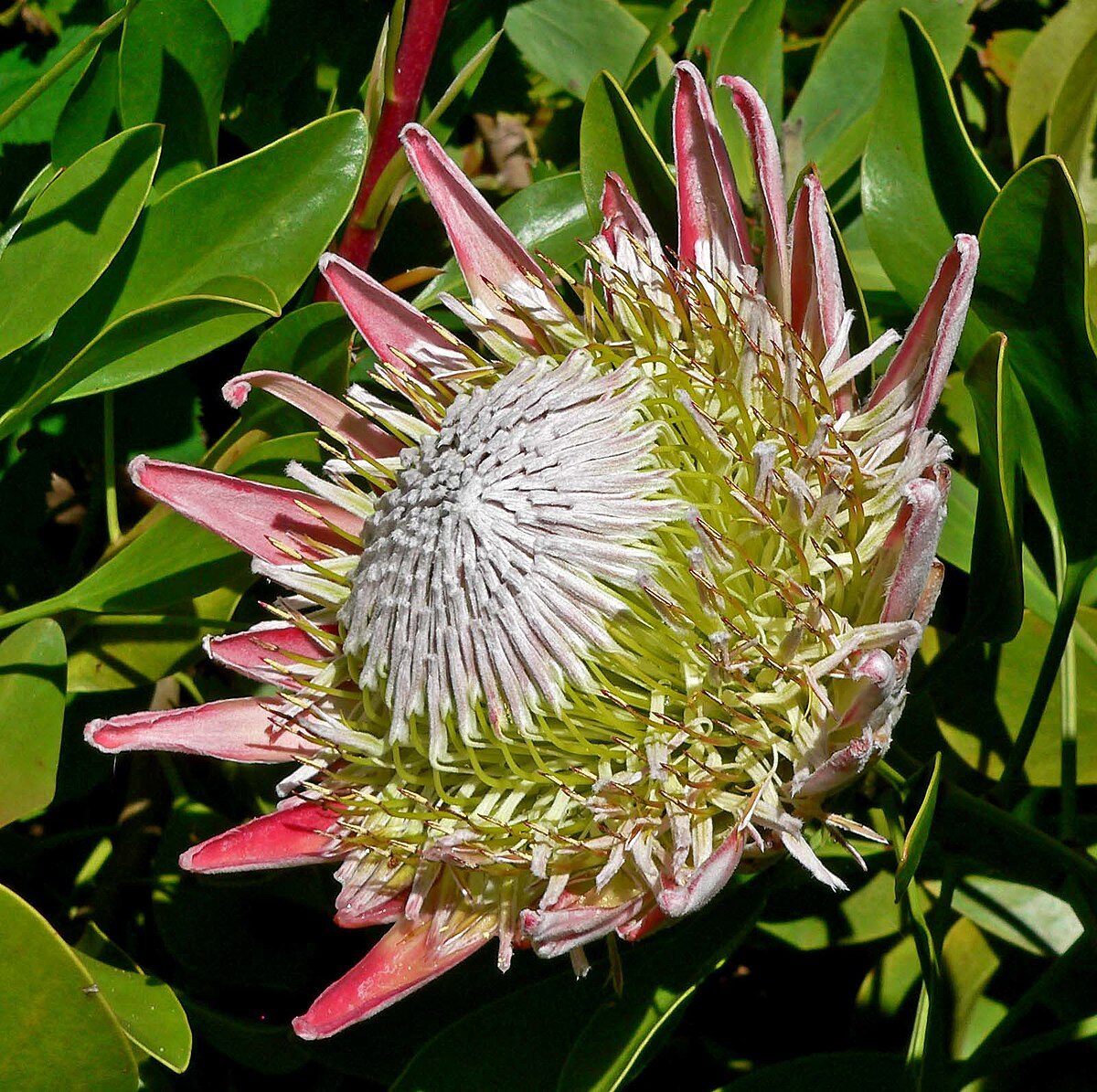
Grow the flower that florists worship. Protea cynaroides produces massive, crown-shaped blooms (up to 12 inches) in silky pinks, creams, and crimsons—vase-life lasting 2–3 weeks. Each plant yields 6–10 flower heads per season. Surprisingly easy in full sun and well-drained soil. Start from seed and own the luxury cut flower market. Your arrangements will never be the same.
Imagine stepping into your garden and cutting a flower so architecturally perfect, so lavishly colored, that it stops conversations mid-sentence. That’s Protea cynaroides—the King Protea, South Africa’s national flower and the darling of the global cut flower trade.
Native to the Cape Floristic Region—one of Earth’s six floral kingdoms—the King Protea evolved in fire-adapted fynbos where harsh conditions bred resilience and spectacular beauty. Named for the Greek sea-god Proteus (master of transformation), it embodies diversity: 81 garden varieties exist, ranging from creamy ivory to deep crimson, though the soft silvery-pink forms are most prized. The species name, cynaroides, hints at its artichoke-like bud form—nature’s promise of grandeur to come.
But here’s what makes this plant a commercial treasure: the cut flower. Florists worldwide consider the King Protea the ultimate focal flower—a single bloom commands an arrangement. Its massive, composite flower heads reach 6–12 inches in diameter, with a domed center of creamy-yellow florets surrounded by stiff, sculptural bracts that resemble a royal crown or honey pot (hence one common name). Once cut, these blooms maintain their architectural perfection for 16 days fresh, and they dry beautifully for permanent arrangements. Vigorous plants produce 6–10 flower heads per season; exceptional specimens yield up to 40. This is why 90% of South African proteas are exported—the King Protea commands premium prices in markets across New Zealand, Australia, Hawaii, and beyond. Grow it for cutting and you’ve essentially cultivated living jewelry.
Cultivation is more forgiving than many imagine. Plant in full sun (minimum 6 hours daily) in acidic, well-drained sandy soil—proteas dread waterlogging more than neglect. Water deeply but infrequently; once established, they’re genuinely drought-tolerant. Avoid phosphorus-rich fertilizer (proteas have evolved special root systems for nutrient-poor soils). Container growing is excellent in cooler climates; move indoors during frost. The plant grows 3–4 feet tall and wide, making it a stunning specimen in Mediterranean gardens, coastal settings, or as a focal point near patios. It’s nearly pest-free, requires minimal fussing, and bonds with you through years of abundant blooms.
Sow King Protea from seed and witness a transformation: from tiny seedling to a plant that gifts you gallery-quality flowers year after year. This is not merely ornamental gardening—it’s entering a legacy of fire-adapted beauty, economic value, and personal pride. Every bloom you cut is a small triumph over distance, proving that paradise can flourish in your own soil.
Only logged in customers who have purchased this product may leave a review.
Reviews
There are no reviews yet.