
Luminous silver-blue fronds that glow in moonlight, crowned by 15-foot cascades of creamy flowers. This hardy desert icon survives -10°C, thrives in poor soil with minimal water, and needs no fussing. Grow from seed and watch an architectural masterpiece unfold for 80+ years. Pure sculptural drama.
€8.50
This is the palm that stops traffic: a silvery-blue jewel from Baja California’s most unforgiving deserts that rewrites what a tropical tree can be.
Raised in the rocky canyons and arid mountain slopes of northwestern Mexico, Brahea armata has learned the art of survival—and turned it into pure visual spectacle. Its natural range is shockingly harsh, yet this palm emerges as one of the most cold-hardy, drought-tolerant, and low-maintenance giants you can grow. What makes it extraordinary is not that it survives hardship, but that it does so while wearing a coat of otherworldly blue.
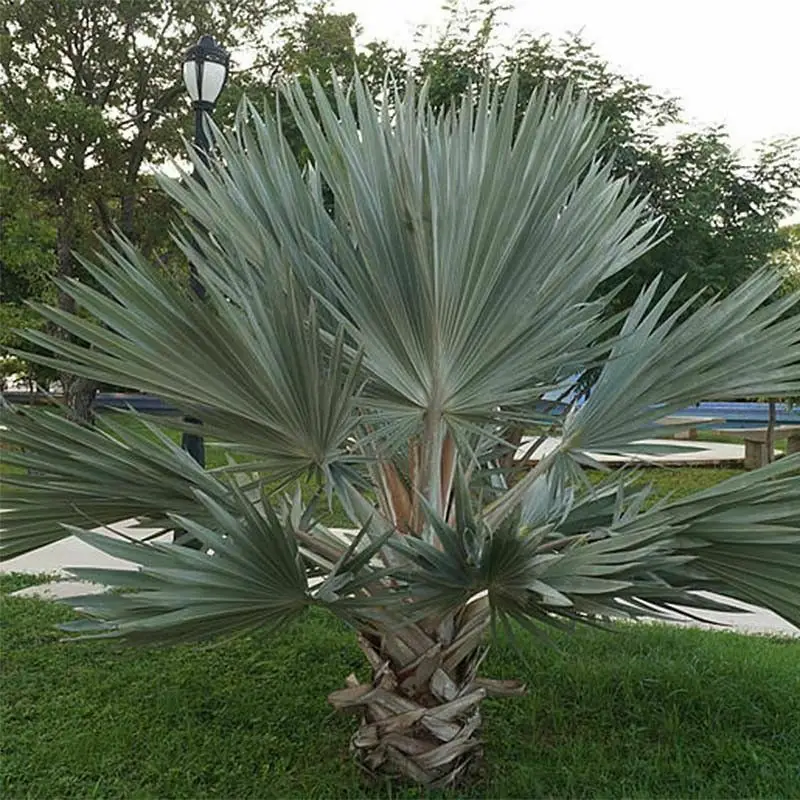
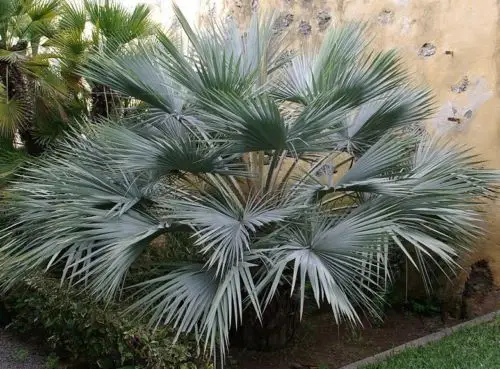
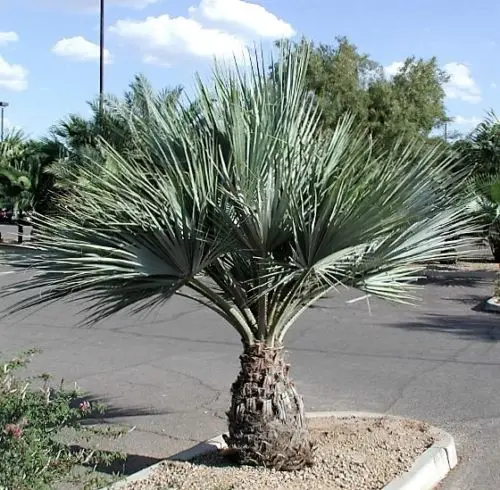
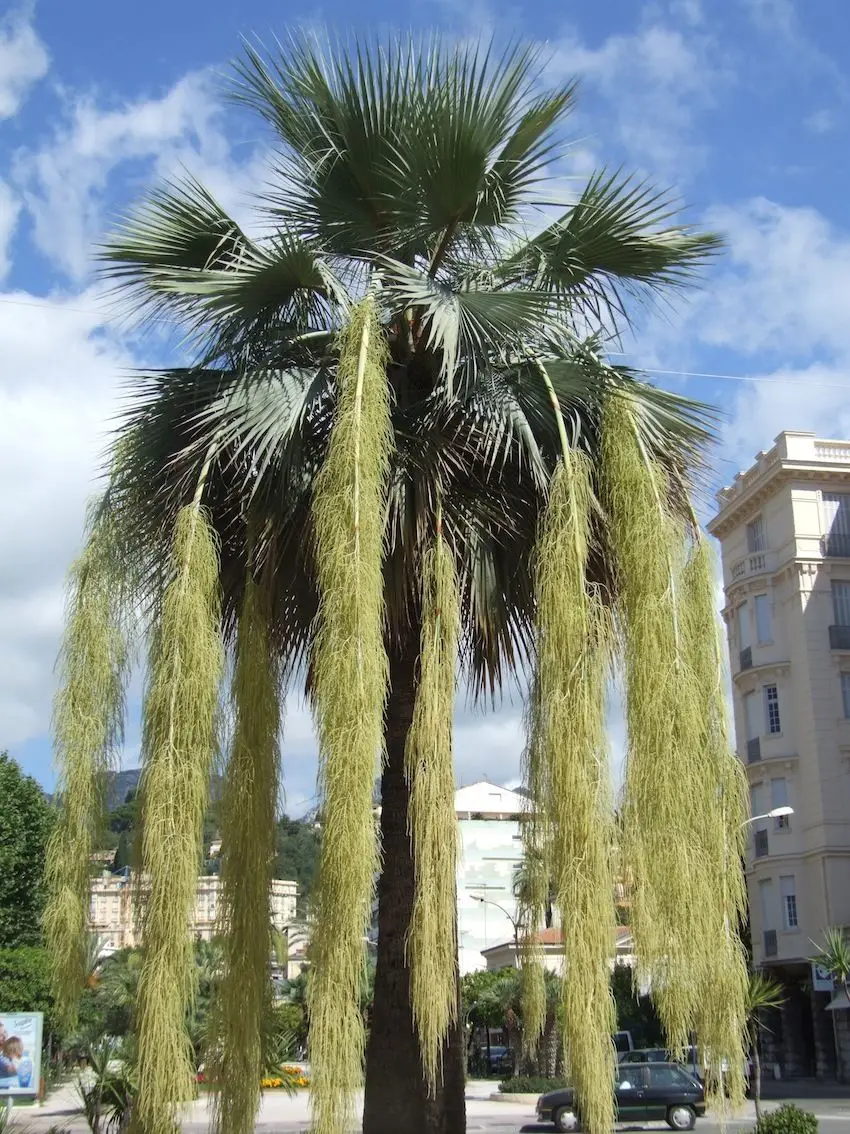
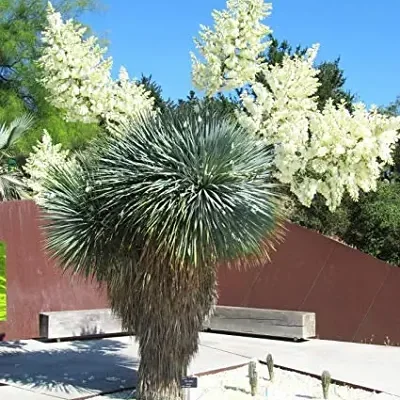
The foliage is the showstopper. Imagine enormous fan-shaped fronds—up to 2 meters across—cloaked in a luminous blue-gray powder that seems to emit light. This waxy coating isn’t decoration; it’s an evolutionary adaptation that reflects desert heat and reduces water loss. In moonlight, mature specimens take on an almost ghostly appearance. But here’s where Brahea armata truly flexes: the flowers. Each summer, it produces inflorescences reaching 5 meters—cascading garlands of creamy-yellow blossoms that arch outward and downward in tresses so dramatic they’ve inspired landscape designers worldwide. These are followed by rounded golden fruits that ripen to black, adding yet another layer of seasonal interest. The palm grows to 12-15 meters, developing a stout, textured trunk marked by the ghost-traces of shed leaves, creating a sculptural form that commands attention whether young or mature.
Ornamentally, Brahea armata is possibly the most striking palm available to temperate and Mediterranean climates. It’s gained the Royal Horticultural Society’s Award of Garden Merit for good reason. Large specimens have adorned the French Riviera for over 50 years, serving as living architecture in some of Europe’s most prestigious gardens. Whether you plant it as a specimen focal point, a sculptural accent near water features, or as a bold architectural element, it delivers drama without fuss. The slow, deliberate growth works in your favor—you’re not managing a rampant monster, but rather cultivating a living sculpture that improves with age.
What elevates this from ornamental to essential: the cultivation is almost trivially easy. Unlike tender tropical palms, Brahea armata is adapted to arid conditions and actually dislikes excess moisture. Plant in full sun (which intensifies the blue color) in well-drained, alkaline to neutral soil. Once established, it’s remarkably drought-tolerant, needing only occasional deep watering. Young plants need more frequent water and winter protection, but mature specimens handle -10°C with ease—some sources suggest hardiness to -12°C. This is a palm that thrives in lean, poor soils where other plants fail. It’s pest-resistant, disease-resistant, and asks for almost nothing. The low-maintenance profile means you’re free to simply enjoy it.
Grow this from seed and you’re beginning a multigenerational journey. Brahea armata is a slow grower at first, taking years to develop its trunk, but it accelerates gradually as it matures. Fresh seeds should be soaked for 24 hours and sown in well-draining seed mix; germination is erratic but rewarding. There’s something deeply satisfying about raising a plant that can live 80-100+ years, improving the landscape for your children and grandchildren. Start from seed now, and you’re planting a living legacy.
Only logged in customers who have purchased this product may leave a review.
Reviews
There are no reviews yet.