
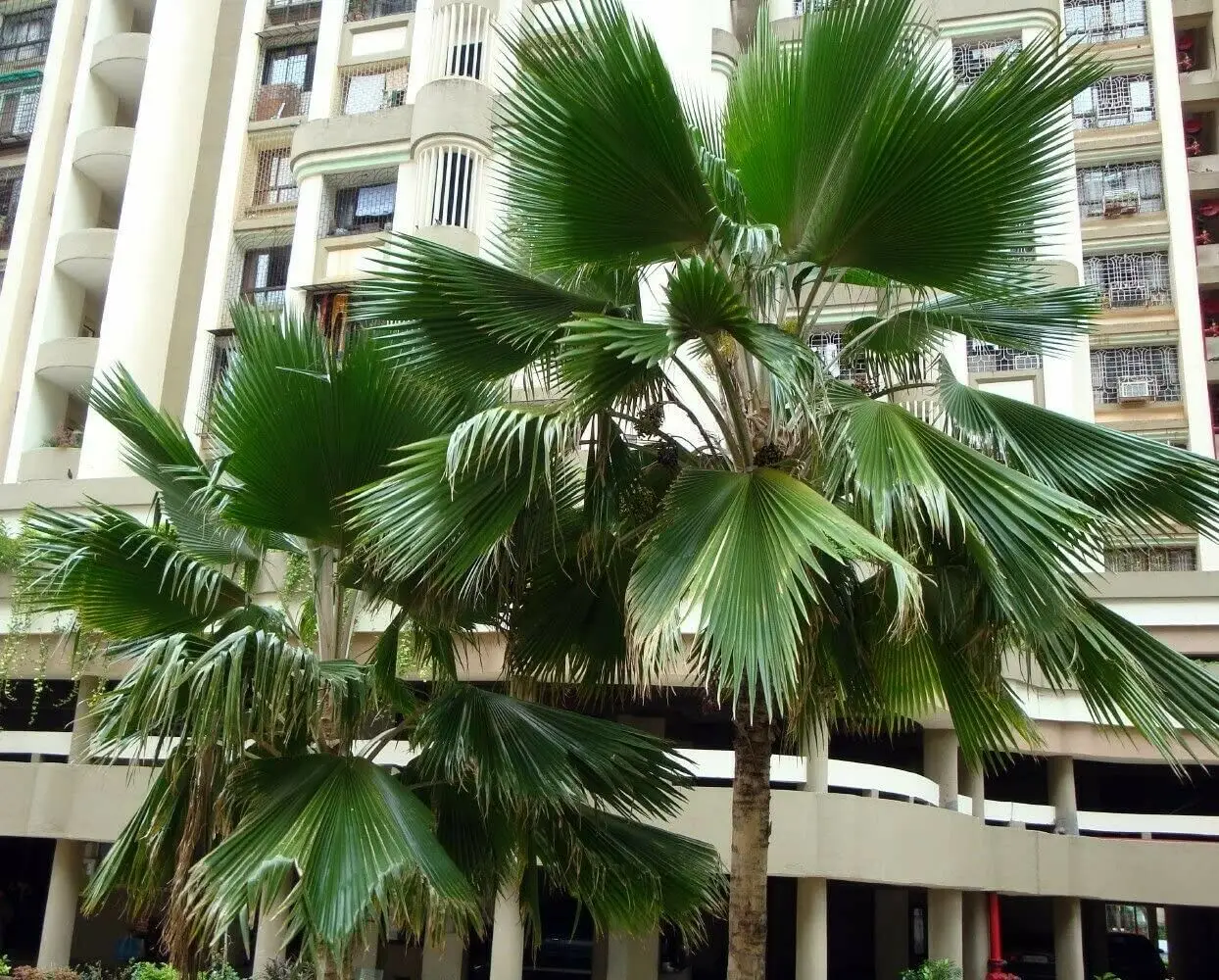
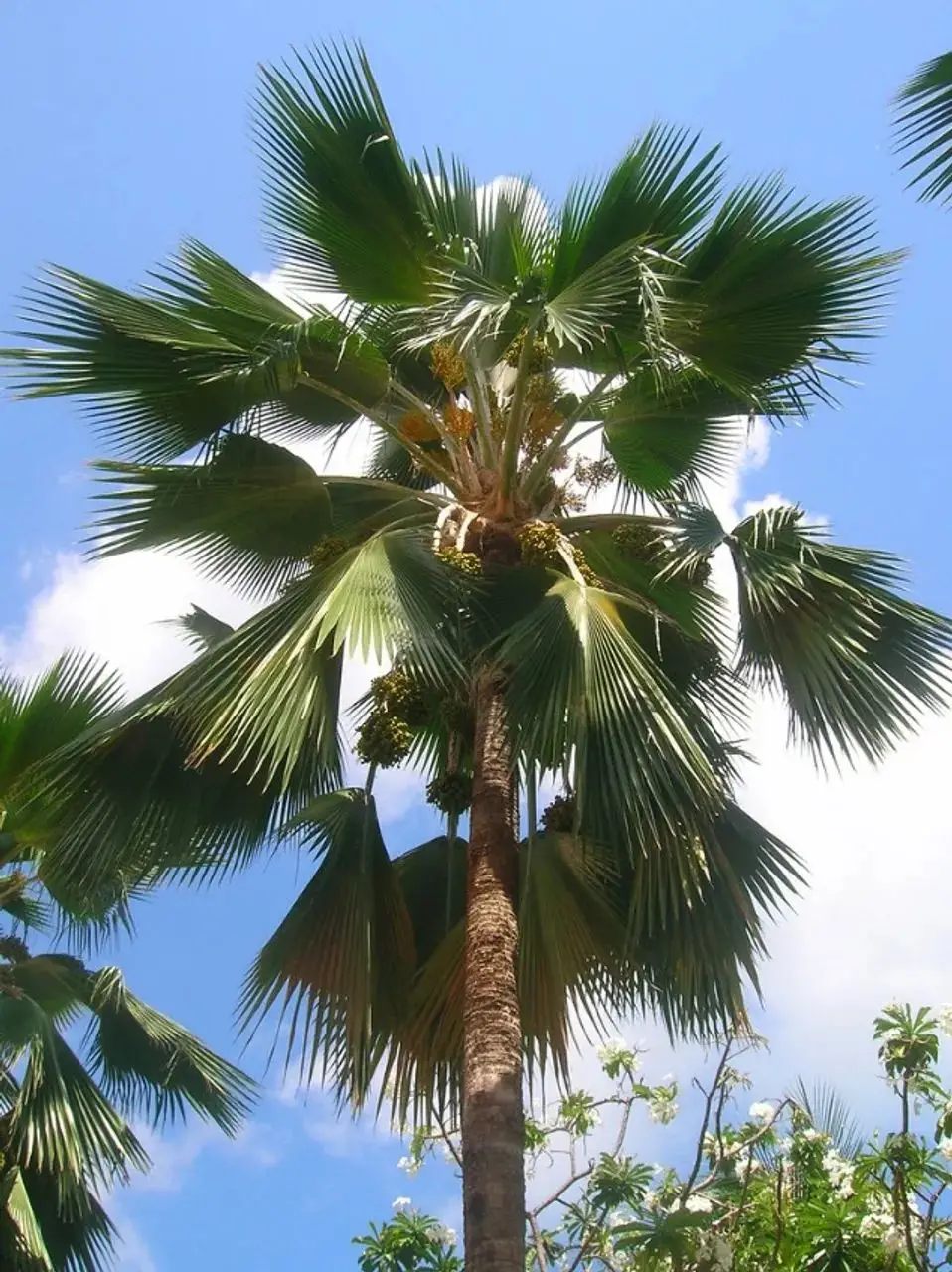
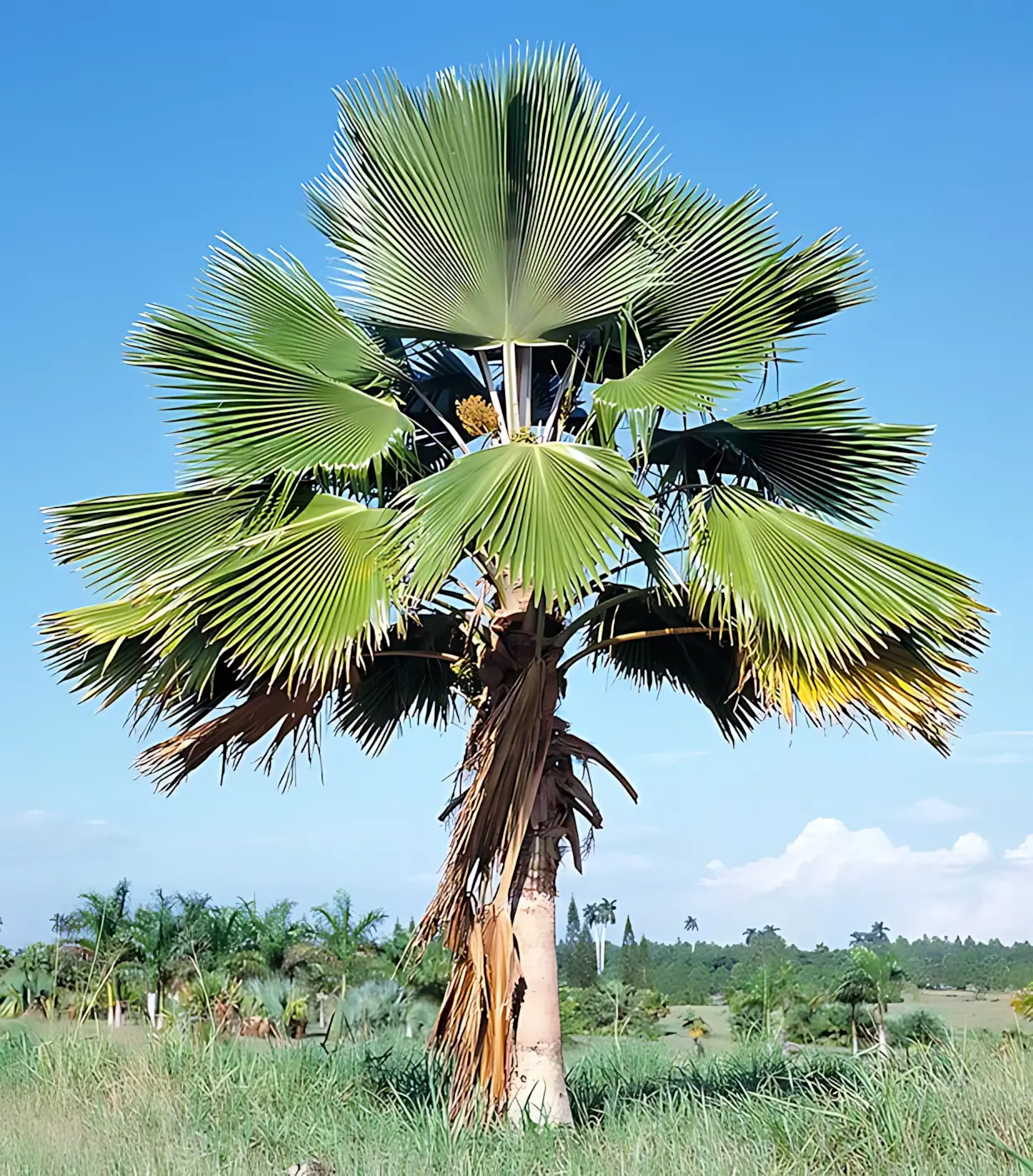
Grow the palm that once graced Fijian royalty. Pritchardia pacifica—with its magnificent 6-foot pleated fan leaves—was reserved exclusively for chiefs as ceremonial fans and umbrellas. Now you can cultivate this prestigious, slow-growing masterpiece from seed. Low-maintenance in warm climates, it matures into a living monument of Pacific history and unmatched elegance.
€2.13
This is the palm that whispered secrets in the courts of Pacific chiefs—a living legacy of Polynesian prestige and timeless beauty.
Pritchardia pacifica originates from the misty islands of Tonga and has wandered across the Pacific—to Fiji, Samoa, the Marquesas—for centuries, likely carried by ancient voyagers who recognized its extraordinary character. The genus name honors William T. Pritchard, the 19th-century British consul in Fiji, and in Tongan it is called *piu* or *niupiu*. This is a palm with history in its fiber, distinction in every frond.
But here is what makes this species truly irreplaceable: In traditional Fijian culture, the massive fan-shaped leaves of Pritchardia pacifica were called **Ai viu**—the word itself meaning both “fan” and “umbrella.” These were not garden ornaments. They were *prestige*. Only Fijian chiefs possessed them. Master craftspeople would attach the enormous 6-foot pleated leaves to frames of light, flexible wood, creating fans and umbrellas of such beauty and authority that they became symbols of rank itself. The leaf was held overhead when rain fell—elegantly shedding water while the holder remained dry beneath living royalty. You held not a palm frond, but power. In villages, only one or two Pritchardia pacifica trees existed—enough to supply a chief’s entire court with this singular material. The trunk itself was occasionally repurposed for ridge-beams in important structures. To own a Fiji Fan Palm, then and now, is to plant a throne room in your garden.
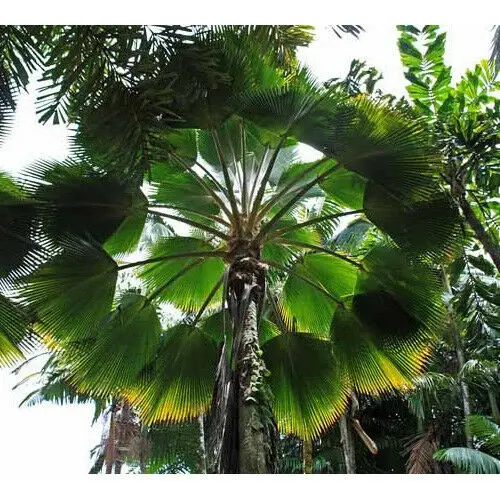
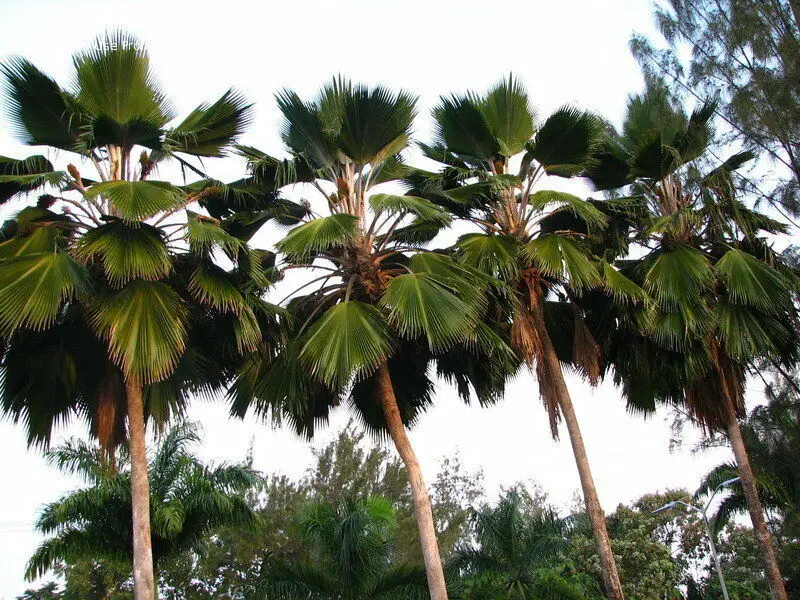
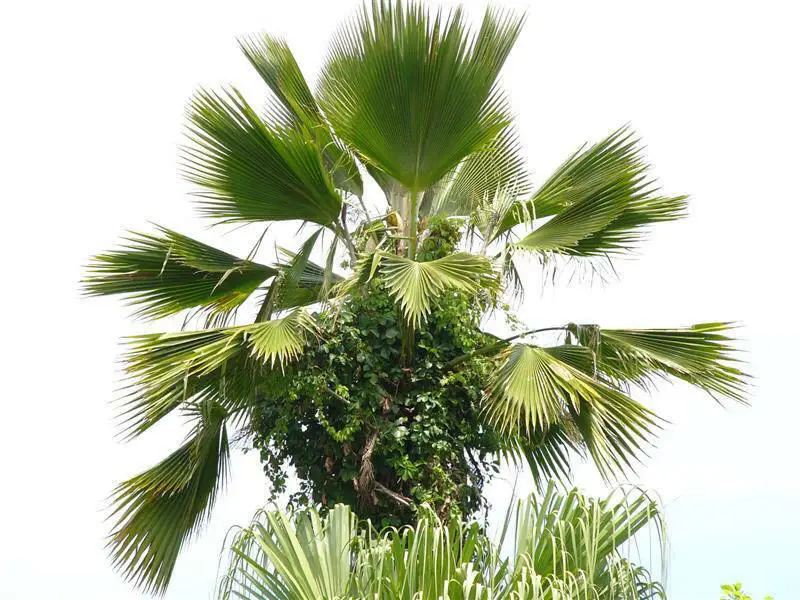
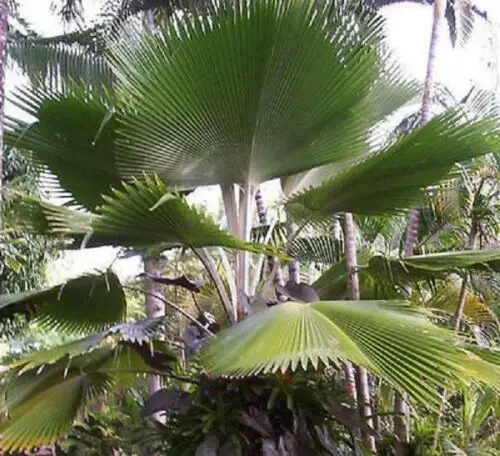
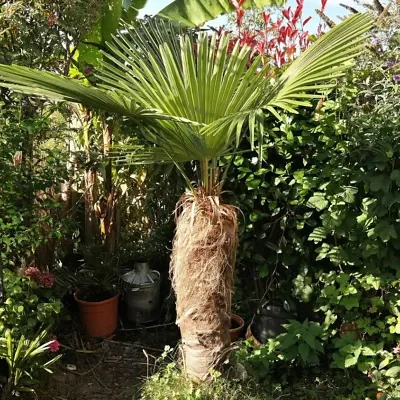
This isn’t merely an ornamental—though it absolutely is stunning. You are cultivating a *cultural artifact*, a species that embodies human reverence for botanical magnificence. Every pleated frond, every new emergence from the crown, is a continuation of a living tradition. The leaves emerge in lime-green splendor, perfectly costapalmate (fan-shaped), divided into dozens of stiff, elegant segments, sometimes reaching 6 feet in length and nearly as wide. The trunk is a study in restraint—smooth, gray-tan, swollen slightly at the base, ringed with the leaf scars of decades. In summer, fragrant, delicate brown flowers bloom in clusters, followed by small dark fruits that attract birds and wildlife. The whole plant breathes with quiet authority, never shouting, always commanding respect.
Growing Pritchardia pacifica is an act of patience rewarded. This is a slow-growing species—refreshingly so in our instant age—and that slowness is part of its charm. It reaches reproductive maturity after 5 to 8 years, and can live for a century or more, meaning you are planting for posterity. The plant thrives in tropical and subtropical warm climates (USDA zones 10–11), preferring bright, filtered light or partial shade. It loves moisture and humidity—mimic its Pacific island homeland with consistently moist, well-draining soil rich in organic matter. Peat, perlite, sand create an ideal medium. The palm tolerates salt spray, so coastal planting is ideal. Keep temperatures consistently above 60°F; frost will damage it. Water regularly during growth, especially in dry spells, but avoid waterlogging. Monthly balanced fertilizer during spring and summer feeds the slow-growing crown. From seed to fruiting specimen requires patience, but the reward is immeasurable—a living connection to Polynesian nobility, a botanical ambassador of the South Pacific.
Imagine standing beneath a canopy of 6-foot fan leaves, watching afternoon light filter through their pleated geometry, knowing that centuries ago, a Fijian chief held that very form of leaf above their head in ceremony and majesty. That moment is waiting for you in seed form. Grow Pritchardia pacifica not as decoration, but as a pilgrimage to the heart of Pacific culture—and to your own sense of what truly matters in beauty. Every new frond is a small revolution against the disposable, a whisper of immortality in the language of leaves. This is more than a palm. This is legacy.
Only logged in customers who have purchased this product may leave a review.
Reviews
There are no reviews yet.