
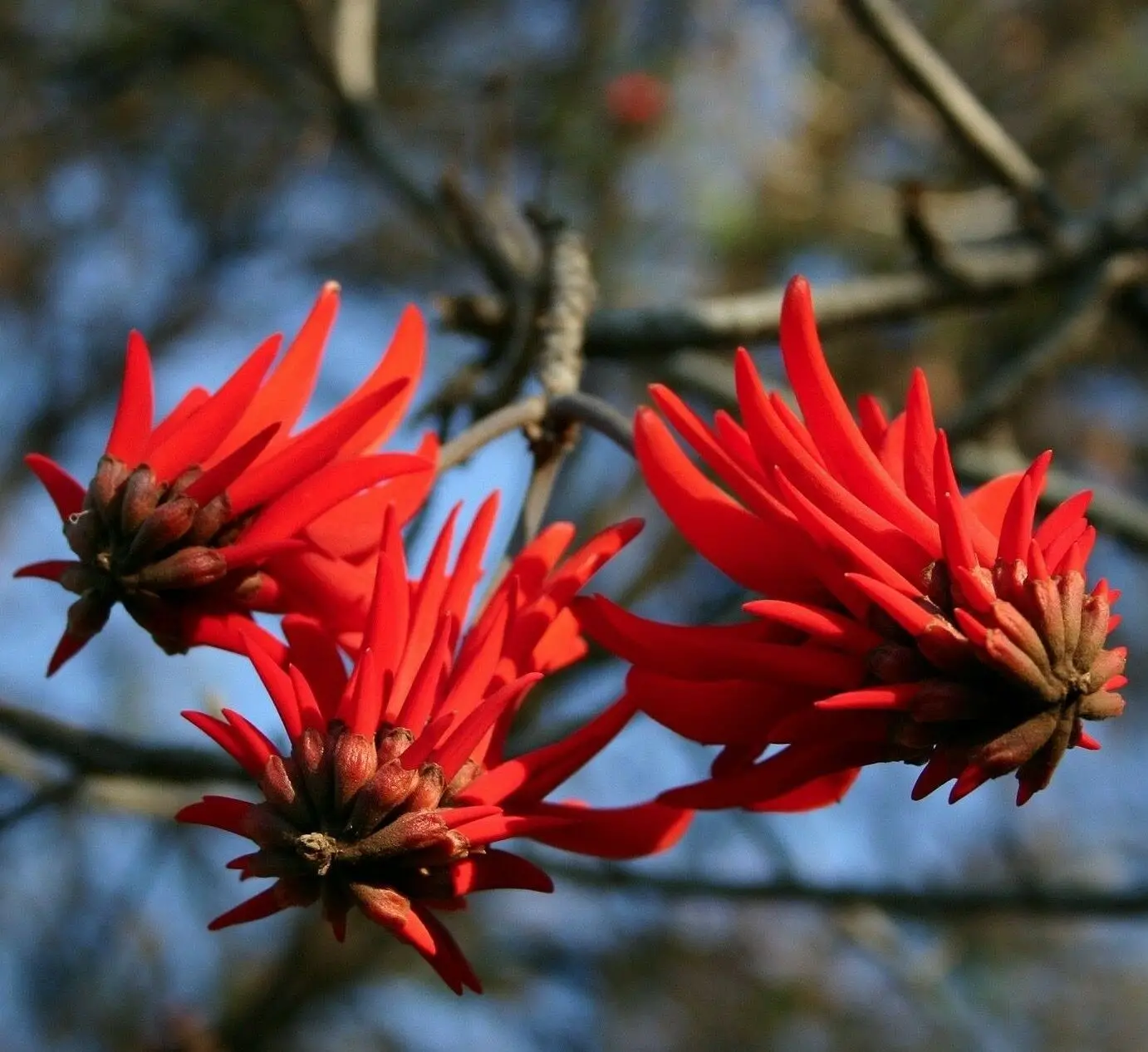
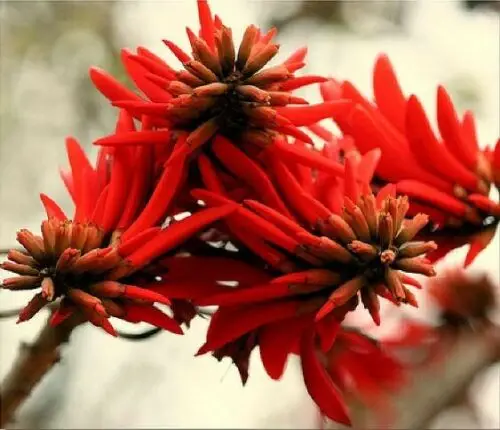
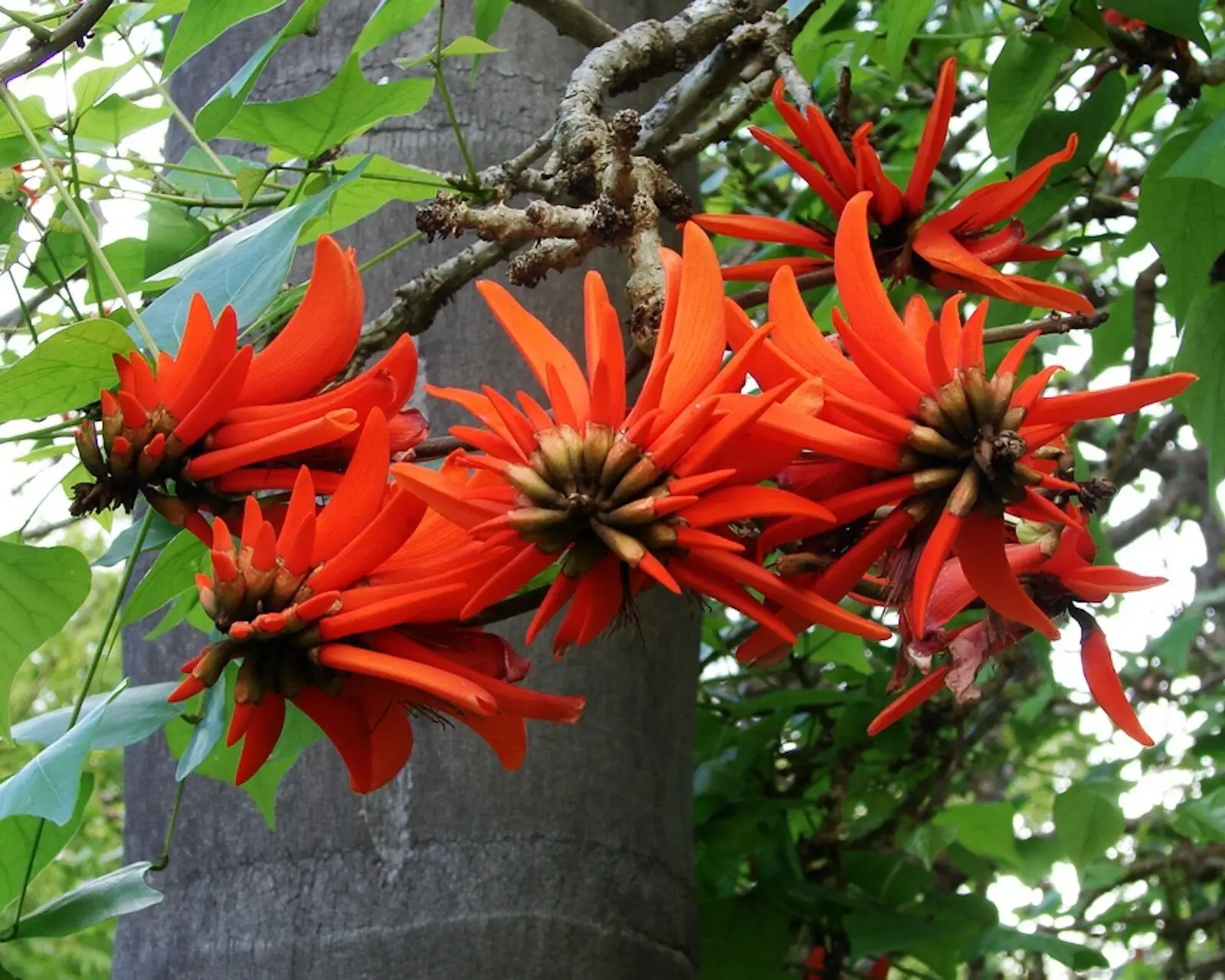
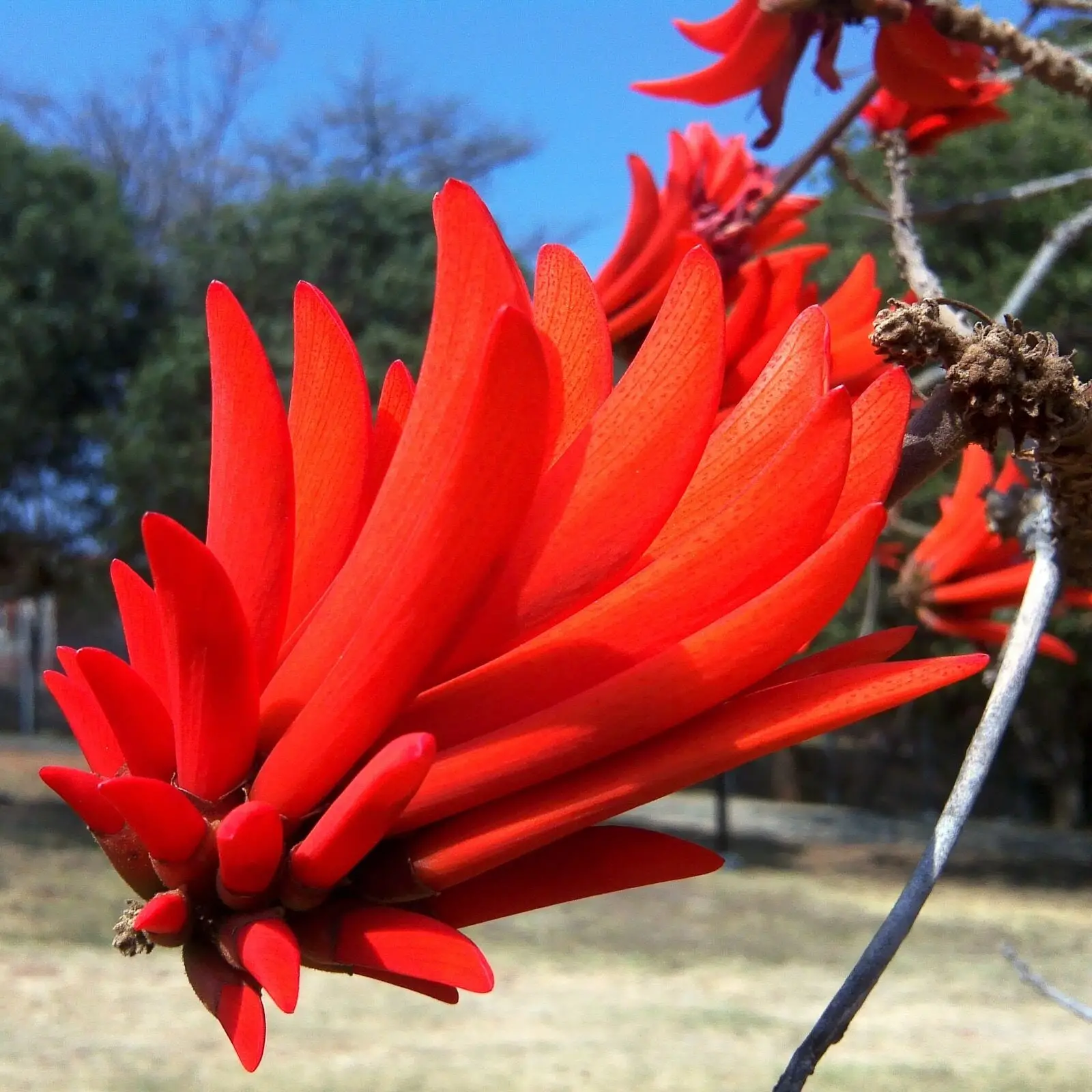
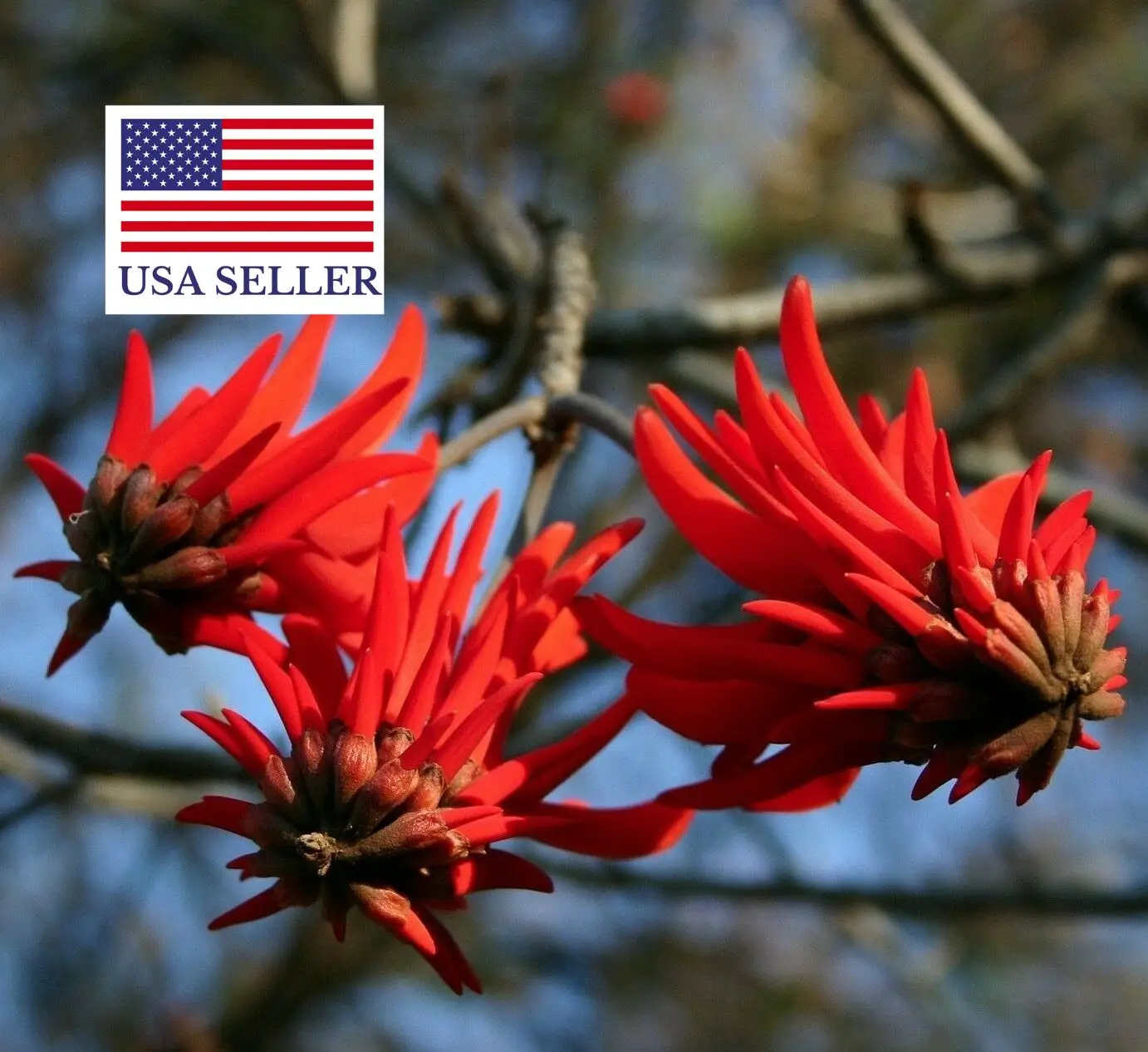
Picture bare branches igniting with brilliant scarlet flowers in the depths of winter. Erythrina lysistemon is the ultimate spectacle tree—masses of jewel-toned blooms on naked wood before a single leaf emerges. It grows fast, loves full sun, tolerates poor soils, and pairs brilliantly in bonsai. Seed it now for a tree that becomes the showstopper of your winter garden.
€3.11
Winter arrives, and most gardens turn grey—except yours. Erythrina lysistemon transforms itself into pure drama, a tree of scarlet fire when the world expects bare branches and dormancy.
Native to South Africa, this deciduous tree grows to 2–12 meters and has earned its many names—Lucky Bean Tree, Sacred Coral Tree, the harbinger of spring. This medium-sized deciduous tree is remarkably adaptable, thriving in a wide range of conditions from coastal gardens to inland savannas. For centuries, gardeners have prized it for one unmatchable quality: brilliant orange to dark red flowers on branches free of leaves in the dry winter months. When it flowers, the effect is hypnotic—regal, scarlet blooms sit stark against the stocky, grey, naked trunk, creating a visual drama that photographs cannot capture.
But there’s more to love. Its tubular, scarlet flowers are adapted to attract nectar-feeding birds such as sunbirds, bulbuls, mousebirds, and white-eyes, as well as insects like bees. The flowers produce abundant nectar, turning your garden into a living wildlife theater. And here’s the icing: this species is often trained as a bonsai. If you’ve dreamed of creating a miniature flowering masterpiece, Erythrina lysistemon responds beautifully to bonsai cultivation. The unusual flowering stems are perfect for the vase, too—bring those scarlet spikes indoors and gasps of delight follow. The tree is also nitrogen-fixing through bacterial in the roots, quietly enriching the soil around it.
Growing this tree is forgiving. It thrives in a wide range of conditions and has become a symbol of the approaching spring throughout southern Africa. The combination of stunning flowers, ease of cultivation, and wildlife value makes it one of the most popular indigenous trees for warm-climate gardens. It has a rapid growth rate, adding to its appeal. The Coral Tree thrives in full sunlight and prefers moderate temperatures. It requires a seasonally dry climate and should be watered sparingly, allowing the soil to dry out between waterings. It prefers well-draining loamy soil and can tolerate a range of soil types but performs best in soil that is not too rich in nutrients. Propagation is relatively easy through seeds or stem cuttings. Seeds should be soaked in water before planting to improve germination.
Imagine it now: a medium-sized tree with a sculptural trunk, thorny branches that catch winter light, and in the coldest months when hope fades, an explosion of scarlet that stops traffic. Every bird in your region will find you. Every eye that passes will pause. You’ll be the one growing the tree that makes people ask, “What is that?” Start it from seed—the cheapest, most rewarding path to a legacy tree that will outlive you and still set your garden on fire each winter. Your future garden awaits.
Only logged in customers who have purchased this product may leave a review.
Reviews
There are no reviews yet.