
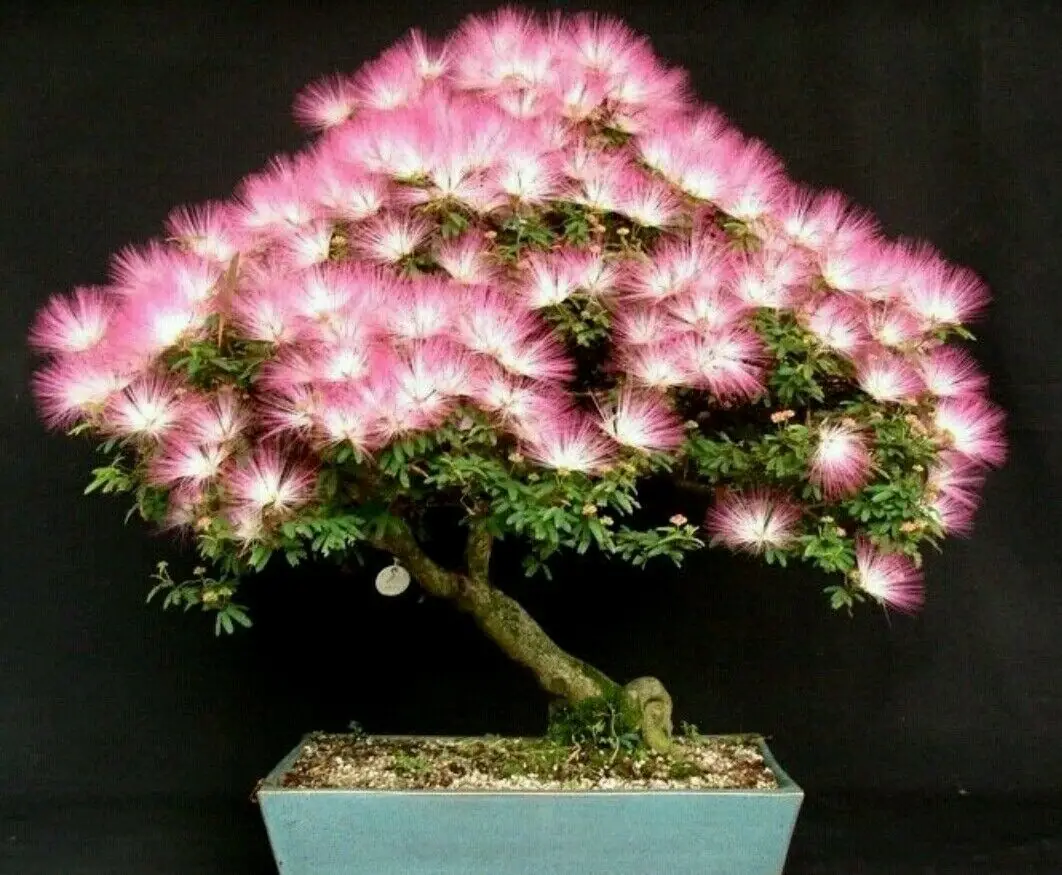
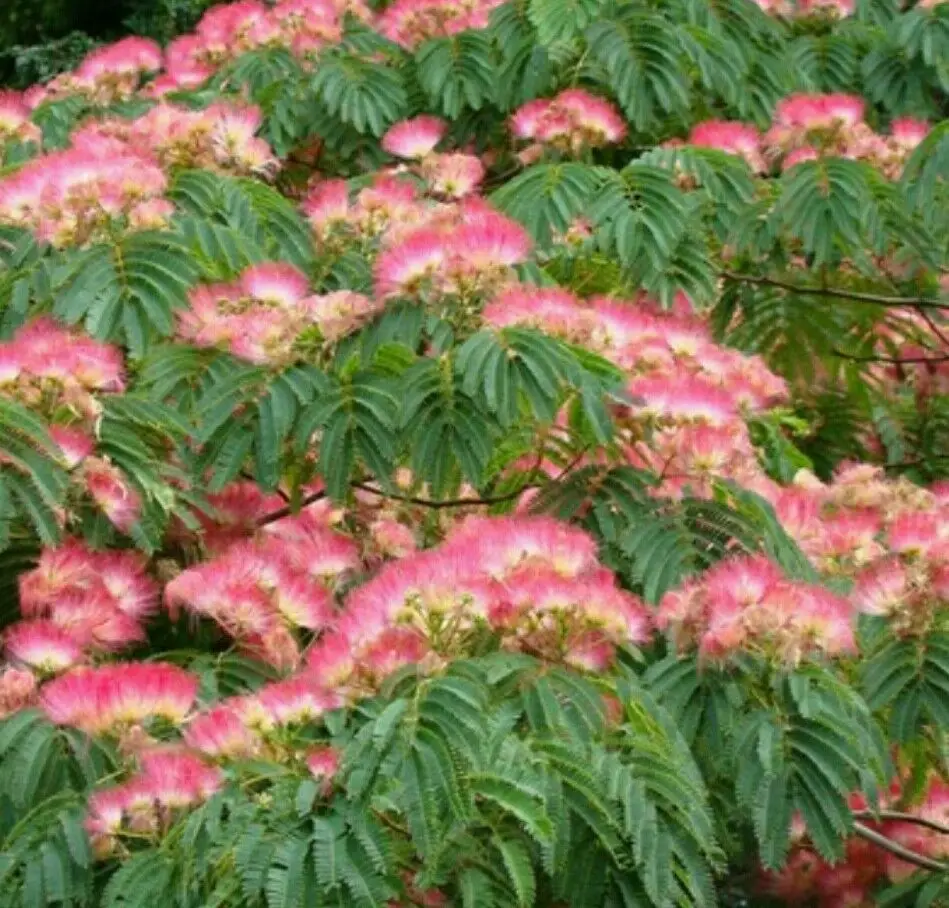
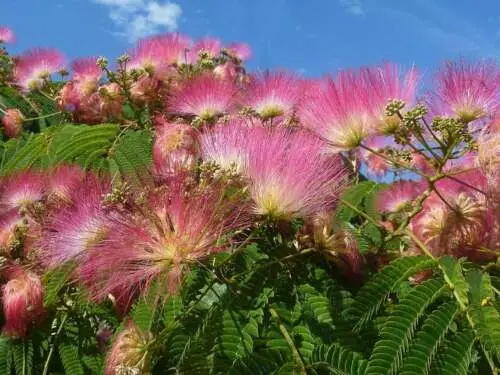
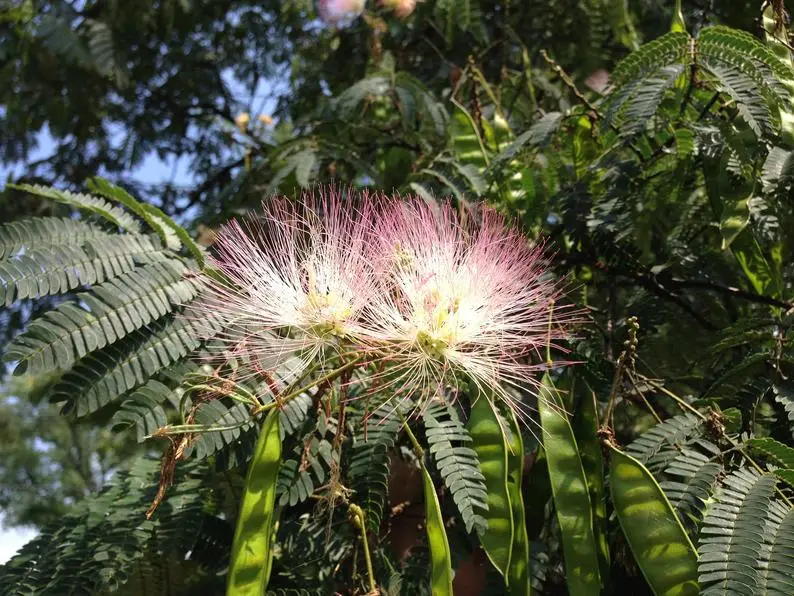
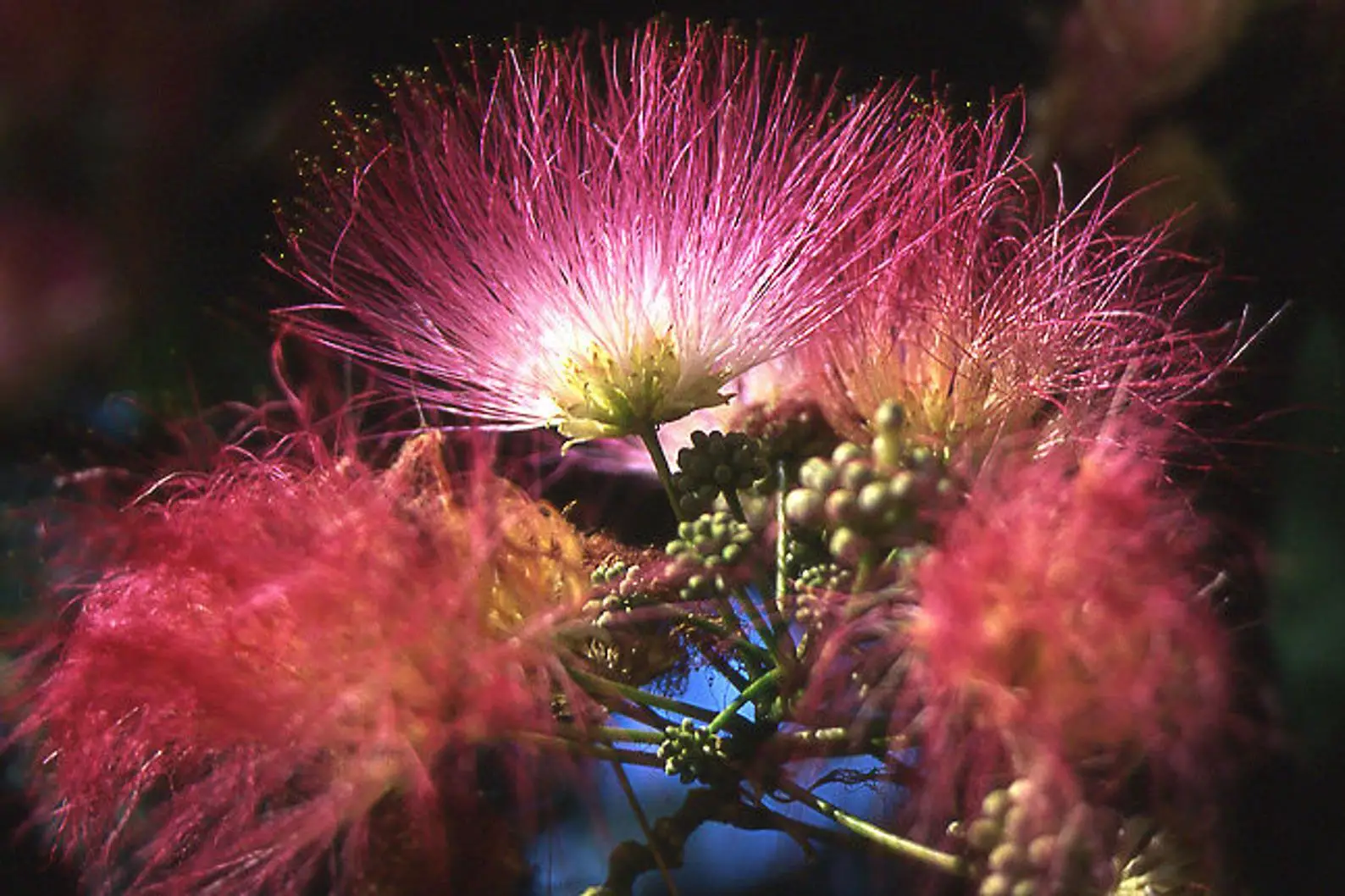
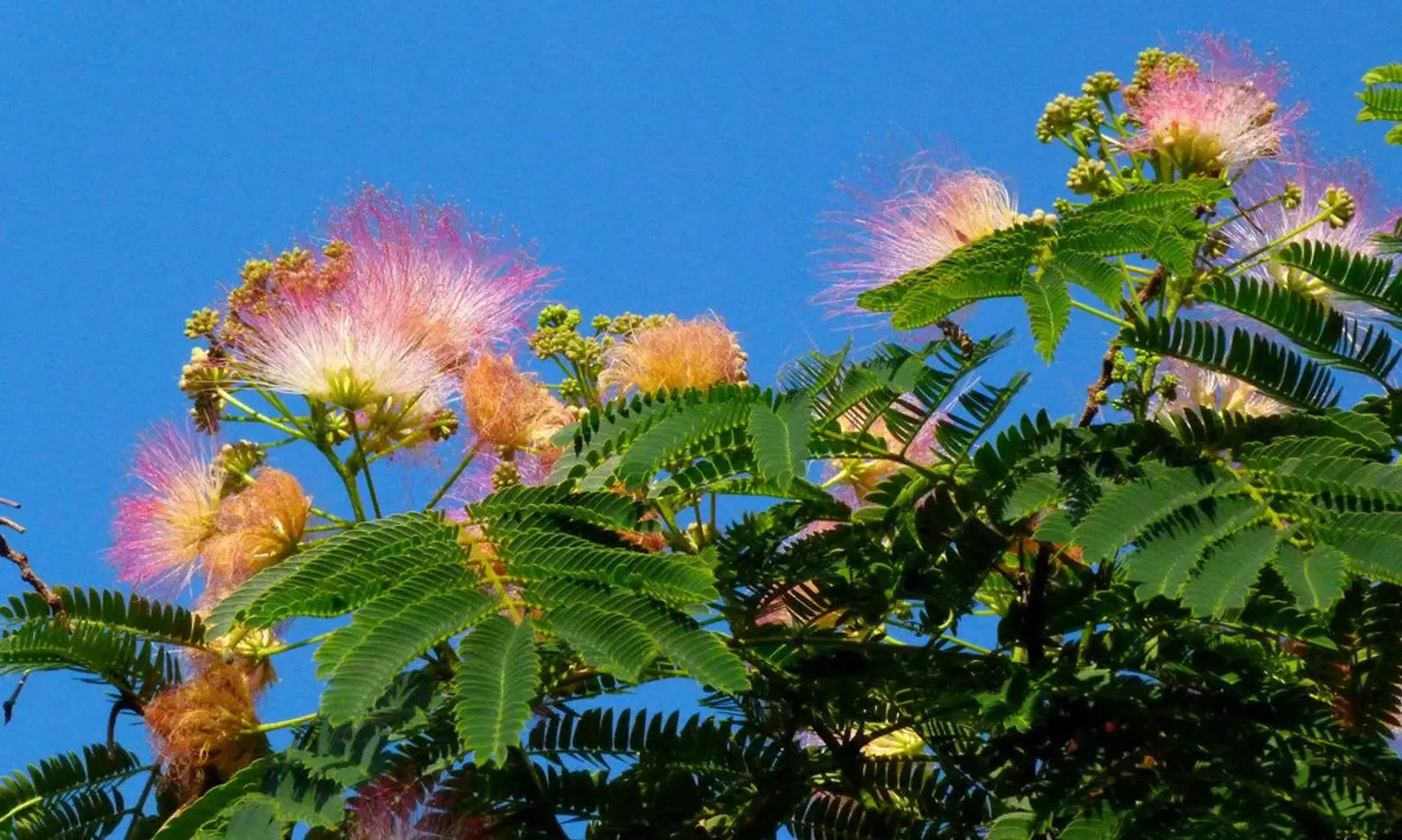
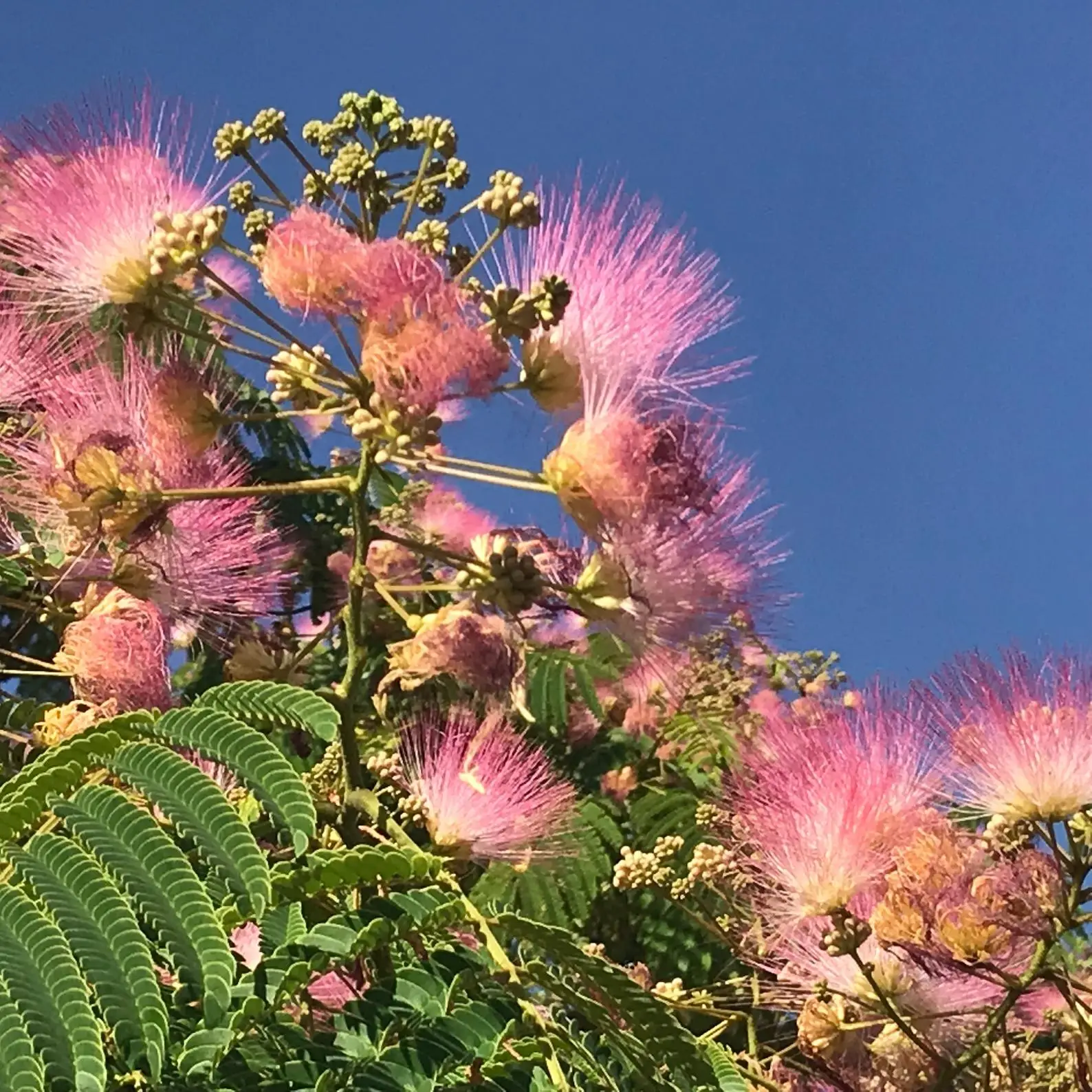
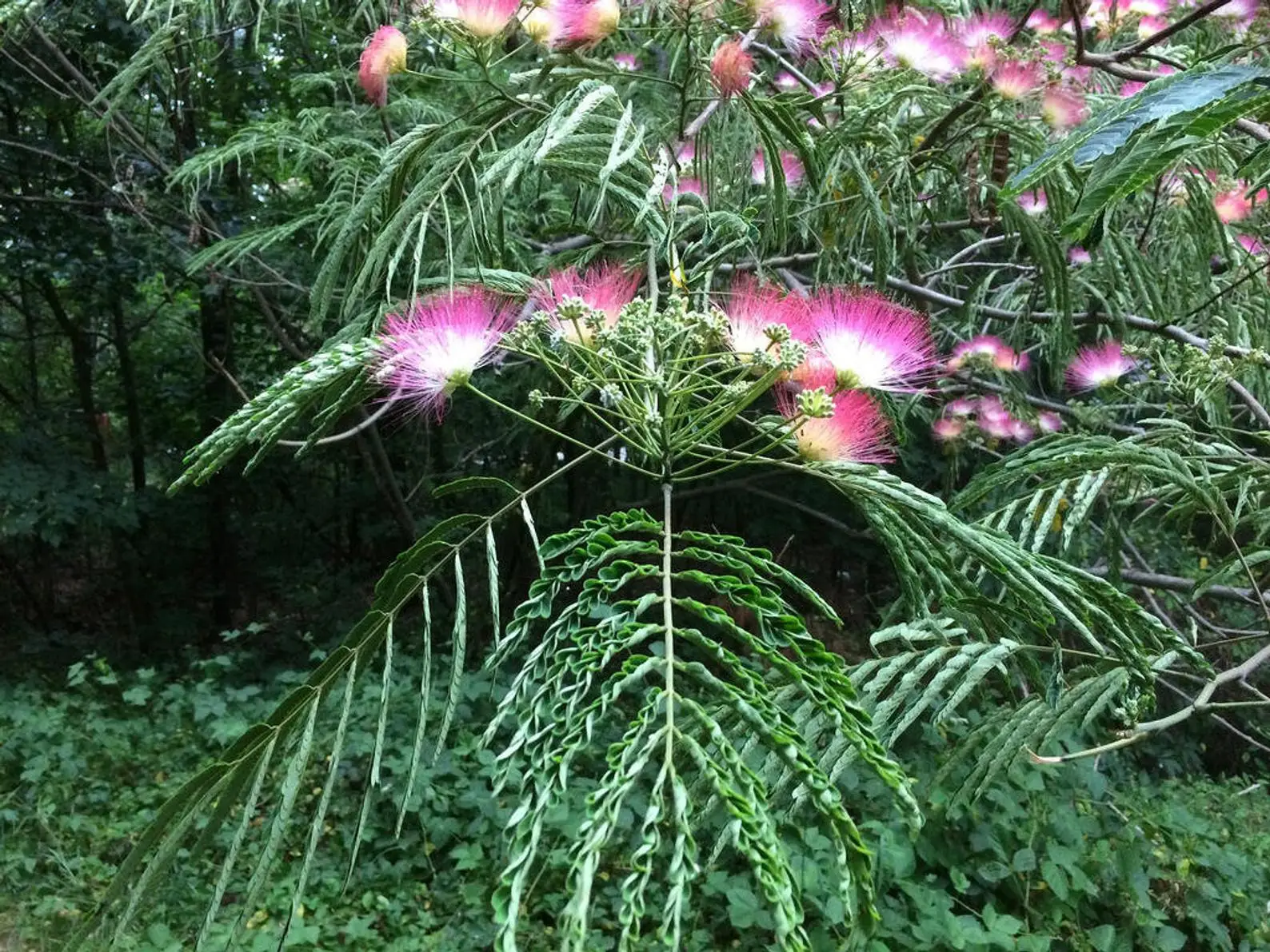
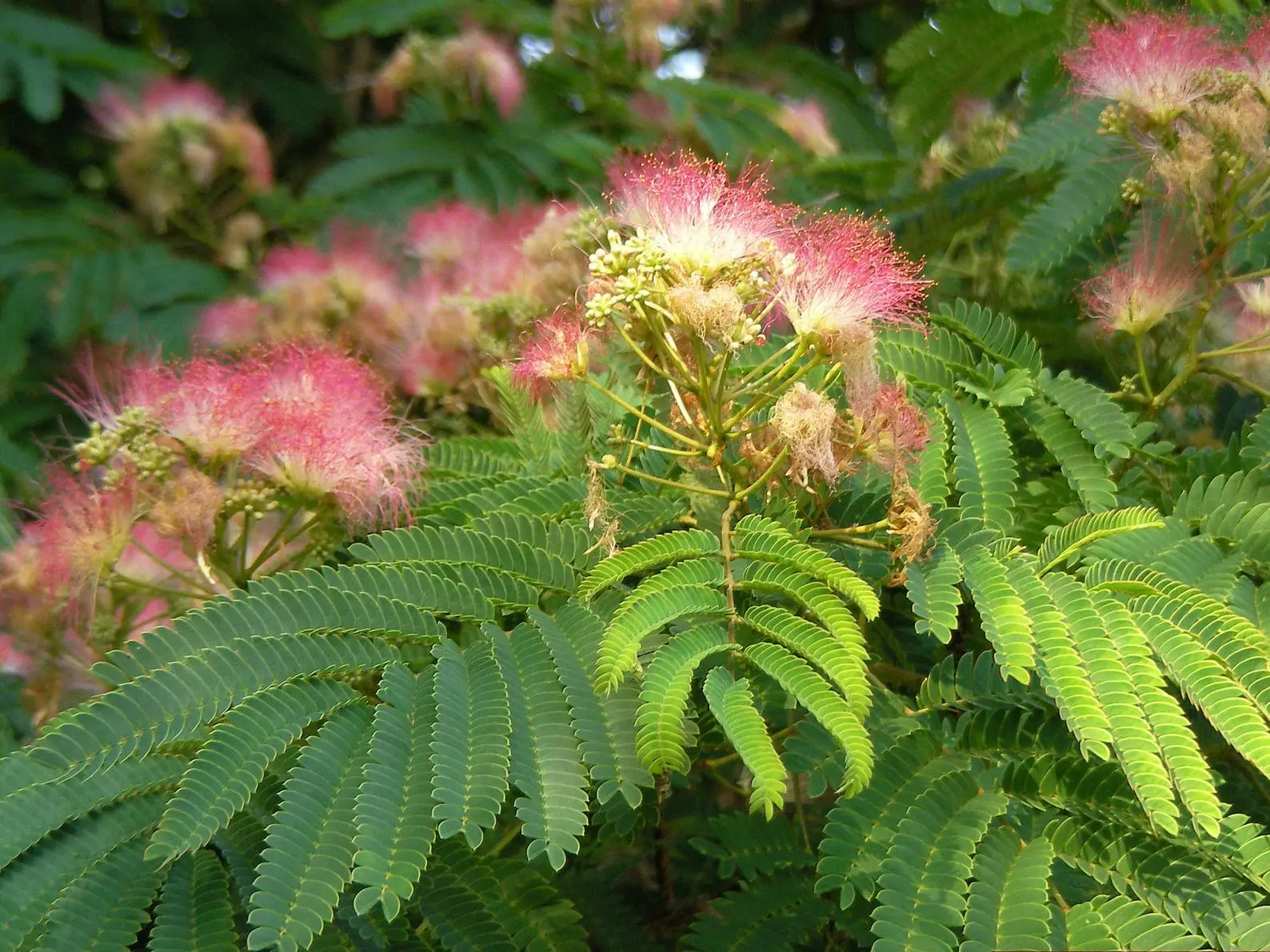
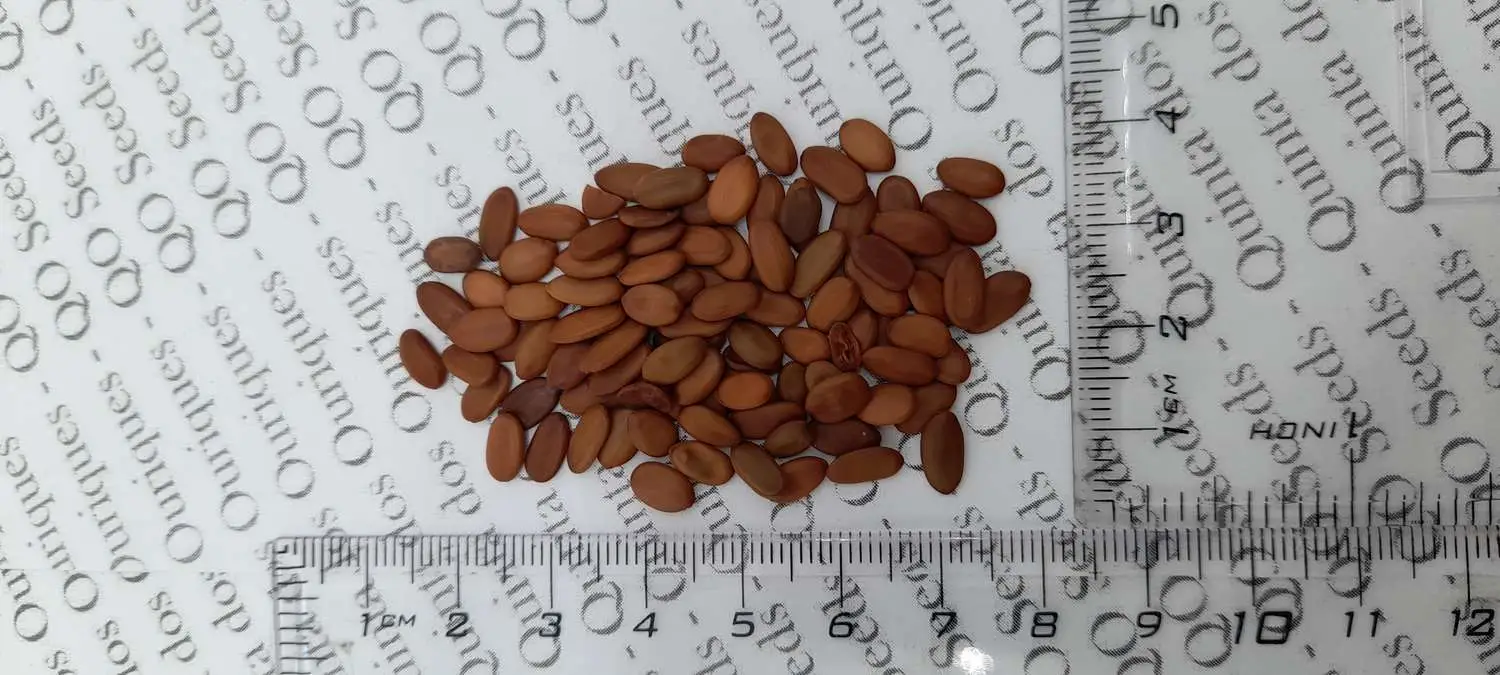
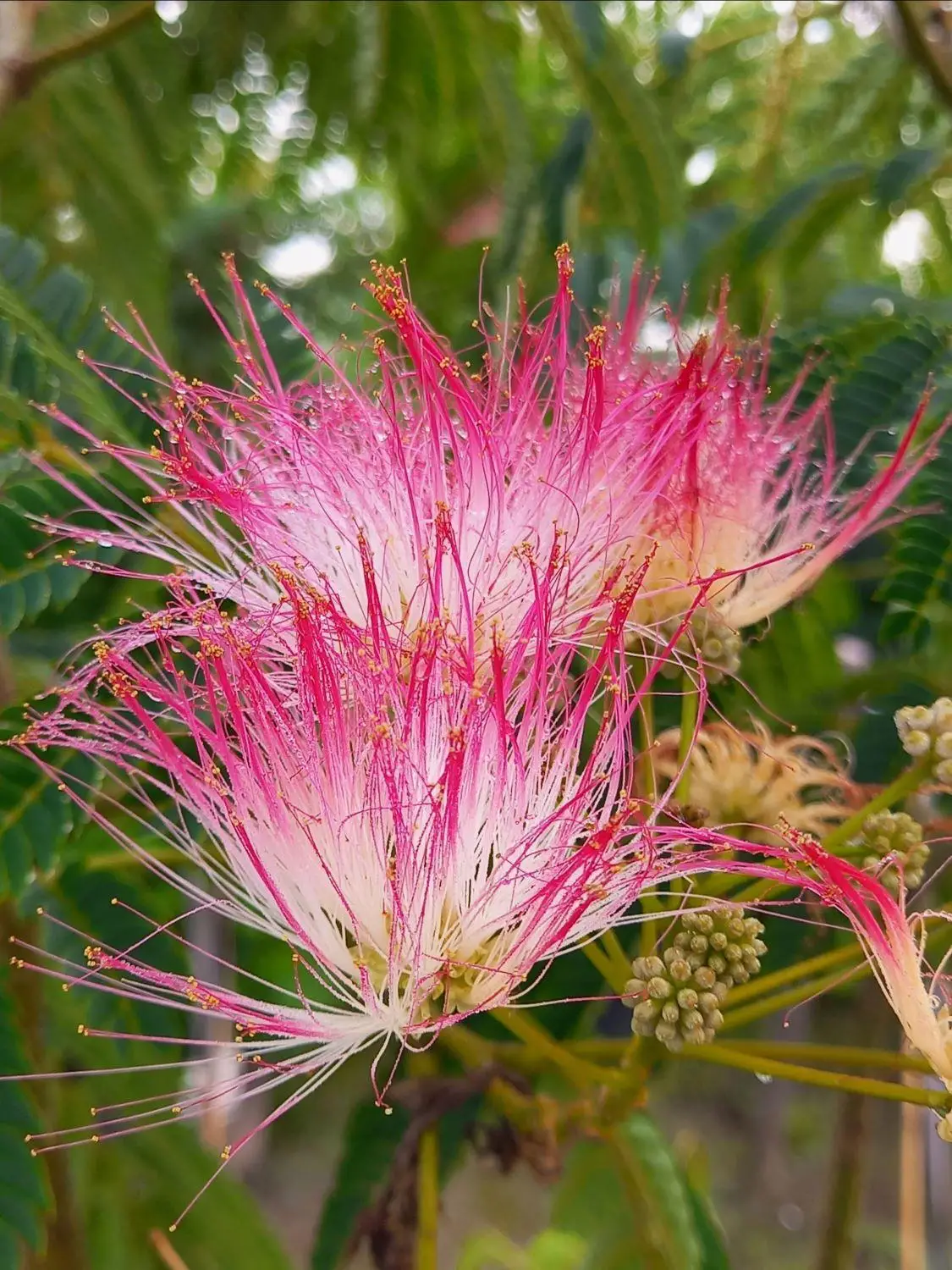
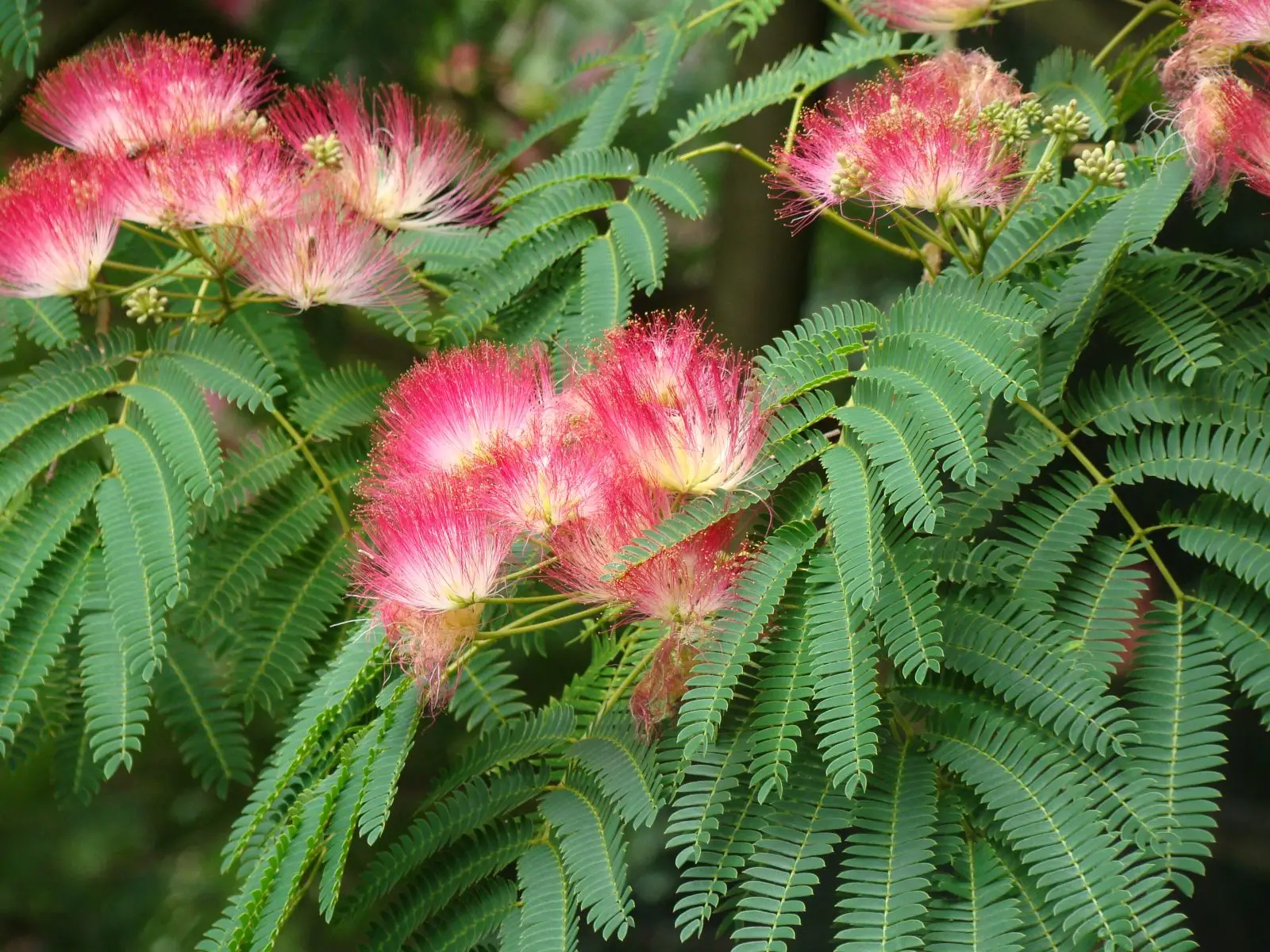
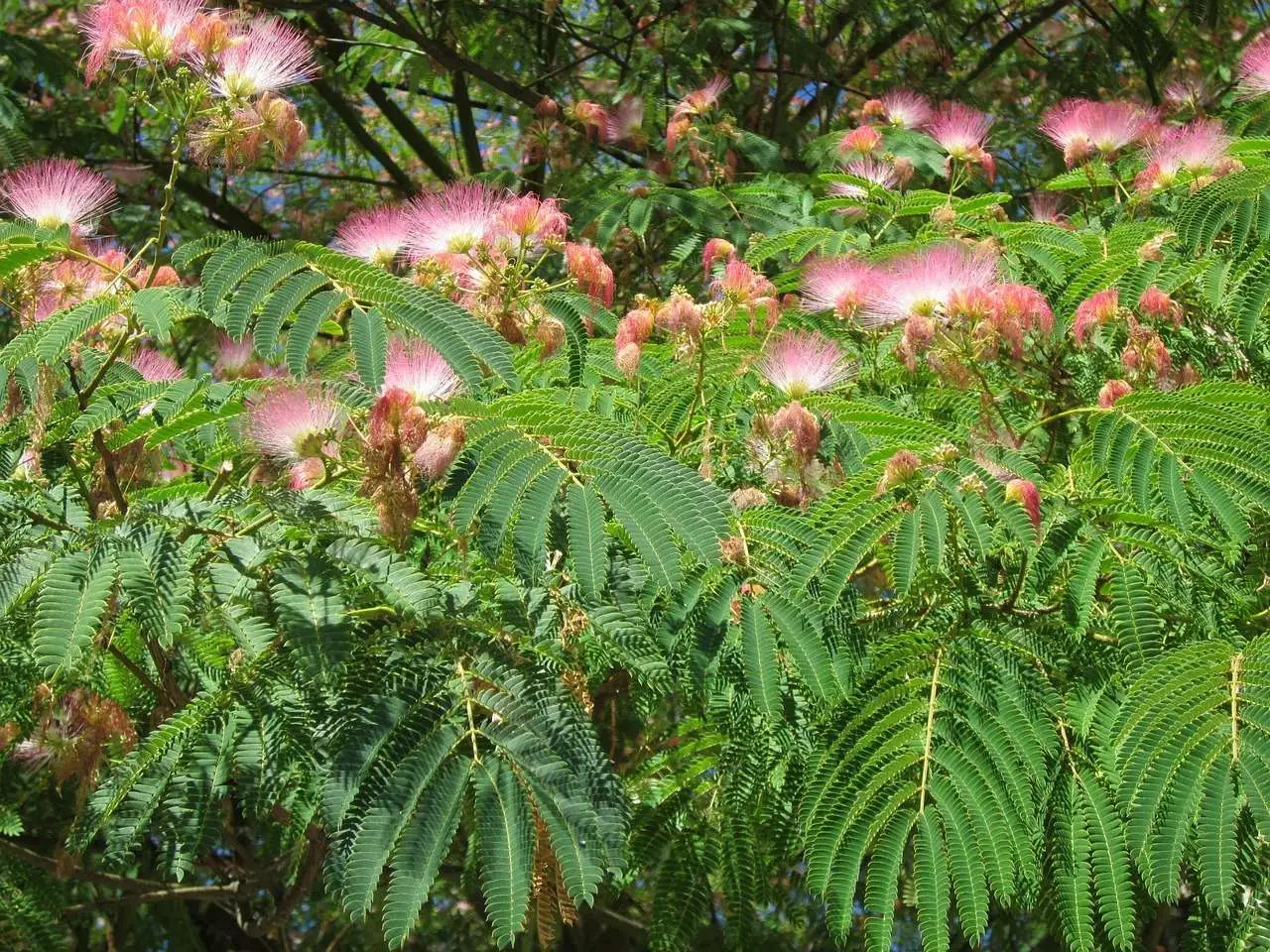
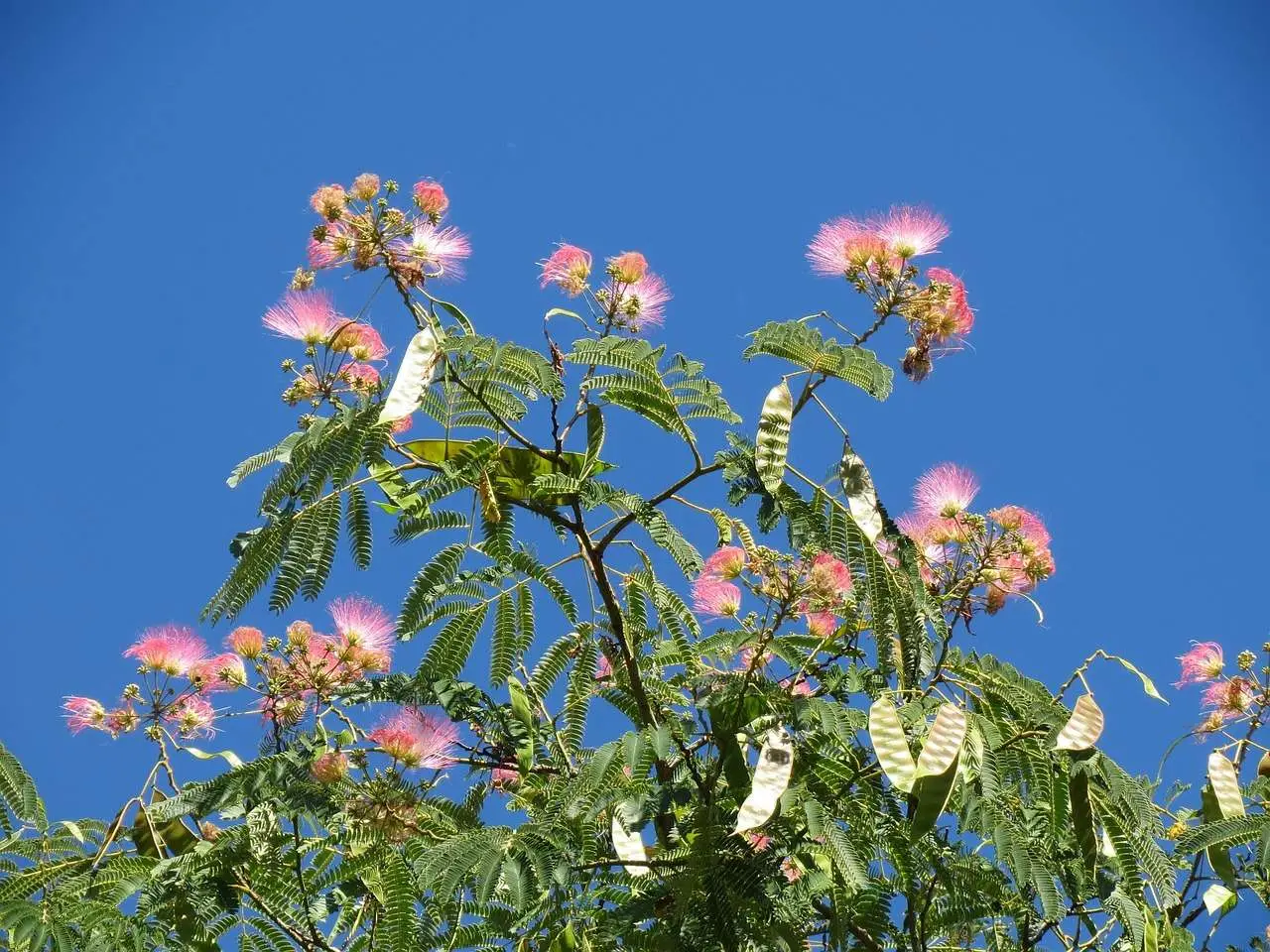
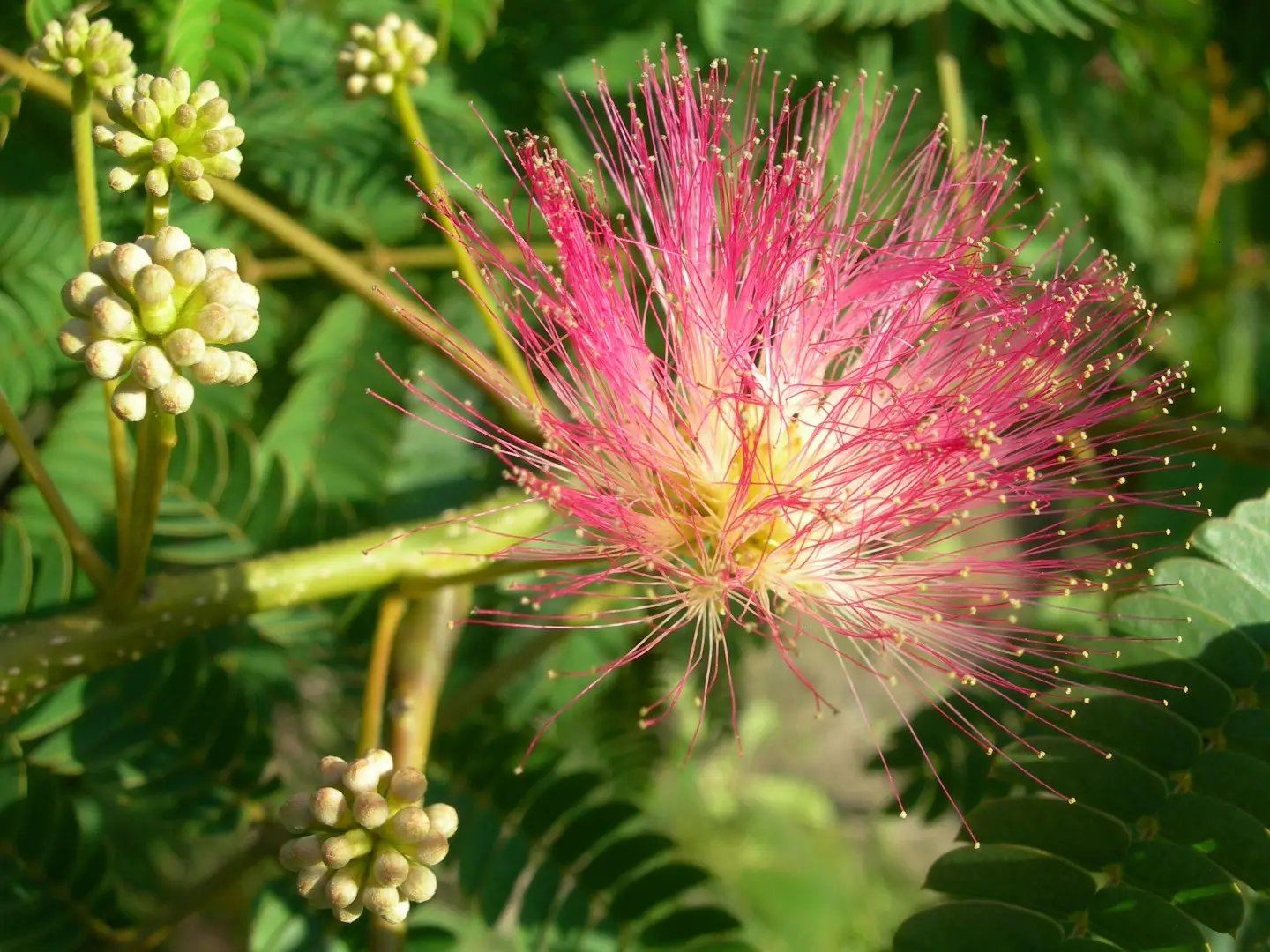
Discover why Japanese bonsai masters obsess over the Pink Silk Tree. Impossibly fast-growing, it rewards you with rose-pink powder-puff flowers blooming summer-long—plus sensitive, fern-like leaves that fold at your touch. Easy from seed, flowers in three years, tolerates varied soil, thrives in sun. Grow your own living sculpture.
€1.92
Imagine owning a tree that blooms pink silk clouds while sleeping at night—its delicate leaflets folding like prayer hands when dusk falls. This is Albizia julibrissin var. rosea, the Pink Silk Tree, a living paradox: exotic yet surprisingly easy, dramatic yet refined, a full landscape specimen that also thrives as an intimate bonsai.
Native to Korea and northern China, this botanical treasure was introduced to the Western world in the 18th century via Italian nobleman Filippo degli Albizzi—whose name graces the entire genus. The name itself whispers its magic: julibrissin derives from the Persian “gul-i abrisham,” meaning “silk flower.” Every element of this tree lives up to that poetry: the botanical name echoes centuries of horticultural admiration, and the form delivers on ancient promises.
But here is where the Pink Silk Tree truly captivates: in Japan, A. julibrissin f. rosea has become the preferred choice for non-traditional bonsai cultivation. This is no accident. The combination of vigorous, fast growth, naturally elegant branching structure, and those unforgettable rose-pink pompom flowers—appearing in abundance just when you need them most—makes it the bonsai artist’s dream. From seedling to miniature specimen, you watch your tree respond to your vision. Older growers speak of it with almost meditative reverence: the act of training a Pink Silk Tree bonsai becomes a dialogue between artist and plant, played out over seasons. And beyond bonsai: the flowers have long been used in traditional teas and tonics, prized in Chinese medicine as a gentle antidepressant. The delicate blooms also draw bees and butterflies in droves, making your garden a pollinator paradise. Even the feathery foliage—those bipinnate, fern-like leaves that fold at night and when touched—becomes a conversation starter, a living curiosity in every garden.
Growing from seed is wonderfully straightforward. The Pink Silk Tree embraces full sun and laughs at poor or alkaline soil. It wants well-drained ground and moderate water, but once established, it tolerates drought with quiet resilience. Given average conditions and warmth, your seedlings will develop strong, spreading canopies that naturally suggest the multi-stemmed forms bonsai artists treasure. Saplings flower within three years—remarkable speed for such a sophisticated beauty. Whether you’re planting a full-sized specimen for dappled summer shade or starting seeds with dreams of a potted masterpiece, this tree adapts to your ambition.
Grow the Pink Silk Tree from seed and unlock a lifetime of possibility. Watch those fern-fronds unfurl, feel the leaflets close at your touch, and one summer morning, discover your tree dressed in thousands of rose-pink silk pom-poms. This is the tree that makes you understand why bonsai artists fall silent when they mention its name.
Only logged in customers who have purchased this product may leave a review.
Reviews
There are no reviews yet.